


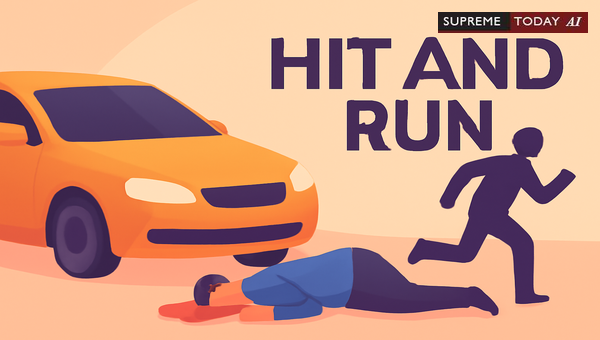
Does Apply If Hit by Vehicle?
Road accidents are tragically common in India, and when a vehicle strikes a pedestrian or another person, questions often arise about criminal liability. One critical query is: Section 307 Attracted Uf Hit by Vehicle—in other words, does , which deals with , automatically apply in such scenarios? The short answer is no. This blog post delves into the legal nuances, drawing from established case law and principles to clarify when this serious charge may or may not stick.
Whether you're a victim seeking justice, an accused facing charges, or simply curious about traffic-related crimes, understanding the intent behind Section 307 is crucial. We'll break down the requirements, examine real-world applications, and highlight factors that courts consider. Note: This is general information based on legal precedents and not specific legal advice. Consult a qualified lawyer for your situation.
Understanding : The Core Elements
punishes attempts to murder, with imprisonment up to life or even death in severe cases. However, it's not triggered by every injury. The provision requires to cause death or . As established in key judgments, requires intent or knowledge to cause death or such 2004 2 Supreme 351.
Merely causing injuries—even grievous ones—doesn't suffice. Courts emphasize that it is not necessary that bodily injury capable of causing death should have been inflicted for Section 307 to apply; rather, the intent or knowledge to cause such injury is essential 2004 2 Supreme 351. Without proof of this (), lesser charges like or are more appropriate.
Hit by Vehicle: When Does Section 307 NOT Apply?
In vehicle collision cases, Section 307 rarely applies automatically. The mere fact of being hit doesn't imply murder attempt. Consider these key points:
- Lack of Intent Evidence: Hit-and-run or accidental collisions without deliberate targeting typically fall short. Causing injuries by hit-and-run or accident, without evidence of intent or knowledge, generally does not attract Section 307 2004 2 Supreme 351.
- Nature of Injuries: Superficial or non-life-threatening wounds weaken the case. In one instance, where injuries were only skin-deep and there was no evidence to support the intention to kill, the accused was acquitted under Section 307 1993 0 Supreme(SC) 135.
- Circumstances Matter: Courts scrutinize if the driver showed reckless disregard for life, like accelerating towards a pedestrian intentionally.
For example, in a case involving a police check-up, the accused stopped the vehicle but then started it, hitting the officer. Despite initial charges, the offence under is not made out. But it was altered to 326 IPC (), with conviction under rash driving sections 279/338 instead 2025 0 Supreme(Mad) 4134. The court modified the conviction due to insufficient evidence of grievous assault, stressing rigorous standards for police conduct and witness reliability.
Case Law Spotlight: Real-World Applications
Judicial precedents provide clarity on vehicle-hit scenarios:
Acquittals and Modifications
- Superficial Injuries: The injuries were only skin deep and there was no evidence to support the intention to kill, leading to acquittal under 307 1993 0 Supreme(SC) 135.
- Rash Driving Prevalent: In a vehicular incident during a check-up, contradictions in witness statements led to downgrading from 326 to 279/338 IPC. The appellate court noted, conviction under section 326 IPC was not legal; hence modified to sections 279 and 338 IPC based on evidence of rash driving 2025 0 Supreme(Mad) 4134.
- No Specific Overt Act: Where an accused merely accompanied another and damaged a vehicle, the offence under Section 307 will not be attracted 2024 Supreme(Online)(KER) 30136.
When 307 Might Apply
Contrastingly, if intent is proven:- Deliberate acts with knowledge of lethality can invoke 307. Where rash and negligent act is preceded with knowledge that such act is likely to cause death or injury, or may be attracted IND_Delhi_BAIL_APPLN-812_2022_Delhi_BAIL_APPLN-812_2022 2022_DHC_1740.- In firearm cases (analogous for intent analysis), multiple wounds with deliberate aim upheld 307: evidence indicated a deliberate attempt to cause grievous harm with knowledge that it could cause death 2004 2 Supreme 351 2024 0 Supreme(Gau) 730.
Another ruling clarified: The necessary ingredients for attracting the first part of Section 307... is . Even without injury, intent alone can suffice, per illustration (c) of the section 2020 0 Supreme(All) 1380.
Broader Context from Related Cases
Vehicle accidents often intersect with other IPC sections:
- Negligent Driving Dominates: In a fatal truck-motorcycle collision, focus was on compensation under , not 307, as it stemmed from high-speed rashness without murder intent 2014 0 Supreme(Del) 1284. The court enhanced compensation but liability was negligence-based.
- Single Blow or Limited Acts: Ingredient of were not attracted and proved. Only a single blow was given, shifting to lesser hurt charges 2014 0 Supreme(Del) 426.
- Weapon Differentiation: Using a dangerous tool like a Hasuli on the neck, deemed dangerous to life, attracted 307 over 326, as the intended impact of the act could be determinative 2011 0 Supreme(Pat) 1432.
In assault disputes, courts downgraded from 307/34 to 324/34, emphasizing the intention to commit murder is the primary criterion... regardless of the nature of the injury 2012 0 Supreme(All) 1485.
These cases underscore: The nature of injuries and surrounding circumstances are crucial in determining whether Section 307 applies, not just the fact of injury2004 2 Supreme 351.
Exceptions: When Section 307 May Be Invoked
While rare, 307 can apply in vehicle cases if:- Deliberate Targeting: Driver swerves to hit intentionally.- Reckless Disregard: Known high-risk behavior with foresight of death, e.g., rash and negligent act... with knowledge that such act is likely to cause death IND_Delhi_BAIL_APPLN-812_2022_Delhi_BAIL_APPLN-812_2022 2022_DHC_1740.- Motive Evidence: Prior enmity or pursuit.
However, cases where injuries are superficial or accidental, without proof of intent or knowledge, are unlikely to attract Section 307, and offences under or 279 IPC may be more appropriate.
Practical Recommendations for Stakeholders
- For Prosecutors: Gather evidence of intent—witnesses, CCTV, motive—before charging 307. Prosecutors should gather and present evidence indicating deliberate intent, motive, or reckless disregard.
- For Courts: Avoid invoking 307 solely on injury occurrence. Courts should carefully examine evidence of intent or knowledge before invoking Section 307.
- For Accused/Victims: Challenge or pursue based on facts; negligence claims often yield fines or shorter terms.
Key Takeaways
- Hitting someone with a vehicle does not automatically attract .
- Proof of to cause death/grievous harm is essential.
- Injuries alone aren't enough—context rules.
- Lesser sections like 279, 338, 324, or 326 typically apply in accidents.
In conclusion, vehicle-hit cases demand nuanced analysis. Hitting someone with a vehicle does not automatically attract . The applicability depends on whether the act was committed with the requisite intent or knowledge to cause death or grievous bodily harm, which must be established by evidence. Always seek professional legal counsel for case-specific guidance.
References:1. 2004 2 Supreme 351 – Core principles on intent.2. 1993 0 Supreme(SC) 135 – Superficial injuries case.3. 2024 0 Supreme(Gau) 730 – Conviction standards.4. Additional sources as cited inline.
#IPC307, #HitByVehicle, #AttemptToMurder















