
SupremeToday Landscape Ad
AI Thinking

AI Thinking...

Searching Case Laws & Precedent on Legal Query.....!

Scanned Judgements…!

Checking relevance for P. Yuvaprakash VS State Rep. By Inspector of Police...

Checking relevance for Nawabuddin VS State of Uttarakhand...

Checking relevance for IN RE: Right to Privacy of Adolescents VS . ...

2024 6 Supreme 193 : In the case discussed, the victim was a minor girl who was 14 years old at the time of the commission of the offence. This is explicitly mentioned in the document: ''''Accused was not an adolescent, but his age was about twenty-five years on the date of commission of offence, and victim was only fourteen years old.'''' The judgment also refers to the victim as a ''''minor girl'''' throughout, confirming her age as below 18 years, which is the legal definition of a child under the POCSO Act. The court''''s determination of the victim''''s age as 14 years is central to the application of Sections 6 of the POCSO Act and Section 376(2)(n) and (3) of the IPC, which are applicable to offences against minors.Checking relevance for Independent Thought VS Union of India...

2017 7 Supreme 673 : The Supreme Court judgment in the document establishes that in cases under the Protection of Children from Sexual Offences (POCSO) Act, 2012, a girl child below the age of 18 years is considered a victim of sexual assault, regardless of marital status. Specifically, the Court held that a married girl child between 15 and 18 years of age can be a victim of aggravated penetrative sexual assault under Section 5(n) of the POCSO Act. The judgment emphasizes that the age of the victim is defined as below 18 years for the purposes of POCSO, and that such a girl child cannot be presumed to have consented to sexual intercourse, even if married. This interpretation is derived from the harmonious construction of the POCSO Act with the Indian Penal Code and the constitutional principles of protection of children''''s rights, bodily integrity, and reproductive choice under Articles 14, 15, and 21 of the Constitution of India.Checking relevance for Manoj Pratap Singh VS State Of Rajasthan...

2022 6 Supreme 216 : The victim girl was a seven-and-a-half-year-old mentally and physically challenged child, as established in the judgment. This age is explicitly mentioned in the context of the case under Section 6 of the Protection of Children from Sexual Offences Act, 2012, which applies to children below the age of 18, and particularly emphasizes the vulnerability of children below 8 years of age in cases involving sexual offences.Checking relevance for State of Rajasthan VS Gautam S/o Mohanlal...

Checking relevance for Anjan Kr. Manjhi S/o Sri Suresh Manjhi VS State Of Assam...

Checking relevance for Shiva Chautal VS State Of Assam, Rep. BY PP, Assam...

2023 0 Supreme(Gau) 864 : The judgment references the Supreme Court case ''''Jarnail Singh vs. State of Haryana'''' (supra), which analyzed the scope of Rule 12 of the Juvenile Justice (Care and Protection of Children) Rules, 2007, and held that while Rule 12 is strictly applicable to determine the age of a child in conflict with law, it should also serve as a basis for determining the age of a child victim of crime. The court emphasized that this principle remains applicable even after the repeal of the Juvenile Justice Act, 2000, by the Juvenile Justice (Care and Protection of Children) Act, 2015, with the age determination now governed by Section 94 of the 2015 Act. This establishes a precedent from the Supreme Court on how the age of a victim girl in POCSO cases should be determined, particularly when documents are lacking and medical tests like ossification are used.Checking relevance for Lios Swer VS State of Meghalaya...

2024 0 Supreme(Megh) 10 : The judgment cites the Supreme Court case of P. Yuvaprakash vs. State Rep. by Inspector of Police, reported in AIR 2023 SC 3525, which elaborately dealt with different aspects of the determination of the age of a juvenile under the Juvenile Justice (Care and Protection of Children) Act, 2015, particularly in the context of POCSO cases. The court emphasized that when there is a dispute regarding the age of a person under the POCSO Act, the court must follow the procedure laid down in Section 94 of the JJ Act, 2015, which mandates age determination through: (i) date of birth certificate from school or matriculation certificate; (ii) birth certificate from a municipal authority or panchayat; and (iii) only if the above are unavailable, through an ossification test or other latest medical age determination test conducted on the order of the Committee or Board. The judgment also notes that the age recorded by the Committee or Board under this provision is deemed to be the true age for the purposes of the POCSO Act.


AI Overview

AI Overview...

Supreme Court Judgments on Determining the Age of Victim Girl in POCSO Cases

Key Points and Insights

  • Age Proof Challenges:
  • The Supreme Court has emphasized that the proof of age is crucial in POCSO cases. Evidence such as school records, medical reports, or witnesses' testimony must substantiate the victim's age. For instance, in 2024 Supreme(Online)(Mad) 52552, the Court held that school records without proper source documentation are insufficient to establish age.
  • In 2024 Supreme(Online)(TEL) 21561, the Court noted that the victim’s own statement (around 19 years) was not enough to prove she was below 18, and prosecution failed to establish her age as a minor under the POCSO Act.
  • Similarly, in 2025 Supreme(Online)(Mad) 77114, the Court reiterated that the victim's age cannot be presumed without reliable evidence, emphasizing that the entry in school records alone is inadequate if not properly verified.

  • Legal Principles and Precedents:

  • The Supreme Court has consistently held that positive proof of age is necessary. In State of Uttar Pradesh (2008) 10 SCR 450, it was clarified that DNA evidence alone cannot determine age or guilt without supporting witness testimony or medical evidence.
  • The Court has also stressed that the absence of reliable age proof can lead to acquittal or quashing of proceedings, especially if the victim is found to be over 18 at the time of the incident (2024 Supreme(Online)(Mad) 52552).

  • Age Thresholds and Relationship Considerations:

  • The Court recognizes that relationships after age 16 may be viewed differently, especially when the victim is above 17, but still under 18. In 2024 Supreme(Online)(TEL) 21462 and related judgments, it was observed that if the victim is more than 17 years old, the provisions of the POCSO Act may not be attracted unless other factors indicate exploitation.
  • The Court has highlighted that age difference matters, and amendments are suggested to restrict offenses where the age gap is within five years for victims aged 16 or more (2025 Supreme(Online)(Mad) 77956).

  • Judicial Discretion and Appellate Review:

  • In cases of acquittal, the Supreme Court has held that appellate courts can reverse decisions only if the evidence clearly indicates guilt. For example, in State of Uttar Pradesh (2022) 8 SCR 536, it was held that the appellate court must consider whether the trial court's view is plausible.
  • The Court has also acknowledged that settled relationships or marriages between minors and adults, especially when accepted by families, can influence judicial outcomes, but age proof remains paramount.

Analysis and Conclusion

The Supreme Court's judgments underscore that accurate determination of the victim's age is fundamental in POCSO cases. The Court consistently demands reliable, corroborative evidence—such as medical reports, school records, or credible witness testimony—to establish whether the victim was a minor at the time of the offense.

In absence of such proof, cases are often quashed or acquittals upheld, especially when the victim is found to be over 18. The Court also recognizes the complexity surrounding relationships involving victims close to 16-18 years and emphasizes that the law aims to protect minors from exploitation, requiring stringent proof of age.

References:- Ravi Sharma v. State of UP, Supreme Court- State of Uttar Pradesh, (2008) 10 SCR 450- State (Government of NCT of Delhi) v. Ram Singh, (2022) 8 SCR 536- Various other judgments emphasizing proof of age and the inadmissibility of unverified school records or entries as sole evidence.


Note: The Court's approach highlights the importance of strict proof of age to uphold justice and prevent wrongful convictions or acquittals based on uncertain evidence.

Determining Victim Age in POCSO Rape Cases: Evidentiary Standards and Supreme Court Guidelines

How Courts Determine Victim Age in POCSO Rape Cases

In the sensitive realm of Protection of Children from Sexual Offences (POCSO) Act cases, one critical factor often determines the applicability of stringent provisions: the age of the victim. Missteps in age determination can lead to miscarriages of justice, either by invoking harsh penalties inappropriately or failing to protect minors adequately. A common query arises: How the Age of Rape Victim in Pocso Cases be Determined? This blog delves into Supreme Court guidelines, evidentiary standards, and practical insights to clarify this vital issue.

Understanding age accurately is not just procedural—it's foundational to upholding justice while safeguarding rights. Let's break down the legal framework, key judgments, and real-world applications.

Legal Framework for Age Determination in POCSO Cases

The Supreme Court has consistently emphasized reliable evidence over assumptions when ascertaining a victim's age under the POCSO Act, 2012. Section 94 of the Juvenile Justice (Care and Protection of Children) Act, 2015, outlines a hierarchical approach that courts must follow. This stepwise method prioritizes documentary proof before turning to medical tests. 2023 0 Supreme(Gau) 864

Stepwise Approach to Proving Age

  1. Documentary Evidence First: Courts look for birth certificates issued by municipal authorities or panchayats, school records, or examination board certificates. These are considered the gold standard due to their reliability. 2023 0 Supreme(Gau) 864
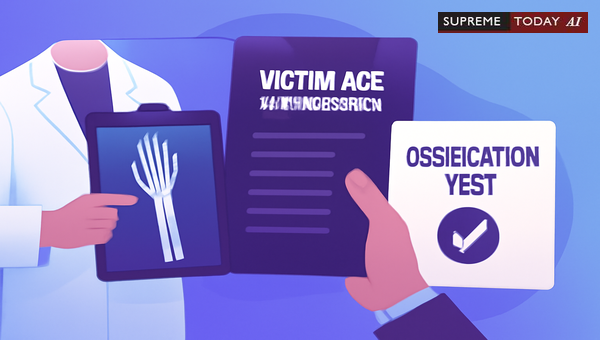
  2. Medical Tests as Secondary: If documents are unavailable, ossification tests (X-rays of bones) or other radiological methods are ordered. However, these are guiding but not conclusive, with a permissible margin of error of about two years. 2023 0 Supreme(Gau) 864
  3. Holistic Evaluation: All evidence, including credible oral testimony, is weighed. The age recorded by authorities or tests is deemed true unless disproven beyond reasonable doubt. 2017 7 Supreme 673

The Court has ruled that the prosecution bears the burden to prove the victim is under 18 beyond reasonable doubt for POCSO provisions to apply. Any ambiguity tilts the benefit of doubt toward the accused. 2023 0 Supreme(Gau) 864

Supreme Court Judgments: Setting the Precedent

In a landmark ruling (AIR 2023 SC 3525), the Supreme Court elaborated on these principles, stating that courts must adhere strictly to the procedure when age is disputed. The benefit of doubt must go to the accused if there is ambiguity or inconsistency in the evidence regarding age, especially considering the inherent limitations and margin of error in ossification tests. 2023 0 Supreme(Gau) 864

Another key observation: If evidence suggests the victim is over 18, POCSO cannot be invoked, shifting the case potentially to other laws like the Indian Penal Code. 2023 0 Supreme(Gau) 864

In cases lacking birth certificates or school records, reliance solely on medical evidence falters if discrepancies arise. The Court mandates a comprehensive review, cautioning against over-reliance on tests alone. 2017 7 Supreme 673

Integrating Insights from Related Cases

High court decisions further illustrate these principles in practice, particularly in consensual relationships involving teenagers. For instance, in several Madras High Court matters, proceedings under POCSO were quashed when victims, post-majority, affirmed consensual relations and happy marital lives with the accused. 2022 Supreme(Online)(MAD) 17699 2025 Supreme(Online)(Mad) 55741

One such case noted: The petitioner and the victim girl were also present along with their child before this Court at the time of hearing. The court highlighted the personal nature of such offences, suggesting legislative tweaks like limiting applicability where the offender is not significantly older than a 16+ victim. 2025 Supreme(Online)(Mad) 55741

Similarly, in Crl.O.P.No.25496 of 2025, the court quashed proceedings after compromise, emphasizing that crimes rooted in adolescent relationships do not invariably impact public interest. 2025 Supreme(Online)(Mad) 63214

These rulings underscore that while age determination is pivotal, courts exercise discretion under Section 482 CrPC for quashing non-compoundable offences if they are purely personal. However, convictions stand firm where credible victim testimony and medical evidence confirm a minor's age, as in a Gauhati High Court appeal upholding a sentence for aggravated penetrative sexual assault on an 11-year-old. 2025 Supreme(Online)(GAU) 1910

Limitations of Age Determination Methods

  • Medical Tests' Inherent Flaws: Ossification provides estimates, not absolutes, with a two-year margin. Courts must interpret cautiously. 2023 0 Supreme(Gau) 864
  • Documentary Precedence: Medical evidence bows to official records. 2023 0 Supreme(Gau) 864
  • Benefit of Doubt Rule: Inconclusive or conflicting proof favors the accused, preventing wrongful POCSO invocation. 2017 7 Supreme 673

Practical Recommendations for Stakeholders

  • Prosecution's Duty: Diligently procure documents early to avoid reliance on fallible tests.
  • Courts' Role: Follow the JJ Act sequence rigorously and consider all circumstances holistically.
  • Defense Strategy: Challenge ambiguities aggressively, leveraging the benefit of doubt.

Authorities are urged to amend laws for nuanced handling of teen relationships, such as age proximity clauses, to balance protection and realism. 2022 Supreme(Online)(MAD) 17699

Key Takeaways

  • Prioritize birth certificates and school records for age proof in POCSO cases.
  • Use ossification tests only as backups, mindful of their two-year error margin. 2023 0 Supreme(Gau) 864
  • Benefit of doubt goes to the accused amid discrepancies. 2017 7 Supreme 673
  • Post-18 consensual cases may lead to quashing, protecting personal liberties. 2025 Supreme(Online)(Mad) 55741

This overview draws from established judgments and is for informational purposes only. Legal outcomes vary by facts; consult a qualified lawyer for advice tailored to specific circumstances. Stay informed, as evolving precedents shape POCSO applications.

References:- 2023 0 Supreme(Gau) 864: Core judgment on age procedures and doubt resolution.- 2017 7 Supreme 673: Emphasis on comprehensive evidence review.- Additional cases: 2022 Supreme(Online)(MAD) 17699, 2025 Supreme(Online)(Mad) 55741, 2025 Supreme(Online)(Mad) 63214, 2025 Supreme(Online)(GAU) 1910.

#POCSOAct, #VictimAgeDetermination, #SupremeCourtJudgments
Chat Download
Chat Print
Chat R ALL
Landmark
Strategy
Argument
Risk
Chat Voice Bottom Icon
Chat Sent Bottom Icon
SupremeToday Portrait Ad
logo-black

An indispensable Tool for Legal Professionals, Endorsed by Various High Court and Judicial Officers

Please visit our Training & Support
Center or Contact Us for assistance

qr

Scan Me!

India’s Legal research and Law Firm App, Download now!

For Daily Legal Updates, Join us on :

whatsapp-icon Back to top







