


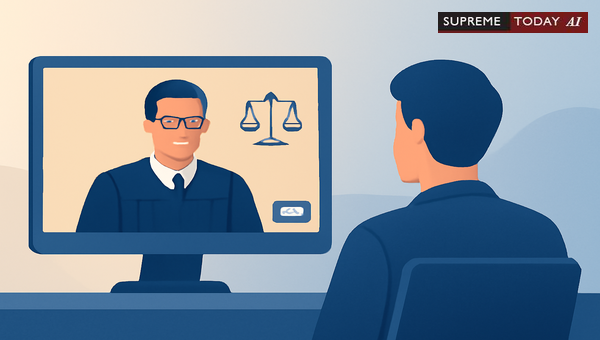
Video Conferencing Under CrPC: A Comprehensive Legal Guide
In the modern era of digital transformation, the has increasingly embraced technology to ensure swift and accessible justice. One such innovation is video conferencing under the , which allows for remote , , and even proceedings in criminal cases. But how does this work legally? What are the key provisions, landmark cases, and practical considerations?
If you've ever wondered about Video Conferencing under CrPC, this guide breaks it down. We'll cover the legal framework, precedents, guidelines, limitations, and tips for effective use. Note: This is general information based on judicial precedents and not specific legal advice. Consult a qualified lawyer for your case.
Overview of Video Conferencing in Criminal Proceedings
Video conferencing has revolutionized the judicial process, especially under the CrPC. It enables the and examination of witnesses remotely, proving invaluable for minors, foreign witnesses, or during crises like the COVID-19 pandemic. The has repeatedly affirmed its validity, provided it upholds fairness and justice.
As highlighted in judicial observations, by video conferencing is permissible... The Court shall be guided by the provisions of the and , the and the while examining a person through video conferencing. 2023 0 Supreme(Kar) 1121
Key Legal Provisions and Landmark Case Laws
1. Recording Statements of Minor Victims
Courts have permitted video conferencing for recording statements of minor victims under . In one notable instance, a minor victim's statement was recorded at the , as the victim and her mother resided abroad. 2020 0 Supreme(Pat) 100
This approach protects vulnerable witnesses while ensuring evidence integrity.
2. General Permissibility and
The landmark case of established video conferencing as a valid method for recording evidence. The held that it satisfies , as evidence is deemed recorded in the presence of the accused. 2023 0 Supreme(AP) 1165 2021 0 Supreme(P&H) 166
Further, Thus it is clear that so long as the accused and/or his pleader are present when evidence is recorded by video conferencing that evidence is being recorded in the 'presence' of the accused and would thus fully meet the requirements of Section 273, Criminal Procedure Code. 2024 0 Supreme(Guj) 97
equates to in this context, embracing virtual reality concepts. 2024 0 Supreme(Guj) 97
3. and Witness Examination
via video is allowed with party consent, especially amid logistical hurdles. Courts have ruled it permissible, as in cases where witnesses faced travel issues. 2021 0 Supreme(Ker) 913 2023 0 Supreme(UK) 339
Thus, invoked the video conferencing facility for of PW5. 2023 0 Supreme(Kar) 1121 Courts may fix schedules for such sessions to streamline proceedings. 2024 0 Supreme(All) 2041
Additionally, to be examined through video-conferencing and the availability of technical facilities for video-conferencing at the agreed upon time and place.
4. Guidelines and High Court Rules
High Courts have issued comprehensive guidelines, applicable to criminal matters under . These ensure justice without disadvantaging parties. 2021 0 Supreme(P&H) 166 2023 0 Supreme(UK) 418
The (and updates like Rules ) outline procedures: identity verification, document display, and accused presence. 2023 0 Supreme(UK) 339 2023 0 Supreme(Kar) 1121 2023 0 Supreme(Del) 6067
allows relaxation of rules for justice. 2023 0 Supreme(Del) 2750
5. Special Circumstances and Pandemic Response
During COVID-19, the authorized video conferencing to maintain judicial functions amid health risks.
Courts have allowed it for health issues like Parkinson's, framing charges remotely. 2024 0 Supreme(Mad) 2592 are common: The hearings shall be conducted in hybrid/video-conferencing mode in conformity with the Rules for Video Conferencing for Courts, . 2023 0 Supreme(Del) 6067
This matter has been taken up through video conferencing. 2022 0 Supreme(Del) 881 2021 0 Supreme(Ori) 214 2021 0 Supreme(Ori) 406
Limitations and Key Considerations
While powerful, video conferencing isn't unlimited:
- : Parties must generally agree; courts can't impose it otherwise. 2021 0 Supreme(Ker) 913
- : Issues like connectivity can undermine proceedings, requiring pre-testing. 2003 3 Supreme 19
- : Courts decide based on case facts, balancing convenience and fairness. 2021 0 Supreme(P&H) 166
Of course, as set out hereinafter, evidence by video-conferencing has to be on some conditions. 2023 0 Supreme(Del) 2750
Safeguards include proper storage of audio-video evidence and ensuring no compromise to rights. 2023 0 Supreme(AP) 1165 2022 0 Supreme(J&K) 524
Practical Recommendations for Legal Practitioners
To leverage video conferencing effectively:- Secure consent from all parties early.- Test technical setups, including bandwidth and equipment.- Follow High Court rules for scheduling and verification.- Stay updated on evolving guidelines, like those for live streaming. 2023 0 Supreme(Del) 6067
While allowing a request for video conferencing, the Court may also fix the schedule for convening the video conferencing. 2024 0 Supreme(All) 2041
Conclusion and Key Takeaways
Video conferencing under CrPC is a robust tool enhancing judicial efficiency, backed by precedents like Praful B. Desai and statutory rules. It supports remote evidence recording, cross-exams, and hearings while safeguarding fairness—provided consent, technical reliability, and discretion are prioritized.
Key Takeaways:- Valid under Sections 164, 273 CrPC if accused is present virtually. 2023 0 Supreme(AP) 1165 2024 0 Supreme(Guj) 97- Ideal for minors, abroad witnesses, pandemics. 2020 0 Supreme(Pat) 100
- Guidelines ensure procedural integrity. 2021 0 Supreme(P&H) 166 2023 0 Supreme(Kar) 1121- Consent and tech prep are crucial to avoid pitfalls.
As technology evolves, expect wider adoption. For tailored advice, reach out to a legal expert. References: 2020 0 Supreme(Pat) 100 2021 0 Supreme(Ker) 913 2023 0 Supreme(AP) 1165 2021 0 Supreme(P&H) 166
2023 0 Supreme(UK) 339 2023 0 Supreme(Kar) 1121 2024 0 Supreme(All) 2041 2024 0 Supreme(Guj) 97. #VideoConferencingCrPC, #CrPCRules, #IndianJudiciary












