


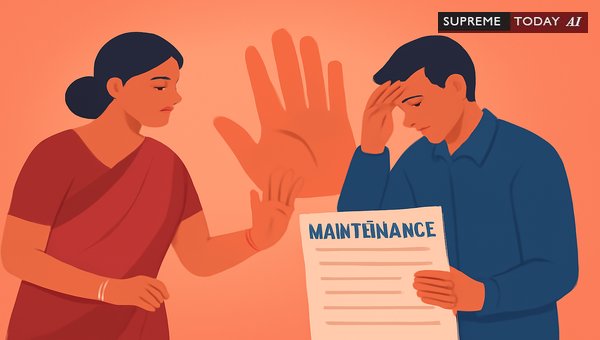
Understanding Willful Default in Maintenance Cases in India
In family law disputes, maintenance payments are crucial for supporting dependents like spouses or children. But what happens when the obligated party fails to pay? A key concept here is —a deliberate refusal that can trigger serious legal repercussions. If you're wondering, What is ?, this guide breaks it down based on Indian judicial principles, drawing from established case law and statutes.
This article provides general insights into the topic and is not legal advice. Consult a qualified lawyer for your specific situation.
Defining Willful Default in Maintenance Obligations
Willful default refers to an intentional and deliberate failure to comply with court-ordered maintenance payments. Courts in India emphasize that this isn't mere oversight but a conscious choice. Key elements include:
- Intentional and Deliberate: The defaulting party knowingly avoids payment. 1985 0 Supreme(SC) 21 2009 0 Supreme(SC) 618
- Knowledge of Consequences: They must be aware of potential penalties, such as sanctions or . 1985 0 Supreme(SC) 21
- Lack of Justifiable Cause: No valid reason, like financial hardship proven in court, excuses the default. 1985 0 Supreme(SC) 21
Courts treat for such defaults as a last resort, only after exhausting milder options. 2023 0 Supreme(Ker) 971 2022 0 Supreme(Ker) 355 The defaulter typically gets a reasonable opportunity to rectify before harsher measures. 2023 0 Supreme(Ker) 971 2022 0 Supreme(Ker) 355
This principle ensures fairness while upholding maintenance orders, which protect vulnerable parties under laws like .
Applications in Key Indian Laws
Domestic Violence Act
Under the , willful default on (interim payments during proceedings) can lead to the court striking off the defendant's defense. This is applied if the non-compliance is deliberate and willful. 2022 0 Supreme(Ker) 355
For instance, if a respondent ignores repeated orders without justification, courts may bar their defense to expedite justice for the aggrieved party.
Section 125
In maintenance proceedings under CrPC Section 125, courts exercise power to strike off defenses with caution and as a last resort, particularly for (stubbornly disobedient) defaults. 2023 0 Supreme(Ker) 971
This power balances enforcement with due process, preventing abuse while ensuring payments flow to those in need.
Exceptions, Limitations, and Procedural Safeguards
Not every default qualifies as willful. Courts recognize boundaries:
- Fresh Applications Allowed: Even if a maintenance claim is dismissed for the applicant's default, they can file anew. 1966 0 Supreme(SC) 89
- No : lack inherent authority to restore dismissed applications. 1966 0 Supreme(SC) 89
- Civil Matters in : can strike defenses in civil maintenance cases upon proving willful default. 2021 0 Supreme(Ker) 26
These limits prevent procedural rigidity and promote access to justice.
Broader Judicial Insights on Willful Default
The concept extends beyond maintenance, illustrating consistent judicial standards across Indian law. In rent control cases under the , willful default in rent payment—defined as intentional, deliberate, calculative, and conscious with knowledge of consequences—leads to eviction. 2019 0 Supreme(Mad) 683 2021 0 Supreme(Mad) 3233
For example, one ruling noted: Hence the tenant had committed willful default and he is liable to be evicted. 2021 0 Supreme(Mad) 3233 Another affirmed: Failure to pay rent regularly, despite notices, constitutes willful default. 2015 0 Supreme(Mad) 1850
Similarly, in under the , willful disobedience of court orders triggers action. Petitions often seek to summon the respondent and deal with him as per law for willful...
N.VEERANAN vs Mr.MANNAVAN
KANNAN vs Balashanmugam
However, courts clarify: There is no willful disobedience if best efforts are made to comply with the order. 2016 0 Supreme(MP) 1053In provident fund delays, claims of no willful default due to unavoidable circumstances were scrutinized, with courts directing statutory appeals over writs. 2025 Supreme(Online)(Kar) 18566
These parallels reinforce that willful default universally requires intent and absence of justification, mirroring maintenance contexts. In eviction disputes, mere payment post-notice doesn't erase prior willful conduct. 2021 0 Supreme(Mad) 3233
Consequences and Court Approaches
Willful default invites escalating remedies:
- Contempt Charges: Invoking for punishment.
- Striking Defenses: As a final step, disabling the defaulter's arguments.
- or Salary: To enforce payments.
- Imprisonment: In extreme CrPC cases for non-compliance.
Courts urge caution, prioritizing compliance opportunities. As one observation notes: The legal principles and case law surrounding willful default are complex and require careful consideration in each case.
Key Findings and Practical Recommendations
- Serious Implications: Willful default can derail defenses and lead to adverse orders. 2023 0 Supreme(Ker) 971 2022 0 Supreme(Ker) 355
- Exercise Restraint: Judges must explore alternatives before severe sanctions.
- Fair Chance: Defaulters deserve time to pay up.
- Complexity: Each case turns on facts like intent and excuses.
From rent and contempt analogies, proving true knowledge of legal consequences is pivotal. 2019 0 Supreme(Mad) 683
Conclusion: Navigating Maintenance Defaults Wisely
undermines judicial orders and family welfare. Typically, it demands proof of deliberate intent without excuse, with courts favoring graduated responses. Whether in , CrPC proceedings, or analogous areas like rent control, the threshold remains high to protect rights.
Key Takeaways:- Document all notices and attempts to comply.- Seek legal aid promptly for disputes.- Understand that even post-default payments may not fully mitigate consequences.
Stay informed, but remember: This is general information. For personalized guidance, approach a legal professional familiar with Indian family law.
#WillfulDefault #MaintenanceLaw #FamilyLawIndia












