


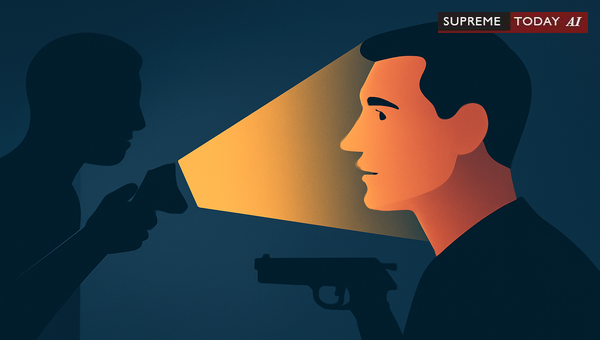
Can a Witness Reliably Identify an Accused's Face in the Light of a Fired Katta in Complete Darkness?
In high-stakes criminal trials, often forms the cornerstone of . But what happens when a witness claims to have seen the accused's face clearly—illuminated only by the brief flash of a fired katta (country-made pistol)—in otherwise pitch-black conditions? This scenario raises critical questions about the reliability of such identification under Indian law. Courts approach these claims with caution, balancing the inherent challenges of low visibility against factors like witness familiarity and corroborative evidence.
This blog post delves into the legal principles governing witness identification in darkness, particularly when tied to the muzzle flash of a fired katta. We'll examine key judgments, reliability factors, and insights from related cases to provide a comprehensive overview. Note: This is general information based on case law and not specific legal advice. Consult a qualified lawyer for your situation.
The Core Legal Question
Witness Stating he Saw the Face of the Accused in the Light of Fired Katta when it was Completely Dark Otherwise.
This precise issue tests the boundaries of in criminal proceedings. have consistently held that recognition in complete darkness is inherently challenging, warranting cautious scrutiny. However, isn't automatically dismissed if supported by circumstances like a light source—even a fleeting one—or non-visual cues. 2000 0 Supreme(Del) 294
Main Legal Findings: Cautious Acceptance with Safeguards
Recognition in Darkness: Inherently Unreliable but Not Impossible
Ocular identification purely in darkness is generally deemed unreliable unless bolstered by additional factors. Courts emphasize that human vision struggles without adequate light, making sole reliance on such risky. As noted in key rulings, recognition in complete darkness is difficult; however, recognition is possible if the witness is acquainted and closely related to another, from the manner of speech, gait and voice. 2000 0 Supreme(Del) 294
- Poor visibility skepticism: In total darkness, face recognition based only on eyes is doubtful without proof of illumination. 2022 0 Supreme(Ori) 681
- Fleeting light consideration: A brief flash, like from a fired katta, may aid visibility if the witness was close enough, but courts demand evidence of its sufficiency.
The Fired Katta Flash: Does It Provide Enough Light?
The muzzle flash from a katta firing is intense but momentary. In 2022 0 Supreme(Ori) 681, the court analyzed similar claims, holding that if witnesses saw the accused's face illuminated by some light source (e.g., a lamp, torch, or sufficient ambient light), recognition would be more reliable. Conversely, absence of evidence of sufficient light or moonlight makes face recognition doubtful. 2022 0 Supreme(Ori) 680
Witnesses claiming visibility in the katta's light must demonstrate proximity and clarity. Without this, courts view it skeptically, especially in pitch-black settings.
Boosting Credibility: Voice, Gait, and Familiarity
Even in darkness, identification gains traction through:- Voice recognition: Permissible if the witness is fairly acquainted with the accused. 2008 3 Supreme 629- Gait or features: Reliable for close relations, as recognition from voice or features is feasible when the witness has some familiarity. 2000 0 Supreme(Del) 294- Relationship factor: Family members or familiars get more leeway, rejecting blanket dismissal of dark-condition . 2022 0 Supreme(Ori) 681
Insights from Related Case Laws and Testimonies
Numerous judgments reinforce these principles, often integrating and .
Torchlight, Firelight, and Similar Illuminations
In cases with torch or firelight amidst darkness, courts upheld identifications. For instance, witnesses like Suchan Mahato described seeing accused fleeing in the light of a torch or fire, rendering faces visible despite the night. 2025 0 Supreme(Jhk) 527 2023 Supreme(Online)(Del) 17430
Similarly, Lal Bachan Pathak and Rabindra Nath Pandey testified to spotting accused with kattas in poor visibility, aided by torchlight or firelight. 2022 0 Supreme(Pat) 241
Challenges with Unspecified Light Sources
Credibility falters without details. In one ruling, was rejected because the source of light in which the witness saw the accused is also not stated. The witness mentioned seeing at but omitted distance or surroundings. 2015 0 Supreme(SC) 1004
Hostile witnesses or litigating parties further complicate matters. A witness admitted enmity yet claimed to see accused with kattas near disputed land.
-
Corroboration Strengthens Claims
Courts favor testimonies backed by recoveries, like country-made pistols and cartridges. In 2022 Supreme(Online)(All) 30368, a witness saw accused firing near a lantern, with weapons later recovered. Sarita and PW-17 identified faces in torchlight, supported by cartridge test-firing. 2025 0 Supreme(Jhk) 1380 2023 0 Supreme(Del) 2358
Even in dragging or pursuit scenarios, specific roles—like accused Laddu Singh firing at the deceased—were noted, though darkness was conceded. 2016 0 Supreme(Pat) 1064
Voice and Proximity in Gunshot Incidents
Post-injury statements often highlight voice: A witness specified telling police that accused Sarain Singh had injured Kuldip Singh with gunshot and that it was dark. 2014 0 Supreme(J&K) 340 Another attributed firing after seeing a katta drawn from the waist. 2014 0 Supreme(Del) 563
Contradictions and Court Scrutiny
Courts meticulously probe:- Light proof: Moonlight, lamps, or flashes must be evidenced. 2022 0 Supreme(Ori) 680- Witness consistency: revelations, like hostility or vagueness, undermine claims.
-
- Corroboration: Sole in darkness rarely suffices without medical, recovery, or multiple witnesses. 2015 0 Supreme(SC) 1004Key Takeaways for Legal Practitioners and Accused
- Demonstrate light or familiarity: Prove some illumination (e.g., katta flash) or close acquaintance for credibility.
- Scrutinize circumstances: Courts demand details on distance, duration, and conditions.
- Voice/gait as alternatives: These bolster visual claims, especially from relatives.
- linkage: Weapon recoveries and enhance reliability. 2023 0 Supreme(Del) 2358
Conclusion: A Balanced Judicial Approach
strike a balance: skepticism toward pure darkness identifications, yet openness to fleeting lights like a fired katta if corroborated. As summarized, recognition of the accused's face in complete darkness solely based on ocular observation is generally deemed unreliable unless supported by circumstances such as the presence of some light, or recognition based on voice or gait when the witness is closely acquainted. 2000 0 Supreme(Del) 294 2022 0 Supreme(Ori) 681
Ultimately, each case turns on totality—light evidence, witness rapport, and consistency. For defense, highlight visibility gaps; for prosecution, build multi-layered proof.
References include 2000 0 Supreme(Del) 294, 2022 0 Supreme(Ori) 681, 2008 3 Supreme 629, 2022 0 Supreme(Ori) 680, 2015 0 Supreme(SC) 1004, 2025 0 Supreme(Jhk) 527, 2023 Supreme(Online)(Del) 17430, 2022 0 Supreme(Pat) 241, 2025 0 Supreme(Jhk) 1380, 2023 0 Supreme(Del) 2358, 2022 Supreme(Online)(All) 30368, -















