


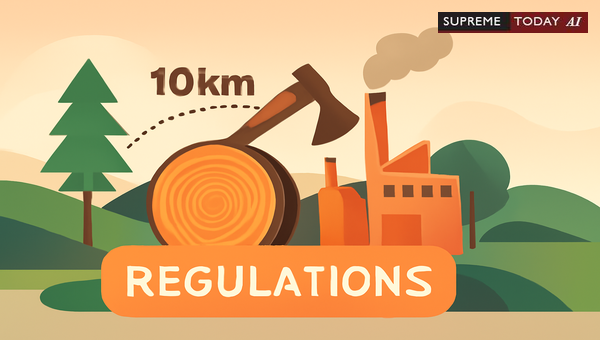
Understanding Distance Regulations for Wood-Based Industries Under 2016 Guidelines
Establishing a wood-based industry in India involves navigating a complex web of environmental regulations designed to protect forests and promote sustainable development. One critical aspect that often raises questions among entrepreneurs and business owners is the distance requirement from protected areas. Specifically, what does Paragraph 7(ii) of the stipulate regarding distances? 2018 0 Supreme(Jhk) 1731
This blog post dives deep into these provisions, exploring the 10km distance rule, key exceptions, amendments, relevant case law, and practical recommendations. Whether you're planning a new sawmill, plywood unit, or charcoal production facility, understanding these rules is essential to avoid legal hurdles from bodies like the or state authorities. Note: This is general information and not specific legal advice; consult a qualified lawyer for your situation.
Overview of the Wood Based Industries Guidelines, 2016
Issued by the on , these guidelines provide a framework for establishing and regulating wood-based industries across India (excluding North Eastern states in some contexts). They aim to balance industrial growth with forest conservation by regulating location, timber sourcing, and licensing through . 2018 0 Supreme(Jhk) 1731
Paragraph 7 addresses restrictions on location, with sub-clause (ii) focusing on distances from sensitive ecological zones. The guidelines were amended on , introducing flexibility based on local conditions. 2018 0 Supreme(Jhk) 1731
Key Distance Requirements: The 10km Rule
Under Paragraph 7(ii), wood-based industries must generally maintain a minimum from the boundary of the nearest . This measure prevents deforestation pressures and ecological disruption near vital habitats. 2018 0 Supreme(Jhk) 1731
As quoted in multiple High Court rulings: 7. Restriction on location of wood based industries. ... 7(ii), the 10 kms of aerial distance from the boundary of impugned 2016 Guidelines dated 11.11.2016.
This rule applies unless overridden by state-specific orders, directives, or approvals from the . SLCs must assess timber availability before granting licenses, aligning with . 2022 0 Supreme(SC) 375
Why This Distance?
- Environmental Protection: Proximity to forests risks illegal felling and habitat loss.
- Timber Sustainability: Ensures industries rely on legally sourced timber without straining local supplies. 2022 0 Supreme(SC) 1086
- Judicial Oversight: Enforced via court orders to prevent violations. 2021 0 Supreme(Mad) 1913
Exceptions to the Distance Rule
The guidelines aren't absolute. Key exemptions include:1. Industrial Estates and Urban Areas: Industries in or can be established from forests. This promotes clustered development and infrastructure support. 2018 0 Supreme(Jhk) 1731 2012 0 Supreme(SC) 2712 - Example: A sawmill in an approved estate within 10km of a forest may still receive permission without CEC concurrence. 2012 0 Supreme(SC) 27122. State-Specific Regulations: States like Uttar Pradesh have complied by allowing setups where legal timber is assured. 2022 0 Supreme(SC) 10863. North Eastern States/UTs: Different norms may apply, often without the strict 10km mandate.
However, even in exceptions, SLCs evaluate timber availability and environmental impact. Punjab's rules, for instance, reference the 2016 guidelines alongside local notifications.
Amendments and Regulatory Updates
The 2017 amendment (September 11) relaxed some provisions for local needs, but core distance rules persist. 2018 0 Supreme(Jhk) 1731
Recent developments include:- NGT Directives: In 2022, the NGT ordered MoEFCC to amend guidelines for wood-based charcoal industries, bringing them under 2016 regulations.
- Clarifications: A , MoEFCC note addressed implementation.
- State Implementation: cases emphasize SLC adherence to , including machinery additions.
Relevant Case Law and Judicial Insights
Courts have reinforced these guidelines:- NGT Emphasis: Comprehensive timber assessments are mandatory before licensing, adopting a precautionary approach. 2022 0 Supreme(SC) 375- : Multiple petitions upheld the 10km rule but noted exceptions in estates. One case clarified: grant of permission to establish saw mill within the Government approved industrial estates irrespective of the distance from the boundary of the nearby forest. 2012 0 Supreme(SC) 2712- and CEC: Oversee compliance, with states aligning via SLCs. 2021 0 Supreme(Mad) 1913- Jammu & Kashmir Context: No contradiction between local rules and 2016 guidelines for wood sales. 2016 0 Supreme(J&K) 507
These rulings highlight that violations, like ignoring distance in non-exempt areas, can lead to shutdowns or penalties.
Practical Recommendations for Compliance
To navigate these regulations:- Site Assessment: Verify distance using aerial mapping tools; aim for >10km or qualify for exemptions.- SLC Approvals: Submit timber availability studies and environmental impact data.- Local Checks: Review state rules (e.g., Punjab 2017 Rules) and court orders.
- Documentation: Maintain records of legal timber sources to preempt NGT challenges.- Professional Guidance: Engage environmental lawyers for site-specific advice.
Conclusion and Key Takeaways
, mandates a 10km distance from notified forests for most setups, with vital exceptions in industrial estates and urban zones. Amendments and court precedents like those from NGT and High Courts add layers of flexibility and enforcement, prioritizing sustainability. 2018 0 Supreme(Jhk) 1731 2022 0 Supreme(SC) 375
Key Takeaways:- Default Rule: 10km aerial distance.
- Exemptions: Industrial/municipal areas. 2012 0 Supreme(SC) 2712- Ongoing Updates: Watch for charcoal inclusions and state variations.- Best Practice: Prioritize compliance to foster responsible growth.
By aligning with these guidelines, industries can thrive while safeguarding India's forests. For tailored advice, reach out to legal experts.
References:2022 0 Supreme(SC) 1086 2022 0 Supreme(SC) 375 2012 0 Supreme(SC) 2712 2016 0 Supreme(J&K) 507 2018 0 Supreme(Jhk) 1731 2021 0 Supreme(Mad) 1913
#WoodBasedIndustries, #ForestRegulations, #EnvLawIndia












