Back
Back





2025 Supreme(Kar) 679
IN THE HIGH COURT OF KARNATAKA AT BENGALURU
M. Nagaprasanna, J.
Sri Rana George - Petitioner
Versus
The State Of Karnataka Represented By Its Principal Secretary and Ors. - Respondents
Writ Petition No.30542 of 2024 (GM - FOR)
Decided On : 02-06-2025
Advocate Appeared:
For the Petitioner:Sri Vikram Huilgol, Sr. Advocate A/W, Sri Mrinal Kuttappa, Advocate
For the Respondent: Sri Shamanth Naik, HCGP
Property owners within a wildlife sanctuary are entitled to unrestricted access regardless of imposed limitations, as dictated by the Wild Life (Protection) Act, 1972, Section 27.
Headnote:(A) Wild Life (Protection) Act, 1972 - Section 27 - Access to private property within wildlife sanctuary - Petitioner challenged restricted access to property within sanctuary; argued right as per Section 27(1)(c) - Court ruled access must be unrestricted as statutory provision does not allow for such limitation - Restriction quashed. (Paras 4, 10, 12)
(B) Right to property - The court affirmed that a person with legal title over property in a sanctuary cannot have restricted access to their land; interpretation aligns with previous judicial decisions confirming such rights. (Paras 9, 11)
(C) Judicial interpretation - Prior Supreme Court and High Court decisions reaffirmed that ownership rights within sanctuary limits permit unimpeded access, barring legislative exceptions. (Paras 8, 10)
Facts of the case:
The petitioner, having legally purchased property within the sanctuary boundaries, sought unrestricted access after being informed of limitations imposed on entry through a forest road. Respondents cited violation of wildlife protection laws.
Findings of Court:
Restricted access imposed contradicted statutory rights under Section 27(1)(c), necessitating quashing of the entry limit.
Issues: Whether Section 27 allows for unrestricted access to property within a sanctuary.
Ratio Decidendi: The court determined that statutory law mandates unhindered access for property owners in sanctuaries; restrictions conflict with the statute's intent and prior judgments.
Result: Writ Petition allowed, restriction quashed.
ORDER :
M. Nagaprasanna, J.
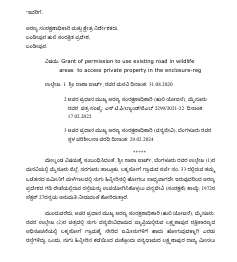
The petitioner is before this Court calling in question an order/direction dated 01-03-2024, by which access to petitioner’s property is restricted to certain hours. A consequential direction by issuance of a writ in the nature of mandamus is sought for unrestricted access to his property within the forest road.
2. Heard Sri Vikram Huilgol, learned senior counsel appearing for the petitioner and Sri Shamanth Naik, learned High Court Government Pleader appearing for the respondents.
3. Facts, in brief, germane are as follows: -
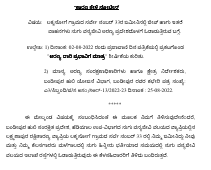
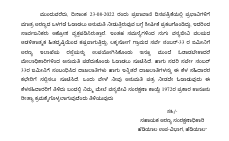
The subject land bearing Sy. Nos. 1, 2, 3, 26, 32 and 33 of Shambugowdanahalli and Lakkasoge Villages, Sargur Hobli, H.D. Kote Taluk, Mysore is granted to certain persons between 1966 and 1972. The original grantees died and legal heirs of the grantees sell the subject property between 2010 and 2021 to the petitioner. Thus, the petitioner becomes the owner of the property pursuant to those registered sale deeds. The sale deeds are also appended to the petition. The petitioner being a private land owner submits a representation for the purpose of access to his property. Access is granted initially and the access later comes to be modified by the impugned direction that the petitioner can enter his property only between 6 a.m. and 6 p.m. It is this restricted entry to the petitioner’s property that has driven the petitioner to this Court in the subject petition.
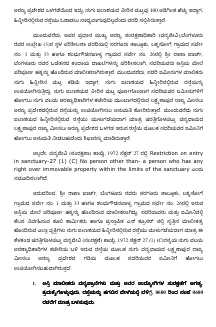
4. The learned senior counsel Sri Vikram Huilgol appearing for the petitioner submits that the Wild Life (Protection) Act, 1972 (‘the Act’ for short) provides exception to restriction on entry only in terms of Section 27 of the Act. The learned senior counsel would submit that Section 27 (1)(c) provides an exception to the restriction on entry to any sanctuary for persons with immovable property within sanctuary limits with the conditions of permit granted under Section 28. The entry is granted, but it is restricted for particular timings. This restriction infringes his fundamental right of movement in the property owned by him for the last 25 years. The learned senior counsel submits that there is no permanent access to the immovable property in question, except through the forest land. Alternate access does exist which cannot be used as water level in Nugu Reservoir rises beyond 100 feet. He would submit that the State has granted access, but has restricted it, which is contrary to law.
5. Per contra, Sri Shamanth Naik, learned High Court Government Pleader would vehemently refute the submissions by taking this Court through the documents appended to the objections to contend that the petitioner has no right to even urge that he should be permitted access in the forest area. It is his submission that if the petitioner has purchased a property in the forest area, he will have to abide by the Rules under the statute, which clearly prohibits entry into any place of the forest. He would further contend that in identical cases the Apex Court has clearly held that the forest roads cannot be permitted to be used by private persons. The learned High Court Government Pleader would further take this court through statement of objections to contend that the title of the property is itself erroneous as the grant that is made in favour of the vendors of the property is itself cancelled later. Contending thus, the learned High Court Government Pleader would submit that no fault can be found to the restricted entry of the petitioner.
6. Learned senior counsel appearing for the petitioner would join the issue in refuting the submissions of the learned High Court Government Pleader. He would contend that the State cannot now go back and make submissions with regard to the title of the property.
7. I have given my anxious consideration to the submissions made by the respective learned counsel and have perused the material on record.
8. The issue in the lis is in a narrow compass as to whether Section 27 of the Act would permit unhindered acc