
 Back
Back





IN THE HIGH COURT OF DELHI AT NEW DELHI
Saurabh Banerjee, J.
Belle Wears Private Limited - Plaintiff
Versus
Hobby Garments Private Limited - Defendant
CS(COMM) 329 of 2024
Decided On : 01-04-2025
(A) Code of Civil Procedure, 1908 - Order XXIII Rule 3 - Consent decree - Joint application for consent decree based on settlement terms between parties regarding trademark and copyright issues - Defendant acknowledges plaintiff's rights and agrees to refrain from infringing actions - Court finds settlement lawful and decrees suit accordingly. (Paras 1, 4, 10)
(B) Court Fees Act, 1870 - Section 16 - Refund of court fees - Court grants 75% refund of court fees paid by plaintiff due to amicable settlement. (Paras 7, 9)
Facts of the case:
The parties entered into a settlement regarding trademark and copyright rights over the mark 'TEENAGER', with the defendant acknowledging the plaintiff's rights and agreeing to refrain from infringing actions. (Para 1)
Findings of Court:
The court finds the terms of the settlement lawful and decrees the suit in accordance with the settlement. (Para 4)
Issues: The main issue was whether the terms of the settlement were lawful and could be decreed by the court. (Para 4)
Ratio Decidendi: The court held that the terms of the settlement were lawful and binding, allowing for a decree based on the agreed terms. (Para 4)
Result: The present suit is decreed in terms of the settlement as recorded hereinabove.
ORDER :
I.A. 8428/2025 (Application filed under Order XXIII Rule 3 read with Section 151 of the CPC)
1. This is a joint application under Order XXIII Rule 3 of the Code of the Civil Procedure, 1908 (CPC) filed on behalf of the plaintiff and the defendant seeking a consent decree based on the terms of settlement as mentioned in para 3 of the present application, which is reproduced as under:-
“3. The following settlement has been arrived at between the parties hereto:-
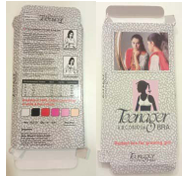 and other formative marks/label as mentioned/ referred in para 4 of the plaint in CS (Comm) No. 329/2024 for the goods falling under various Classes as mentioned in the plaint.
b) That the defendant also admit and acknowledge the plaintiffs copyright in the artistic features of the packaging/ labels as mentioned/referred in para 6 of the plaint including their distinctive scripts, positions and placing of features, their respective get ups, lay outs, combination of colours and arrangements of general and descriptive materials in respect of above said goods.
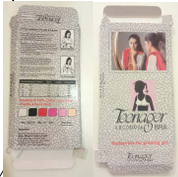 ” bearing the copyright/artistic work for the goods falling in class 25&26.
d) That the defendant shall not have any objection with respect to the registration of the said trademarks/ copyrights as well as pending trademark and copyright applications of the plaintiffs in any manner whatsoever.
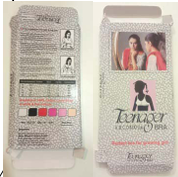 with any suffix or prefix and/or any other mark/name which is identical and/or deceptively similar to the plaintiff’s registered trademark/ copyright.
f) The defendant undertakes not to use the scripts, positions and placement of any features, get ups, lay outs, combination of colours and arrangement as are or is identical or deceptively similar to the features, get ups, layouts, positions and placement or combination of colours of the plaintiff’s pouches/packaging material in respect of and in relation to the products falling in Class 25 & 26.
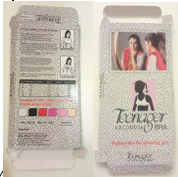 ” with any suffix or prefix and even in future also the defendants shall not file any such application for the registration which may be similar or identical to the plaintiff trademark/ label/ artistic work/ trade dress without first consulting with Plaintiff.
(h) The defendant undertake to recall the marketing, promotional and advertising materials, if any, that bear or incorporate the mark TEENAGER and the infringing packaging materials within, whenever it is brought to the attention of the defendant.
(i) That the defendant do not have any packaging and any other material bearing the impugned mark or infringing trade dress or copyright. The defendant further undertakes that they will destroy all the impugned packaging, bearing the impugned mark or infringing trade dress or copyright within Thirty days from the date of the execution of the present Settlement Agreement.
(k) The defendant further undertakes to remove impugned mark/packaging/goods from the e-commerce website/social media/online portals, if any, within two weeks from signing of this settlement agreement.
(l) The above-mentioned undertakings have been given by both the parties on their own free will/consent and without any coercion and the same shall be binding on them as well as on their proprietor, partners, CEO, directors, legal heirs/assignee in business, distributors, dealers, stockiest, servants and agents/representatives for all times to come.
(m) The defendant has no objection if a decree of perpetual injunction is passed by this
The court upheld a consent decree based on a lawful settlement between parties regarding trademark and copyright rights, allowing for a refund of court fees.
Mutual settlement of disputes allows parties to withdraw claims under Order XXIII Rule 3, leading to court decreeing the suit based on agreed terms.
The main legal point established in the judgment is the entitlement of parties to claim a refund of court fees under Section 16 of the Court Fees Act upon reaching a settlement and withdrawing their ....

Amicable settlements between parties are entitled to the same benefits of court fee refunds as formal out-of-court dispute resolution methods under Section 89 CPC.

Point of Law : The purpose of Section 69-A is to reward parties who have chosen to withdraw their litigations in favour of more conciliatory dispute settlement mechanisms, thus saving time and resour....
Point of Law : The purpose of Section 69-A is to reward parties who have chosen to withdraw their litigations in favour of more conciliatory dispute settlement mechanisms, thus saving time and resour....
Point of Law : Even though a strict construction of the terms of Section 89 CPC and Section 69-A of the 1955 Act may not encompass such private negotiations and settlements between the parties, we em....
Parties reaching an amicable settlement qualify for court fee refunds, and private negotiations are acknowledged as valid dispute resolution methods under relevant statutes.
Court fees are refundable when parties amicably settle their disputes, reaffirming that private negotiations qualify for benefits under relevant statutes.
The judgment establishes the principle that parties who reach a settlement out of court are entitled to claim a refund of the court fees deposited by them, in line with the purpose of Section 16 of t....



An indispensable Tool for Legal Professionals, Endorsed by Various High Court and Judicial Officers
Please visit our Training & Support
Center or Contact Us for assistance

Scan Me!
India’s Legal research and Law Firm App, Download now!


For Daily Legal Updates, Join us on :



 Back to top


