
 Back
Back





2025:DHC:2084
IN THE HIGH COURT OF DELHI AT NEW DELHI
PRATHIBA M. SINGH, J.
National Restaurant Association of India and Others – Appellants
Versus
Union of India and Another – Respondents
W.P. (C) Nos. 10683, 10867 of 2022, C.M. APPL Nos. 31033, 31645, 38599 of 2022, 45891 of 2023, 23175 of 2024
Decided On : 28-03-2025
Advocates Appeared :
For the Appellants : Lalit Bhasin, Nina Gupta, Ananya Marwah, Devvrat Tiwari, Ajay Pratap Singh
For the Respondents : Chetan Sharma, Sandeep Mahapatra, Ashish Dixit, Abhinav Bansal, Vikramaditya Singh, Tribhuvan, Shubham Sharma, Saurabh Tripathi, Amit Gupta, Ishan Malhotra, Chandan, Deepak Tanwar, Shivam Tiwari, Kiritman Singh
| Table of Content |
|---|
| 1. service charge is not automatically mandatory. (Para 3 , 4 , 5 , 6 , 7 , 8 , 9) |
| 2. guidelines require voluntary consent for service charges. (Para 21 , 22 , 23) |
| 3. consumer rights must not be overridden by restaurant practices. (Para 39 , 40 , 41 , 45) |
| 4. current practices regarding service charge are misleading and can misrepresent costs. (Para 134 , 135 , 136) |
JUDGMENT :
PRATHIBA M. SINGH, J.
1. This hearing has been done through hybrid mode.
2. Whether the collection of mandatory Service Charge by restaurants and other establishments is permissible under the Consumer Protection Act, 2019 (hereinafter the ‘CPA 2019’)?
Background:
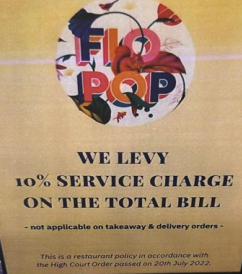
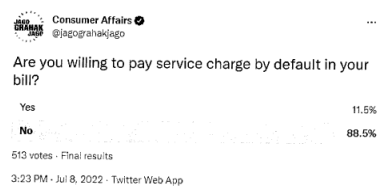
3. The Central Consumer Protection Authority (‘CCPA’) established under Section 10 of the CPA, 2019 received several complaints regarding restaurants and hotels (hereinafter, the ‘restaurant establishments’) charging ‘Service Charge’ over and above the cost of the food items. This Charge in the range of 5-20% in lieu of ‘Tip’ or ‘Gratuity’ was being collected from consumers on a compulsory basis. In addition, Goods and Services Tax (‘GST’) was charged on the said service charge, resulting in substantial burden consumers. The CCPA then issued guidelines to prevent unfair trade practices and protect consumer interest with regard to levying of service charge, on 4th July, 2022. The same are extracted hereinbelow for ready reference:
“3. It has come to the notice of the CCPA through many grievances registered on the National Consumer Helpline that restaurants and hotels are levying service charge in the bill by default, without informing consumers that paying such charge is voluntary and optional. Further, service charge is being levied in addition to the total price of the food items mentioned in the menu and applicable taxes, often in the guise of some other fee or charge.
4. It may be mentioned that a component of service is inherent in price of food and beverages offered by the restaurant or hotel. Pricing of the product thus covers both the goods and services component. There is no restriction on hotels or restaurants to set the prices at which they want to offer food or beverages to consumers. Thus, placing an order involves consent to pay the prices of food items displayed in the menu along with applicable taxes. Charging anything other than the said amount would amount to unfair trade practice under the Act.
5. It is understood that a tip or gratuity is towards hospitality received beyond basic minimum service contracted between the consumer and the hotel management, and constitutes a separate transaction between the consumer and staff of the hotel or restaurant, at the consumer's discretion. Only after completing the meal, a consumer is in a position to assess the quality and service and decide whether or not to pay tip or gratuity and if so, how much. The decision to pay tip or gratuity by a consumer does not arise merely by entering the restaurant or placing an order. Therefore, service charge cannot be added in the bill involuntarily, without allowing consumers the choice or discretion to decide whether they want to pay such charge or not.
6. Further, any restriction of entry based on collection of service charge amounts to a trade practice which imposes an unjustified cost on the customer by way of forcing him/her to pay service charge as a condition precedent to placing order of food and beverages, and falls under restrictive trade practice as defined under Section 2 (41) of the Act.
7. Therefore, to prevent unfair trade practices and protect consumer interest with regard to levying of service charge, the CCPA issues the following guidelines:
(i) No hotel or restaurant shall add service charge automatically or by default in the bill.
(ii) Service charge shall not be collected from consumers by any other name.
(iii) No hotel or restaurant shall force a consumer to pay service charge and shall clearly inform the consumer that service charge is voluntary, optional and at consumer's discreti
AI


The main legal point established in the judgment is the binding effect of the settlement between the parties, the waiver of the right to seek re-employment by the workmen, and the entitlement of the ....

A lockout is justified if it is declared in response to an illegal strike or a strike that is in breach of a settlement or award.

The combination of eyewitness testimonies, recovery of the weapon used, and forensic examination results can establish guilt in criminal cases, even based on circumstantial evidence.


The conviction of an accused person under Section 27(3) of the Arms Act is not permissible in law if the accused is also charged with committing murder under Section 302 of the Indian Penal Code.

The court can enhance compensation based on the deceased's income and family dependency, and adjust the multiplier used by the Tribunal if found unjustified.



An indispensable Tool for Legal Professionals, Endorsed by Various High Court and Judicial Officers
Please visit our Training & Support
Center or Contact Us for assistance

Scan Me!
India’s Legal research and Law Firm App, Download now!


For Daily Legal Updates, Join us on :



 Back to top


