
 Back
Back





IN THE HIGH COURT OF KERALA AT ERNAKULAM
A. BADHARUDEEN, J.
Sunil Mathew Gandhi Lane - Appellant
Versus
State of Kerala - Respondent
Crl.MC 979 OF 2024
Decided On : 30-01-2025
(A) Protection of Children from Sexual Offences Act, 2012 - Sections 23(1), 23(3), 23(4) - Juvenile Justice (Care and Protection of Children) Act, 2015 - Section 74 - Quashing of proceedings - Accused sought to quash final report alleging offences under POCSO and JJ Acts - Court held that prima facie offences under Sections 23(1), 23(3), and 23(4) of POCSO Act are made out, while quashing prosecution under Section 74 of JJ Act. (Paras 16 , 17 ) (B) Cognizability of offences - Court determined that offences under POCSO Act are cognizable, allowing police to investigate without Magistrate's order, contrary to claims of petitioners. (Paras 15 , 16 )
Facts of the case: Accused allegedly lowered the reputation of a child victim by sharing derogatory content on social media regarding her involvement in a film. The police initiated investigation based on a complaint from the victim's father.
Findings of Court: The court found sufficient grounds to proceed with charges under POCSO Act, while quashing charges under JJ Ac
Issues: Whether the offences under POCSO Act were made out prima facie and whether the police had authority to investigate.
Ratio Decidendi: The court ruled that the accused's actions constituted a prima facie violation of the POCSO Act, while the JJ Act's provisions did not apply in this instance.
Result: Petition allowed in part; prosecution under Section 74 of JJ Act quashed, but charges under POCSO Act upheld.
ORDER :
Accused Nos.1 and 2 in S.C.No.1090/2022 on the files of Special Court under the Protection of Children from Sexual Offences Act (`POCSO Act’ for short) Offences, Nedumangad, have filed this Criminal Miscellaneous Case under Section 482 of the Code of Criminal Procedure (`Cr.P.C’ for short) to quash Annexure-I final report in Crime No.601/2020 of Vattiyurkavu Police Station, Thiruvananthapuram District, and all further proceedings thereof.
2. Heard the learned counsel for the petitioners and the learned Public Prosecutor in detail. Perused the records. Even though notice was served upon the 2 nd respondent, no appearance.
3. Here the prosecution alleges commission of offences punishable under Sections 23(1), 23(3) and 23(4) of the POCSO Act and Section 74 of the Juvenile Justice (Care and Protection of Children) Act, 2015 (`JJ Act’ for short), by the accused who are the petitioners herein.
4. The prosecution case in a nut shell is that the accused persons, two in numbers, shared common intention to lower the reputation of the child victim, used their mobile phones’ contents and video graphed conversations which would give an impression that the children who acted in `Aamy’ film had been sexually exploited by the director of the film with specific reference to the child victim who had played the key role of the childhood of a famous writer in the film and the accused persons uploaded the video in social media news channel. It is alleged that the said acts of the accused had the effect of lowering the reputation of the child victim and infringing upon her privacy and that the accused persons thereby have made themselves liable for the said offences. The police started investigation on the basis of a petition submitted by the father of the de-facto complainant and submitted final report against the petitioners. The learned jurisdictional Special Court (under the POCSO Act), Thiruvananthapuram, took cognizance upon the said final report for the said offences as against the petitioners.
5. While canvassing quashment of the entire proceedings, the learned counsel for the petitioners raised two fold contentions. The first contention raised is that, on the facts of the case, none of the offences would attract, prima facie, and, therefore, the entire proceedings would require quashment. The second contention raised is that offence under Section 74 of the JJ Act is a non cognizable offence as per Section 86(3) of the JJ Act and, therefore, the police officer is not empowered to register crime and investigate the same without the order of a Magistrate. He also raised a contention that offences under Sections 23(1), 23(3) and 23(4) of the POCSO Act also are not cognizable offences. Therefore, the police has no authority to register crime and to investigate the same. Therefore, for the said reason alone, the entire proceedings would require quashment.
6. As far as the second contention raised by the learned counsel for the petitioners is concerned, it is submitted by the learned Additional Director General of Prosecution (`ADGP’ for short) that, in view of Section 33(1) of POCSO Act, a Special Court may take cognizance of any offence, without the accused being committed to it for trial, upon receiving a complaint of facts which constitute such offence, or upon a police report of such facts. So, insofar as the offence under the POCSO Act is concerned, a Special Court is empowered to take cognizance of any offence on receipt of a complaint of facts which constitute such offence or upon a police report of such fact. In view of the above, police officer is specifically empowered to register and investigate all offences under the POCSO Act, where Section 155(2) of Cr.P.C has no application.
7. Before answering the second contention, I am inclined to consider the first contention. In the instant case, crime was registered based on the statement of the victim. According to the v
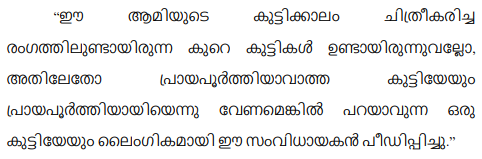
The court upheld the applicability of POCSO Act offences while quashing charges under the JJ Act, affirming that the police could investigate without a Magistrate's order.

Section 23 of the POCSO Act applies to any person making comments about a child without authentic information, not just media personnel.

Disclosing a child's identity in media without proper authorization violates the POCSO Act, regardless of the underlying allegations being false.

(1) Provision of Section 23 of POCSO which protects child victims of sexual abuse from unwarranted intrusion into privacy, harassment and mental agony has to be strictly enforced – Provision cannot b....

The court upheld the framing of charges against the petitioner for disclosing the identity of a minor victim, establishing a prima facie case based on evidence of involvement in the dissemination of ....
Prompt and proper reporting of commission of offence under POCSO Act is of utmost importance – Non-reporting of sexual assault against a minor child despite knowledge is a serious crime and more ofte....

The Special Court has the authority to direct police to register an F.I.R. under the POCSO Act, and such directions, despite procedural flaws, do not constitute illegality.

The court emphasized that quashing of a criminal FIR, especially in cases involving minors, should only occur when no prima facie case is established, maintaining the integrity of the trial process.

POCSO Cases – There is no bar for Special Judge to forward complaint to Police official to register case and to investigate the matter – Offences under POCSO Act are cognizable offence and police sho....

The prosecution must prove charges beyond reasonable doubt for convictions in sexual offences; acquittal is justified if evidence does not meet this burden.



An indispensable Tool for Legal Professionals, Endorsed by Various High Court and Judicial Officers
Please visit our Training & Support
Center or Contact Us for assistance

Scan Me!
India’s Legal research and Law Firm App, Download now!


For Daily Legal Updates, Join us on :



 Back to top


