
 Back
Back





IN THE HIGH COURT OF KERALA AT ERNAKULAM
C. JAYACHANDRAN, J.
Satheeshkumar Rajagopal Pai, S/o. Rajagopal Pai - Petitioner
Versus
State Of Kerala, Represented By Public Prosecutor, High Court Of Kerala and Anr. – Respondents
Crl. MC No. 7922 Of 2022
Decided On : 04-03-2025
(A) Indian Penal Code - Sections 294(b) and 509 - Quashment of proceedings sought by petitioner accused in a pending case - Allegations in First Information Statement and Final Report found lacking specificity to constitute offences - Court emphasizes necessity of clear allegations for effective defense and determination of obscenity. (Paras 3 , 8 , 9 , 11 )
(B) Criminal Procedure - Right to effective defense - Accused must be informed with precision of charges to prepare a defense. (Paras 8 , 9 )
Facts of the case:
Petitioner seeks quashment of Crime No.1058 of 2021, alleging no specific obscene words or gestures in the First Information Statement or Final Report to substantiate charges under Sections 294(b) and 509.
Findings of Court:
Court finds no basis for charges as allegations lack specificity; thus, proceedings quashed.
Issues: Whether the allegations in the First Information Statement and Final Report constitute offences under IPC Sections 294(b) and 509.
Ratio Decidendi: The court ruled that vague allegations prevent the accused from mounting an effective defense; specific words or gestures must be identified to ascertain whether the charges are substantiated.
Result: Crime No.1058/2021 and all further proceedings quashed.
ORDER :
(C. JAYACHANDRAN, J.)
Petitioner herein is the sole accused in Crime No.1058 of 2021 of Kuthiyathode Police Station, Alappuzha, now pending as C.C. No.108/2022 before the Judicial First Class Magistrate Court-I, Cherthala. The offence alleged are under Sections 294(b) and 509 of the Indian Penal Code . The petitioner seeks quashment of the crime, as also, all further proceedings therefrom, on the premise that neither the allegations in the First Information Statement, nor the contents of the Final Report, would constitute the offences afore referred.
2. Heard the learned counsel for the petitioner; the learned counsel for the 2nd respondent/defacto complainant and the learned Public Prosecutor on behalf of the 1st respondent State.
3. Learned counsel for the petitioner would invite the attention of this Court to the 2nd page of the First Information Statement to point out that, no specific word is referred to therein to ascertain whether the same is an obscene word, so as to attract the offence under Section 294(b) of the Indian Penal Code . Both with respect to the words and with respect to the gesture alleged to have been shown by the petitioner/accused, there is no specificity of allegation, so as to attract the offence under Section 509 of the Indian Penal Code . Except alleging that bad words were used, so as to outrage the modesty of the defacto complainant, there is no version with respect to the words used or the gestures used, so as to ascertain whether the offences alleged are attracted or not. The same is the situation with respect to the Final Report, wherein also, no such words or gestures is seen specified. In such circumstances, petitioner cannot defend himself effectively, for which reason, the entire proceedings are liable to be quashed, is the submission made by the learned counsel for the petitioner. As regards the offence under Section 294(b), petitioner relied upon a recent judgment of the Hon'ble Supreme Court in N.S. Madhanagopal and Another v. K. Lalitha [ (2022) 15 S.C.R. 649 ]. Particular reference in this regard is made to the findings in paragraph no.8 of the judgment.
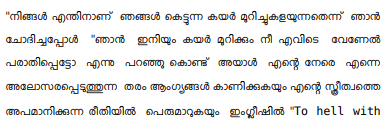
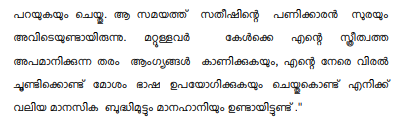
4. Refuting the above contentions, learned counsel for the 2nd respondent would submit that specific words to the following effect has already been referred to in the First Information Statement:
"To hell with you bloody ........ You are an annoying figure ...... you are the bloodiest, you can go to hell."
According to the learned counsel, there are dotted gaps after the word 'bloody' and it is only because of the decency of the defacto complainant that such words is not incorporated. The word obviously intended, according to the learned counsel for the petitioner, is a four letter word which starts with 'F'. Learned counsel would also point out that there is specific reference in the First Information Statement that, words used and the gestures shown were such that it outrages the modesty of the defacto complainant, which caused serious mental agony to her. As to what precise word was used and what gesture was shown, is a matter for evidence and this Court cannot pre-judge that due to the absence of the said words, the proceedings are liable to be aborted. Learned counsel relied upon a Division Bench judgment of this Court in Dhanisha v. Rakhi N. Raj and Another [ 2012 (2) KHC 111 ]. The counsel invited the attention of this Court to paragraph no.26, which referred to the necessity of the matter is being adjudged after trial, so as to ascertain whether the offences alleged are attracted or not.
5. Learned Public Prosecutor would also support the submissions made by the learned counsel for the 2nd respondent.
6. Having heard the learned counsel appearing for the respective parties, this Court finds considerable force in the submissions made by the learned counsel for the petitioner. The offences alleged are under Sections 294(b) and 509, of which the former is extracted herebelow:
"(b) sings, recites or utters any obscene song, ballad

Specificity in allegations is essential to substantiate charges under IPC Sections 294(b) and 509; vague claims prevent effective defense.
Vague allegations without specific words do not establish offences under IPC Sections 294(b), 506, and 509, leading to quashing of prosecution.
The judgment emphasizes the importance of establishing the intent behind the actions alleged in offenses related to obscenity and insult to modesty, highlighting the need for prima facie evidence to ....

Abusive language does not constitute obscenity under IPC unless it arouses lascivious thoughts; allegations did not support charges under Sections 294(b) or 509 IPC.

Obscenity – In order to satisfy definition of obscenity to attract Section 294(b) of IPC, words uttered must be capable of arousing sexually impure thoughts in minds of its hearers – Quashment of cri....
Allegations of stalking and obscenity must meet legal thresholds of intent and evidence; mere accusations without substantiation are insufficient for prosecution.

The court established that the definitions and interpretations of 'obscene acts' and 'public place' under the IPC are broad, and the intent behind actions is crucial in determining the applicability ....
To constitute an offense under Section 294(b) of the IPC, the words or acts must be obscene and cause annoyance to others; mere abusive language does not suffice to meet the threshold of obscenity.
The court ruled that abusive language does not constitute obscenity under IPC unless it arouses lascivious thoughts, and threats must show intent to intimidate to be actionable.



An indispensable Tool for Legal Professionals, Endorsed by Various High Court and Judicial Officers
Please visit our Training & Support
Center or Contact Us for assistance

Scan Me!
India’s Legal research and Law Firm App, Download now!


For Daily Legal Updates, Join us on :



 Back to top


