
 Back
Back





IN THE HIGH COURT OF KERALA AT ERNAKULAM
A. BADHARUDEEN, J.
R.Santhosh Kumar - Appellant
Vs.
State Of Kerala - Respondent
Crl.Rev.Pet No. 1102 of 2025
Decided On : 10-12-2025
| Table of Content |
|---|
| 1. accused's alleged asset accumulation based on family incomes. (Para 3 , 4) |
| 2. legal standard for establishing disproportionality for public servants. (Para 10 , 11) |
| 3. court affirmed dismissal of discharge based on trial evidence necessity. (Para 12 , 14) |
ORDER :
A. Badharudeen, J.
Order dated 07.10.2025 in Crl.M.P.No.30 of 2022 in C.C.No.17 of 2021 on the files of the Enquiry Commissioner and Special Judge (Vigilance), Thiruvananthapuram, is under challenge in this Criminal Revision Petition moved by the sole accused therein.
2. Heard the learned counsel for the revision petitioner/sole accused as well as the learned Public Prosecutor appearing for the VACB in detail. Perused the records and the order impugned.
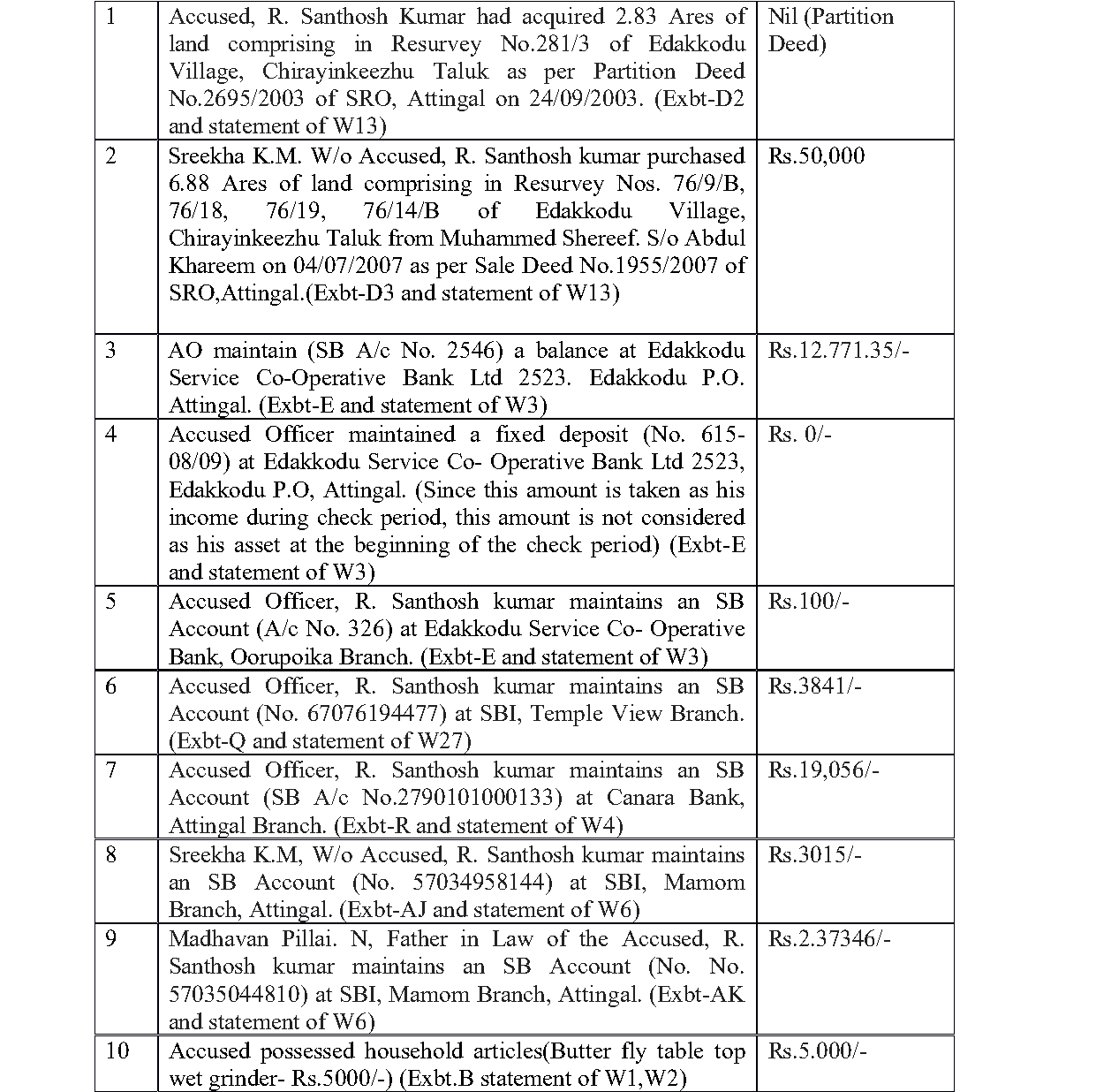
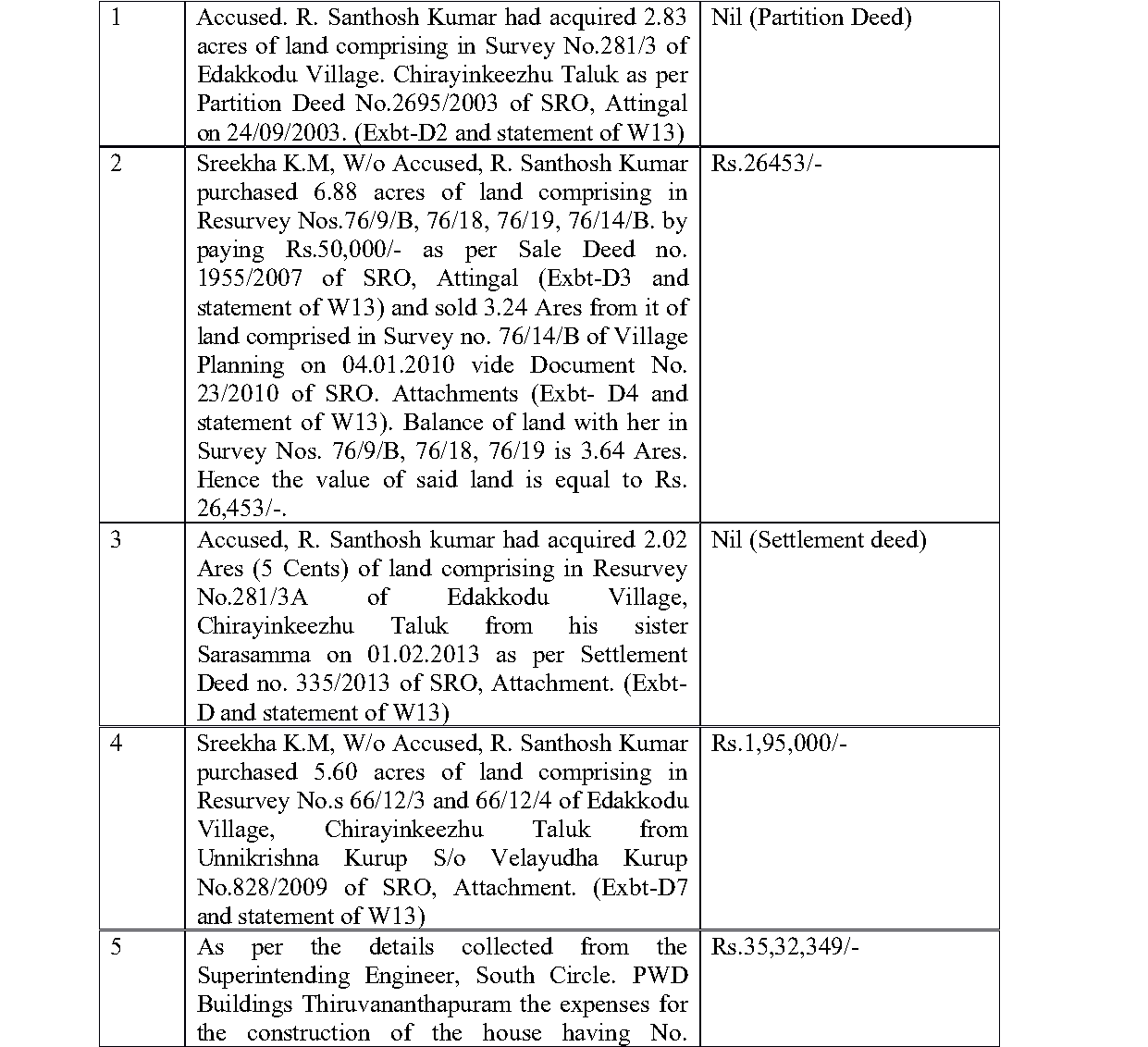
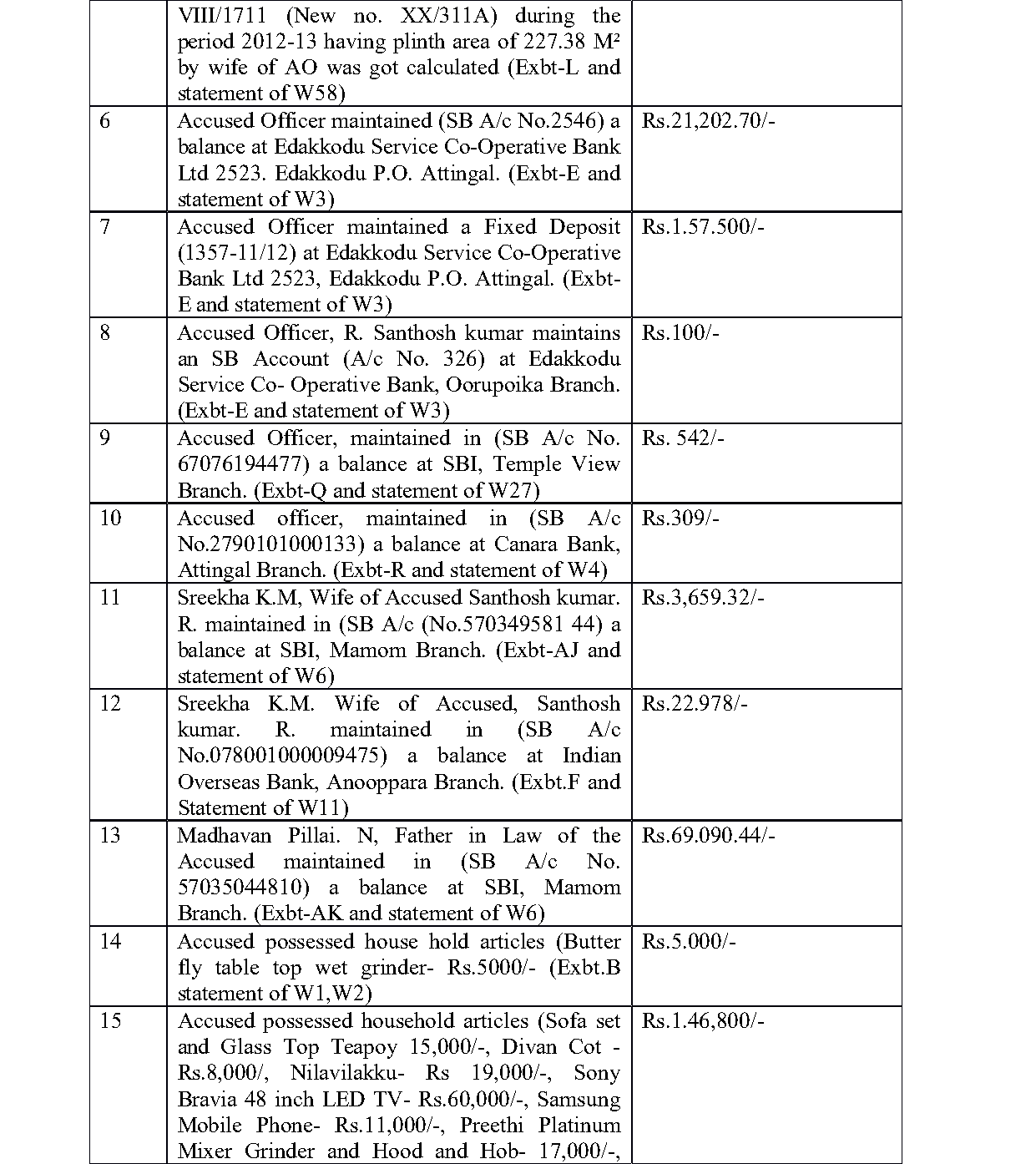
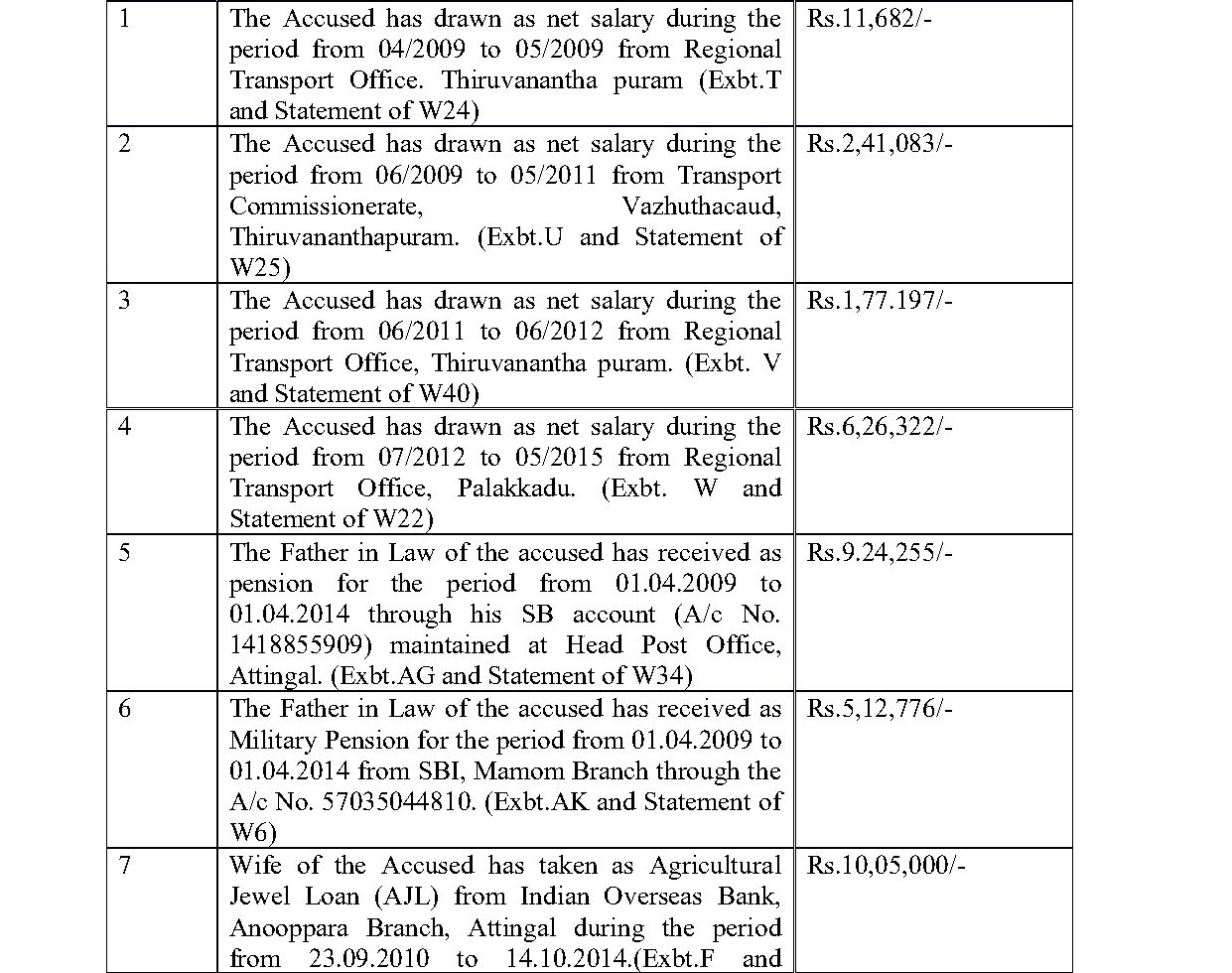
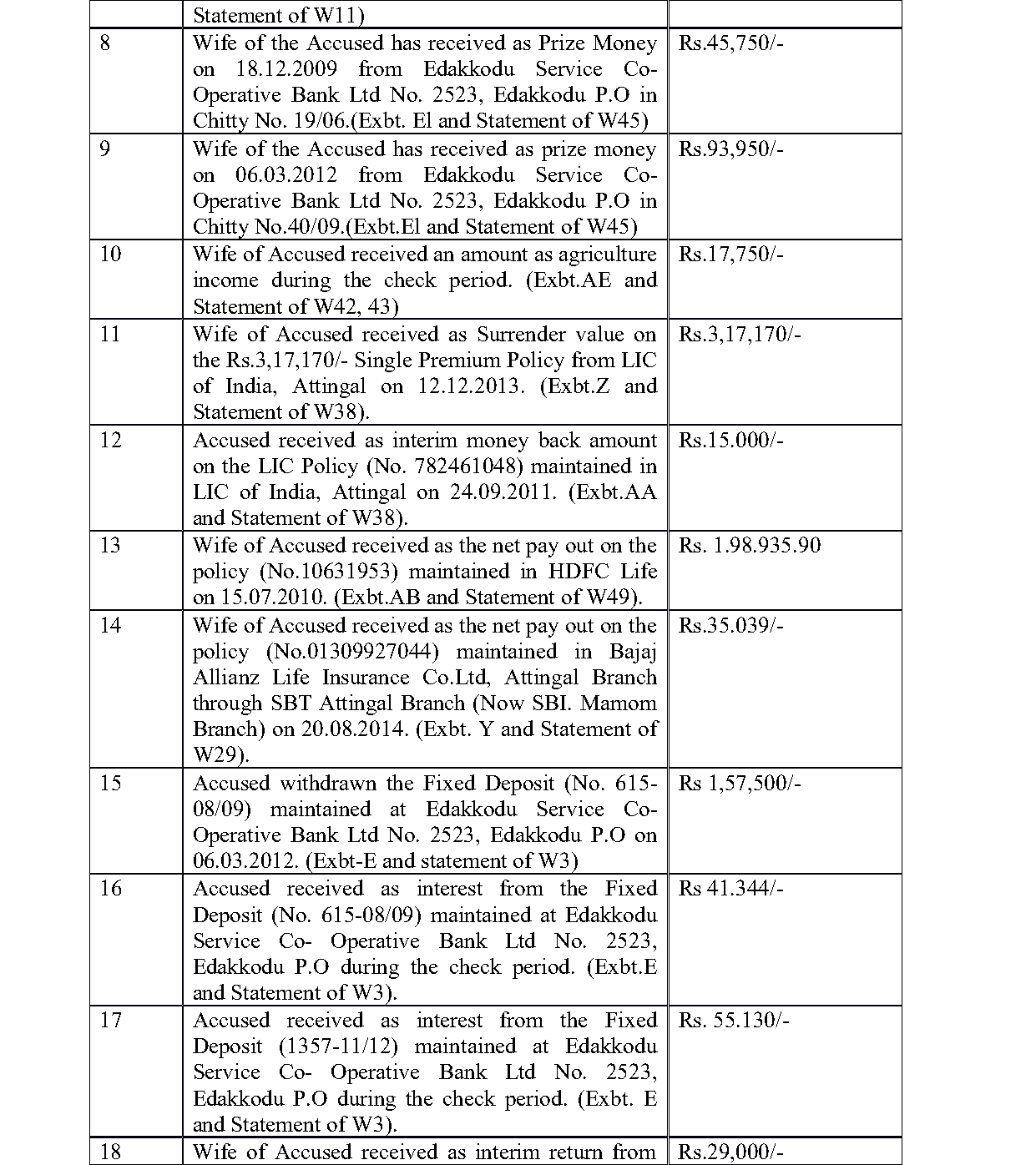
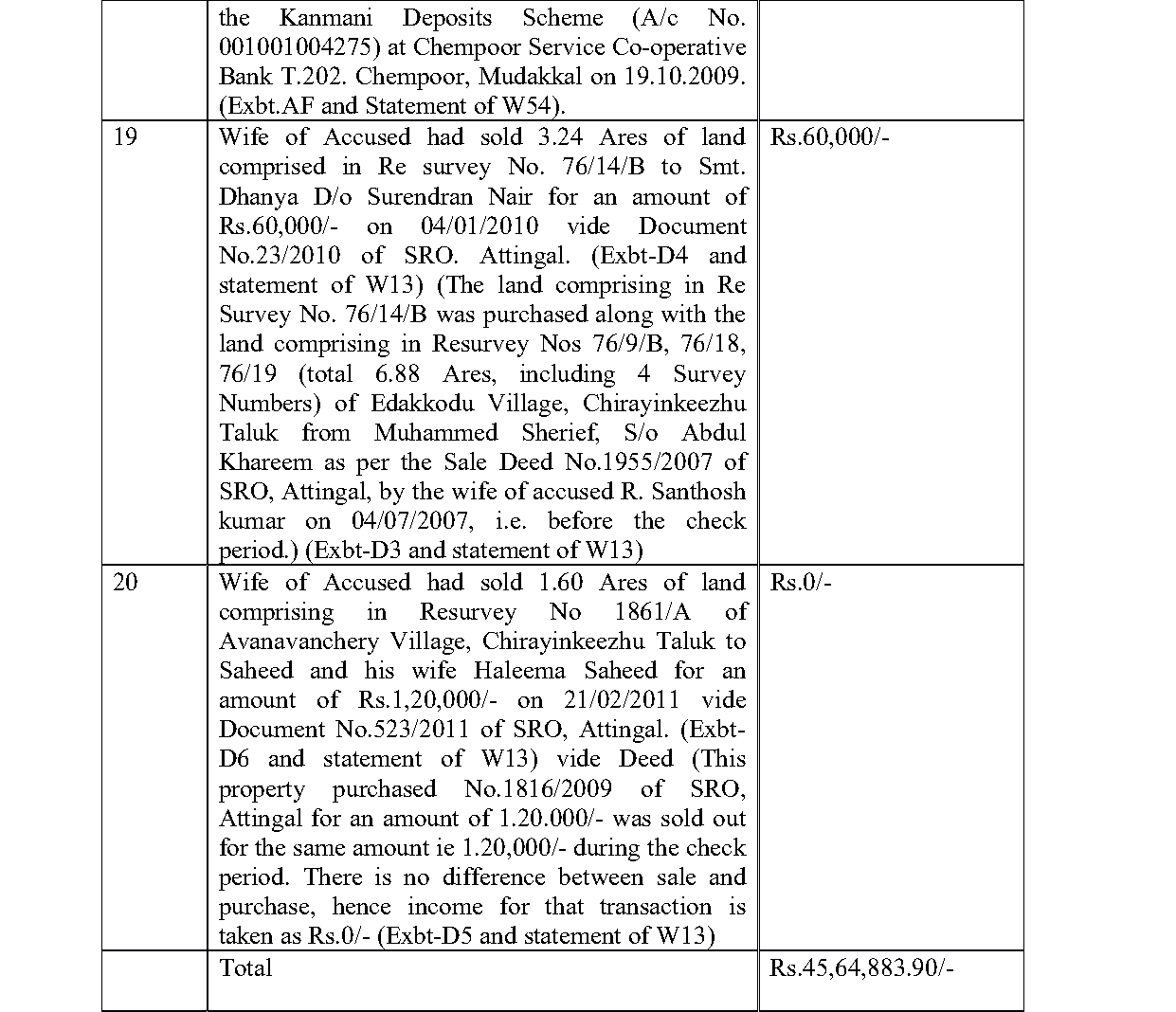
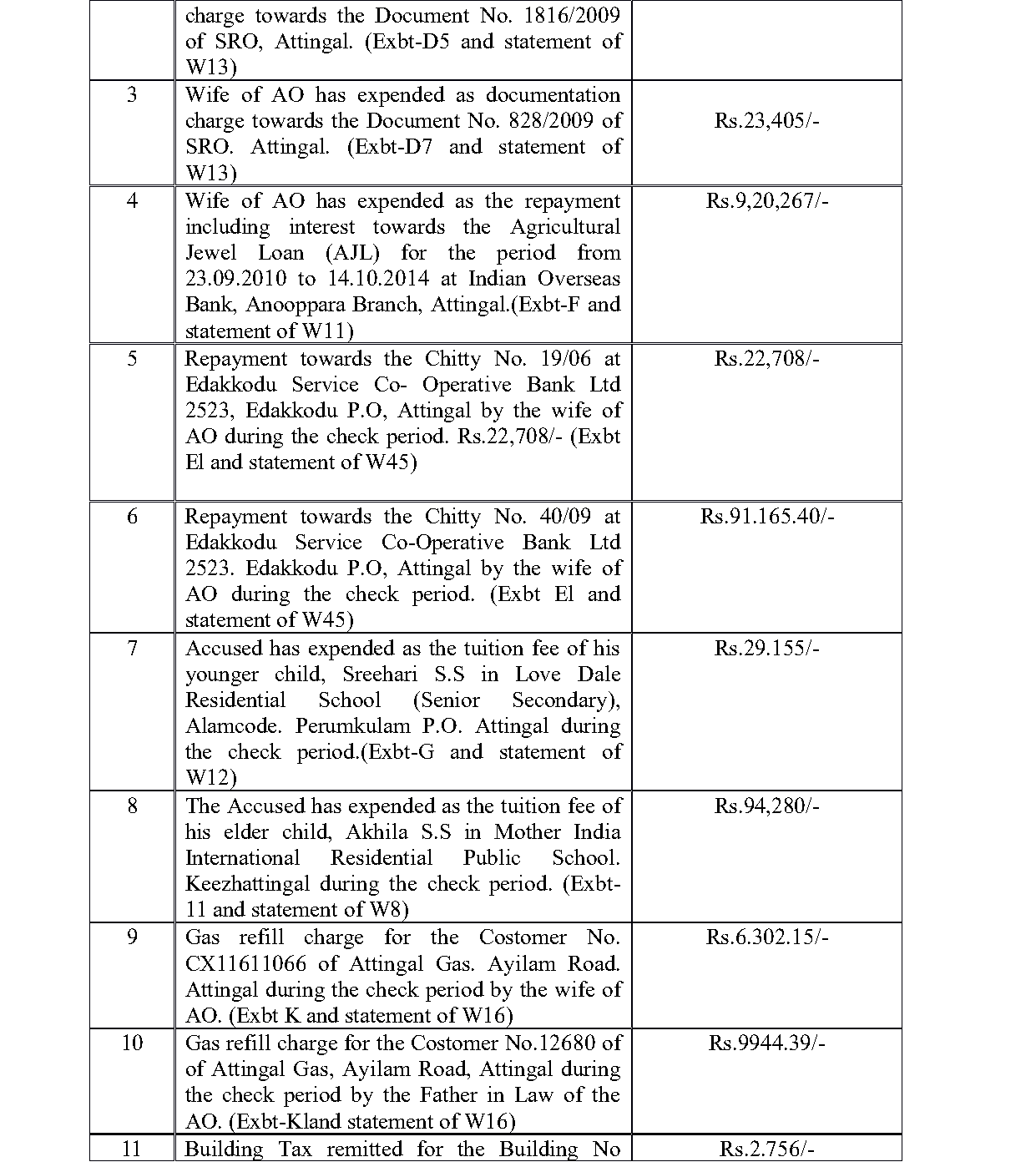
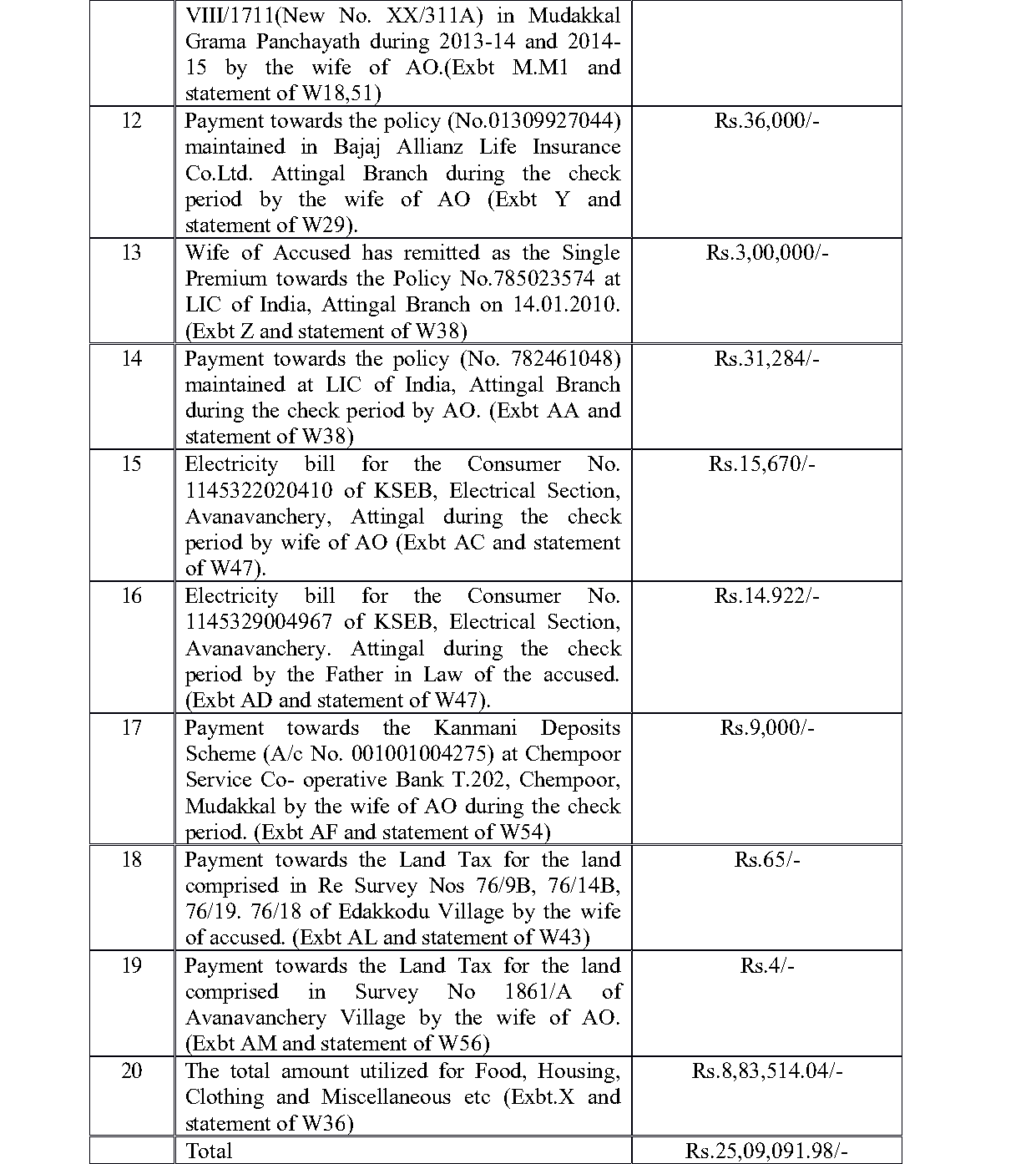
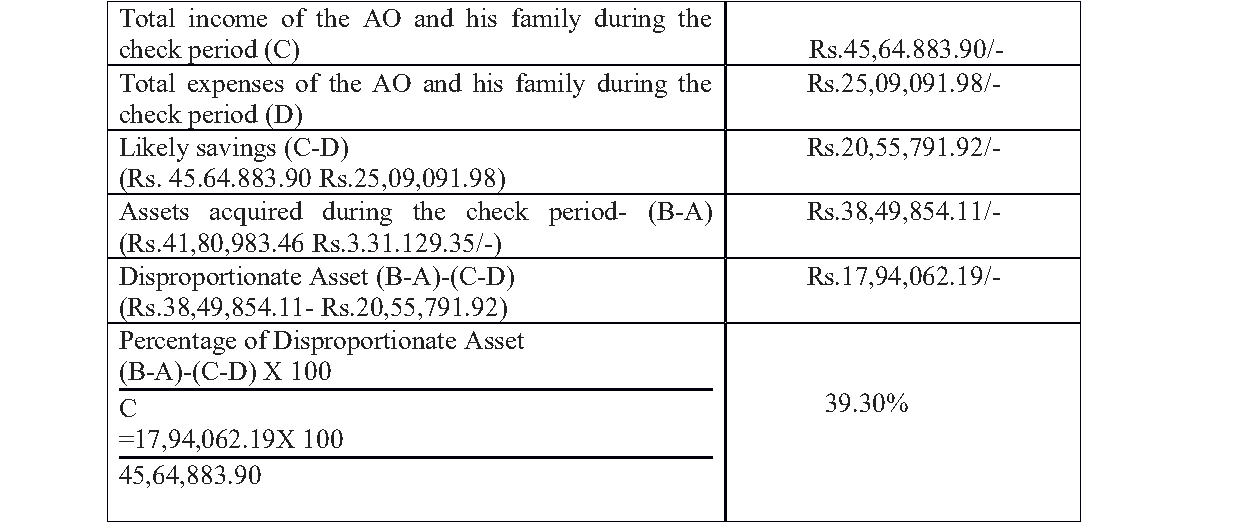
3. The prosecution case is that the accused, who worked as an Office Attendant in the Transport Commissionerate, in the Regional Transport Offices at Thiruvananthapuram and Palakkad between 01.04.2009 and 13.05.2015, being a public servant, amassed wealth by corrupt and illegal means disproportionate to his known sources of income, calculated at 39.30%. As per the prosecution allegation, the asset he had as of now would come to Rs.38,49,854.11 and his savings was 20,55,791/-. Therefore, he had assets to the tune of Rs.17,94,062.19 (i.e, 39.30%). On this premise, the prosecution alleges that the accused committed offence punishable under Section 13 (1)(e) r/w 13(2) of the Prevention of Corruption Act, 1988 (`PC Act, 1988’ for short), by the accused/revision petitioner.
4. On getting summons from the Special Court, the accused appeared and filed Crl.M.P.No.30/2022 seeking discharge as provided under Section 227 of the Criminal Procedure Code, 1973. While seeking discharge before the Special Court, the main contention raised by the accused is that the income of his wife and father-in-law, who had been residing with him, was also taken into consideration to assess his income so as to show that he had amassed wealth disproportionate to his known sources of income. That apart, the methodology adopted by the vigilance in calculating the income and assets of a public servant also was challenged while canvassing discharge. Finally the Special Court found that, on verification of the statements of the witnesses, the table of statements, the exhibits annexed to the final report and statements A to F, prima facie, the allegation of the prosecution is established and, therefore, the discharge plea could not succeed.
5. When the learned Senior Counsel, who challenged the order of the Special Court, on the date of admission as on 30.10.2025, pointed out that the income to the tune of Rs.38,54,526.76 covered by item Nos.2,4,5,13 and 15 in the basic statement D are the assets specifically held by the wife and father in law of the accused and the prosecution had no case that those assets were generated by using the fund of the accused. When the matter was heard on 27.11.2025, the learned Senior Counsel conceded that when the wife and father in law resided along with the accused, their income also can be considered. But the Special Court not adverted to the said facts while dismissing the discharge petition moved by the accused. Therefore, the order may be set aside and the matter may be remanded back for fresh consideration by the Special Court.
6. Per contra it is pointed out by the learned Public Prosecutor that in this case the wife of the accused is a house wife and she did not have any income independently other than that of the husband. It is also pointed out that since the father in law had some income, the same was taken into consideration along with the expenses of the father in law and the wife of the accused while finding that the accused had amassed disproportionate assets to the tune of Rs.17,94,062.19. It is also submitted that as per paragraph 130 of the Vigilance Manual, the term `public servant’ should be taken to include his family and any others who are dependent on him and in the same line, the financial de




In assessing disproportionate assets, a public servant's family's income and expenditures can be included for determining asset accumulation.

At discharge stage, prima facie evidence must indicate a case exists; defence matters cannot be thoroughly examined until trial. Abetment can include non-public servants aiding corrupt conduct.

The court ruled that a special judge's discharge finding is flawed if it performs a mini trial rather than evaluating evidence for the basis of accusations, necessitating a trial.

Discharge under Section 239 Cr.P.C. requires consideration of whether a prima facie case exists; trial court's scrutiny of evidence is improper at this stage.

A public servant and abettors can be tried together for possession of disproportionate assets without a satisfactory account of their sources, under the Prevention of Corruption Act, 1988.

The necessity of proper evidence evaluation at trial for substantiating income claims in disproportionate assets cases, distinguishing the limited scope of revisional power concerning discharge decis....
The court must consider all relevant income sources and documents before framing charges under the Prevention of Corruption Act, ensuring a fair evaluation of the accused's financial status.
Public servants must account for assets acquired beyond known lawful income, with the burden of proof resting on them, confirming the significance of established evidential standards in corruption ca....

At the discharge stage, a court assesses the prosecution's evidence on its face value to determine if there are grounds to proceed with trial, without full examination of evidence.

The main legal point established in the judgment is that the charge can be framed based on the possibility of the commission of a crime, even if the case is based on circumstantial evidence. The Cour....



An indispensable Tool for Legal Professionals, Endorsed by Various High Court and Judicial Officers
Please visit our Training & Support
Center or Contact Us for assistance

Scan Me!
India’s Legal research and Law Firm App, Download now!


For Daily Legal Updates, Join us on :



 Back to top


