
 Back
Back





IN THE HIGH COURT OF KERALA AT ERNAKULAM
Nitin Jamdar, C.J., Basant Balaji, J.
Kerala High Court Advocates Association (Khcaa) – Petitioner
Versus
State Of Kerala Government Secretariat, Thiruvananthapuram, Represented By Its Chief Secretary And Ors. – Respondents
WP(PIL) NO. 14 of 2025
Decided On : 31-10-2025
JUDGMENT :
Nitin Jamdar, C. J.
Through this Public Interest Litigation, the Kerala High Court Advocates’ Association challenges the amendment to the Kerala Court Fees and Suits Valuation Act, 1959, introduced by Section 2 of the Kerala Finance Act, 2025. The Mavelikara Bar Association and the Trivandrum Bar Association have joined as intervenors supporting this challenge.
2. Earlier, the levy of court fees and the valuation of suits in the region were governed by the Madras Court-Fees and Suits Valuation Act, 1955, the Travancore-Cochin Court-Fees Act, 1125, and the Travancore- Cochin Suits Valuation Act, 1125. To ensure uniformity across the entire State, it was considered necessary to enact a common law, and accordingly, the Kerala Court Fees and Suits Valuation Act, 1959 (hereinafter referred to as the ‘Act of 1959’) came into force on 1 February 1962.
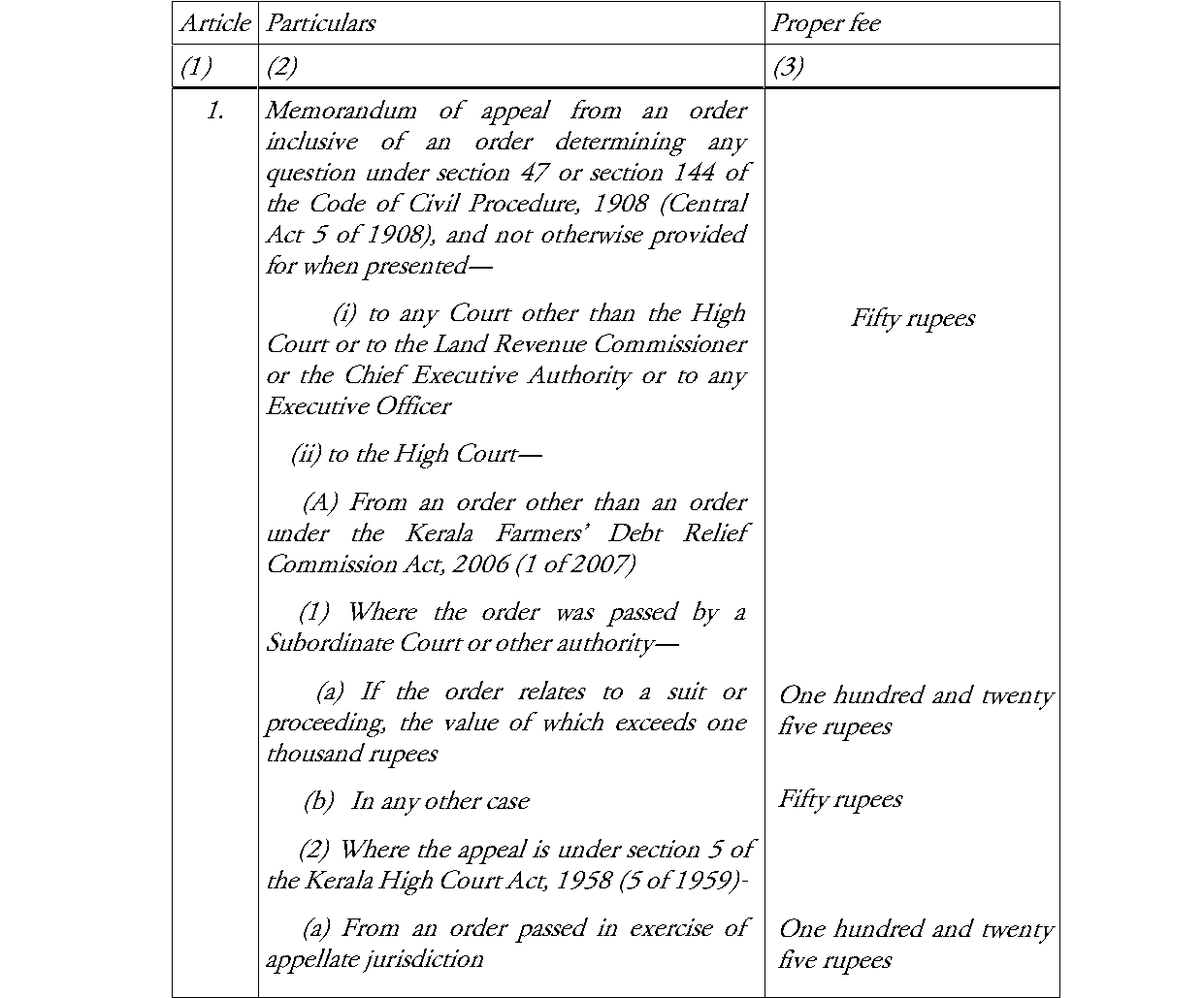
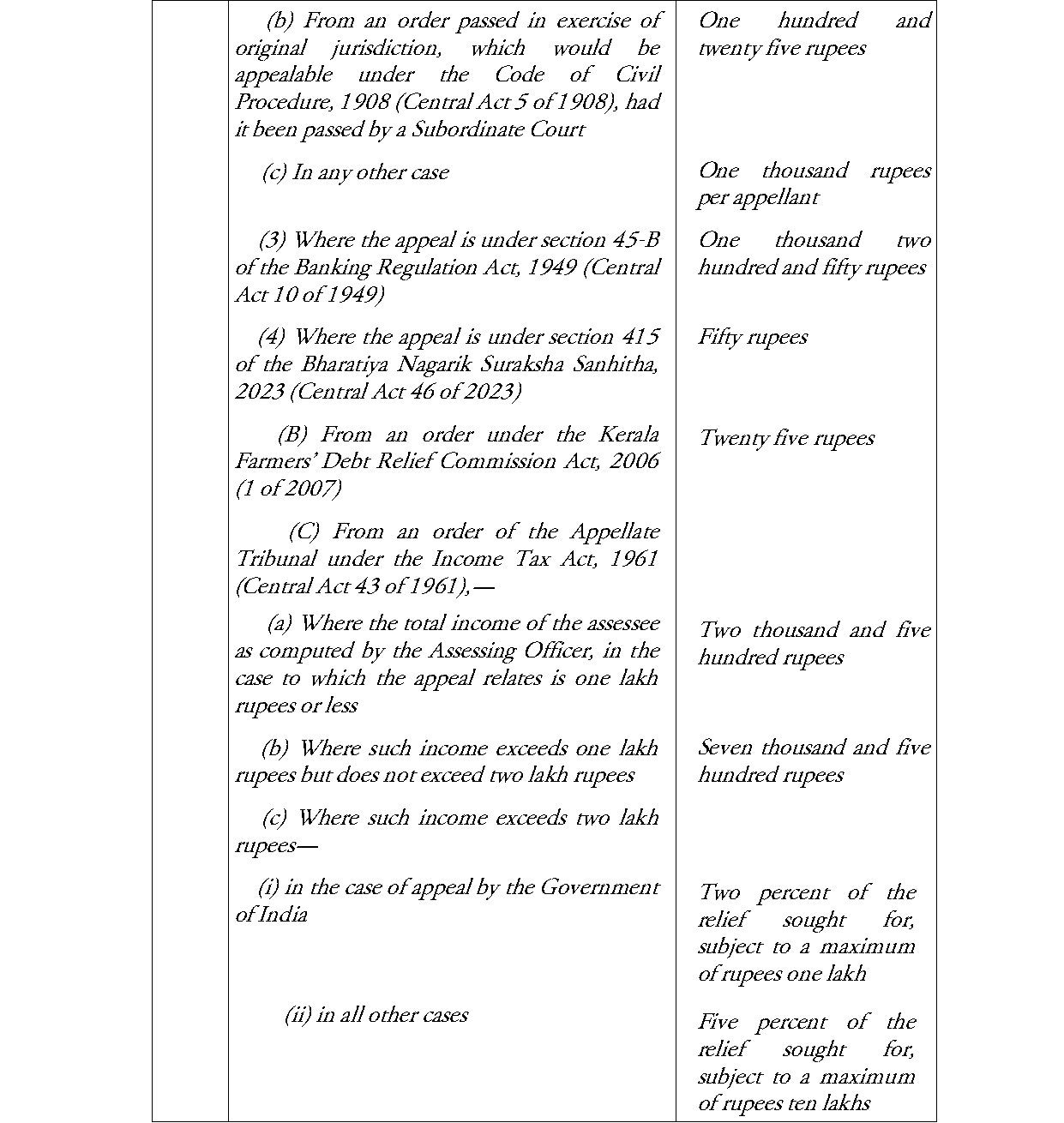
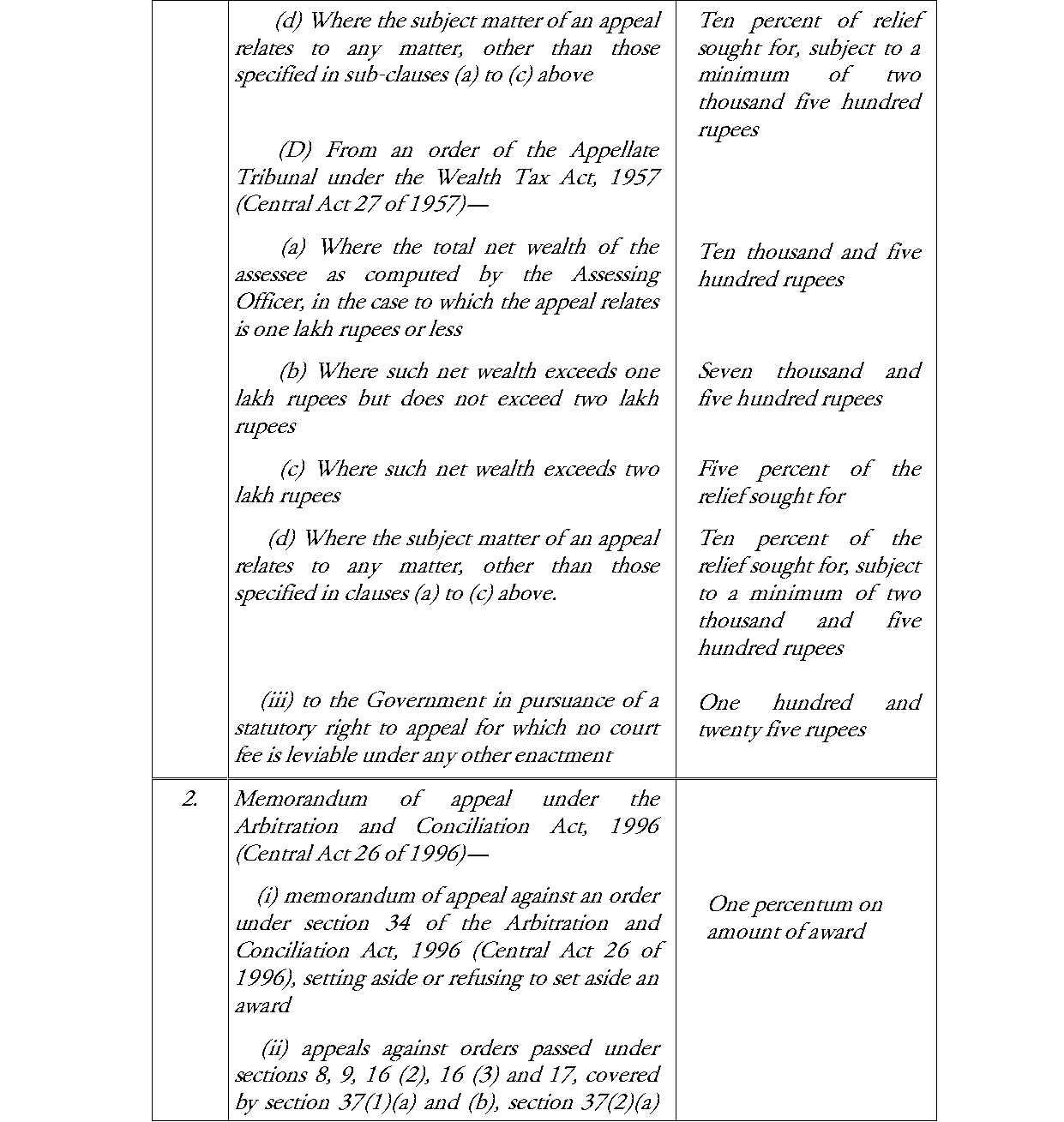
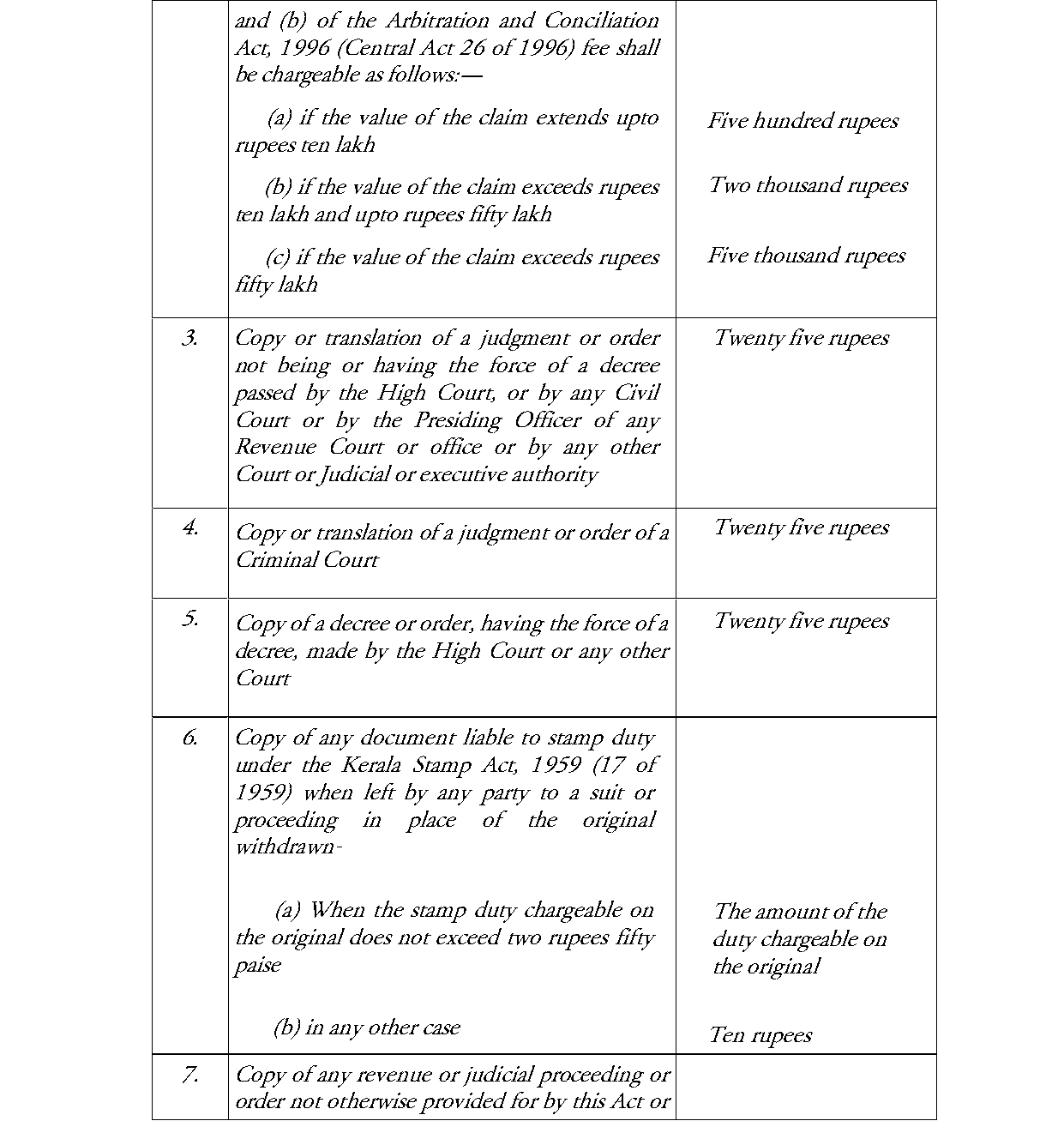
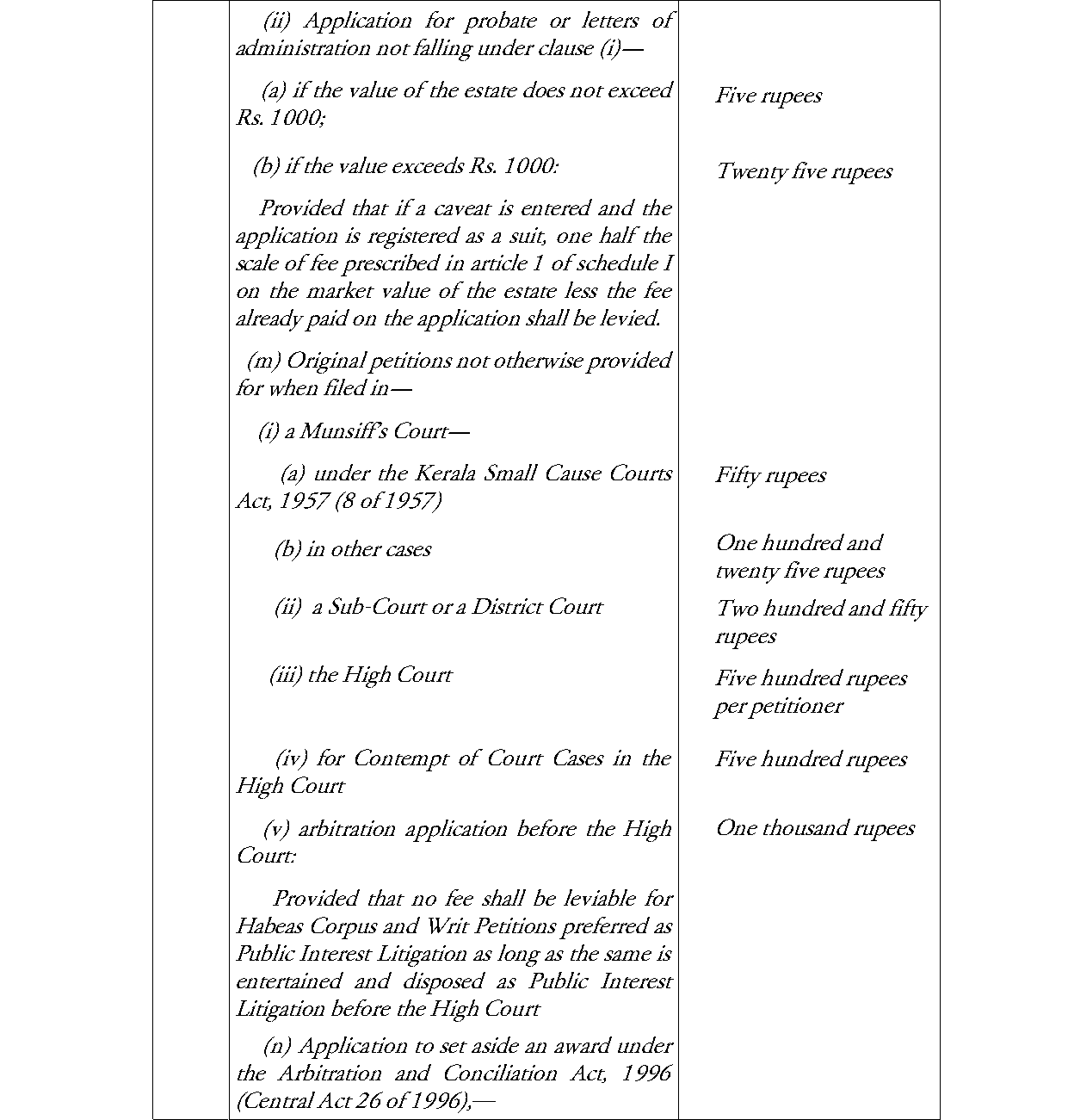
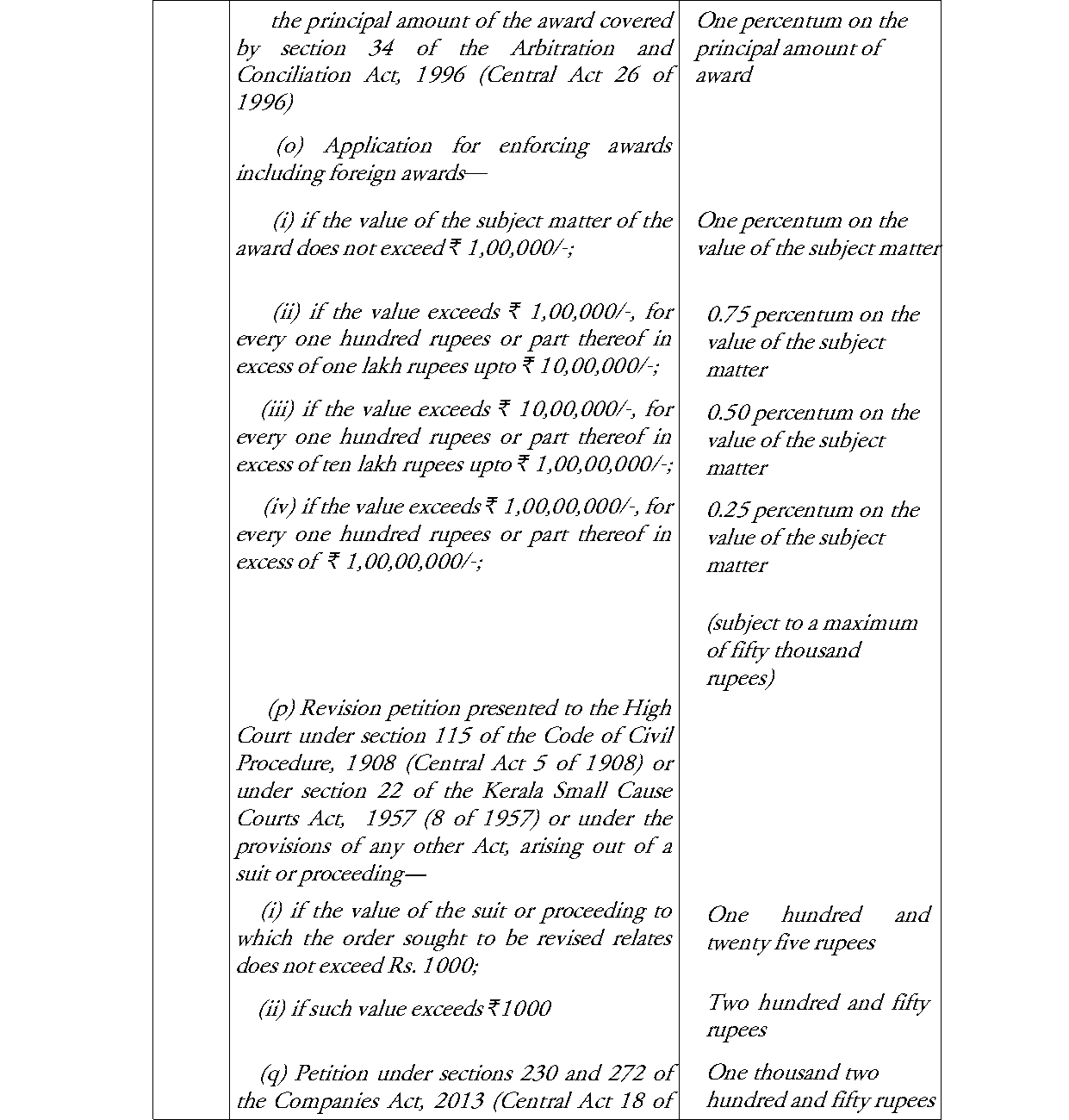
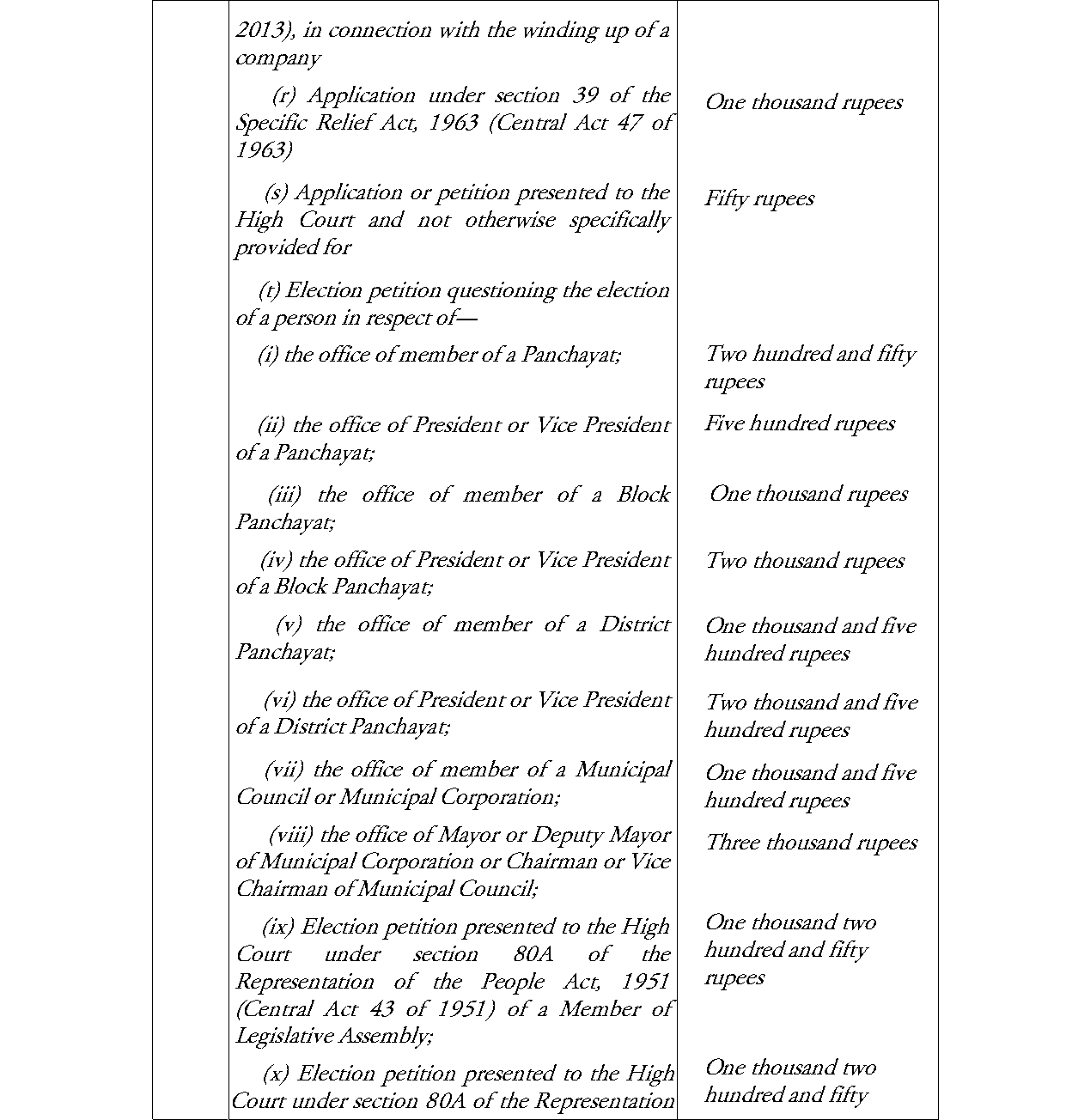
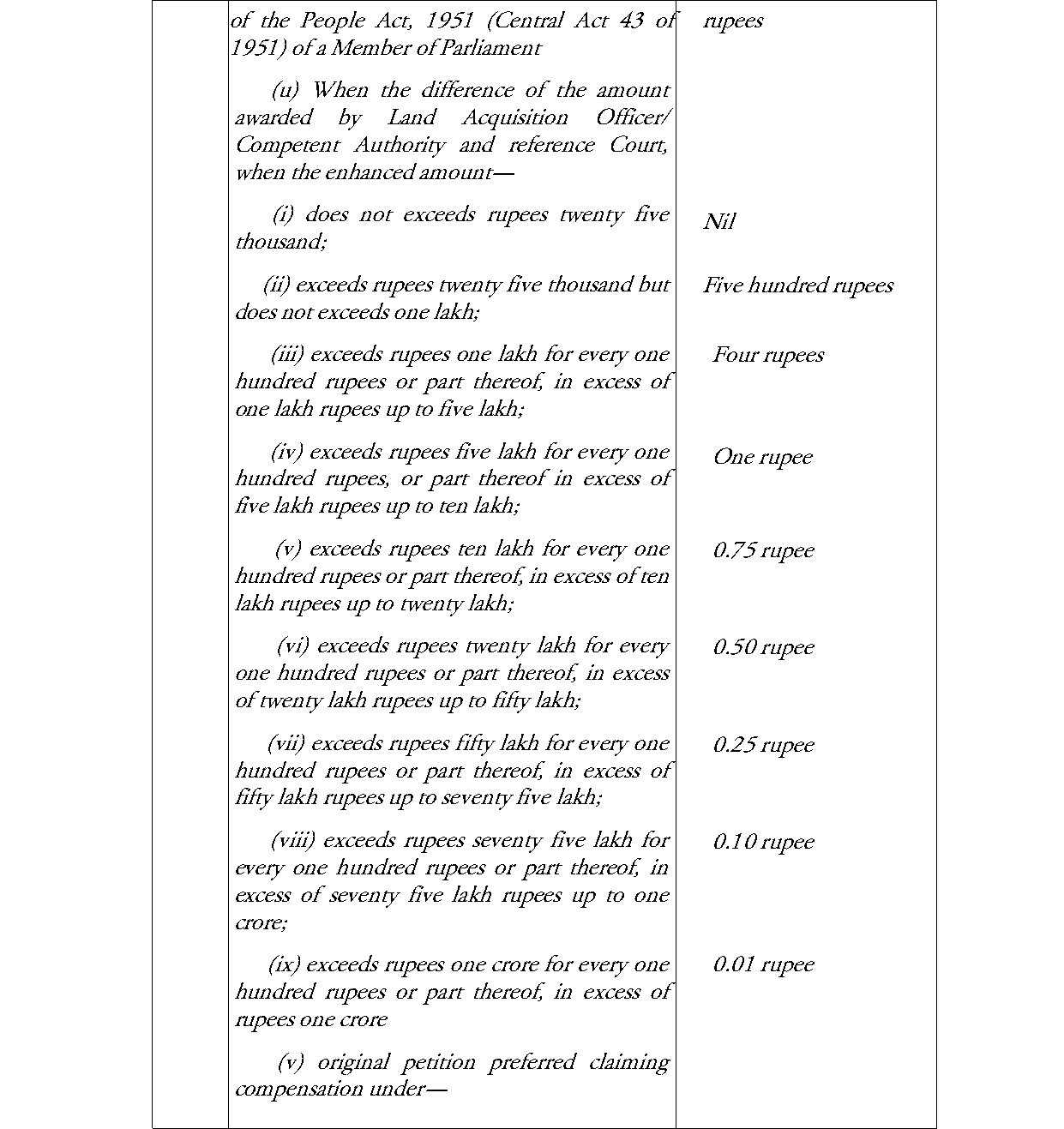
3. The Act of 1959 comprises nine chapters. Chapter I sets out the definitions and the applicability of the Act. Chapter II relates to the liability to pay court fees, while Chapter III provides for the determination of court fees under various sections. Chapter IV concerns the computation of fees, and Chapter V addresses the valuation of suits. Chapters VI and VII contain provisions relating to probates, letters of administration, refunds, and remissions. Under Section 85 of the Act of 1959, the Kerala Court Fees and Suits Valuation Rules, 1962 were framed. Schedule I appended to the Act deals with ad valorem fees, and Schedule II prescribes the court fees, which form the main subject matter of the present challenge.
4. The Act of 1959 has undergone several amendments over the years. Act 8 of 1966, enacted to raise additional resources for the Fourth Five Year Plan, enhanced the rates of court fees. This was followed by Act 8 of 1968, which introduced amendments necessitated by the period when the State of Kerala was under President’s Rule. By Act 12 of 1969, a further amendment was made to provide for the levy of court fees on election petitions, as no specific provision existed earlier. Subsequently, Act 7 of 1972 amended the Act of 1959 to grant certain concessions to Co-operative Societies and Trade Unions formed by members of the Scheduled Castes and Scheduled Tribes. Acting on the recommendations of the Taxation Enquiry Committee, the Act was further amended to prescribe a uniform fee rate for miscellaneous petitions. Thereafter, Act 38 of 1976 introduced provisions relating to court fees payable before Tribunals, and Act 39 of 1976 brought in procedural changes. Following a challenge to the validity of certain clauses in the Schedule, on the ground that the court fee levied was excessive and amounted to taxation, the State undertook a study, leading to further amendments through Act
6 of 1991. Subsequent amendments were also made from time to time, based on financial proposals of the Government of Kerala concerning various legislations.
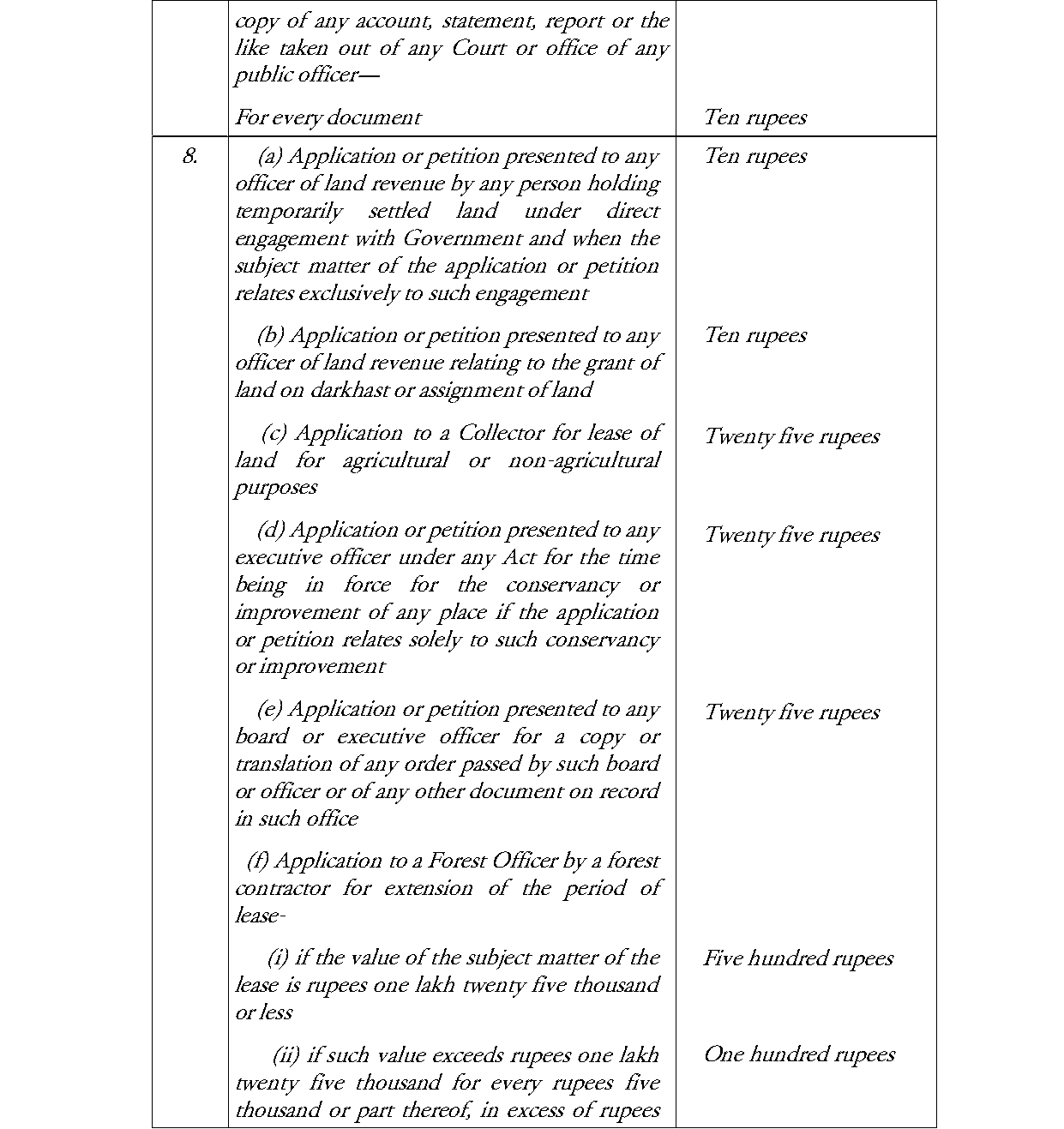
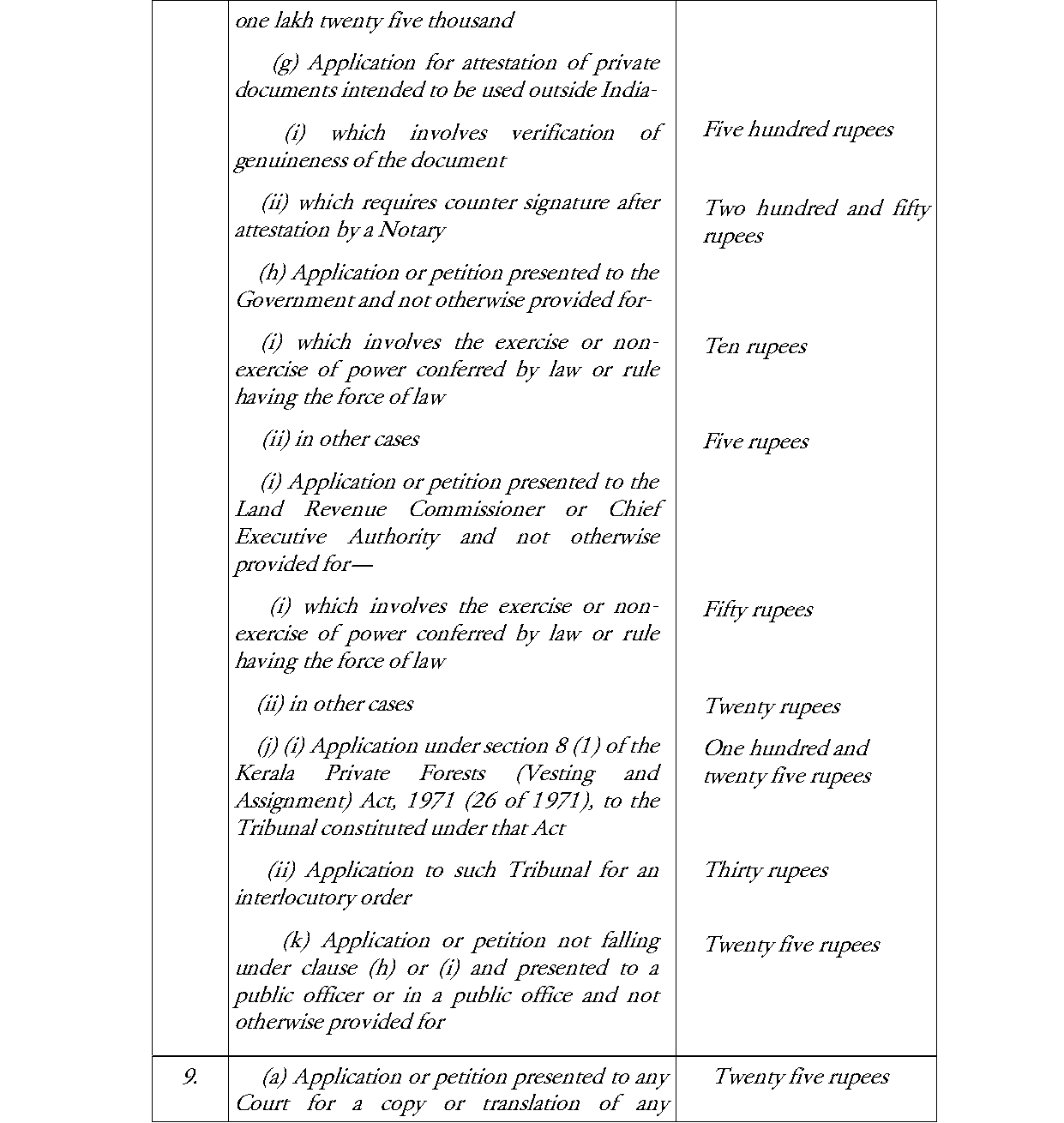
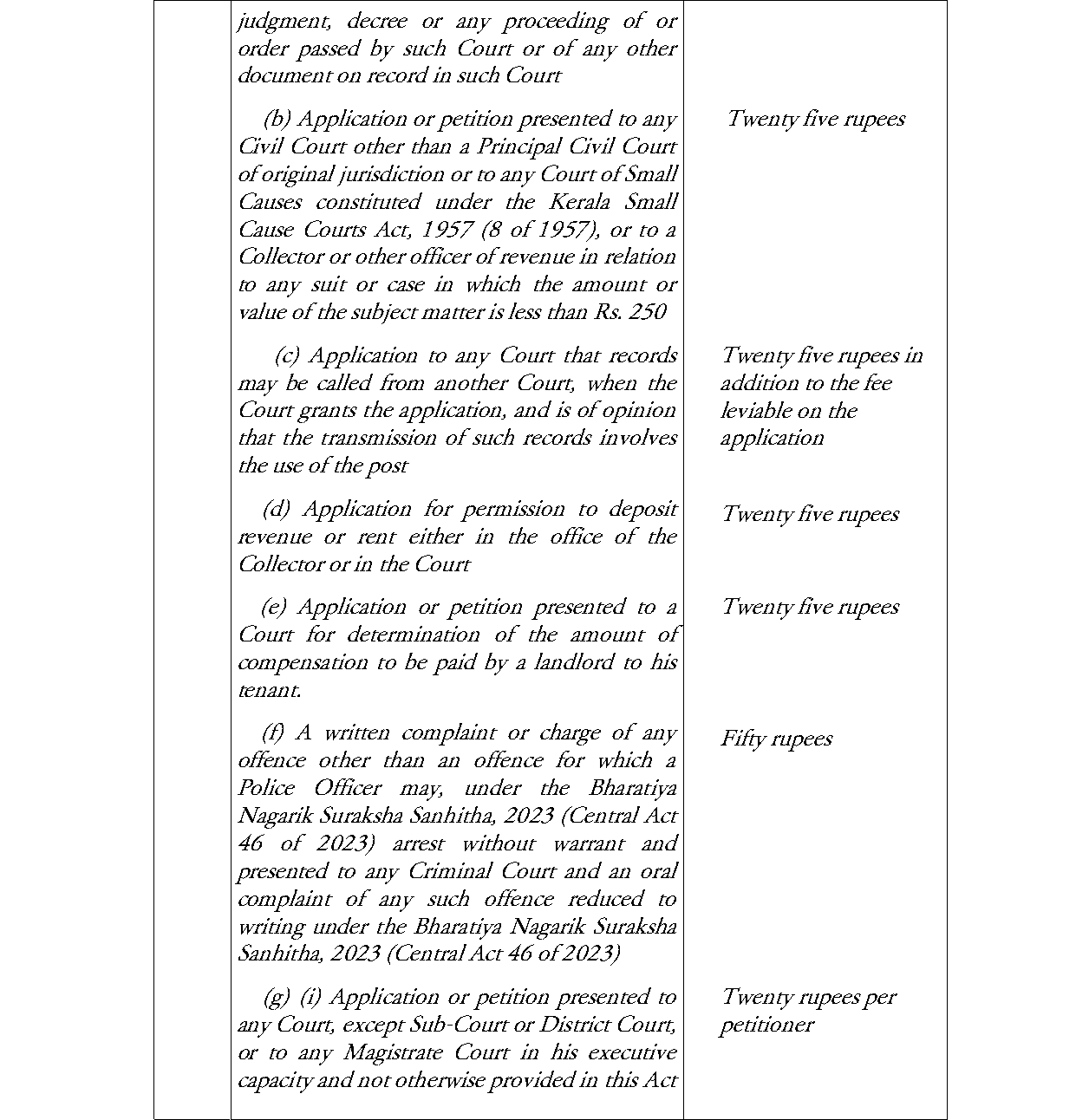
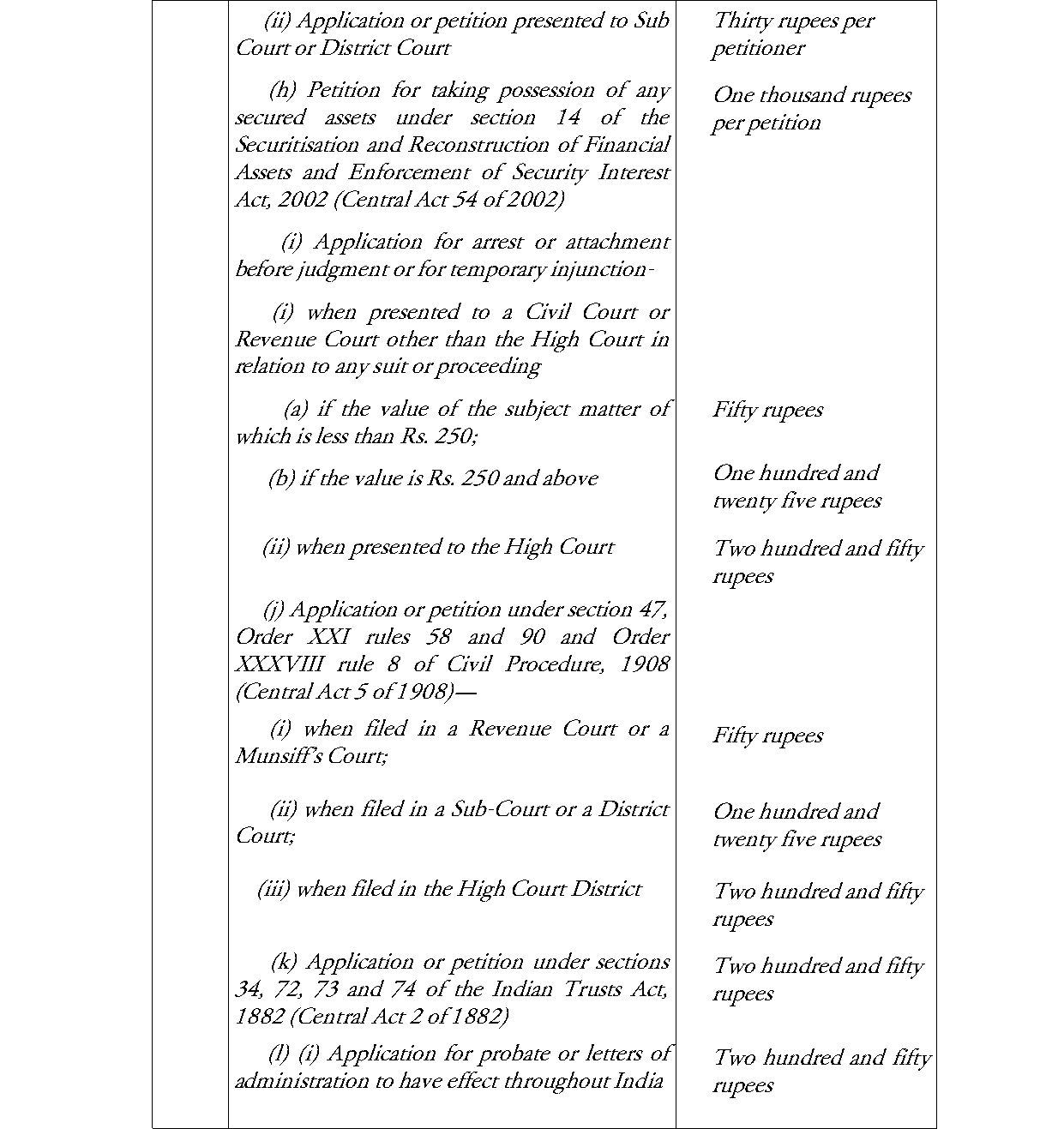
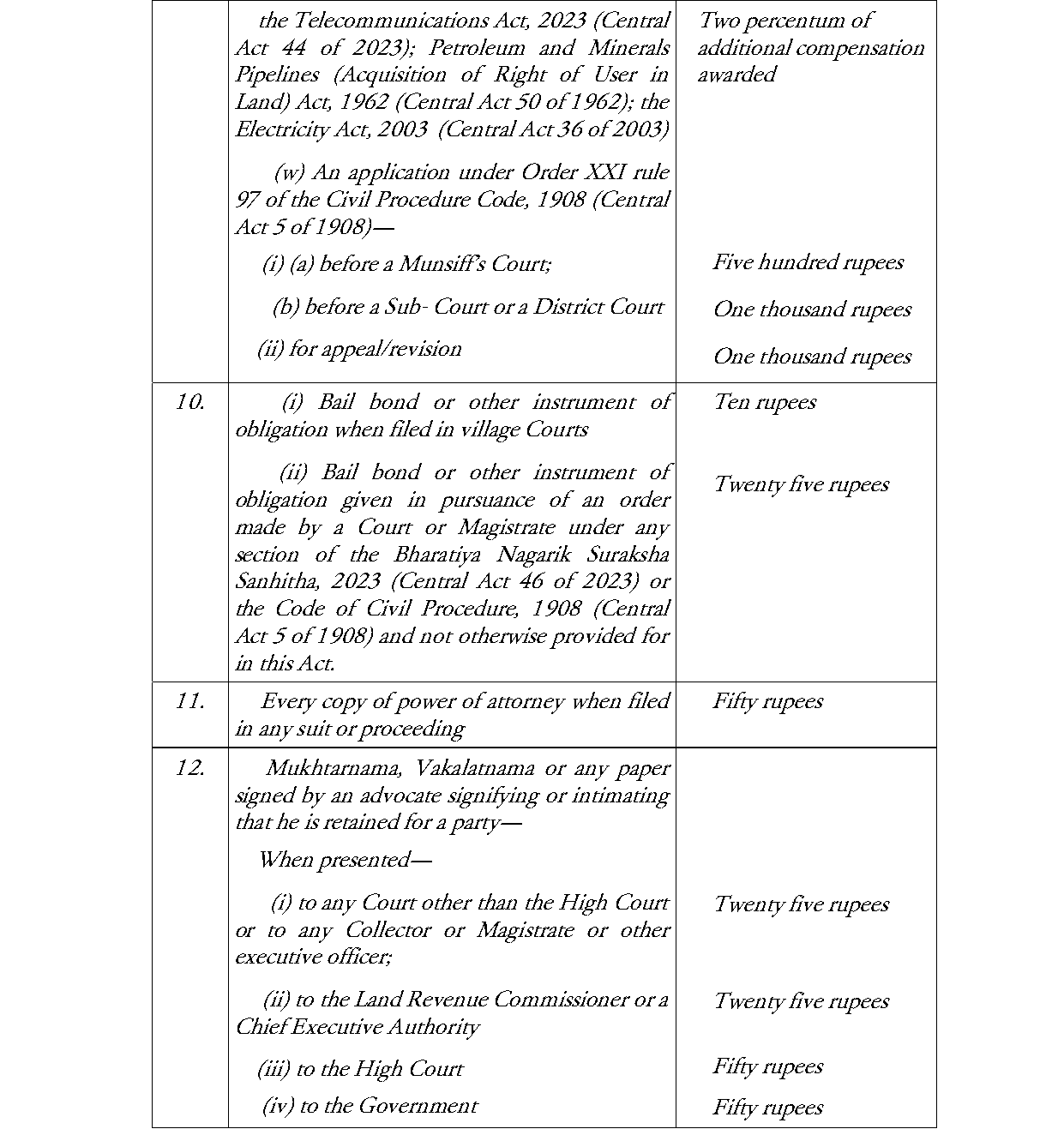
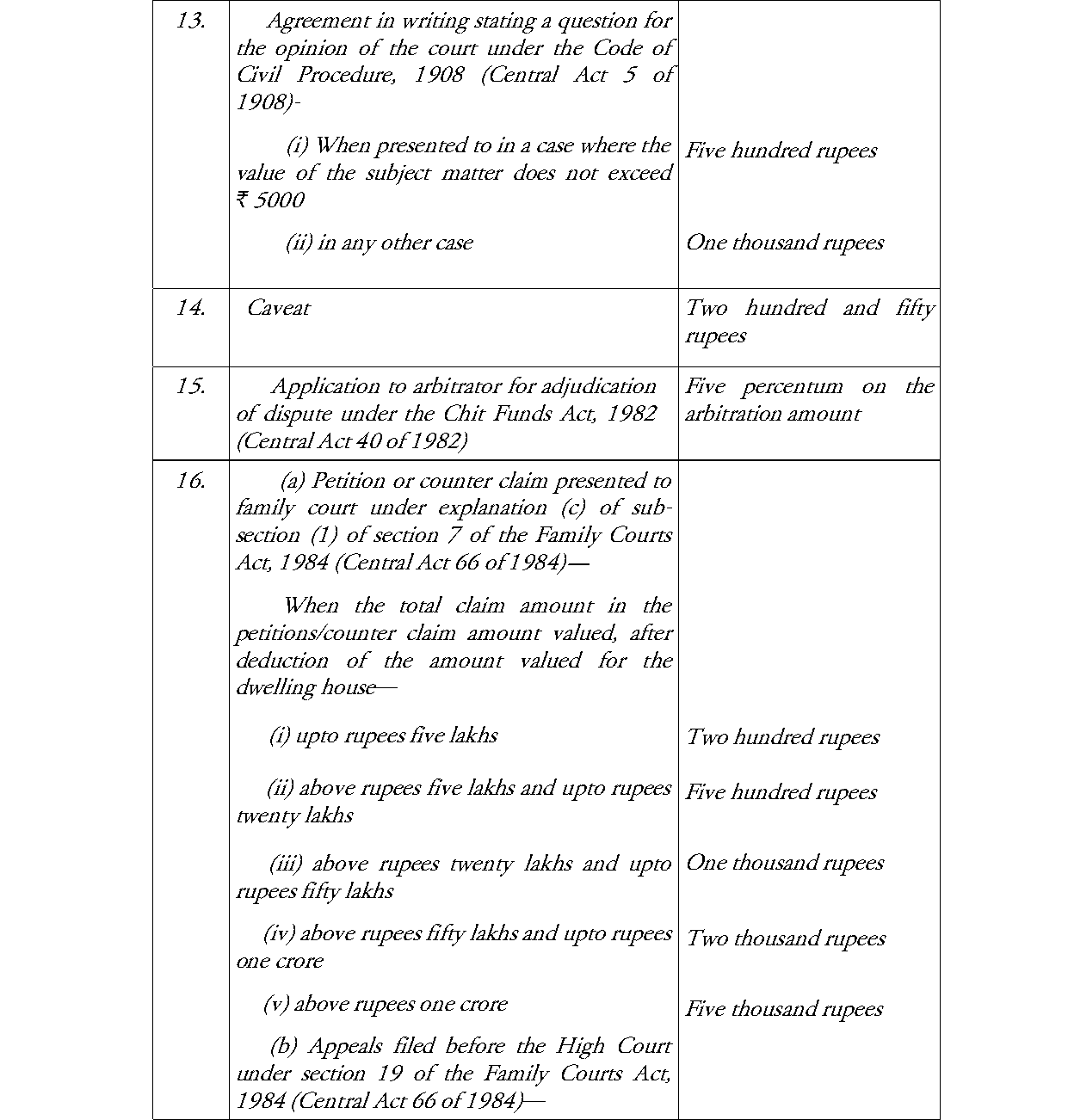
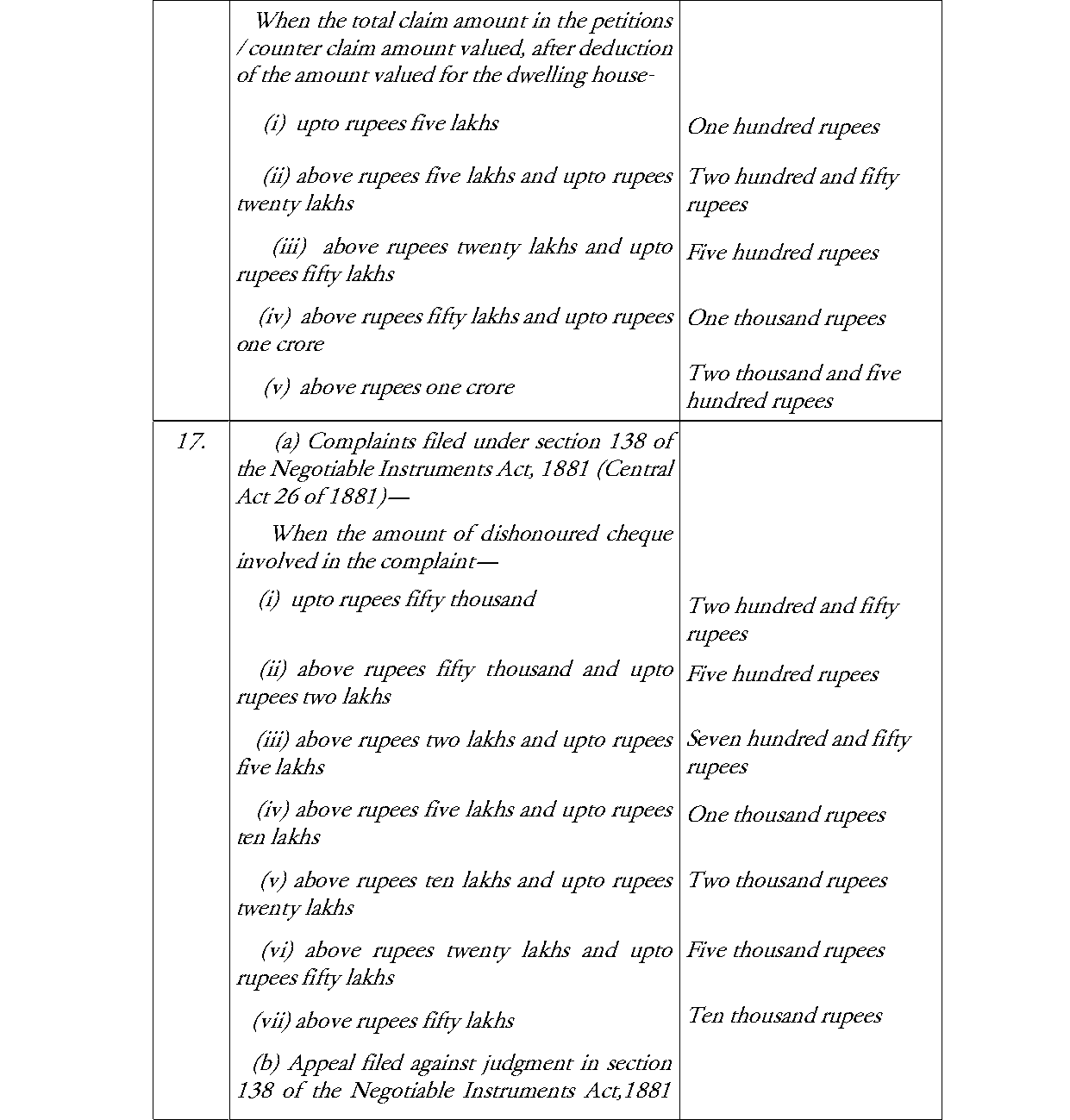
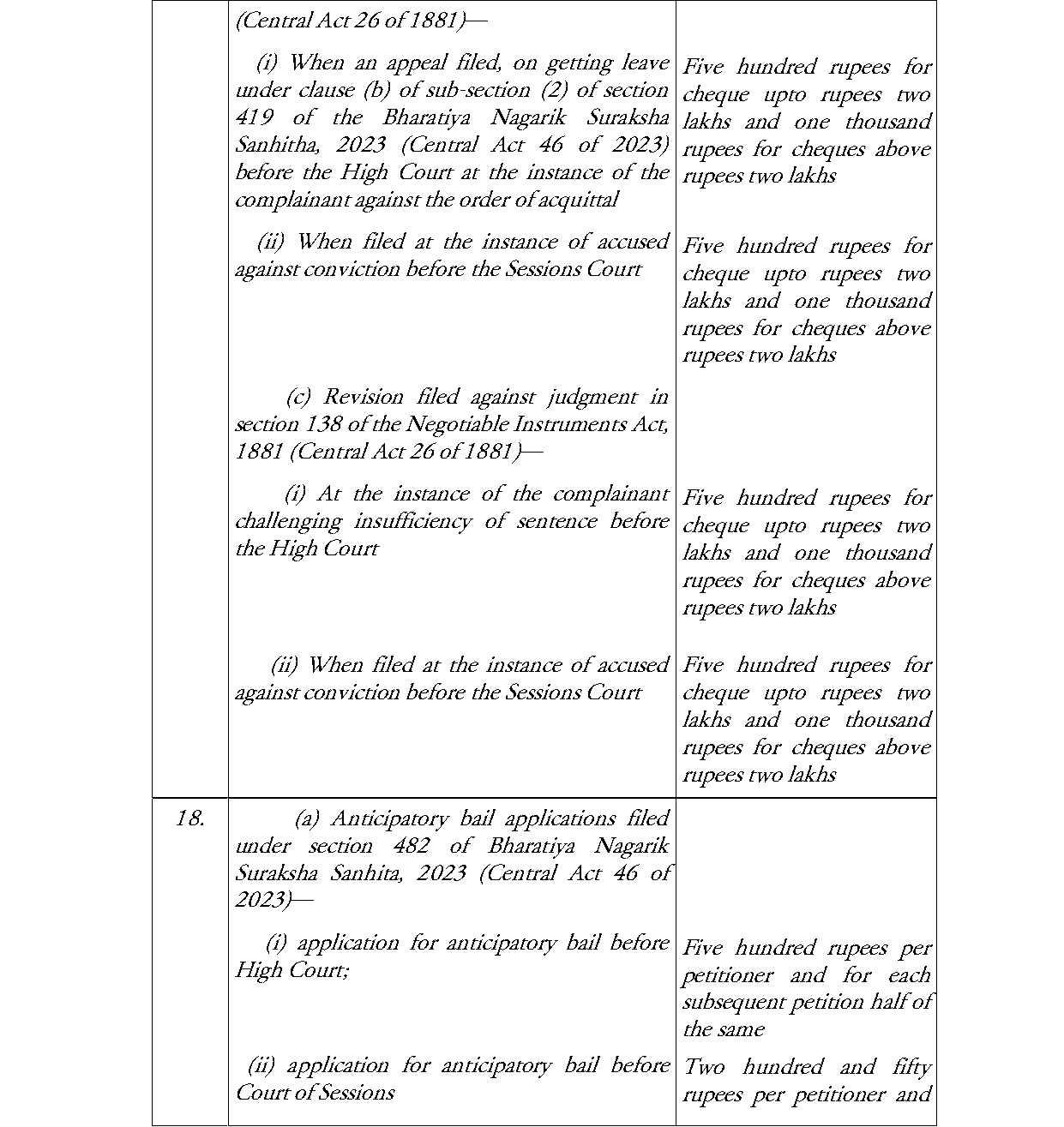
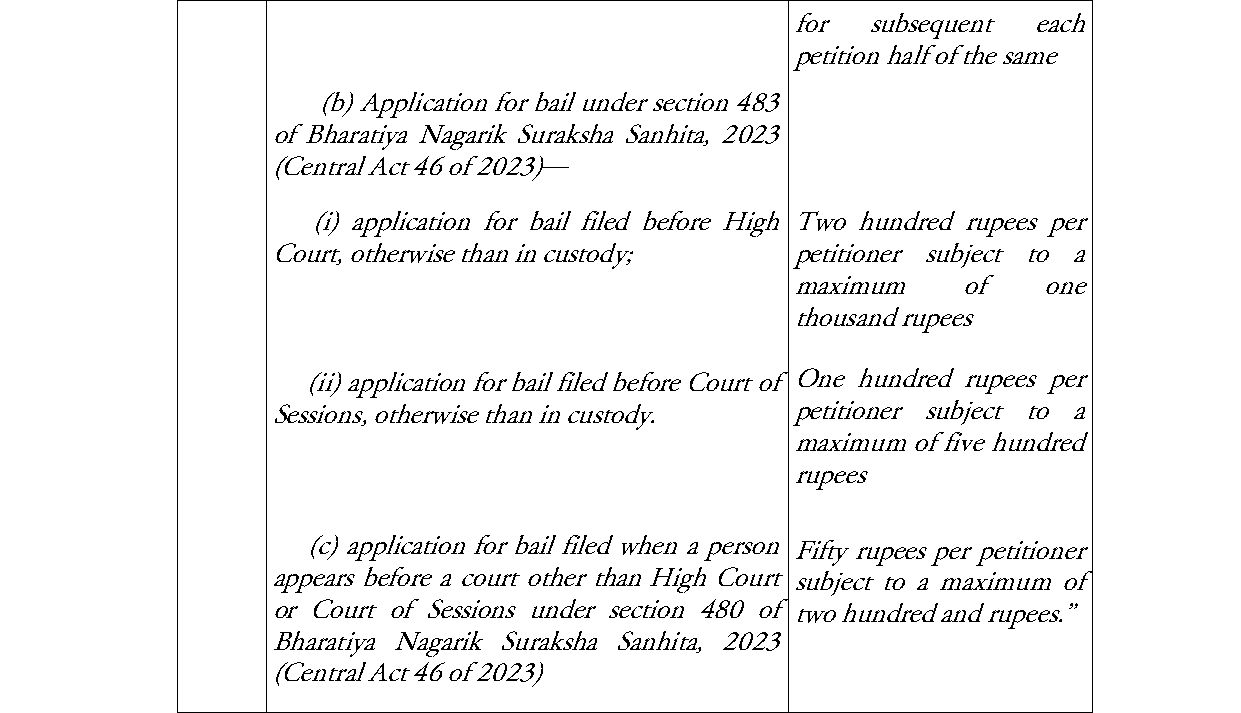
5. The subject matter of challenge is the Kerala Finance Act, 2025 (hereinafter referred to as ‘the impugned Amending Act’), by which the Act of 1959 was amended. For the sake of convenience, the impugned Amending Act is reproduced hereunder:
“ACT 3 OF 2025
THE KERALA FINANCE ACT, 2025
An Act to give effect to certain financial proposals of the Government of Kerala for the Financial Year 2025-2026.
Preamble.- WHEREAS, it is expedient to give effect to certain financial proposals of the Government of Kerala for the Financial Year 2025-2026;
BE it enacted in the Seventy-sixth Year of the Republic of India as follows:-
CHAPTER I
PRELIMINARY
1. Short title and commencement.- (1) This Act may be called the Kerala Finance Act, 2025.
(2) Save as otherwise provided in this Act,-
a) clause (a) of sub-section (1) of section 4 shall be deemed to have come into force on the 1st day of July, 2017;
(b) section 6 shall come into force on such date as the Government may, by notification in the Official Gazette, appoint:
Provided that different dates may be appointed for
The court ruled that legislative revisions to court fees under the Kerala Finance Act, 2025, are constitutionally valid, reflecting economic necessity and not infringing citizens' right to access jus....


The right to appeal is substantive and determined by the law in effect at the original proceeding's initiation, not subject to retrospective fee increases.
Point of law: If the fee in terms of sub-rule (1) of Rule 397 could be exempted, the fee in terms of sub-section (1) of Section 76 of the Court Fees Act also could be exempted, for the same is only a....

Court fee - Court can grant extension of time for payment of the balance court fee beyond a period of 30 days.

Equal treatment under law is mandated by Article 14; provisions imposing no ceiling on probate court fees violate this principle as they constitute hostile discrimination.


Alternate Dispute Resolution (ADR) – Refund of court fees – Section 89 CPC nowhere correlates settlement of disputes by alternate mechanisms to amount of money that may be saved by parties in so far ....

Damage suit – Valuation for the purposes of jurisdiction and relief has to be same in money suits falling under category 7(i).
Regulation of fee is within domain of Committee for fixation of fee which shall ensure that fee is non-exploitative and reasonable. Right conferred on institutions to fix fee for professional courses....



An indispensable Tool for Legal Professionals, Endorsed by Various High Court and Judicial Officers
Please visit our Training & Support
Center or Contact Us for assistance

Scan Me!
India’s Legal research and Law Firm App, Download now!


For Daily Legal Updates, Join us on :



 Back to top


