Back
Back





2025 Supreme(Raj) 1876
IN THE HIGH COURT OF JUDICATURE FOR RAJASTHAN AT JAIPUR
ANAND SHARMA, J.
Ramesh S/o Shri Pyarelal - Appellant
Versus
State of Rajasthan - Respondent
S.B. Civil Writ Petition No. 7144 of 2002
Decided On : 20-08-2025
For the Appellant : Sandeep Bhagwati
For the Respondent: Vinod Kumar Gupta
Disciplinary action requires adherence to procedural fairness; an acquittal in criminal court significantly impacts the validity of subsequent disciplinary penalties based on similar allegations.
Headnote:(A) Rajasthan Civil Services (Classification, Control and Appeal) Rules, 1958 - Rule 17 - Services - Disciplinary action - The petitioner challenged his dismissal and forfeiture of benefits, asserting no proper inquiry was conducted before the penalty, which amounted to removal rather than minor punishment. Acquitted in criminal proceedings, the petitioner sought reinstatement, arguing procedural violations in disciplinary action. The Court found that dismissal was contrary to the prescribed rules as rules mandated a detailed inquiry for major penalties. The principle that an acquittal in criminal trials materially influences disciplinary proceedings was upheld. (Paras 1, 10-19)
(B) Delay and laches - It was argued that the delay of 18 years in filing the writ petition rendered it untenable. However, the Court ruled that a fresh cause of action arose post-acquittal in criminal proceedings. (Paras 5, 12, 20)
Facts of the case:
The petitioner, initially appointed as Constable, was removed after allegations of impersonation and fraudulent documentation. He was suspended and subsequently dismissed without an inquiry. Following acquittal in criminal court, he sought reinstatement with benefits.
Findings of Court:
The dismissal and appellate orders were nullified due to procedural violations and recognized impact of criminal acquittal.
Issues: Whether disciplinary action was valid despite subsequent acquittal in criminal trial and procedural fairness.
Ratio Decidendi: The absence of proper inquiry as stipulated in Rule 16 of the Rules of 1958 rendered the dismissal void, and acquittal in a criminal trial which was based on similar charges obligates reconsideration of disciplinary decisions.
Result: Writ petition allowed; orders of dismissal quashed.
| Table of Content |
|---|
| 1. challenge to dismissal order and acquittal. (Para 1 , 2 , 3) |
| 2. arguments about procedural violations and delays. (Para 4 , 5 , 6) |
| 3. court's analysis of due process in disciplinary actions. (Para 8 , 9 , 10 , 15) |
| 4. importance of acquittal in similar cases. (Para 16 , 17 , 18) |
| 5. final ruling quashing dismissal and consequences. (Para 19 , 21 , 22) |
JUDGMENT :
ANAND SHARMA, J.
1. Petitioner has challenged order dated 30.06.1984 passed by Superintendent of Police, Jhalawar, whereby, the petitioner has been discharged from service after conducting enquiry and the remaining benefits of suspension period have also been forfeited. The petitioner has also assailed order dated 12.11.1984, whereby, appeal filed by the petitioner against penalty order has been dismissed by the appellate authority. Further, the petitioner has also prayed for direction against the respondents to reinstate him in service with all benefits in the light of judgment dated 31.03.2000 passed by the Chief Judicial Magistrate, Jhalawar (hereinafter to be referred as ‘criminal court’)acquitting the petitioner from all charges framed against him.
2. The facts giving rise to the instant writ petition are that the petitioner was initially appointed on the post of Constable in the year 1979. One criminal complaint was lodged by private persons mentioning therein that the petitioner was working with a fraud name of “Ramesh” in respondent-department whereas his actual name was “Mohan Lal”. It has been mentioned that the petitioner has misused certificates of his younger brother Ramesh for obtaining job in Police Department. It was further mentioned that pursuant to aforesaid complaint, the petitioner was initially suspended vide order dated 24.01.1984 and later on, dismissed from service, without conducting any enquiry or without affording any opportunity of hearing, vide order dated 30.06.1984. The petitioner submitted that thereafter, he filed appeal under Rule 23 of the Rajasthan Civil Services (Classification, Control and Appeal) Rules, 1958 (hereinafter to be referred as ‘the Rules of 1958’). However, appeal of the petitioner was also dismissed vide order dated 12.11.1984.
3. It has also been contended in the writ petition that with similar allegations, the petitioner had to face criminal trial before the criminal court and after full fledged trial, the criminal court has acquitted the petitioner vide judgment and order dated 31.03.2000. It has been submitted that after honourable acquittal from competent criminal court, the petitioner requested for reinstating him and also served legal notice, yet no action was taken for reinstating the petitioner.
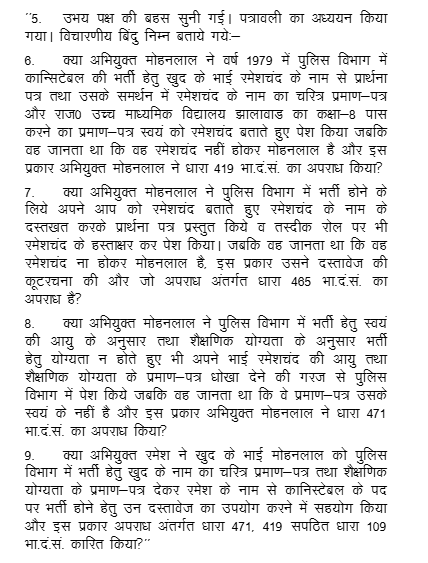
4. Learned counsel for the petitioner submits that firstly, order of dismissal dated 30.06.1984 was null and void for the reason that such major penalty was imposed upon the petitioner pursuant to charge sheet issued under Rule 17 of the Rules of 1958, whereas under Rule 17 of the Rules of 1958, procedure is to conduct enquiry for punishing the delinquent with minor penalty. Secondly, charges with regard impersonation as well as producing deceptive and wrong certificates was also basis of criminal trial launched against the petitioner, in which, after recording evidence, the petitioner has been acquitted of the charges framed against him for commission of offences punishable under Sections 419 , 465, 471 and 109 IPC. Thus, such acquittal by the competent court has washed out any delinquency attached to the allegations levelled against the petitioner and soon after the acquittal, the petitioner was entitled for reinstatement along with all consequential benefits.
5. Per contra, learned Additional Government Counsel appearing for the respondents opposed writ petition and submitted that the dismissal of the petitioner took place in the year 1984 and his appeal was also rejected immediately, however, thereafter, the petitioner did not take any step to challenge such dismissal order as well as order passed by the ap