1. Dispute over use of allotted facility area — Installation of idols — Use as community centre. (Para 1 , 2 , 3 , 15 )
 Back
Next 





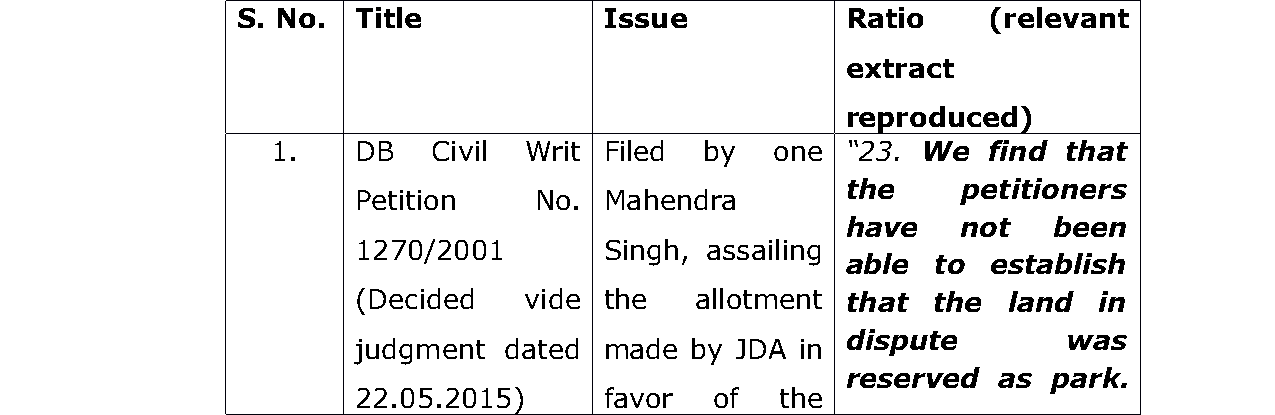
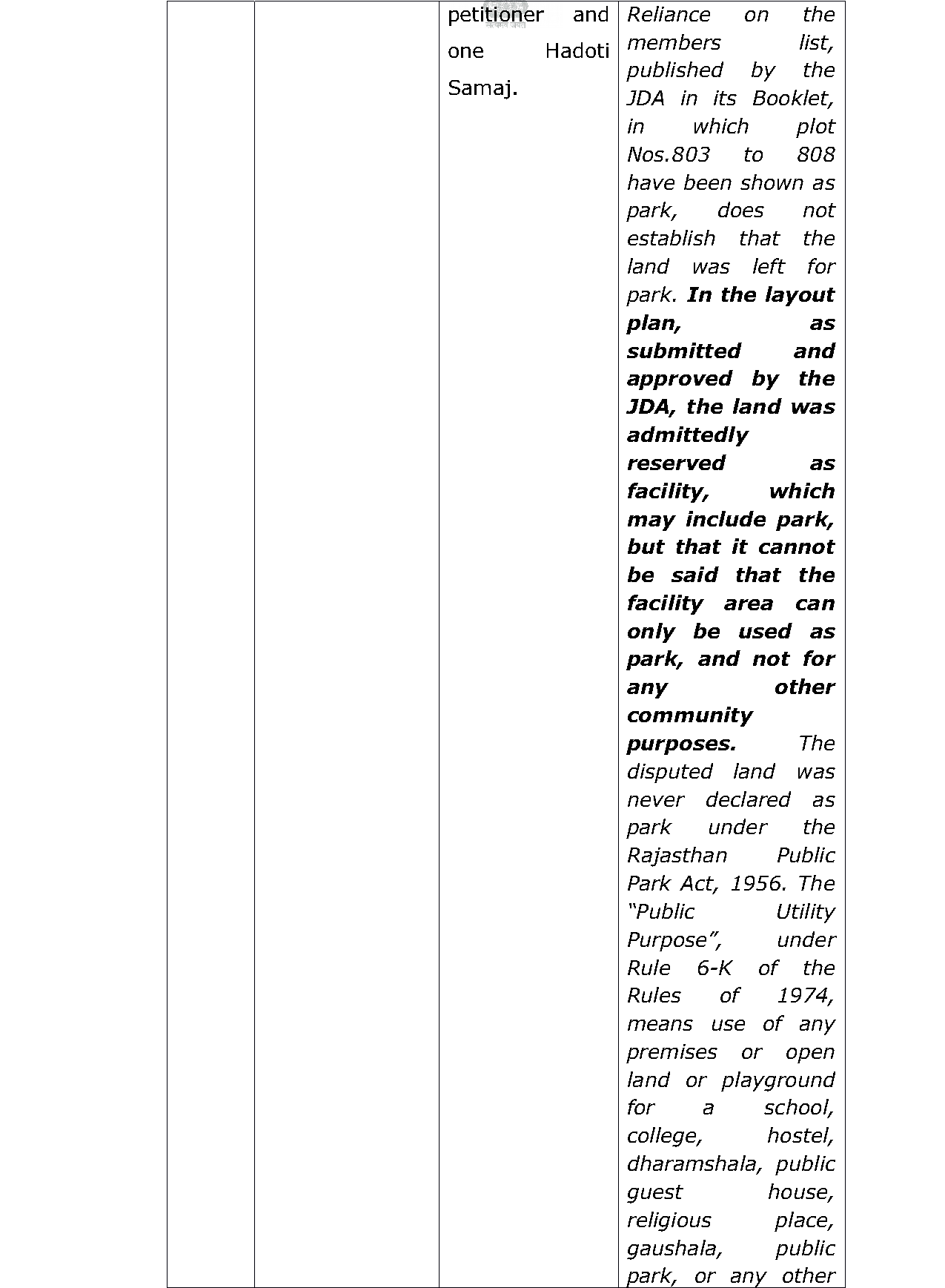
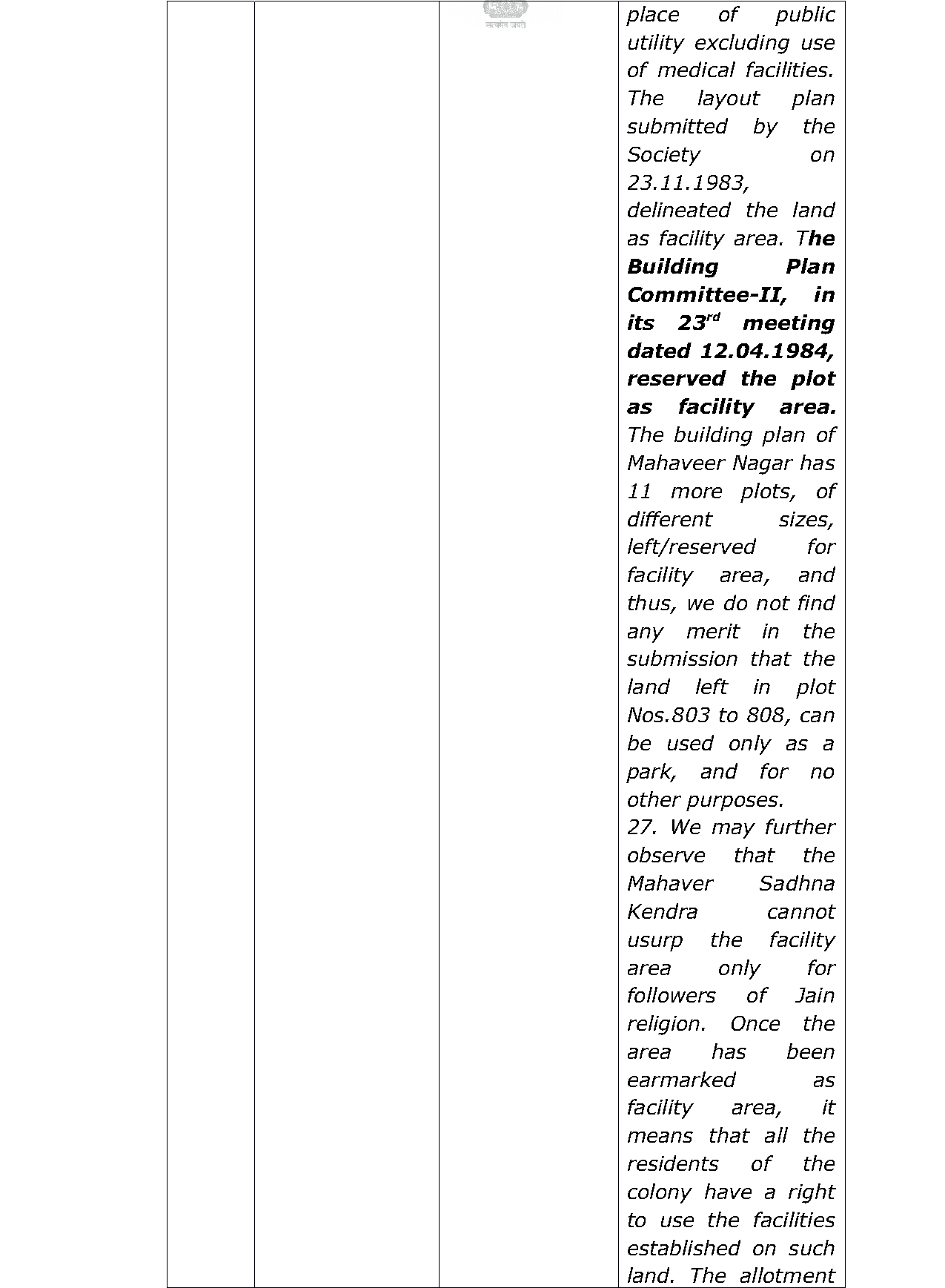
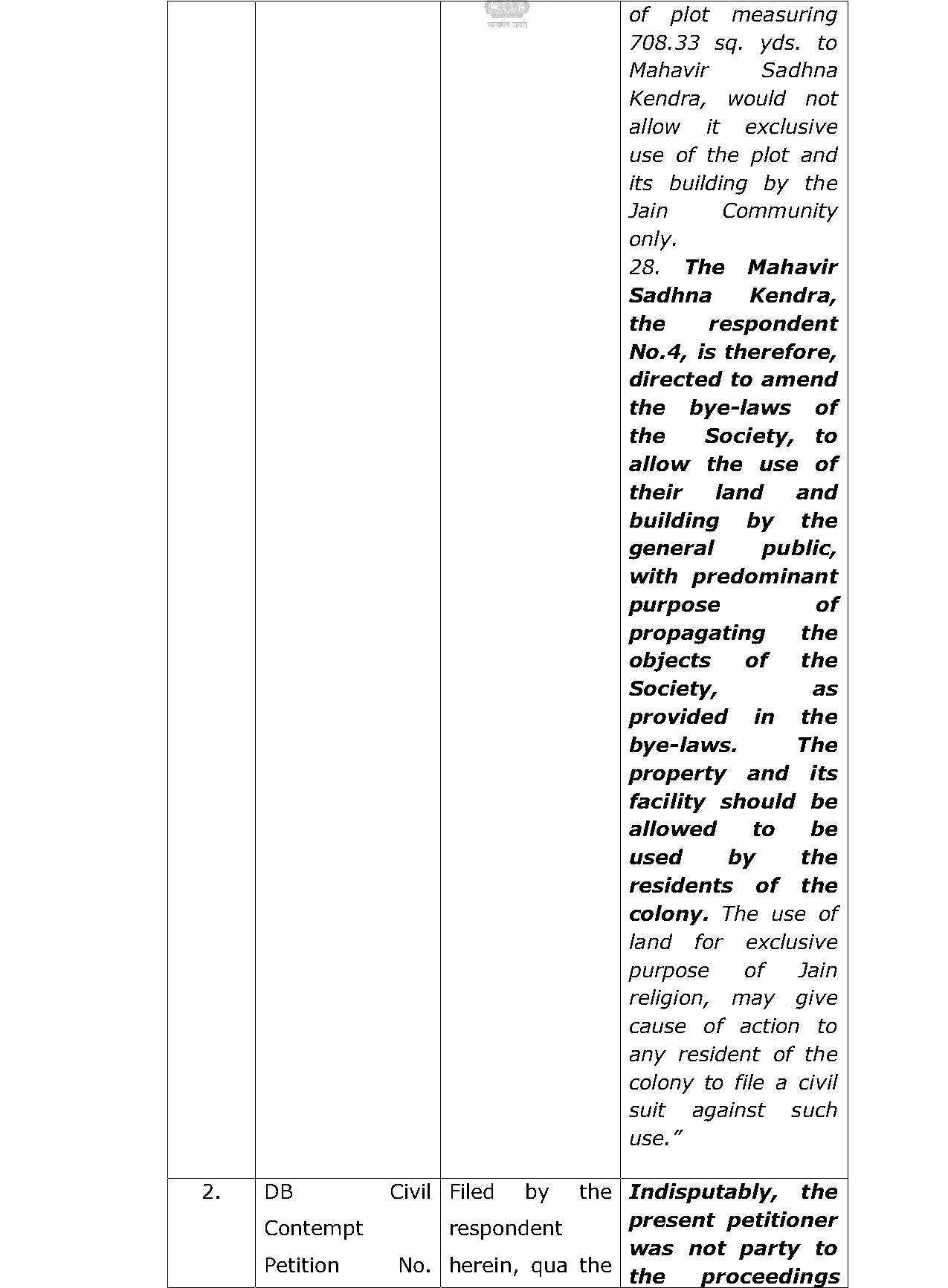
2026 Supreme(Raj) 206
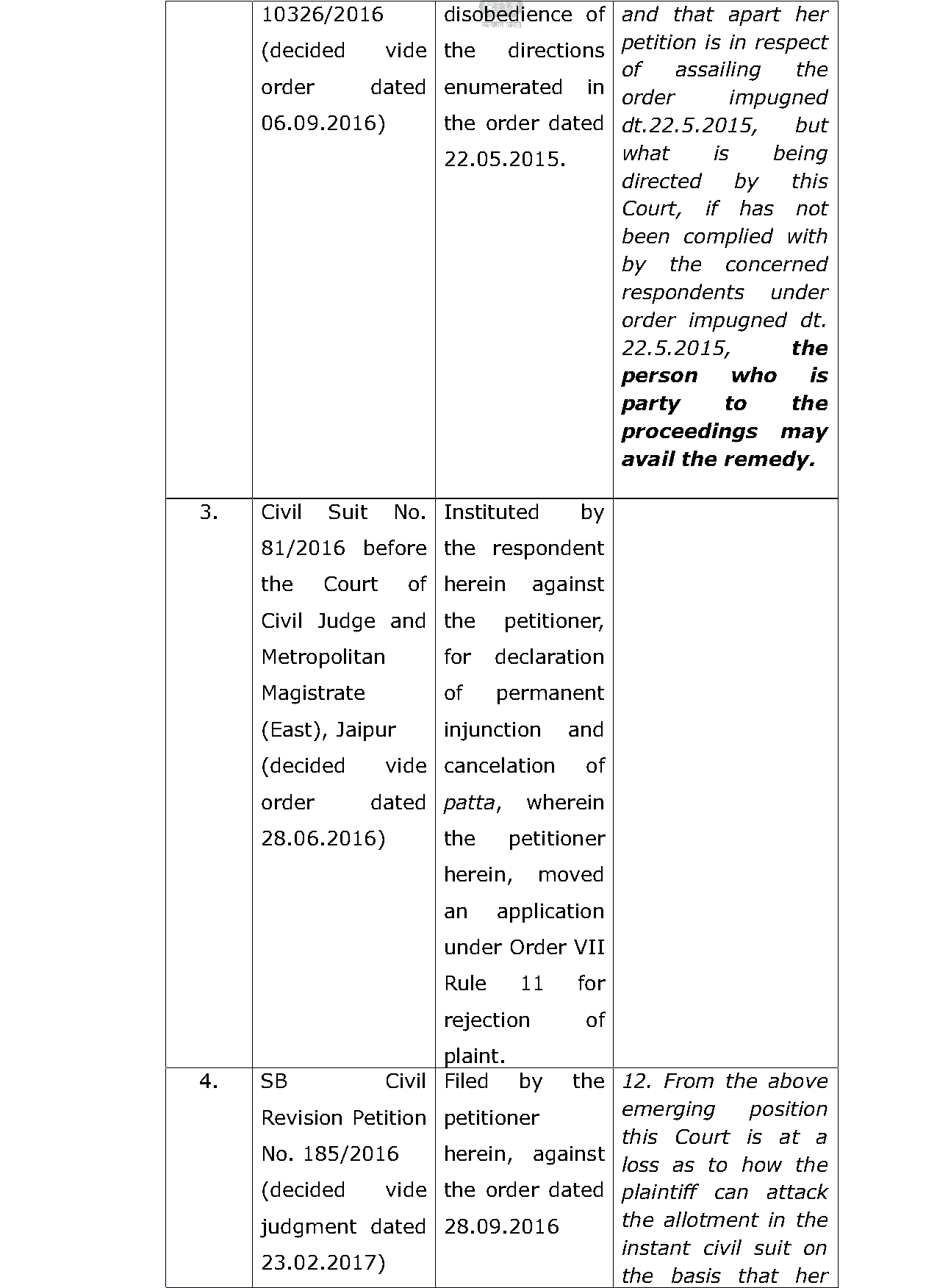
IN THE HIGH COURT OF JUDICATURE FOR RAJASTHAN AT JAIPUR
SAMEER JAIN, J.
Mahaveer Sadhna Sansthan – Appellant
Versus
Shashi Mathur W/o Late N.C. Mathur – Respondent
S.B. Civil Writ Petition No. 7478 of 2026
Decided On : 06-05-2026
Advocates Appeared:
For the Appellants : R.K. Agrawal, N.K. Maloo, Nitin Jain, Kamal Paraswal, Sarvesh Jain, Vaibhav Pareek
For the Respondents: Manish Sharma, Ashish Guwalani
For the Appellants : R.K. Agrawal, N.K. Maloo, Nitin Jain, Kamal Paraswal, Sarvesh Jain, Vaibhav Pareek
For the Respondents: Manish Sharma, Ashish Guwalani
The dominant purpose and actual usage of a property determine whether it is used for exclusive religious purposes. Installation of idols does not necessarily convert a public facility area into an exclusive religious domain, provided the premises remain accessible to the general public regardless of religion.
Headnote:(A) Constitution of India - Article 227 - State Urban Improvement Rules - Rule 6-K - Public Utility Purpose - Supervisory jurisdiction under Article 227 cannot be invoked for re-appreciation of evidence or substitution of findings unless the orders suffer from jurisdictional error, perversity, or patent illegality (Paras 10, 16). "Public Utility Purpose" encompasses the use of premises for religious places, among others, provided they serve a public function (Para 7).
(B) Property Law - Permissible Use of Land - Facility Area vs. Exclusive Religious Use - The installation of idols in a portion of a building does not ipso facto amount to exclusive religious use of the premises if the property continues to be utilized for diverse community-oriented activities without discrimination on the basis of religion or caste (Paras 8, 18). The determinative test is the dominant purpose and actual usage of the property rather than the mere existence of religious symbols (Para 18).
(C) Interpretation of Judicial Mandates - A direction that a facility area shall not be used exclusively by followers of any particular religion does not impose an absolute embargo on all religious activity, but prohibits the exclusion of other residents and the general public (Para 19).
Facts of the case:
An allotment of land in a facility area was upheld by a court with the condition that the area must not be used exclusively by any one religion and must remain accessible to all residents. The petitioner society amended its bye-laws and obtained a revised lease deed to align with this mandate. The respondent subsequently filed suits alleging illegal construction and misuse, obtaining a temporary injunction that restrained the petitioner from installing idols or using the property for a specific religion. The petitioner challenged this, asserting that the property is used for various public activities, including yoga classes and social gatherings, and that the constructions followed an approved building plan.
Findings of Court:
The trial courts erred by equating "facility area" with "community centre" in a restrictive sense and presuming that the installation of idols necessarily leads to exclusive religious use. There was no cogent evidence demonstrating the exclusion of the general public. The court found that the trial courts acted ultra vires by granting directions that virtually decided the suit at the interim stage, despite the lack of evidence of exclusive religious appropriation.
Issues: Whether the installation of religious idols in a 'facility area' constitutes exclusive religious use in violation of a previous judicial mandate; and whether the trial courts committed a jurisdictional error by granting a restrictive injunction without evidence of exclusive appropriation of the premises.
Ratio Decidendi: The court ruled that the dominant purpose of usage is the key test for determining the nature of land use. The mere presence of idols does not equal exclusive religious use if the premises continue to serve a public community purpose and remain open to all. A holistic and purposive approach must be adopted instead of a mechanical interpretation of land-use terms.
Result: Petition allowed; impugned orders quashed and set aside.
Legal Category Hierarchy
- practice and procedure
- property law
- civil procedure
- constitutional law
Table of Contents
2. Petitioner: land used for public/community purposes without exclusive religious use. Respondent: installation of idols constitutes exclusive religious use in violation of binding orders. (Para 2 , 4 , 5 , 6 , 7 , 8 , 9 , 10 , 11 , 12 , 13 , 14 )
3. The dominant purpose test applies — installation of idols alone does not convert use to exclusive religious; continued public use prevails. (Para 16 , 17 , 18 , 19 )
4. Determinative test for exclusive religious use is dominant purpose and actual usage, not mere existence of religious symbols or idols. (Para 18 , 19 )
5. Writ petition allowed — impugned orders quashed — parties bound by condition of non-exclusive public access. (Para 20 , 21 , 22 , 23 )
6. Does installation of idols in a facility area automatically constitute exclusive religious use?
No. The determinative test is the dominant purpose and actual usage of the property, not the mere existence of idols or religious symbols. (Para 18 , 19 )
7. What is the correct test for determining permissible use of land allotted as a facility area?
The correct test is whether the property continues to serve public or community purposes, not whether isolated religious symbols exist. (Para 18 , 19 , 20 )
8. Can a court grant an injunction that effectively decides the suit at the interim stage?
No. Courts must avoid granting interim relief that goes beyond the prayers and virtually decides the suit without a full trial. (Para 20 )
9. Is it necessary to implead the development authority as a party in a suit concerning land use violations?
Yes. The authority that allotted and sanctioned the use is a proper and necessary party in such injunction suits. (Para 20 )
JUDGMENT :
SAMEER JAIN, J.
1. That the present writ petition has been instituted assailing the judgment and order dated 02.04.2026 passed by the learned Additional District Judge No. 1, Jaipur Metropolitan-I, Jaipur, whereby the appeal preferred by the petitioner against the order dated 25.03.2026, passed by the learned Additional Civil Judge and Judicial Magistrate No. 2, Jaipur Metropolitan-I, Jaipur, in Temporary Injunction Application Case No. 127/2025, whereby the second temporary injunction application moved by the petitioner came to be allowed, has been dismissed.
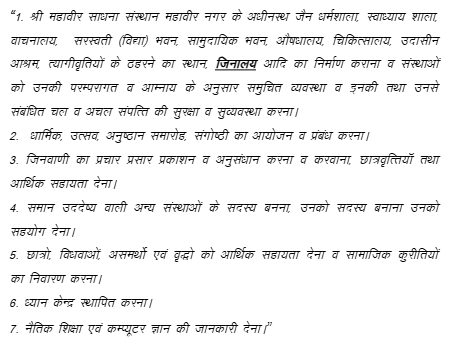
2. At the outset, learned counsel for the petitioner contended that the respondent has repeatedly suppressed the material and chequered history of litigation pertaining to the subject matter and has approached the learned civil courts with unclean hands, actuated by ulterior motives. It was further contended that the petitioner is a duly registered society under the provisions of the Rajasthan Societies Registration Act, possessing a valid registration certificate as well as a governing constitution. For the sake of brevity, the relevant extract from the constitution of the petitioner-sansthan is reproduced hereinbelow:
3. It was submitted that the genesis of the present matter lies in the order dated 03.02.2001, whereby the State Government accorded sanction for allotment of land admeasuring 726 square yards in favour of the petitioner and 1000 square yards in favour of another society, namely Hadoti Samaj, Jaipur, out of the facility area adjacent to Plot Nos. 508 and 509, Mahaveer Nagar, Tonk Road, Jaipur. Pursuant thereto, the Jaipur Development Authority (hereinafter referred to as “JDA”), after approval by the Building Plan Committee (hereinafter referred to as “BPC”), allotted land admeasuring 591 square meters to the petitioner, followed by execution and registration of the lease deed on 03.08.2001. The said allotment was subsequently challenged by Mahendra Singh and others by way of D.B. Civil Writ Petition No. 1270/2001 before the Division Bench of this Court, which came to be disposed of vide order dated 22.05.2015 on the basis of a settlement arrived at inter se the parties. In terms of the said settlement, it was agreed that Mahavir Sadhna Sansthan would suitably modify the allotment and that equivalent land admeasuring the same area would be provided adjacent to Plot Nos. 508 and 509 within the same facility area, subject to certain setbacks. It is pertinent to note that the husband of the present respondent was also a party to the said settlement. In furtherance of the judgment dated 22.05.2015, the petitioner society amended its bye-laws on 18.01.2016 with the predominant objective of aligning its functioning with the mandate of the said judgment, and submitted the amended bye-laws to the JDA for issuance of a modified patta. Consequently, a revised patta along with a revised site plan was issued in favour of the petitioner on12.02.2016.
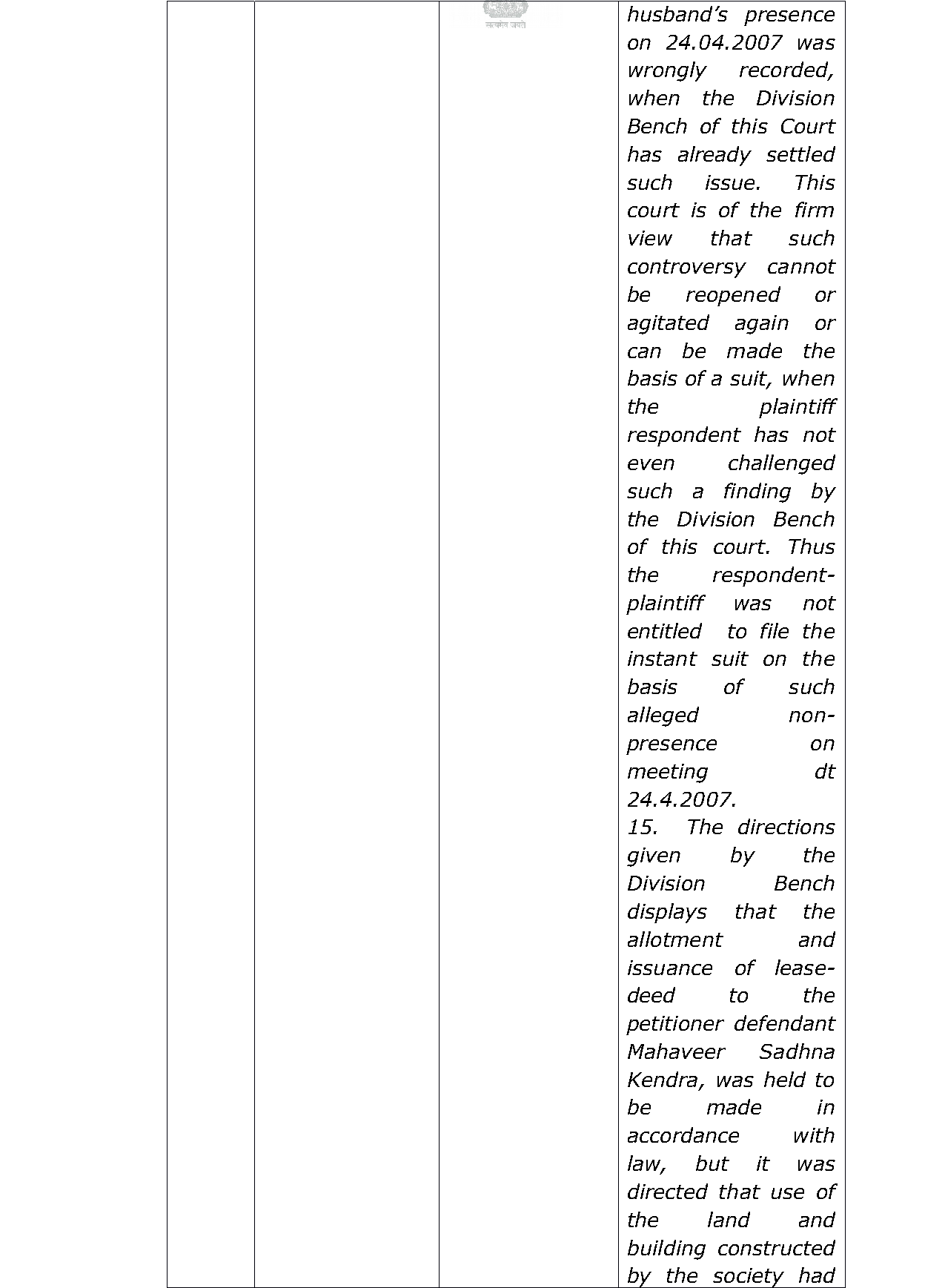
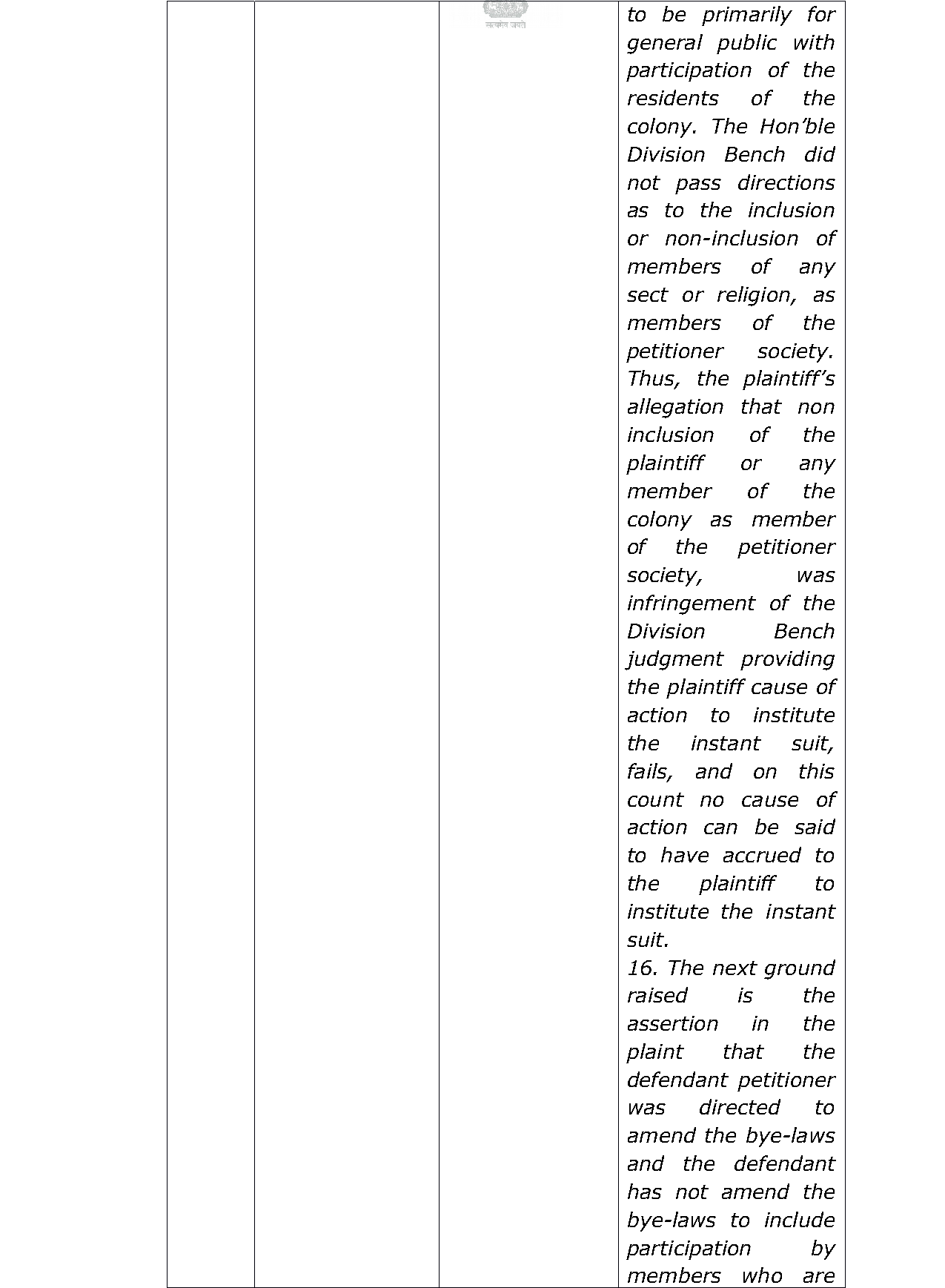
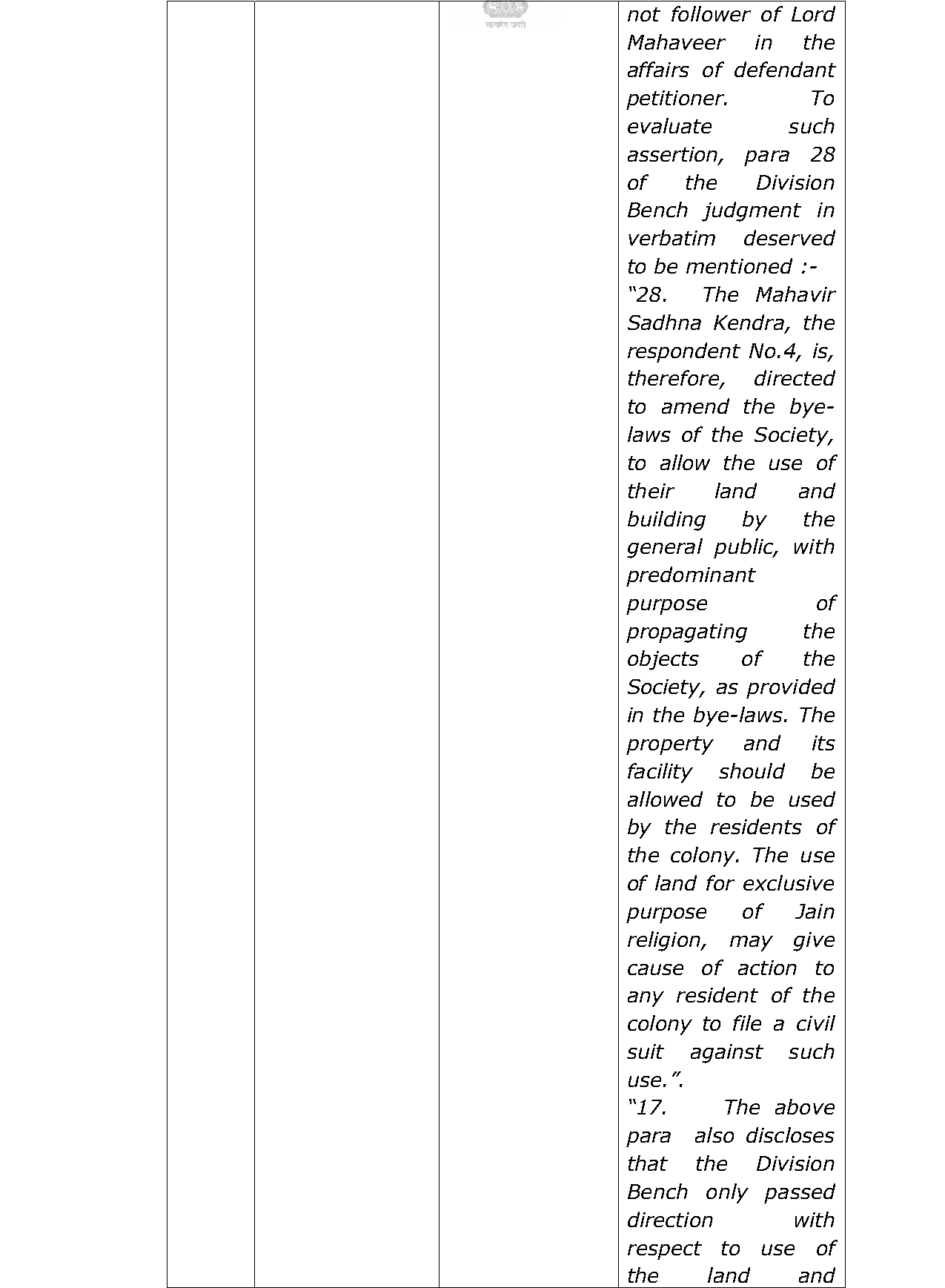
4. It was further contended that this Court, vide judgment dated 22.05.2015, categorically upheld the legality of the allotment made in favour of the petitioner society and the action of the JDA in executing the lease deed. Notwithstanding the same, the respondent preferred D.B. Civil Contempt Petition No. 10326/2016 alleging disobedience of the directions contained in the said judgment, which also came to be dismissed vide order dated 06.09.2016. It was submitted that despite the aforesaid, the respondent, exhibiting a pattern of vexatious and frivolous litigation, instituted Civil Suit No. 81/2016 before the Court of Civil Judge and Metropolitan Magistrate (East), Jaipur, seeking declaration, permanent injunction and cancellation of the patta. The petitioner herein, in response thereto, preferred an application under Order VII Rule 11 CPC for rejection of the plaint; however, the same came to be dismissed vide order dated 28.09.2016.
5. It was further submitted that the parties have been embroiled in litigation for