
 Back
Back





BEFORE THE MADURAI BENCH OF MADRAS HIGH COURT
RMT. TEEKAA RAMAN, J.
Ponragavan - Appellant
Versus
The Secretary, Home Department, Chennai - Respondent
W.A. (MD) Nos. 116, 217 of 2020, C.M.P. (MD) Nos. 1018, 1481 of 2020
Decided On : 10-01-2025
| Table of Content |
|---|
| 1. dispute regarding construction on property (Para 1 , 2 , 4 , 6) |
| 2. arguments regarding property rights and planning permissions (Para 8 , 9 , 11) |
| 3. court observations on law and order implications (Para 18 , 19 , 20 , 24) |
| 4. requirement for planning permission highlighted (Para 25) |
| 5. final conclusions of the court on allowed appeals (Para 27) |
JUDGMENT :
N. SENTHILKUMAR, J.
1. The Writ Petitioner one Ponragavan had filed the Writ Petition in W.P.(MD)No.1185 of 2020 to refrain the sixth respondent from putting up a gate or arch or name board of the Church in the disputed land in survey No.283/5, situated in Mathusuthanapuram Village, Agasteeswaram Taluk, Kanyakumari District.
2. The learned Single Judge by taking note of the submissions made by the learned Special Government Pleader that there is likelihood of law and order problem between two religious groups in the said area by allowing the sixth respondent, namely, G.Devadhas to put up construction would result many problems, which may affect the general public in the locality, disposed of the said Writ Petition. Challenging the same, the appeal has been filed in W.A.(MD)No.116 of 2020.
3. Similarly, G.Devadhas, who is arrayed as sixth respondent in W.P.(MD)No.1185 of 2020 had filed a Writ Petition in W.P.(MD)No. 10694 of 2014 with a prayer to refrain the respondents 2 to 5 therein or their subordinates from in any way interfering with the petitioner’s right to deal with his property including effecting of construction of a gate, arch and name board of the Church in the property of the Church in survey No.283/5, situated in Mathusoohtanapuram village, Agastheeswaram Taluk, Kanyakumari District.
4. The learned Single Judge, after hearing the parties and the counter filed by the fifth respondent therein, namely, Inspector of Police that the petitioner's Church was located in a very communally sensitive area and any construction by the petitioner may lead to breach of peace, communal problem and disturb the cordial relationship, allowed this Writ Petition.
5. The facts are common in both the Writ Petitions and the present Writ Appeals are one and the same.
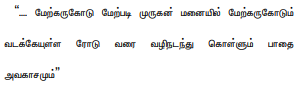
6. G.Devadhas, the Writ Petitioner in W.P.(MD)No.10694 of 2014, who was a Secretary of CSI Church, Pillayarpuram in Agastheeswaram Taluk, Nagercoil, Kanyakumari District, stated that the Church building is situated in survey No.283/19, which is the property of the Church to an extent of 16.5 cents. Apart from the abovesaid property, the Church has also owned lands in survey Nos.283/18, 283/21, 283/5 in Mathusoothanapuram Village. Out of the said property, the vacant land in survey No.283/5, measuring 1 cent and 620 sq.links was purchased by the Church by a registered sale deed in Doc.No.716 of 2009, dated 26.02.2009. Later, they obtained patta with regard to survey No.283/5 in patta No.4995 and they are in possession of the said property, since 26.02.2009. The petitioner claims that in the land to an extent of 1 cent 620 sq. links in survey No.283/5, which absolutely belongs to the petitioner's Church, the petitioner’s Church has the right to put up construction under Article 300A of the Constitution of India.
7. The counter was filed by the fifth respondent/Inspector of Police, Suchindram Police Station, stating that the land in survey No. 283/5 was named as water tank street and the same was maintained by the local Panchayat and the Tahsildar. According to the counter, the Writ Petitioner wanted to establish his title and right over the property measuring 1 cents 620 sq. links in survey No.283/5.
8. Mr.Ajmal Khan, the learned Senior Counsel appearing for the Writ Petitioner in W.P.(MD)No.10694 of 2014/respondent in W.A. (MD)No.217 of 2020/sixth respondent in W.A.(MD)No.116 of 2020 would contend that the Church is protected by constitutional freedom as enshrined under Article 26 of the Constitution of India, which is extracted hereunder:
“26. Subject to public order, morality and health, every religious denomination or
AI
Rights to construct structures on property must adhere to planning regulations, and disputes over property ownership are to be resolved through civil suits, not writ jurisdiction.

The central legal point established in the judgment is the requirement of prior approval from the Collector for construction of a building for public worship, as per Rule 26 of the A.P.Gram Panchayat....


Court grants liberty to file fresh application after disposal of related suit without expressing opinion on merits.



An indispensable Tool for Legal Professionals, Endorsed by Various High Court and Judicial Officers
Please visit our Training & Support
Center or Contact Us for assistance

Scan Me!
India’s Legal research and Law Firm App, Download now!


For Daily Legal Updates, Join us on :



 Back to top


