
 Back
Back





IN THE HIGH COURT OF JUDICATURE AT MADRAS
K. RAJASEKAR, J.
Dhandapani – Appellant
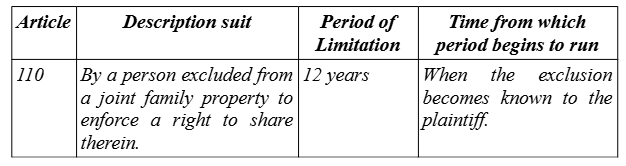
Versus
Rajaram – Respondent
Second Appeal No. 17 of 2023, Civil Miscellaneous Petition No. 459 of 2023
Decided On : 30-01-2025
| Table of Content |
|---|
| 1. rights to partition ancestral properties (Para 1 , 3 , 4 , 5) |
| 2. trial court's ruling on partition claim (Para 7 , 8) |
| 3. substantial questions of law framed (Para 9 , 10 , 11) |
| 4. plaintiff's right to demand partition (Para 12 , 14 , 15) |
| 5. ouster vs. adverse possession principles (Para 18 , 19) |
| 6. final judgment on partition and shares (Para 30 , 32) |
JUDGMENT :
K. RAJASEKAR, J.
1. The plaintiff has filed this Second Appeal challenging the concurrent finding wherein, both the Courts have held that the plaintiff is not entitled for partition of the suit properties.
2. For the sake of convenience, the parties are referred herein as per their ranking in the Trial Court.
3. The plaintiff and the first defendant are brothers. The second defendant is their sister. A Schedule properties are the ancestral properties in the hands of plaintiff's father namely, Velayudam. From the income earned from A Schedule property, B Schedule properties were purchased and both properties were enjoyed by the plaintiff, defendants and their father Velayudam. From the year 1979 onwards, the plaintiff has started residing in various places since he was employed, however, he used to pay ubiquities to his father. Velayudam Padayachi was died on 12.09.1984. Prior to his death, he was having a severe illness for the period of one month and he was not in a fit state of mind. Taking advantage of the plaintiff's absence, the defendants have fabricated a Will as if, the suit properties were bequethed in their favour. In the month of August 1985, the plaintiff came to know about the Will and issued a legal notice to the defendants as well as his mother and also demanded partition for the suit properties.
4. The defendants by stating various reasons, have dragged the issue for almost 15 years. In spite of elders advise to hand over the plaintiff's share, the defendants have refused to partition hence he has come forward with the suit for partition. Since the properties are ancestral properties and after the death of plaintiff's father, he is entitled for 2/3 share in the suit property. The alleged Will executed by the plaintiff's father is also not true, valid and it will not bind on the plaintiff. Hence he has come forward with the suit for partition.
5. The defendants have contested the suit and they pleaded that the suit properties are not ancestral properties of Velayudam. The plaintiff was working in various places as Village Administrative Officer and never cared about the family. Their father executed a Will in fit state of mind and was hale and healthy. The plaintiff was also fully aware about the execution of the Will and now claims it as forged Will with malafide intention. During lifetime of Velayudam, already the properties were given to the plaintiff. Their mother has also gifted some properties belongs to her in favour of the plaintiff. Even in the absence of Will, the plaintiff has lost his right in claiming partition since the first defendant is in exclusive possession for more than 15 years after denying the rights of the plaintiff and thereby, on the principle of ouster, the plaintiff is not entitled to claim partition. The suit is also barred by limitation, since the suit has been filed after lapse of 15 years. Some of the properties belongs to one Chakravarthy has also been included in the property hence the suit is bad for non-joinder of necessary parties.
6. Based on the pleadings, the Trial Court has framed the following issues:
“1. Whether the plaintiff is entitled for 2/3rd share in the suit properties?
2. Whether the suit is barred by limitation?
3. Whether the plaintiff is entitled for mesne profits under Order 20 Rule 12 CPC?
4. To what relief?”
7. The Trial Court has held that the plaintiff has already severed himself from the joint family hence he is not entitled to claim partition as a co-parceners and it has considered the rights of the parties, including the proof and validity of Will and accepted the validity of Will. The Trial C
AI
A co-parcener's possession is presumed to be joint; mere exclusive possession by another does not constitute adverse possession without evidence of hostile intent, supporting the right to partition.

A claim for partition can prevail despite long possession by others if there is insufficient proof of ouster or adverse possession against a co-parcener. Limitation Act principles apply to claims acc....
Possession of one co-parcener is deemed possession of all; mere long possession does not establish adverse possession without evidence of ouster.

The court affirmed that co-owners retain rights unless clear ouster is proven, and limitation laws do not apply to partition claims under the Hindu Succession Act.
Ouster among co-sharers requires hostile animus, long exclusive possession known to other co-owner; mere possession insufficient.
The court affirmed that daughters are entitled to equal shares in ancestral properties post-amendment, invalidating wrongful transactions made without their consent.
The amendment of co-parcenery rights retroactive effects and joint possession presumption prevent claims of ouster without substantial evidence.
In a partition suit, registered documents act as constructive notice, initiating the limitation period. Prolonged exclusive possession of ancestral property by a co-owner establishes ouster. Addition....
Properties claimed as self-acquired were determined to be ancestral; the appeal for partition was dismissed due to lack of joint possession evidence and non-joinder of necessary parties, also barred ....

(1) Principle that there cannot be a partial partition is not an absolute one – It admits of exceptions. Properties not in possession of co-sharers/coparceners being omitted cannot result in a suit f....



An indispensable Tool for Legal Professionals, Endorsed by Various High Court and Judicial Officers
Please visit our Training & Support
Center or Contact Us for assistance

Scan Me!
India’s Legal research and Law Firm App, Download now!


For Daily Legal Updates, Join us on :



 Back to top


