
 Back
Back





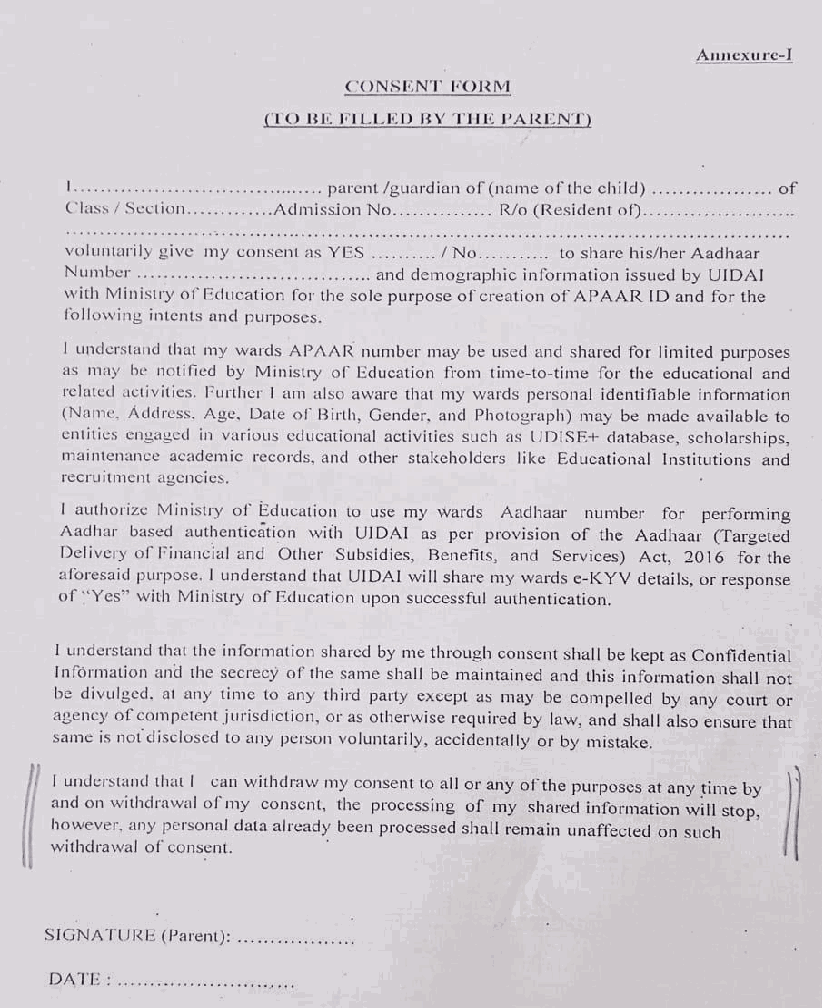
IN THE HIGH COURT OF ORISSA AT CUTTACK
SASHIKANTA MISHRA, J.
Rohit Anand Das and another – Petitioners
Versus
State of Odisha and others - Opposite Parties
W.P.(C) No.8285 of 2025
Decided On : 12-12-2025
| Table of Content |
|---|
| 1. right to privacy and consent implications. (Para 2 , 3 , 4) |
| 2. nature and role of educational authorities. (Para 5 , 6 , 7) |
| 3. procedural compliance in issuing notices. (Para 8 , 9) |
| 4. debate on voluntary vs. mandatory nature of consent. (Para 10 , 11 , 12 , 13) |
| 5. court analysis on consent form shortcomings. (Para 14 , 15 , 16 , 17 , 18) |
| 6. order for consent form amendment. (Para 19) |
JUDGMENT :
Sashikanta Mishra, J.
'Privacy is an inherent human right, and a requirement for maintaining a human condition with dignity and respect’- said Bruise Schneier in his book, ‘Schneier on Security’. It is a fundamental human right that protects an individual’s personal information, choices, dignity and freedom from unwarranted surveillance. It is recognized as a fundamental right under Article 21 of the Constitution of India. A Five- Judge Bench of the Supreme Court in the case of K.S. Puttaswamy vs. Union of India, (2019) 1 SCC 1 held in no uncertain terms that right to privacy being an important fundamental right encompasses various aspects of life. Though not absolute, it can be subject to reasonable restrictions only. The present Writ Petition involves the question of interference with the Petitioners’ right to privacy.
Facts
2. Briefly stated, the Petitioner No.2 represented by her father Petitioner No.1, is a student of K.G.1 in Sai International School, Bhubaneswar. The Petitioner No.1 received a letter dated 28.12.2024 from the school to give his consent for generation of an APAAR ID for his ward. A consent form was enclosed to the said letter. Said letter required the parents to give their consent along with a copy of their Aadhaar Card to the class teacher by 10th January, 2025 for generation of the APAAR ID. The Petitioners are basically aggrieved by such letter on the ground that it does not provide the parents the right to opt out of the requirement to submit Aadhaar details. According to the Petitioners, the consent form contains several clauses which could infringe their right to privacy, as their personal information could be made available to other entities. It also runs contrary to the stated position of the Ministry of Education, Government of India that the initiative is entirely voluntary in nature. Petitioner No.1 therefore, wrote to the Principal of the School expressing his apprehension and clearly indicating that he would not be granting consent for the creation of an APAAR ID for his daughter (Petitioner No.2). He also indicated that the consent form provided along with the letter dated 28.12.2024 did not provide an option to refuse consent or opt out of the initiative. Since the petitioners did not receive any response, they have approached this Court in the present Writ Petition seeking the following relief:
“It is, therefore, prayed that the writ petition may kindly be allowed and by an appropriate writ, order or direction the Hon’ble Court may be pleased to;
(a) Issue an appropriate writ, order or direction in the nature of a mandamus directing the Opposite Parties to amend the consent form given in Ministry of Education letter dated 11.10.2023 vide Annexure-4 so as to provide parents with the option to opt out of issuance of APAAR ID;
(b) Issue an appropriate writ, order or direction declaring that the present consent form for the APAAR initiative is not valid without the provision of an option to refuse consent as this violates Petitioner No. 2’s right to privacy under Article 21 of the Constitution;
(c) In the alternative, issue an appropriate writ, order or direction in the nature of a mandamus directing the Opposite Parties to rescind the Ministry of Education letter dated 11.10.2023 vide Annexure-4 and related instructions/orders directing schools to get APAAR ID issued and issue a new notification, if required, wherein the option to opt out of issuance of APAAR ID is clearly given to parents and displayed in the consent form;
(d) Issue an appropriate writ, order or direction in the nature of a mand
AI
Consent forms for educational initiatives must include opt-out provisions to protect individuals' right to privacy under Article 21 of the Constitution.

Mandatory Aadhar-based facial recognition attendance is unconstitutional as it violates the right to privacy under Articles 14, 19, and 21 and must be voluntary as per the Aadhar Act.


Point of law : If a student omits or fails to pay the fees and contributions due to a school together with the fine due thereon by the last working day of the month in which they are due, his name sh....

The court affirmed that public health measures can limit individual rights if justified by legality, necessity, and proportionality, especially during emergencies like a pandemic.


The court held that under Section 33 of the Aadhaar Act, UIDAI must provide Aadhaar details to aid in tracing missing trafficking victims, balancing privacy with the need for substantive justice.



An indispensable Tool for Legal Professionals, Endorsed by Various High Court and Judicial Officers
Please visit our Training & Support
Center or Contact Us for assistance

Scan Me!
India’s Legal research and Law Firm App, Download now!


For Daily Legal Updates, Join us on :



 Back to top


