Back
Back





2025 Supreme(Sikk) 53
THE HIGH COURT OF SIKKIM : GANGTOK
MEENAKSHI MADAN RAI, J.
The Branch Manager, New India Assurance Co. Ltd. - Appellant
Versus
Kailash Rai and Another – Respondents
MAC App. No.03 of 2024
Decided On : 22-05-2025
For the Appellant :Mr. Dipayan Roy, Advocate
For the Respondents:Mr. Tashi Wongdi Bhutia and Ms. Anjali Pradhan, Advocates, Mr. Mahesh Subba, Advocate.
An explicitly authorized driver qualifies as a third party under an insurance contract, rendering the insurer liable to indemnify damages for accidental death. Being authorized differentiates the driver from a vehicle owner or mere borrower, ensuring eligibility for compensation regardless of optional personal accident coverage.
Headnote:(A) Motor Vehicles Act, 1988 - Sections 166 and 168 - Death in motor accident - Liability of insurer - Status of deceased driver - Whether authorized driver steps into the shoes of the owner - Necessity of proving negligence - Applicability of doctrine of res ipsa loquitur - When the facts of an accident suggest negligence in the absence of direct explanation, the legal burden remains satisfied. (Paras 6, 8)
(B) Insurance Law - Contract of indemnity - Third party coverage - Distinction between authorized driver and borrower of vehicle - When a driver is explicitly authorized by the vehicle owner, such driver is classified as a third party under the insurance contract, despite the absence of specific optional coverage - Vicarious liability of the owner for the actions of an authorized driver. (Paras 7, 8)
(C) Appellate Jurisdiction - Scope of judicial review - An appellate court must ensure that findings are based on evidence on record and sound judicial reasoning - Failure to consider documentary evidence, such as authorization letters, renders findings perverse and warrants interference. (Paras 7, 8, 9)
Facts of the case:
A claim was filed by the parent of a deceased driver who died in a motor vehicle accident. The lower tribunal initially questioned the claim, asserting that the deceased stepped into the shoes of the vehicle owner and that the absence of personal accident coverage barred recovery. The insurer challenged the liability, while the claimant sought compensation for the loss.
Findings of Court:
The court held that the deceased, being explicitly authorized by the owner to operate the vehicle, did not forfeit the status of a third party. The doctrine of res ipsa loquitur was applicable to the circumstances of the accident, confirming negligence. The insurer is liable to indemnify the loss under the standard contract of insurance.
Issues: Whether an authorized driver who meets with a fatal accident constitutes a third party for the purpose of insurance indemnity, and whether the lack of specific optional personal accident coverage for the owner excuses the insurer from liability for damages arising from the death of an authorized third-party driver.
Ratio Decidendi: A driver who operates a vehicle under express authorization from the owner maintains the status of a third party. Therefore, the insurer is liable to pay compensation for the death of said driver under the relevant motor vehicles legislation, as the authorized status prevents the driver from being conflated with the owner, regardless of personal relationship.
Result: Appeal dismissed. The insurer is directed to pay the awarded compensation with interest from the date of filing the claim petition.
| Table of Content |
|---|
| 1. case context, factual background of the accident, and initial arguments of parties. (Para 1 , 2 , 3 , 4 , 5) |
| 2. evaluation of lower court errors and applicability of the 'stepping into shoes of owner' doctrine. (Para 6 , 7) |
| 3. authorized drivers are third parties; they do not step into the owner's shoes. (Para 8) |
| 4. assessment of just compensation and formal disposal of the appeal. (Para 9 , 10 , 11 , 12 , 13 , 14) |
JUDGMENT :
Meenakshi Madan Rai, J.
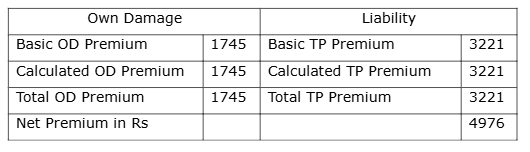
1. The Appellant-Insurance Company assails the Judgment dated 13-02-2024, of the Learned Motor Accidents Claims Tribunal, Gangtok, Sikkim (hereinafter, “MACT”), in MACT Case No.32 of 2022. The Respondent No.1-Claimant, father of the deceased, in an application filed under Section 166 of the Motor Vehicles Act, 1988 (hereinafter, “MV Act”) sought compensation of a sum of Rs. 30,38,000/- (Rupees thirty lakhs and thirty eight thousand) only, on account of the death of his twenty-seven year old son, due to a motor vehicle accident on 21-06-2022. Rs. 15,00,000/- (Rupees fifteen lakhs) only, was granted against the said claim by the MACT. The Appellant is aggrieved by the fact that despite the insured- Respondent No.2 herein, having opted out of the “compulsory personal accident” (CPA) and not paid the premium thereof, the amount of Rs. 15,00,000/- (Rupees fifteen lakhs) only, was erroneously granted by the MACT, contrary to the terms of the insurance policy, the MACT having reasoned that the driver, since deceased, had stepped into the shoes of the owner and thus entitled to the compulsory PA cover.
2. The Appellant, before this Court, urged that, as Respondent No.2 the owner of the vehicle, had opted out of the CPA coverage of the insurance policy, the liability of the Appellant to compensate did not arise. Drawing strength from the decision in Ramkhiladi and Another vs. United India Insurance Company and Another , (2020) 2 SCC 550 : AIR 2020 SC 527 and Dhanraj vs. New India Assurance Co. Ltd. and Another , (2004) 8 SCC 553 : AIR 2004 SC 4767 it was contended that as the deceased son, stepped into the shoes of the owner of the vehicle Respondent No.2, his mother, the Respondent No.1 was disentitled to the compensation claimed.
3. The Respondent No.1, on the other hand, submitted that the issue of Respondent No.2 opting out from the personal accident cover was never agitated before the MACT and is being raised for the first time in Appeal. That, the policy is a “Private Car Package Policy” and covers all persons travelling in the vehicle, including the driver of the vehicle. That, there is no error in the finding of the MACT granting Rs. 15,00,000/- (Rupees fifteen lakhs) only, to the Respondent No.1.
4. Respondent No.2 had no submissions to advance, but endorsed the submissions put forth by Learned Counsel for the Respondent No.1.
5. Before considering the merits of the matter, a brief summary of the facts is narrated herein. The deceased Suraj Rai, aged about twenty-seven years and drawing a monthly salary Rs. 20,000/- (Rupees twenty thousand) only, was the son of the Respondent No.1-Claimant and the Respondent No.2 the vehicle owner. He was driving vehicle bearing registration No.SK 05 P 0815 (Mahindra Bolero) on the Gangtok road, District Namchi, on 21-06-2022. He met with the unfortunate accident at about 0915 hours the same day, resulting in his fatality. The Respondent No.1 filed the Claim Petition under Section 166 of the MV Act before the Learned MACT, seeking compensation as detailed hereinabove.
6. Having considered the arguments of the Learned Counsel for the parties and examined the documents on record, it is relevant to notice in the first instance that the MACT in the impugned Judgment while granting compensation amounting to Rs. 15,00,000/- (Rupees fifteen lakhs) only, rationalised in Paragraphs 12 and 14 of the impugned Judgment inter alia that (i) there was no rash or negligent driving of any other person in the present case. (ii) A claim for compensation cann