
 Back
Back





IN THE HIGH COURT OF ALLAHABAD
VIVEK KUMAR BIRLA, DONADI RAMESH, JJ.
Shashi Kant Tiwari – Appellant
Versus
High Court Of Judicature At Allahabad And 2 Others – Respondents
Writ A No. 12307 of 2019
Decided on : 23-04-2024
| Table of Content |
|---|
| 1. the initial hearing outlines the structure of employment and intentions regarding examination. (Para 1) |
| 2. factual background of the petitioner's case and attempts in examinations (Para 2 , 3) |
| 3. arguments challenging the rejection based on employment circumstances (Para 4 , 5 , 6) |
| 4. court’s analysis of the implications of full-time employment on advocacy eligibility (Para 8 , 10 , 11) |
| 5. establishment of eligibility criteria from constitutional and statutory provisions (Para 12 , 13 , 16 , 18) |
| 6. the court's conclusion reiterates the requirement of continuous practice for eligibility. (Para 19 , 20) |
| 7. court’s final dismissal of the petition based on established criteria (Para 22 , 24 , 25) |
JUDGMENT :
Vivek Kumar Birla, J.
1. Heard Sri Shashi Kant Shukla along with Sri Sushil Kumar Shukla, learned counsel for the petitioner and Sri Ashish Mishra, learned counsel appearing for the respondents-High Court.
2. Present petition has been filed with the following prayers:-
“I. Issue a writ order of direction in the nature of certiorari to quash the impugned order dated 08.05.2019 vide Memo No. 232/S & A Cell/2-019 passed by respondent no. 2 Registrar (J) Selection and Appointment/Seniority High Court of Judicature at Allahabad.
II. Issue a writ order of direction in the nature of mandamus commanding and directing the respondents to declare the result of the petitioner as finally selected candidate in Uttar Pradesh Higher Judicial Service Examination 2016 bearing roll No. 6242.
III. Issue a writ order of direction in the nature of mandamus commanding the respondents to issue the appointment letter to the petitioner as finally selected candidate in Uttar Pradesh Higher Judicial Service Examination 2016 bearing roll No. 6242.”
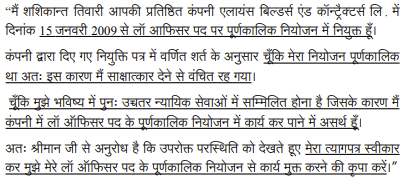
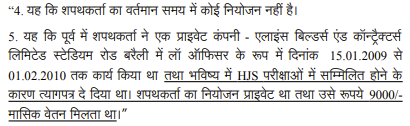
3. As stated, the case of the petitioner is that the petitioner is a practising lawyer and was registered as an Advocate on 16.11.1998 in Bar Council of Uttar Pradesh. He was appointed as Law Officer on 15.1.2009 in a company with the name and style of Alliance Builders and Contractors Limited, Bareilly (hereinafter referred as the Company). It is alleged that he was representing on behalf of the Company in different courts of law, a copy of the appointment letter dated 15.1.2009 has been annexed as Annexure-3 to the writ petition. It is the case of the petitioner that he was simultaneously also appearing for private clients and had filed several Vakalatnamas on behalf of other litigants as well in various courts of law during the year 2009-10. He appeared in Uttar Pradesh Higher Judicial Services Examination, 2009 and in the Form the fact regarding his legal services to the abovenoted Company has been mentioned. He was qualified the prelims as well as the written examination and was called for interview but he was not permitted to participate in the interview on the ground that he is a salary paid employee. As he intended to appear in Higher Judicial Services Examination, therefore, he moved an application dated 1.1.2010 before the Managing Director of the Company tendering his resignation, copy whereof has been annexed as Annexure-14 to the writ petition. The resignation of the petitioner was accepted by the Company and relieving order was passed on 1.2.2010. Subsequently, the petitioner appeared in Uttar Pradesh Higher Judicial Services Examination, 2012 and was again successful in prelims as well as in the written examination and was called for interview, however, as he has obtained only 21 marks out of 100 marks, therefore, his name did not figure in the select list. He again appeared in Uttar Pradesh Higher Judicial Services Examination, 2014 but could not qualify the written examination. The petitioner again applied in April 2016 for Uttar Pradesh Higher Judicial Services Examination, 2016 against 72 vacancies so advertised. He filled up the Form on 6.6.2016 (Annexure-19 to the writ petition), however, it is claimed that due to inadvertent mistake some facts were wrongly mentioned by the petitioner
AI
An advocate ceases to practice when engaged in full-time employment, rendering them ineligible for judicial recruitment under Article 233(2) of the Constitution.


The central legal point established in the judgment is the interpretation of the requirement of 'continuously practicing advocate for not less than 7 years' for selection to the Delhi Higher Judicial....

The main legal point established in the judgment is the requirement of continuous practice as an advocate immediately preceding the date of the application for appointment as a District Judge.

The requirement of continuous practice for seven years under Rule 9(2) of the Delhi Higher Judiciary Services Rules aligns with Article 233(2) of the Constitution, validating the rule's constitutiona....
The eligibility criterion of 'having been continuously practicing as an Advocate for not less than seven years' as per Rule 9(2) of the DHJS Rules does not require an inquiry into the specific functi....

Point of law : Article 309 of the Constitution of India deals with the recruitment and conditions of service of persons serving the Union or a State. The Article 309 provides the competence for the G....
In the cases where such in-service incumbents have been appointed by way of direct recruitment from bar as we find no merit in the petitions and due to dismissal of the writ petitions filed by the ju....



An indispensable Tool for Legal Professionals, Endorsed by Various High Court and Judicial Officers
Please visit our Training & Support
Center or Contact Us for assistance

Scan Me!
India’s Legal research and Law Firm App, Download now!


For Daily Legal Updates, Join us on :



 Back to top


