
 Back
Back





IN THE HIGH COURT OF ALLAHABAD
SAURABH SHYAM SHAMSHERY, J
Radheshyam Shukla And 14 – Appellant
Versus
State Of Up And 3 Others – Respondent
Decided on : 06-03-2025
WRIT - A No. – 19031, 16842, 17403 of 2024 WRIT - A No. – 1169, 1207, 1357, 1372, 1378, 1469 of 2025
Decided On : 06-03-2025
(A) Uttar Pradesh Civil Pension Commutation Rules, 1941 - Recovery of commutation amount from pension - Petitioners challenged an Office Memorandum dated 08.12.2008, asserting that recovery terms were excessive and arbitrary - Court upheld the 15-year recovery period, stating that acceptance of commutation terms was binding. (Paras 3-5, 12-14)
(B) Judicial Review - The court reiterated that policy matters regarding pension commutation are not subject to judicial review unless proven arbitrary or irrational - Petitioners failed to demonstrate any such grounds. (Paras 12-14)
Facts of the case:
Petitioners, retired employees of the U.P. Government, contested the extended recovery period of their commuted pension, arguing it was excessive and not stipulated by any regulation. (Paras 2-4)
Findings of Court:
The court found the recovery policy reasonable and consistent with previous judgments, dismissing the writ petitions for lack of merit. (Paras 18-19)
Issues: Whether the recovery of commutation amount for 15 years is arbitrary and if petitioners had grounds to challenge the Office Memorandum. (Paras 3-4)
Ratio Decidendi: The court concluded that acceptance of commutation terms creates a binding contract, and the recovery period of 15 years is not subject to modification post-acceptance. (Paras 12-14)
Result: Writ petitions dismissed.
JUDGMENT :
Saurabh Shyam Shamshery, J.
1. Heard S/Sri Nawal Kishor Mishra, Praveen Tiwari, Bhagwan Dutt Pandey, Rajesh Tripathi, Vijay Kumar Rai, Ram Krishna Yadav, Ashok Kumar Yadav, Pashant Singh, Anurag Shukla, Satish Chandra Tiwari, Brijendra Kumar Srivastava, Suresh Singh, Rajesh Kumar, Vinod Kumar Singh, Chandra Bhan Gupta, Chheda Lal Verma, Rajnish Kumar Srivastava, Anil Kumar Sharma and Ms. Durga Tiwari, learned counsels for petitioners, Sri Ashish Kumar Nagvanshi and Sri Rajesh Kumar Tiwari, learned A.C.S.C. for State along with other connected writ petitions.
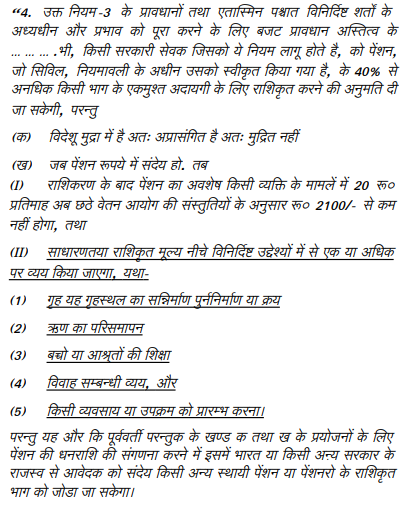
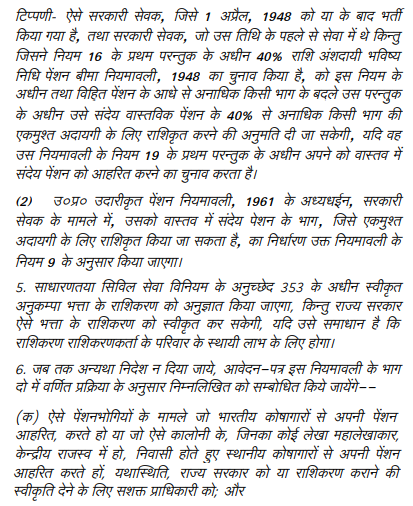
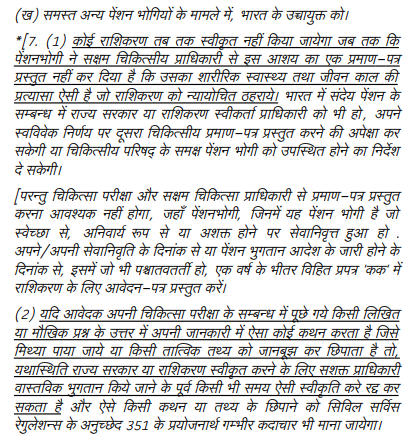
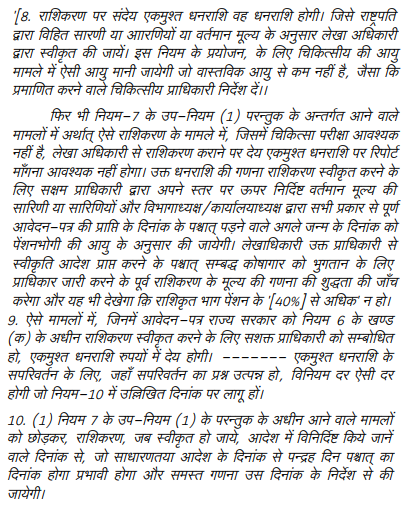
2. This is bunch of writ petitions. All the petitioners have retired many years ago from the U.P. Government of Higher Education Department and are receiving pension and they have received benefits of a lump sum amount by Commutating their respective pension under Uttar Pradesh Civil Pension Commutation Rules , 1941.
3. The petitioners are aggrieved that their commutation amount has already recovered in about 10 to 12 years, however, by an Office Memorandum dated 08.12.2008, recovery from pension is directed to continue up to 15 years and as such the government has received much more amount than it was commuted. All the writ petitioners have challenged the said Office Memorandum dated 08.12.2008 on similar ground that according to their contention, the commutation amount was not loan, therefore, the exact amount could only be recovered and not more.
4. Learned counsels for petitioners have also argued that there is no provision that by way of an Office Memorandum dated 08.12.2008, number of years to recover commutation value could be determined upto 15 years, without any basis and otherwise also it was excessive and arbitrary.
5. This Court has earlier asked the counsels for petitioners to go through a recent judgement passed by Division Bench of this Court in case of Ashok Kumar Agrawal and 48 others versus Union of India and another , 2025:AHC:6439-DB , wherein similar arguments were rejected in regard to petitioners therein i.e. employees of Punjab National Bank. For reference the relevant part thereof is mentioned hereinafter :-
“Having accepted such offer, a binding contract comes into existence between the employee and the employer as per which the original pension is to be restored after 15 years. Having acquiesced to the commutation policy with open eyes, it is not open for the retiring employee to contend later that the period of restoration of full pension be reduced from 15 years to 10 years. Whether or not the lumpsum amount gets equalised on expiry of 10 years or 11 year is not decisive or material. What is material is the nature of obligation which enures upon the parties when the retiring employee accepts the provision of commutation of pension. The employee with his open eyes having availed the policy, cannot subsequently turn around or seek modification in its terms. The argument that the table or the figures were not adequately disclosed, is also not acceptable, inasmuch as the chart specifies the manner in which the commutation is to be fixed and the period after which the original pension is to be restored. In case, the employees had any misgivings about it, they could have sought appropriate clarification before accepting the offer. Once, the petitioners have acquiesced to the policy and accepted the offer, their subsequent attempt to resile or seek change in its computation would clearly be impermissible.
The writ petition lacks merit and is, accordingly, dismissed.
The view taken by us clearly finds support from the adjudication made by the Supreme Court in "Common Cause" A Registered Society And Others Vs. Union of India, (1987) 1 Supreme Court Cases, 142 , R. Gandhi Vs. Union of India And Others , (1999) 8 SCC 106 as well the judgment of Delhi High Court in Forum Retired IPS Officers (FORIPSO) Vs. Union of India & Another, 2019 SCC Online Del 6610 and Punjab & Haryana High Court in Shila Devi Vs. State of Punjab in CWP No. 9426 of 2023 ."
6. In re
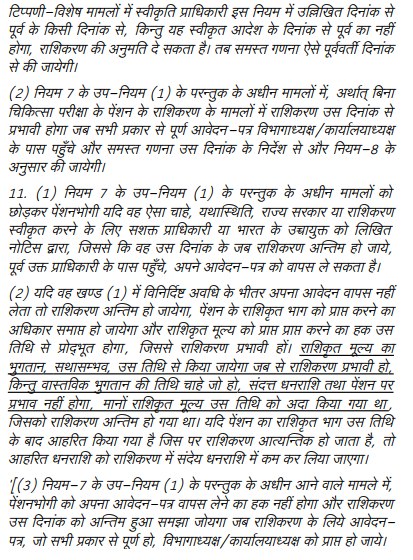
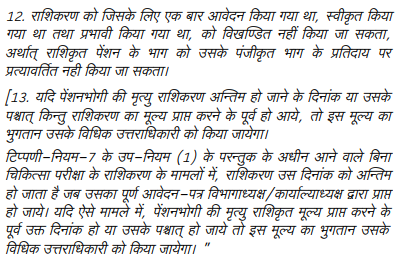
The acceptance of pension commutation terms creates a binding contract, and the 15-year recovery period is upheld as reasonable and not subject to judicial review.

The court upheld the 15-year recovery period for pension commutation value, emphasizing it prevents unjust enrichment while balancing pensioners' rights and financial sustainability.


The existing 15-year period for pension commutation restoration is upheld as lawful, with no justifications for its reduction.

The court upheld the 15-year pension recovery period, deeming it non-arbitrary based on established precedents.

The court upheld the 15-year period for restoration of commuted pension as neither arbitrary nor unreasonable, affirming binding legal precedent.
Pensioners cannot challenge 15-year commutation recovery period after voluntarily accepting it; tribunals lack jurisdiction to direct policy changes reducing restoration time despite earlier lump-sum....

Rule. 315 (a) Government may sanction commutation for a lump amount, of one-half of the pension or any lesser amount provided that the residue of pension after commutation is not reduced to less than....



An indispensable Tool for Legal Professionals, Endorsed by Various High Court and Judicial Officers
Please visit our Training & Support
Center or Contact Us for assistance

Scan Me!
India’s Legal research and Law Firm App, Download now!


For Daily Legal Updates, Join us on :



 Back to top


