Back
Back





2025 Supreme(All) 3159
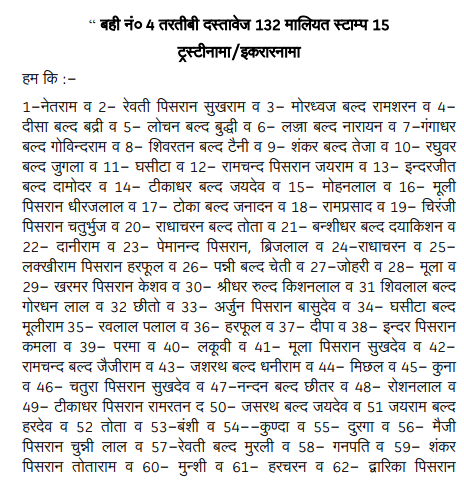
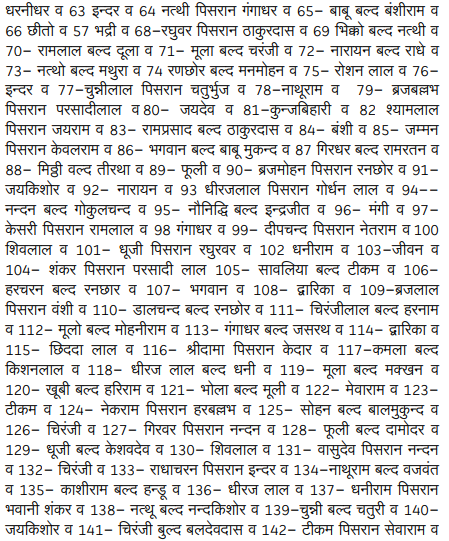
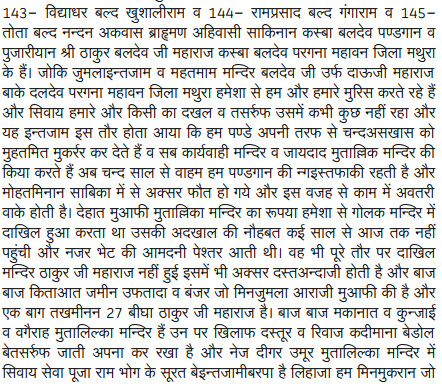
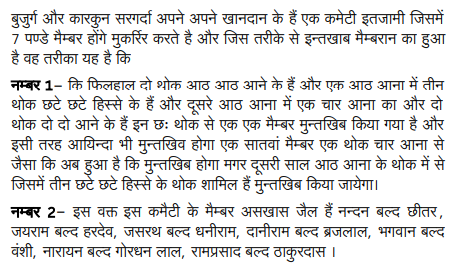
IN THE HIGH COURT OF JUDICATURE AT ALLAHABAD
ROHIT RANJAN AGARWAL, J.
Govind Ram Pandey And Another – Appellant
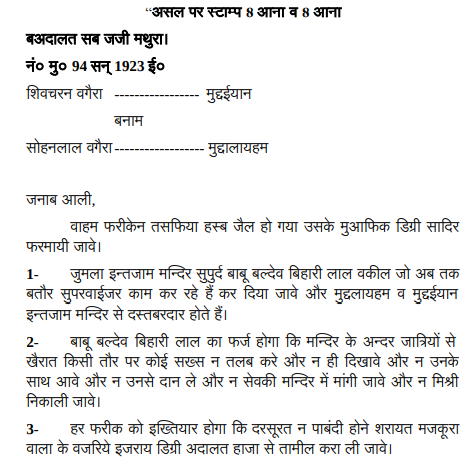
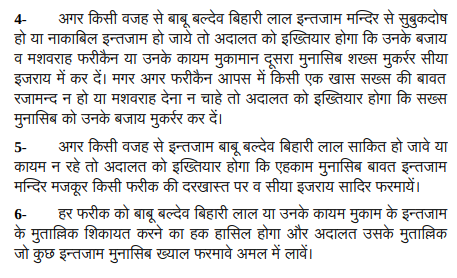
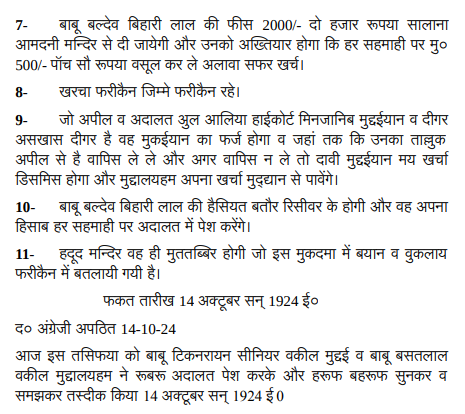
Versus
Nutan Prakash And 15 Others – Respondents
Matters Under Article 227 No.10194 of 2024
Decided on : 21-03-2025
For the Petitioner: Ravi Shanker Pathak, Siddharth Niranjan, Yadvendra Rai Pandey
For the Respondent: Ananya Pandey, Ashish Kumar Dubey, Durlabh Kumar Pandey, Badri Mani Tripathi, Rahul Sahai, Rakesh Kumar, Yadvendra Rai Pandey
The 1904 management agreement regulates temple governance, rejecting succession claims; appointments to the management committee must arise solely from designated family groups.
Headnote:(A) Indian Trusts Act, 1882; Code of Civil Procedure, 1908 - Section 94 - Dispute over management of temple - The court addressed historical management agreements, questioning the applicability of successorship in management roles. The 1904 Agreement mandates the constitution of a management committee exclusively from the original families involved. (Paras 1, 3, 63)
(B) Judicial Precedent - The court noted a trend of continued litigation based on compromise and non-adherence to foundational management agreements, indicating a misuse of judicial process. [Paras 55, 60]
Facts of the case:
The case centers on a long-standing dispute regarding temple management, underpinned by a 1904 management agreement. The present litigants claim legacy rights over temple management contrary to the original agreement. (Paras 1-3)
Findings of Court:
The court found that the original management agreement from 1904 governs current management, rejecting claims of succession based on a 1924 compromise. (Paras 63, 64)
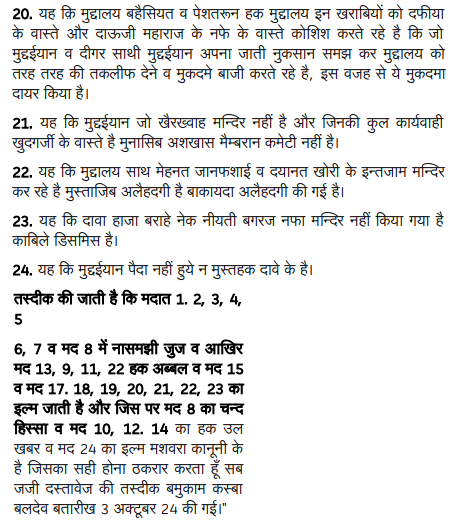
Issues: Whether the original management agreement allows for succession in management roles, and the validity of ongoing receiver appointments based on compromise notwithstanding the initial agreement. (Paras 20, 55)
Ratio Decidendi: The court emphasized that the 1904 Agreement does not provide for succession; management roles must be filled exclusively from designated families with the role of receivers as temporary measures to ensure property management. (Paras 42, 55)
Result: The court dissolved ongoing proceedings for receiver appointment, directing the formation of a new management committee per the original agreement.
| Table of Content |
|---|
| 1. historical background of the temple and its management. (Para 1 , 2 , 3) |
| 2. details of the 1904 agreement and initial temple management structure. (Para 4 , 6 , 8) |
JUDGMENT :
ROHIT RANJAN AGARWAL, J.
1. Holy city of Mathura is under grip of frivolous temple litigations. Most of them are for appointment of Receivers and controlling day to day functioning.
2. Present litigation hovers around famous Sri Thakur Baldeo Ji Maharaj Temple also known as Dauji Mandir. It is an old temple situated at Baldeo Mahawan, Mathura. History relates back to about 500 years, when it was built/established by one Parampujya Goswami Kalyan Devacharya Ji Maharaj. After his death, his successors managed the affairs of Temple and conducted seva, puja, archana etc. With passage of time, families of successors increased and by end of 1903, there were 145 families who were looking after the seva and puja.
3. Admittedly, on 02.09.1904, a Trustee Nama/Ikrar Nama (hereinafter called as “Agreement”) was executed which was registered on 13.09.1904 by family members of 145 families. According to the registered Agreement, 145 family members were divided into six groups (Thoks). From them, Seven Member Management Committee was appointed which included following persons:-
(i) Nandan son of Chhittar (ii) Jayram son of Hardeo (iii) Jasrath son of Dhaniram (iv) Daniram son of Brajlal (v) Bhagwan son of Banshi (vi) Narayan son of Gordhan Lal and (vii) Ram Prasad son of Thakur Das
4. Paragraph 3 of the Agreement provided that each shareholder continued to perform puja and seva on his turn and Committee would only supervise such activities. Paragraph 5 provided that in case of death of any member, or in case he refuses to work, or fails to attend the meeting of the Committee for one year, then another member from his Thok was to be appointed. In case, for three months, no member was appointed then remaining member would appoint a member in his place. Further, in case of dispute between the existing members, a draw of lots would be done before the Deity and a person in whose name the chit is opened would be appointed as the member.
5. The Agreement which was executed on 02.09.1904 and registered on 13.09.1904 is extracted hereasunder for the better appreciation of the case:-
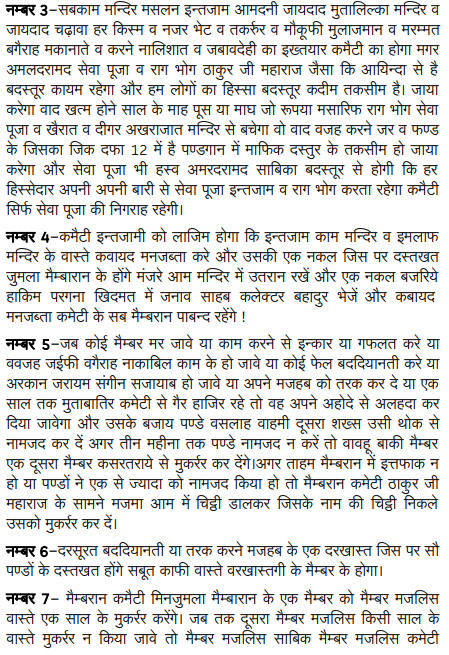
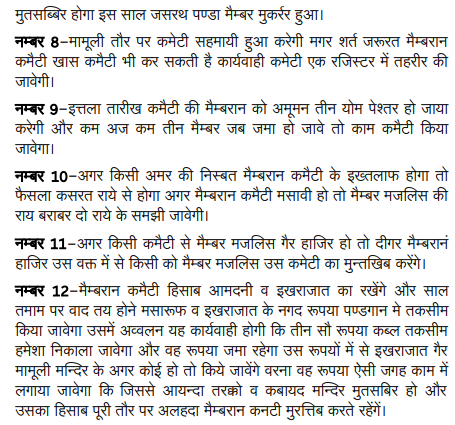
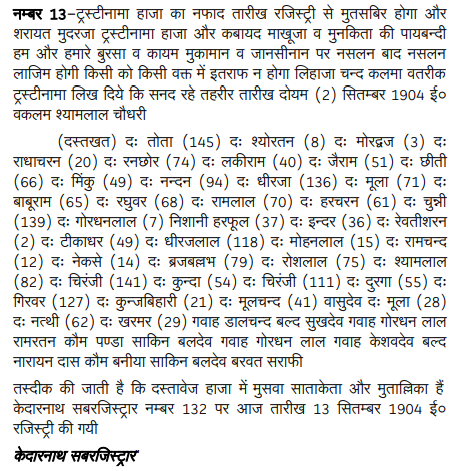
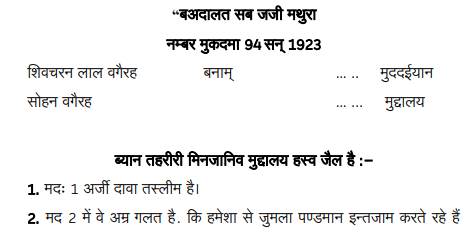
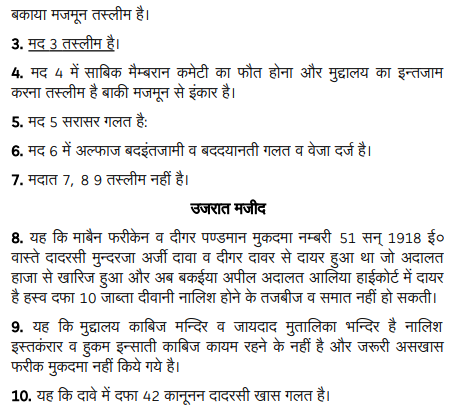
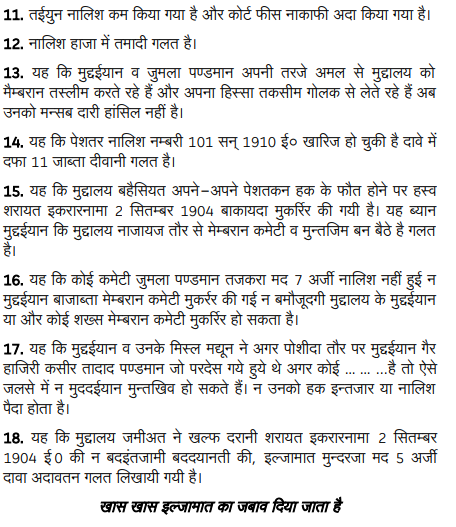
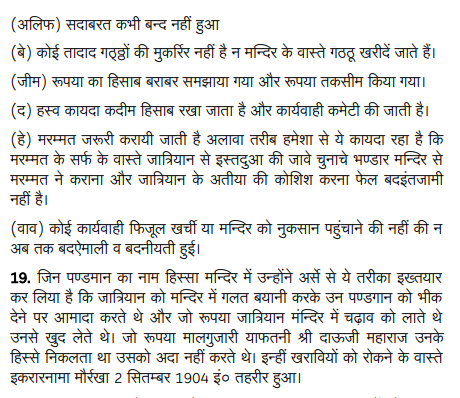
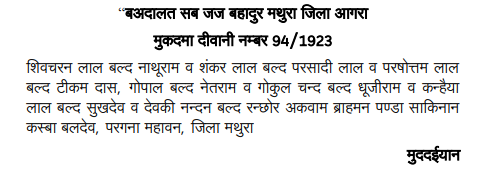
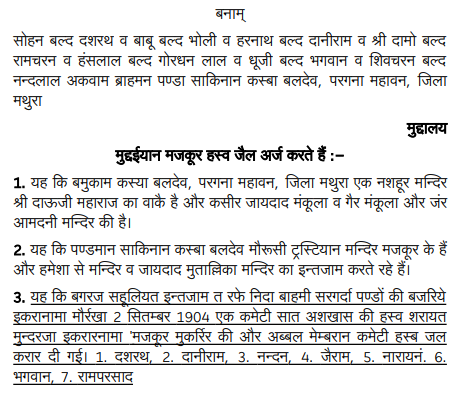
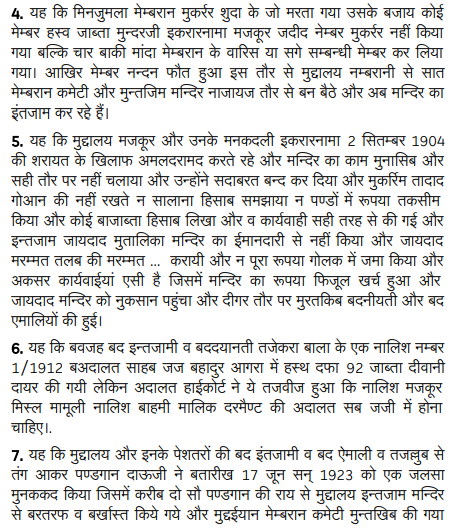
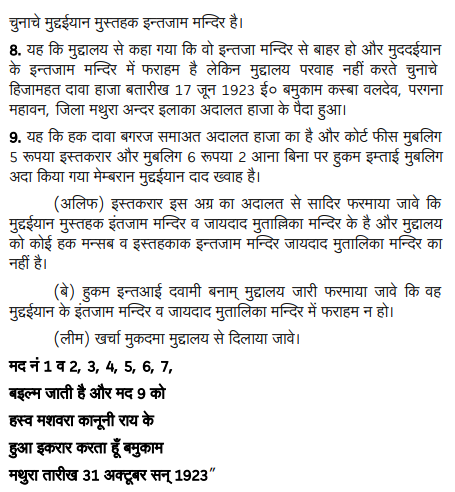
6. After the execution of the above document, 145 families who were rendering puja and seva continued for a decade or so, but sometimes in the year 1923, dispute arose in regard to functioning of the Committee of Management. On 17.06.1923, a meeting of 200 Pandas (Sevayats) of Dauji Temple was held and a resolution was passed for removing the Seven Member Management Committee who were not the original appointees of 1904 and they had claimed to be the legal heirs of them. On the same day, Seven Member Committee was nominated by 200 Pandas which included Shivcharan Lal, Shankar Lal, Parshottam Lal, Gopal, Gokul Chandra, Kanhaiya and Devaki Nandan. On 31.10.1923, these seven members filed Original Suit No. 94 of 1923 before Sub Judge, Bahadur, Mathura, District-Agra against Sohan son of Dashrath, Babu son of Bholi, Harnath son of Daniram, Shri Damo son of Ramcharan, Hanslal son of Govardhan Lal, Dhuji son of Bhagwan and Shivcharan son of Nandlal. In the plaint, it was alleged that that as per the registered agreement dated 02.09.1904, Seven Member Committee was constituted which included Dashrath, Daniram, Nandan, Jairam, Narayan, Bhagwan and Ram Prasad. After the death of members of original Management Committee, no new members were inducted as per the agreement, but their legal heirs and near relatives formed a Committee of Management. In the said suit, relief of declaration for managing the affairs of temple along with relief of permanent injunction restraining the defendants from interfering in peaceful working was sought. The entire plaint of Suit No. 94 of 1923 is extracted hereasunder:-
7. The defendants of Suit No. 94 of 1923 contested the same and filed their written statement on 03.10