
 Back
Back





IN THE HIGH COURT OF ALLAHABAD
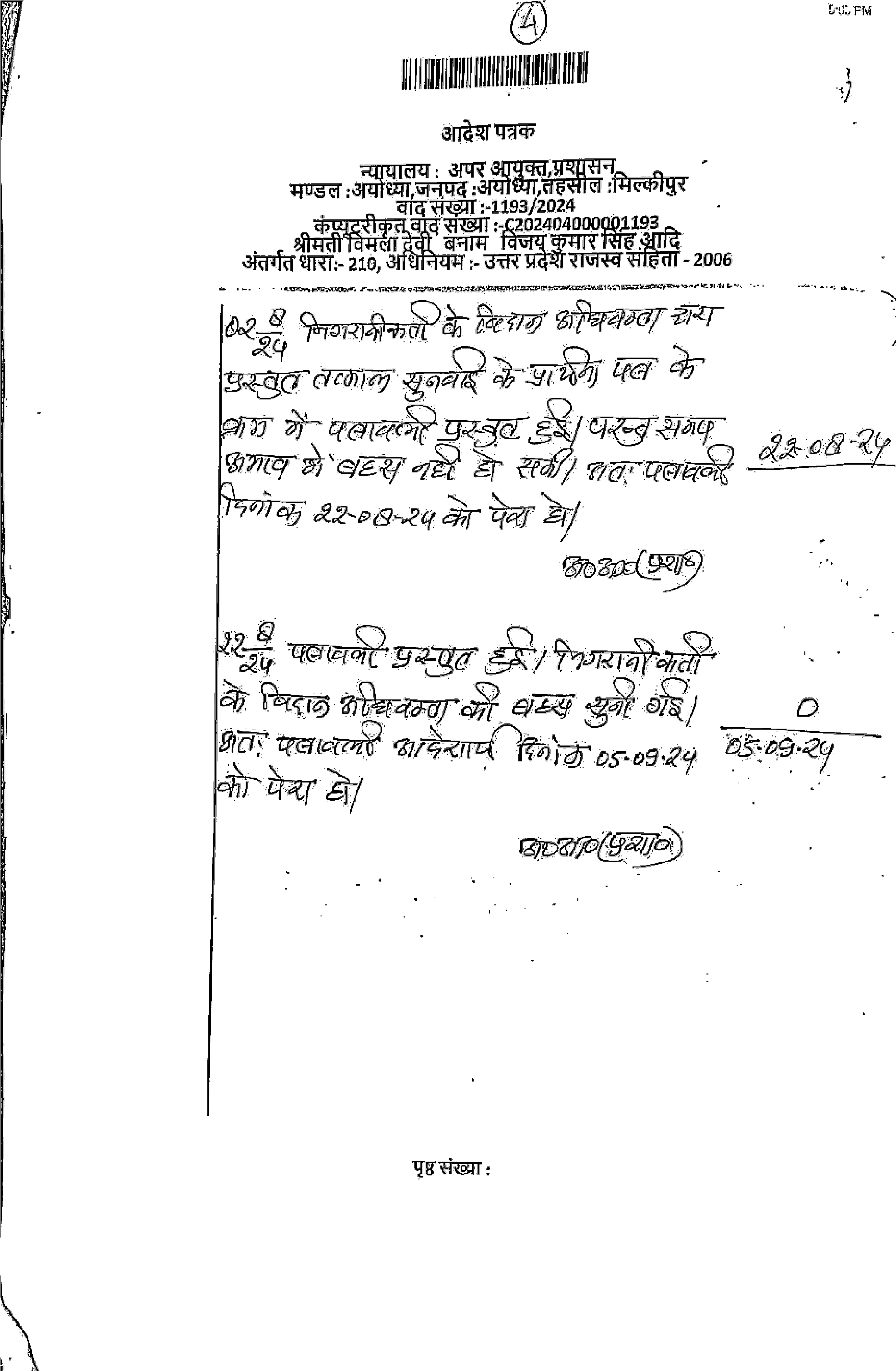
Jaspreet Singh, J.
Arvind Kumar Singh – Petitioner
Versus
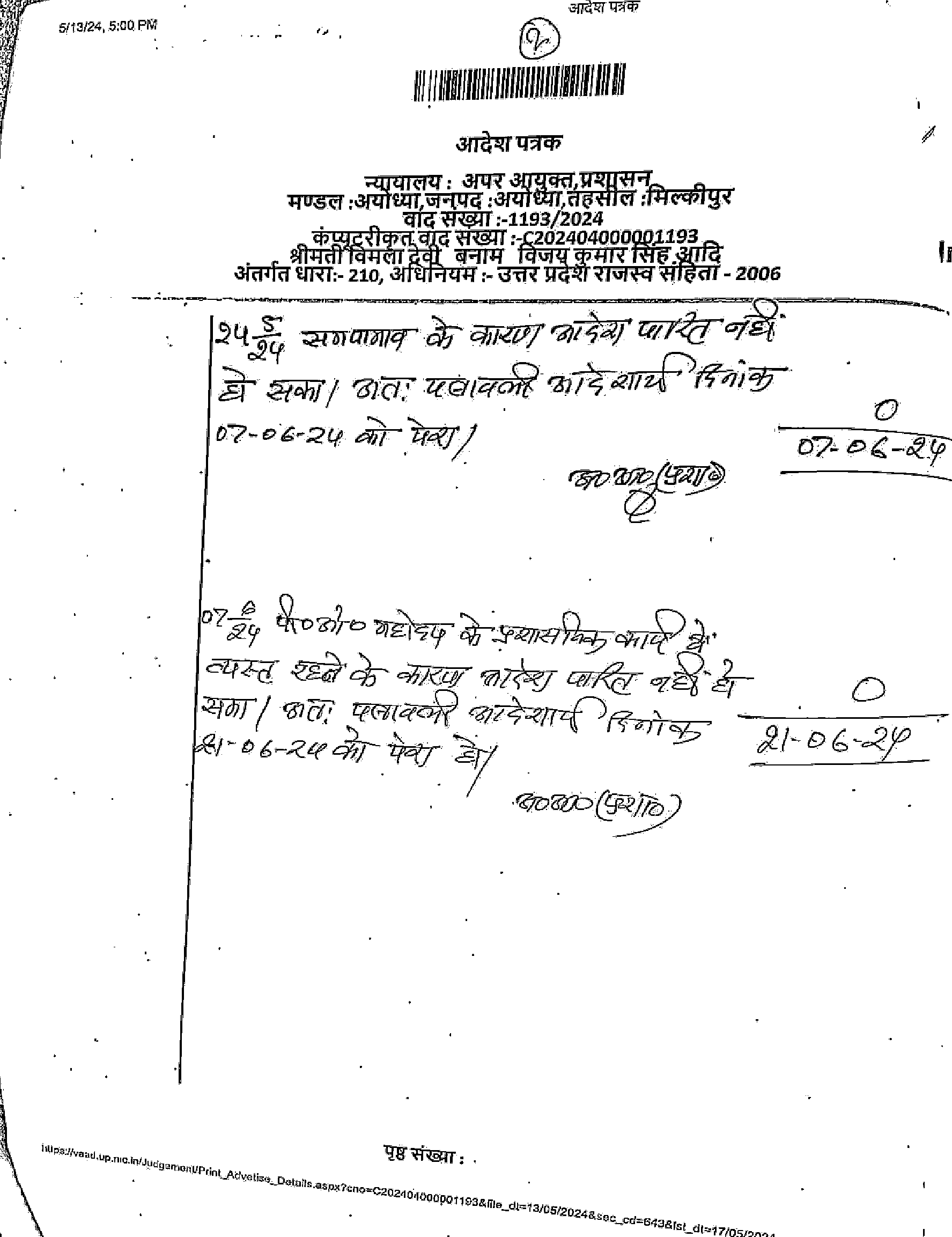
State Of U.P. Thru. Collector, Ayodhya And Others – Respondents
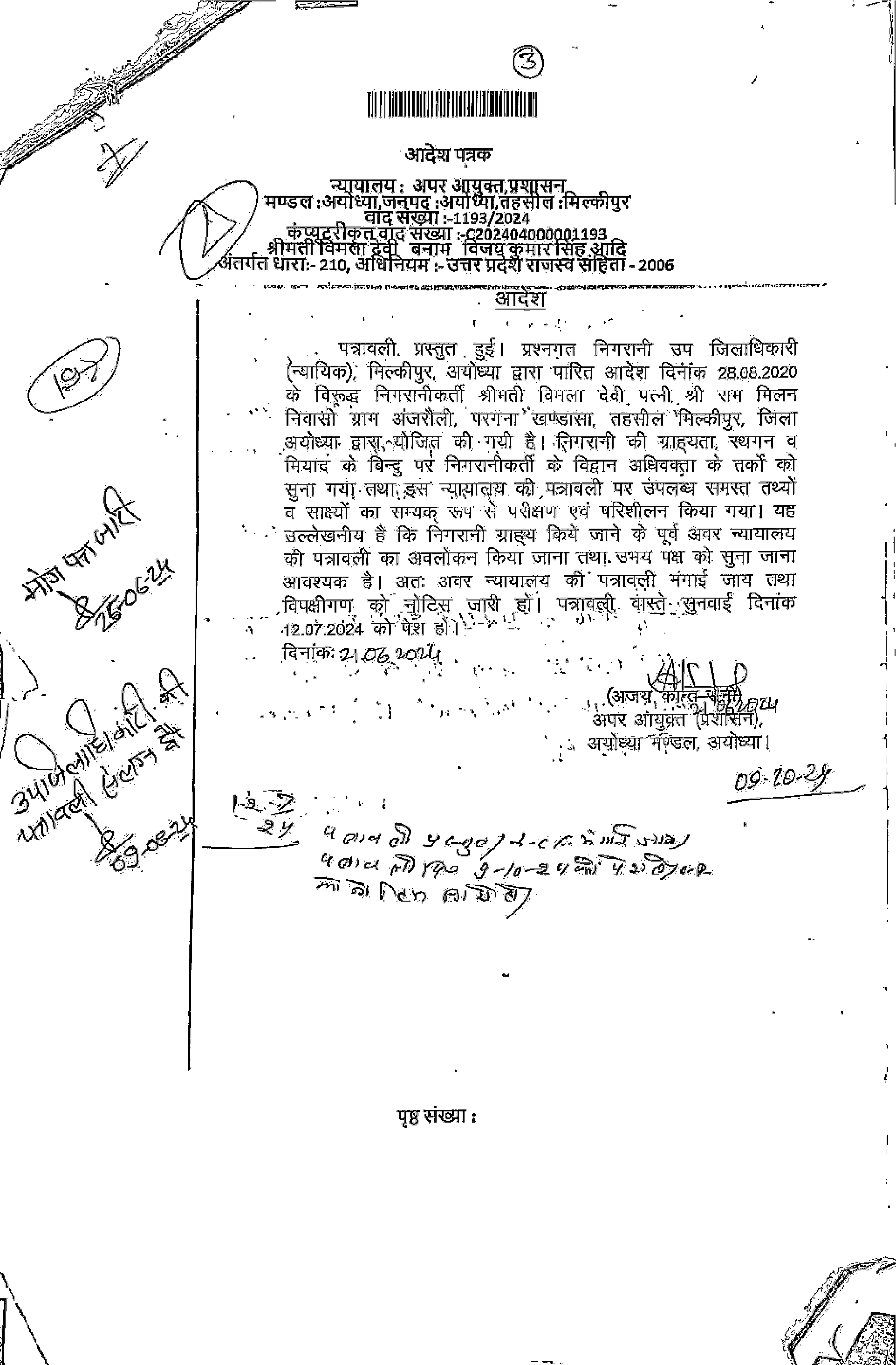
WRIT - C No. - 9397 of 2024
Decided On : 11-11-2024
| Table of Content |
|---|
| 1. quashing of revision order due to lack of notice. (Para 2 , 4 , 8) |
| 2. inadequate explanations and errors in procedural compliance. (Para 5 , 11 , 19) |
| 3. improper understanding of legal requirements by respondent. (Para 10 , 17) |
| 4. jurisdictional error on passing order against deceased. (Para 12 , 16) |
| 5. restoration of interim order and communication for disciplinary action. (Para 20 , 21) |
JUDGMENT :
Jaspreet Singh, J.
1. Heard learned counsel for the petitioner as well as the learned Standing Counsel for the State-respondents. Sri Mohan Singh, learned counsel, for the respondent no. 4-Gaon Sabha.
2. This Court had passed an order dated 07.11.2024 and in pursuance thereof the respondent no. 2 was required to submit his explanation. In furtherance thereof Sri Ajay Kant Saini, Additional Commissioner (Administration), Ayodhya Mandal, Ayodhya has appeared and filed his personal affidavit which is taken on record and has also shown the original records relating to the Revision No. 1193 of 2024 (Smt. Vimla Devi Vs. Vijay Kumar and Others).
3. The petitioner has instituted the present petition wherein he seeks quashing of the order dated 05.09.2024 passed by the respondent no. 2 whereby the revision was allowed without issuing notice and even without condoning the delay at the admission stage itself and remitted the matter to the court of first instance to consider and decide the controversy after affording an opportunity of hearing to the parties.
4. The primary dispute had arisen between the petitioner and the private respondents in a suit filed under Section 144 of the U.P. Revenue Code, 2006. An interim order was granted in favour of the petitioner on 28.08.2020 directing the parties not alienate the property in question. After more than three years, the private respondents preferred a revision which as noticed above was allowed without condoning the delay or without issuing notice.
5. It was also urged that even though the matter was listed for 09th October, 2024 yet in a surreptitious manner, the impugned order has been passed on 05.09.2024 as such the Revisional Authority without there being any reason or material on record has pre-poned the date and without information to the petitioner, the revision was allowed. It is in the aforesaid backdrop that the respondent no. 2 was summoned to explain as also to present the record.
6. Upon perusal of the original record placed before this Court, it indicates that the first order was passed on 17.05.2024 fixing 24.05.2024 as the next date. Thereafter the matter was listed on 24.05.2024 but on account of paucity of time, it was adjourned for 07th June, 2024. On 07th June, 2024 since the Presiding Office was busy in administrative duty, the matter was listed on 21.06.2024.
7. On 21.06.2024, an order was passed that for the purposes of consideration of an application for condonation of delay, interim relief as well as on admission of the revision, the Presiding Officer considered that the records of the Trial Court were necessary to be perused, hence, it called for the records and also issued notice to the respondents in the revision (the petitioner herein).
8. The matter was thereafter listed on 12.07.2024 on which date again the order indicates that the Lower Court Record had not been received and no notices were issued to the respondents, hence, the same compliance has to be done by the revisionist and the matter was fixed for 09.10.2024 but thereafter the impugned order dated 05.09.2024 has been passed.
9. This Court notices that most of the order sheets which have been placed on record are not signed by the Presiding Officer. The manner in which the order sheets have been drawn also prima facie appears that they have been incorporated at a later stage. There is nothing on record to indicate that any notices were issued to the respondents of the revision and apparently till the order dated 05.09.2024 was passed till then neither the records were available nor the notice to the
AI
An order passed without issuing notice to involved parties and without condoning delay is jurisdictionally incorrect, violating principles of procedural fairness.

Judicial proceedings must follow prescribed procedures; failure to document and hear parties leads to invalid orders, undermining public trust in the justice system.

Orders must adhere to principles of natural justice, and failure to do so renders them invalid.
The court emphasized that orders affecting rights must follow due process, ensuring fair opportunity for all parties before any decision is made.
The court ruled that an ex parte order requires a recall application to be maintainable, emphasizing the need for parties to be heard before any interim orders are issued.
Judicial integrity must be maintained through consistency in orders, and manipulation of judicial records undermines the rule of law and public confidence.
The central legal point established in the judgment is the need for a liberal approach in matters relating to condonation of delay, emphasizing the importance of substantial justice and not denying p....
The court emphasized that the principles of natural justice require a fair hearing and reasoned decisions, which were violated in this case.



An indispensable Tool for Legal Professionals, Endorsed by Various High Court and Judicial Officers
Please visit our Training & Support
Center or Contact Us for assistance

Scan Me!
India’s Legal research and Law Firm App, Download now!


For Daily Legal Updates, Join us on :



 Back to top


