
 Back
Back





HIGH COURT OF JUDICATURE AT ALLAHABAD
AJIT KUMAR, J.
Mahesh Singh - Petitioner
Versus
State Of Up And Others – Respondents
WRIT A. No. 16186 of 2024, WRIT A. No. 12094 of 2024, WRIT A. No. 17054 of 2024
Decided On : 26-09-2025
| Table of Content |
|---|
| 1. petitioners' termination based on chargesheet criteria. (Para 1) |
| 2. arguments on discriminatory nature of the government order. (Para 2 , 3 , 4 , 5 , 6 , 7) |
| 3. replication of relevant government order provisions. (Para 8 , 9) |
| 4. classification based on sentencing duration for chargesheeted individuals. (Para 10 , 11) |
| 5. court's critique of classification rationale under article 14. (Para 12 , 13 , 14 , 15 , 16 , 17) |
| 6. identification of classification as ultra vires article 14. (Para 18 , 19 , 20) |
| 7. striking down of discriminatory clauses of the government order. (Para 21 , 22) |
| 8. direction for petitioners' representation regarding reinstatement. (Para 23 , 24) |
JUDGMENT :
Ajit Kumar, J.
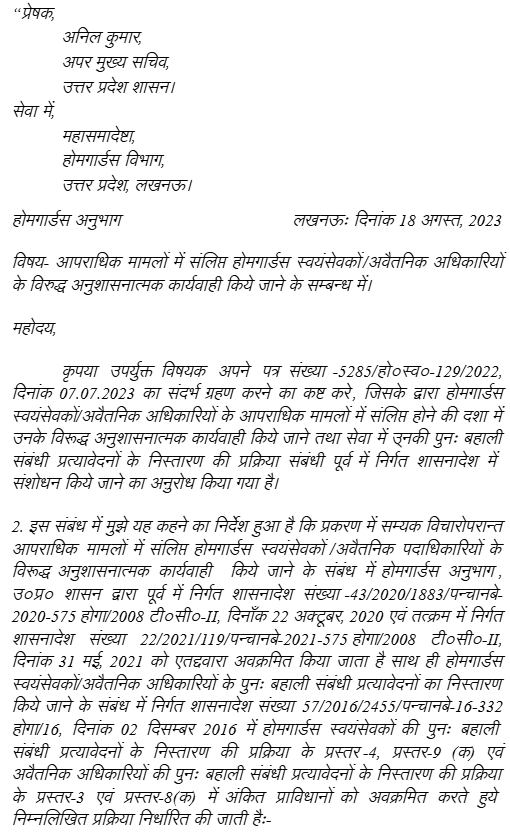
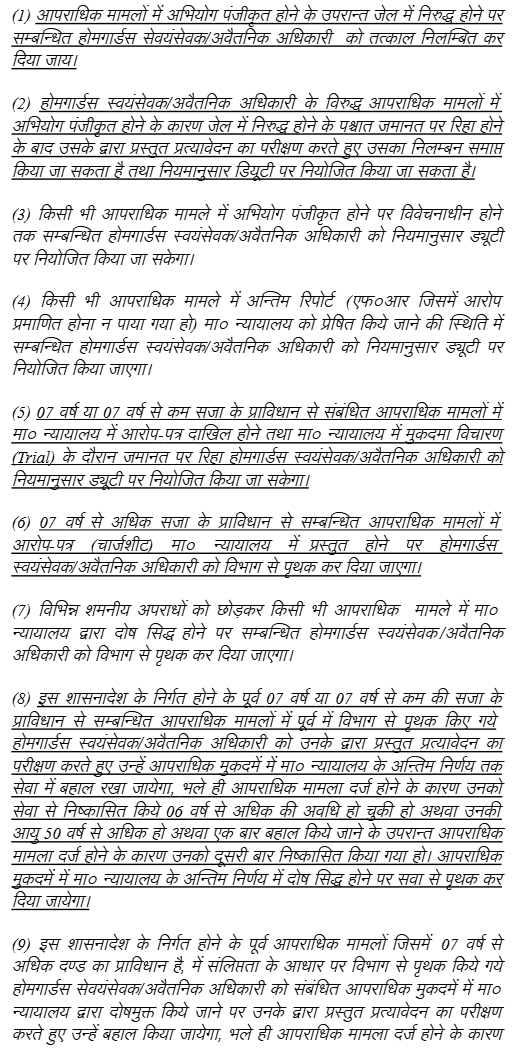
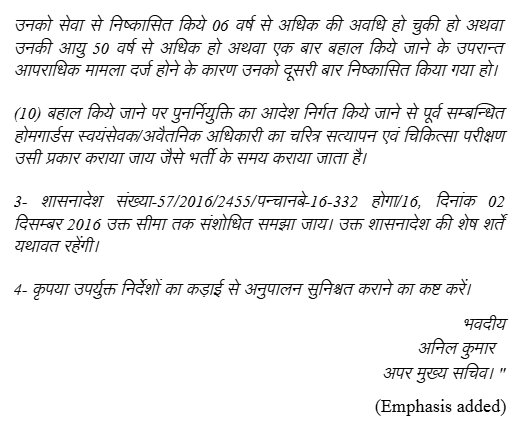
1. In all the above petitions petitioners are aggrieved by the impugned orders passed by the competent authority terminating the services of the petitioners by taking aid of the Government order dated 18th August, 2023 which provides for termination of services of such home guards, who have been chargesheeted in a criminal case in respect of offences for which prescribed sentence is more than 7 years under the criminal penal code.
2. It is argued for the petitioners that so long as the Government order dated 18th August, 2023 remains in force, the order impugned terminating the service of the petitioners cannot be questioned for the reason that they have been chargesheeted in criminal case for an offence for which sentence provided is more than 7 years. So, challenge basically laid to the Government order dated 18th August, 2023 in all these petitions insofar as its clause (6) is concerned.
3. It is argued by learned counsel for the petitioner that not only clauses (5) and (6) are discriminatory as there is no intelligible differentia available to the State respondents inserting these provisions but providing classification between two sets of employees, one facing criminal charges qua offences with sentence 7 years or less; and the other with more than 7 years is arbitrary on the face of it. According to learned counsel for the petitioners, there can be no rational nexus between the object sought to be achieved and classifications so made.
4. Per contra, learned Additional Chief Standing Counsel defended the government order dated 18th August, 2023 on the ground that the State is justified in carving out difference between the offences which are heinous in nature for which sentence is more than 7 years and those which are minor in nature being not heinous for which sentence is 7 years or less.
5. It is sought to be argued that in matters where the sentence is 7 years or less, the Courts are also discouraging arrests by granting bail ordinarily, and which ultimately does not adversely suffer the work that volunteers are to perform. It is also argued by learned Additional Chief Standing Counsel that a person chargesheeted in offences which are heinous in nature if they are continued, it would also give bad impression about the home guard forces which are auxiliary to the police force as at times volunteers are employed at various places to aid and help police personnels. They are called upon to perform same duty as police personnels perform, by way of their auxiliary assistance.
6. It is further argued that the object sought to be achieved, therefore, is to ensure that people who become offender of heinous crimes are not part of the force until acquitted, so that police force also may not get demoralized and public faith and trust reposed in police force to maintain public order and public peace, does not get eroded.
7. Thus learned Additional Chief Standing Counsel argued that there is a rational nexus between the object sought to be achieved and classification made and that would render it to be valid intelligible differentia. It is argued that on the testing anvil of Article 14 of the Constitution of India the relevant clauses (5) and (6) of the government order dated 18th August, 2023 qualifies and hence it should be upheld.
8. In order t
AI
Classification based on sentence severity for disciplinary action against chargesheeted individuals is discriminatory under Article 14, lacking rational justification and violating principles of equa....

Discharge of Home Guards volunteer based solely on FIR registrations without notice, hearing or conviction violates natural justice and statute; post-acquittal reinstatement not automatic, competent ....

Continuous service of Home Guards transforms their status from volunteers to de facto employees, entitling them to equal pay and benefits under constitutional principles.

The main legal point established in the judgment is that disciplinary actions against Home Guards must comply with the statutory requirements, and the fundamental rights of the individuals must be up....

A.P.Police Manual or Police Standing Orders are not binding on the Home Guards since Home Guards are governed by A.P. Home Guards Act, 1948 and rules framed thereunder in view of the adoption of the ....

The Court directed the State to ensure continuous deployment of Home Guards, acknowledging their service as essential and requiring equitable treatment consistent with constitutional rights to liveli....

Home Guards are civil servants entitled to due process under Article 311(2) of the Constitution, necessitating a fair inquiry before removal.



An indispensable Tool for Legal Professionals, Endorsed by Various High Court and Judicial Officers
Please visit our Training & Support
Center or Contact Us for assistance

Scan Me!
India’s Legal research and Law Firm App, Download now!


For Daily Legal Updates, Join us on :



 Back to top


