
 Back
Back





IN THE HIGH COURT OF JUDICATURE AT ALLAHABAD
RAJEEV BHARTI, J.
Faujdar Yadav and Others – Appellants
Versus
State of U.P. and Another – Respondents
Application U/s 482 No. 34372 of 2016
Decided On : 12-01-2026
| Table of Content |
|---|
| 1. context of the alleged offence under sc/st act (Para 3 , 4 , 10) |
| 2. challenge to the applicability of sc/st act provisions (Para 5 , 6) |
| 3. supreme court precedents on public view requirement (Para 7 , 8 , 9) |
| 4. absence of essential ingredients for sc/st claim (Para 11) |
| 5. conclusion on the continuation of criminal proceedings (Para 12) |
| 6. outcome of the application and allowed proceedings (Para 13 , 14 , 15) |
JUDGMENT :
RAJEEV BHARTI, J.
1. Rejoinder affidavit filed today is taken on record.
2. Heard learned counsel for the applicants, learned A.G.A. appearing for the State, learned counsel for opposite party no.2 and perused the material brought on record.
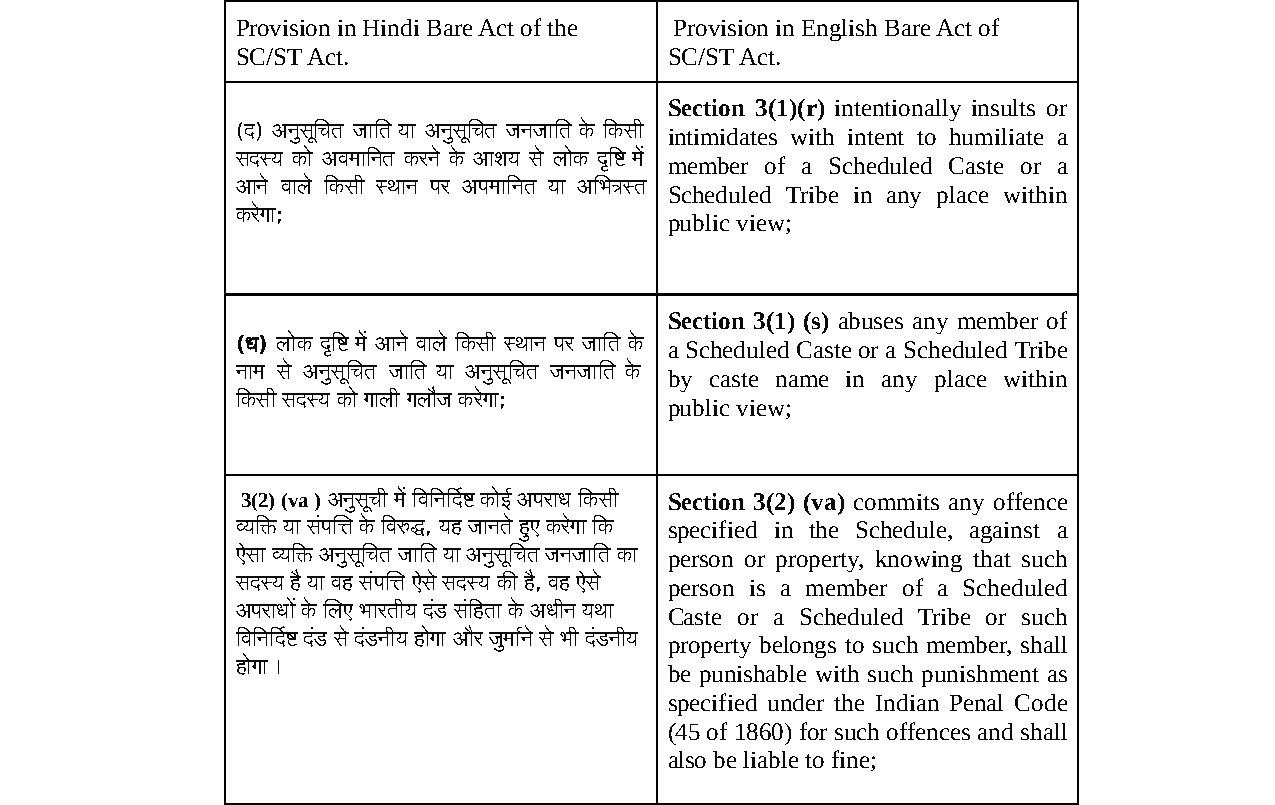
3. The present application has been filed for quashing the impugned charge sheet dated 07.07.2016, bearing charge sheet no.15/16 in Special Criminal Case No. 96 of 2016 ( State Vs. Faujdar and others ), arising out of Case Crime No.317 of 2016, under Sections 323, 504 I.P.C. & 3(1)Da, Dha & 3(2)(va) of Scheduled Castes and Scheduled Tribes (Prevention of Atrocities) Act, 1989 (hereinafter referred to as "SC/ST Act') Police Station - Saidpur, District - Ghazipur, pending in the Court of Special Judge SC/ST Act, Ghazipur.
4. Brief facts of the case are that on 17.03.2016 an N.C.R. No.63 of 2016 was lodged at Police Station- Saidpur, District- Ghazipur under Sections 323, 504 I.P.C. against the applicants by the opposite party no.2 stating therein that on 17.03.2016, the applicants were constructing drain in the field of opposite party no.2 forcefully and when the same being opposed by opposite party no.2, the applicants abused him by using caste related words and also assaulted his son with lathi and danda.
5. Learned counsel for the applicant submits that the invocation of the provisions of SC/ST Act is wholly misconceived inasmuch as the essential statutory ingredients of the alleged offence having been committed “in any place within public view" is completely absent. It is contended that, as per the prosecution case itself, the alleged incident was only witnessed by the informant Shyam Dev Gaud and his son Vinod Gaud, who are admittedly interested and related witnesses and no independent member of the public was present at the place of occurrence.
6. It is further argued that neither the FIR nor the charge sheet specifies the exact caste-related words allegedly used, nor does it disclose whether the alleged caste-related words, if any, were made with intention to humiliate the informant on account of his caste and in a place within the public view, which is mandatory statutory requirement for attracting offences under SC/ST Act "in any place within public view".
7. Learned counsel for the applicant in support of his argument has placed reliance upon the judgment of Hon'ble Supreme Court in Ramesh Chandra Vaishya Vs. State of U.P. & Another, (2023) 0 SC 550 [Criminal Appeal No. 1617, decided on 19.05.2023] wherein it has been held that every insult or intimidation does not constitute an offence under SC/ST Act and that in the absence of any independent public witness and public view, continuance of proceedings under SC/ST Act would amount of abuse of process of law.
8. The Hon'ble Supreme Court has consistently held in the case of Swaran Singh vs. State , (2008) 8 SCC 435 , that the expression "in any place within the public view" does not mean merely a place accessible to the public, but requires the presence of independent members and interested witness does not specify this requirement. Similarly in Hitesh Verma Vs. The State of Uttarakhand & Another, (2020) 10 SCC 710 , the Hon'ble Supreme Court has held that the dispute occurring in a private place or where any member of the public is present does not attract offence under Section 3(1) Da, Dha of SC/ST Act.
9. In support of his contention, learned counsel for the applicant has also placed reliance upon in the case of State of Haryana and Ors. vs. Bhajan Lal & Ors. 1992 Supp (1) SCC 335, that if the contents of the
AI
To establish an offence under the SC/ST Act, the conduct must occur in public view with independent witnesses; otherwise, proceedings may be quashed as an abuse of process.

Mere allegations without evidence of public view do not constitute an offence under the SC/ST Act unless insults target caste identity in a public context.
For an offence under the SC/ST Act, there must be intent to humiliate based on caste identity; mere membership in a Scheduled Caste is insufficient.

The court emphasized that criminal proceedings must be quashed if they lack prima facie evidence, preventing abuse of the judicial process.

Assault and abuse in public view – Public view is an essential ingredient to constitute offence under Section 3(1) (s) of Scheduled Castes and Scheduled Tribes (Prevention of Atrocities) Act, 1989.

(1) Casteist abuses and criminal intimidation – Place of occurrence must be one “within public view” which is a sine qua non for making out offence under SC/ST Act.(2) Quashing of criminal case – Con....


The presence of an incident in public view suffices to establish an offence under the SC/ST Act, regardless of whether it was witnessed by the public.

The court clarified the interpretation of 'within public view' in the context of the Atrocities Act, holding that a place can be considered 'within public view' even if it is a private place, provide....



An indispensable Tool for Legal Professionals, Endorsed by Various High Court and Judicial Officers
Please visit our Training & Support
Center or Contact Us for assistance

Scan Me!
India’s Legal research and Law Firm App, Download now!


For Daily Legal Updates, Join us on :



 Back to top


