
 Back
Back





HIGH COURT OF JUDICATURE AT ALLAHABAD
MANOJ KUMAR GUPTA, ARUN KUMAR, JJ.
Smt. Soni - Petitioners
Versus
State of U.P. and others - Respondents
WRIT C No. 28263 of 2025
Decided On : 05-01-2026
| Table of Content |
|---|
| 1. writ petition seeks restoration of possession. (Para 1 , 2) |
| 2. dispute over possession of ancestral house. (Para 3 , 4 , 5 , 6 , 7) |
| 3. court's observations on procedural errors. (Para 8 , 9 , 10) |
| 4. counterarguments from respondent no.8 acknowledged. (Para 11 , 12 , 13) |
| 5. petitioner's assertions against respondent no.8's claims. (Para 14 , 15) |
| 6. evaluation of parties' rival submissions. (Para 16 , 17) |
| 7. description of common possession and absence of partition. (Para 18 , 19) |
| 8. details on application leading to dispossession. (Para 20 , 21) |
| 9. trial court's action on ex parte injunction. (Para 22 , 23) |
| 10. legal mandate for notice in ex parte cases. (Para 24 , 25) |
| 11. concerns over trial court's hurried actions. (Para 26 , 27) |
| 12. judicial authority to enforce possession. (Para 28 , 29) |
| 13. circumstances justifying court's scrutiny. (Para 30 , 31) |
| 14. allegations of dispossession versus evidence. (Para 32 , 33) |
| 15. jurisdiction of administrative authorities questioned. (Para 34 , 35) |
| 16. trial court's exceedance of jurisdiction. (Para 36 , 37) |
| 17. conclusion on mala fide conduct and remedy. (Para 38 , 39) |
| 18. disposal order directing restoration of possession and compensation. (Para 40) |
JUDGMENT :
1. The present writ petition has been filed for the following reliefs:-
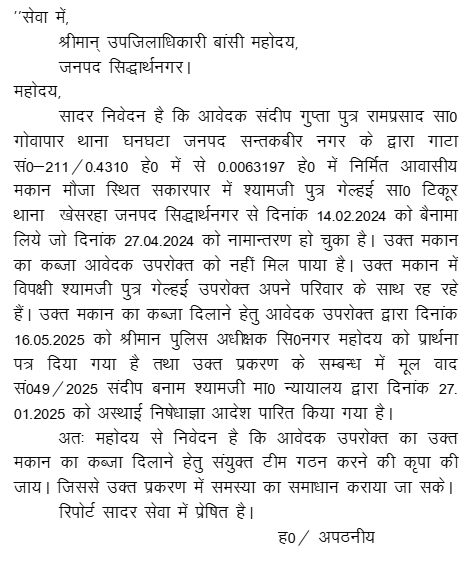
i. Issue a writ, order or direction in the nature of Mandamus commanding and directing the respondent no. 2 to 7 to open the lock and restore the possession of the petitioner over her joint ancestral house.
ii. Issue a writ, order or direction in the nature of Mandamus commanding the State Government to take appropriate action against the Respondent no. 4, 5, 6 and 7 for crushing the rule of law.
FACTS OF THE CASE
2. The case of the petitioner is that her father-in-law namely, Gelhari was a co-tenure holder of plot No.211, area 0.431 hectare. After his death, the names of the petitioner’s husband Shyamji, his brothers Premji, Ramji and Lalji and their mother Shivdhari Devi came to be recorded in the relevant khatauni in his place. During his lifetime, he constructed a two storied building over the said plot, having frontage of 20 feet on Bansi- Dandi Road and a width of 68 feet. On the ground floor, there are two shops, each having a width of 9 feet and a gallery of 6 feet width, which serves as an entrance to the remaining part of the house. In one of the shops, the petitioner has been running a beauty parlour and income from the said business is the only source of livelihood for the petitioner and her family. The husband of the petitioner, namely, Shyamji and his younger brother Premji, unfortunately fell into bad company of respondent No.8 and started consuming liquor with him. Respondent No.8 is a Peshkar in the court of Chief Judicial Magistrate. Taking advantage of the situation, he succeeded in obtaining a sale deed dated 14.2.2024 in his favour for a portion of the undivided residential house, measuring 10 feet from the front and 68 feet in width.
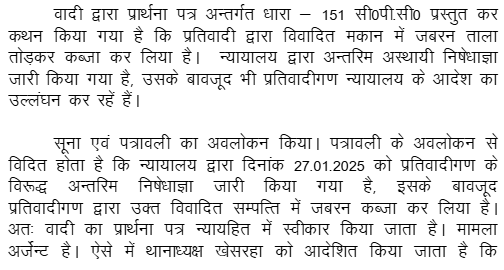
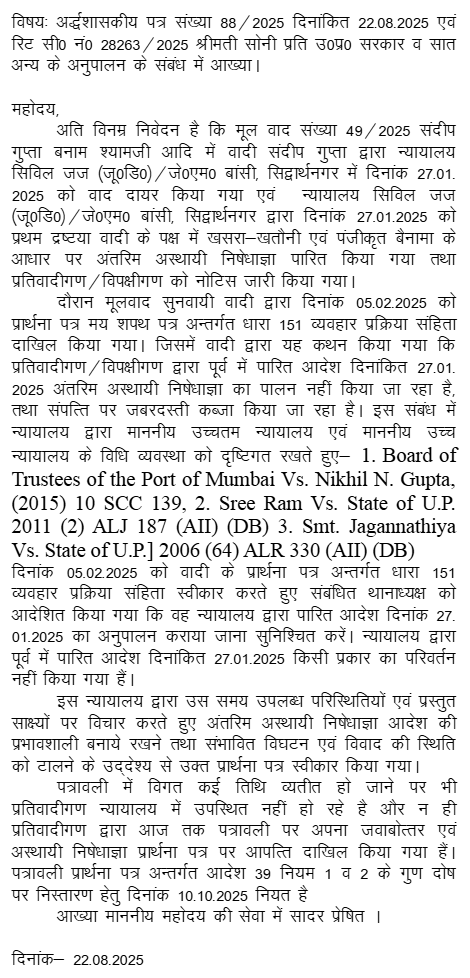
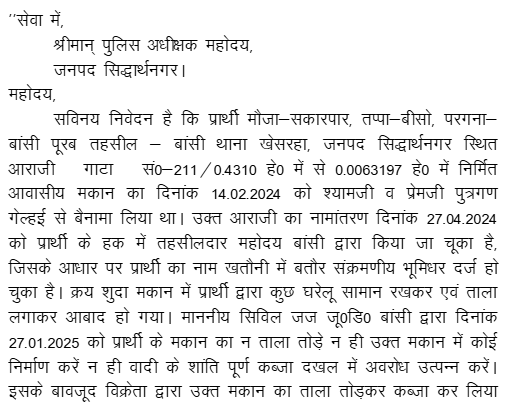
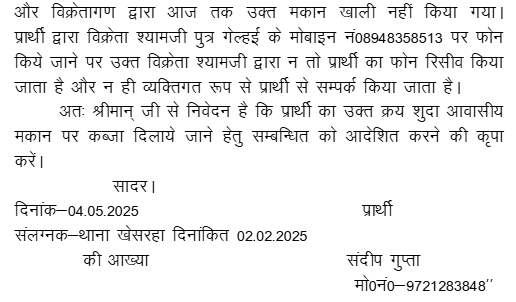
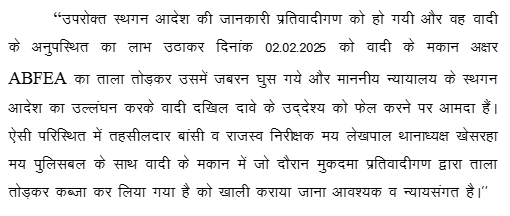
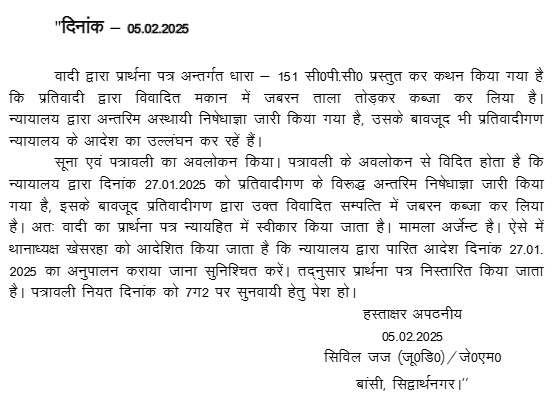
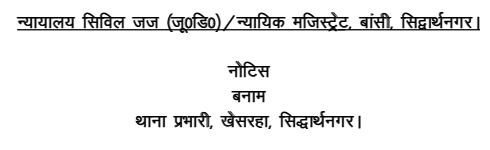
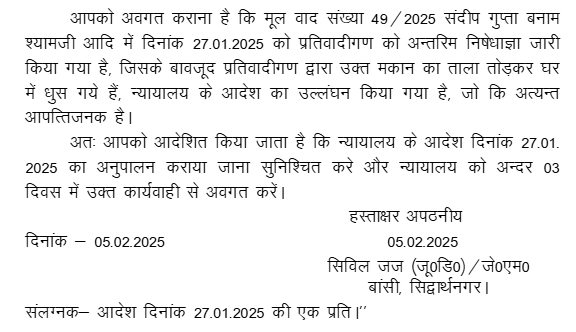
3. It is stated that respondent No.8 procured the said sale deed for a specific portion of the residential house, fully knowing that no division or partition of the aforesaid house had ever taken place amongst the co- sharers and families of all the co-sharers were residing in the same. On 13.1.2025, respondent no.5, the Tehsildar, Tehsil Bansi, District Siddharth Nagar, alongwith police force and respondent no.8, reached the house of the petitioner and asked her to vacate the house. The petitioner strongly opposed the same, stating that the house in question is the ancestral house, in which she has been residing with her three minor children. When respondent No.8 failed in his attempt to take possession by force, he instituted Original Suit No. 49 of 2025 against the petitioner, her husband Shyamji, and his brother Premji, praying for decree of permanent injunction restraining the defendants from taking possession of property allegedly purchased by him through sale deed dated 14.02.2024; from breaking the lock o


AI
The court held that ex parte injunctions must adhere to proper legal process, emphasizing the necessity of hearing all parties and verifying possession before enforcement, thereby invalidating the ad....

The court ruled that administrative actions and orders from the trial court lacking due procedural safeguards lead to wrongful dispossession.
The trial court's ex parte orders for possession were illegal, necessitating due process and rightful hearings before dispossessing parties from joint property.

Administrative authorities cannot interfere in civil property disputes pending before a competent court, and dispossession must follow due process of law.

The court established that inherent powers under Section 151 of the CPC can be exercised to restore possession when parties have been wrongfully dispossessed, irrespective of the formal dismissal of ....


Execution courts can issue possession warrants under CPC for violations of permanent injunctions based on established possession findings.

In property disputes, proof of ownership and lawful possession must be established; mere claims without supporting evidence lead to dismissal of injunction requests.



An indispensable Tool for Legal Professionals, Endorsed by Various High Court and Judicial Officers
Please visit our Training & Support
Center or Contact Us for assistance

Scan Me!
India’s Legal research and Law Firm App, Download now!


For Daily Legal Updates, Join us on :



 Back to top


