
 Back
Back





IN THE HIGH COURT OF JUDICATURE AT ALLAHABAD LUCKNOW
RAJESH SINGH CHAUHAN, INDRAJEET SHUKLA, JJ.
Manish - Appellant
Versus
State of U.P. – Respondent
CRIMINAL APPEAL No. - 565 of 2019
Decided on : 03-06-2026
| Table of Content |
|---|
| 1. establishment of the factual matrix and prosecution narrative of a dowry-related death case. (Para 1 , 2 , 3 , 4 , 5 , 6 , 7 , 8 , 9 , 10 , 11 , 12 , 13) |
| 2. appellate court mandate to independently reassess evidence in convictions. (Para 14 , 15 , 16) |
| 3. evaluation of prosecution witnesses and medical reports surrounding the cause of death. (Para 17 , 18 , 19 , 20 , 21 , 22 , 23 , 24 , 25 , 26 , 31 , 32 , 33 , 34 , 35 , 36 , 37 , 38 , 39 , 40 , 41) |
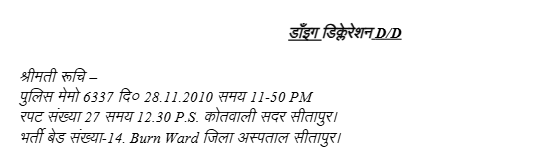
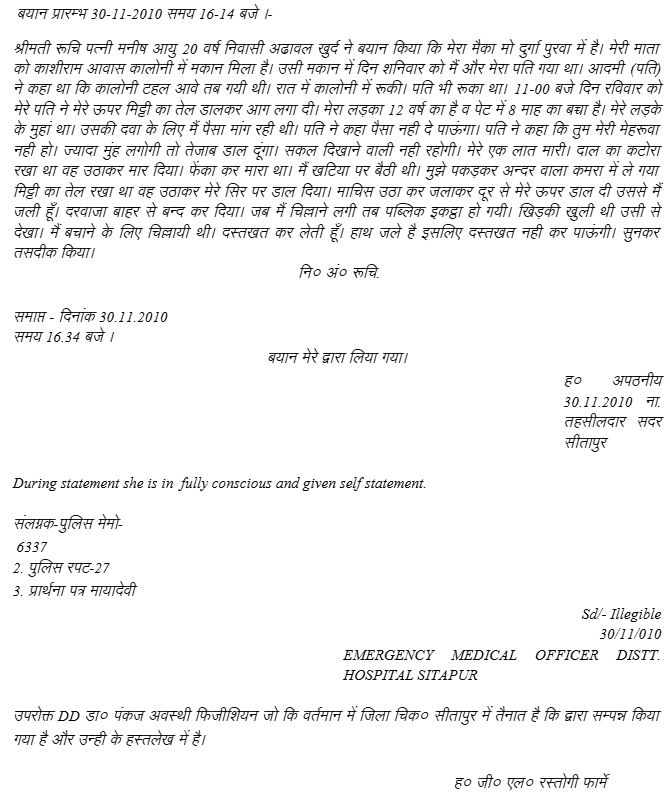
| 4. admissibility and evidentiary weight of dying declarations under section 32(1) indian evidence act. (Para 27 , 28 , 29 , 30 , 103 , 104 , 105 , 106 , 107 , 108 , 109 , 110) |
| 5. contentions regarding evidentiary reliability and sentencing mitigation based on septicemic complications. (Para 42 , 43 , 44 , 45 , 46 , 47 , 48 , 49 , 50 , 51 , 52 , 53 , 54 , 55 , 56 , 57 , 58 , 59 , 60 , 61) |
| 6. application of legal principles distinguishing murder, culpable homicide, and the impact of supervening infections (septicemia). (Para 62 , 63 , 64 , 65 , 66 , 67 , 68 , 69 , 70 , 71 , 72 , 73 , 74 , 75 , 76 , 77 , 78 , 79 , 80 , 81 , 82 , 83 , 84 , 85 , 86 , 87 , 88 , 89 , 90 , 91 , 92 , 93 , 94 , 95 , 96 , 97 , 98 , 99) |
| 7. final judicial affirmation of conviction for murder based on intentional act and proximate causation. (Para 111 , 112 , 113 , 114 , 115 , 116 , 117 , 118 , 119 , 120 , 121 , 122 , 123 , 124 , 125 , 126) |
| 8. proportionality in sentencing and judicial power to commute life sentences to fixed terms. (Para 127 , 128 , 129 , 130 , 131 , 132 , 133 , 134 , 135 , 136 , 137 , 138 , 139 , 140 , 141 , 142 , 143 , 144 , 145 , 146) |
JUDGMENT :
INDRAJEET SHUKLA, J.
1. For the sake of explication, the instant judgement is set out in the following parts:
INDEX
| Serial No. | Heading | Page Nos. |
| 1. | Factual Matrix | 02-02 |
| 2. | Prosecution case in nutshell | 02-05 |
| 3. | Scope of Criminal Appeal against conviction | 06-07 |
| 4. | Prosecution evidence | 07-10 |
| 5. | Dying declaration | 10-18 |
| 6. | Submission of parties (I) Contentions raised on behalf of the appellant | 18-20 |
| (II) Submissions advanced on behalf of the State | 20-27 | |
| 7. | Statutory perceptions and authoritative pronouncements | 27-33 |
| 8. | Analysis and Reasoning | 33-54 |
| 9. | Conclusion | 54-54 |
| 10. | Proportionality of Sentence | 55-61 |
FACTUAL MATRIX
1. Convicted and sentenced for the one of the most depraved offences i.e., burning of his wife who was carrying pregnancy of eight months, consequently death of an unborn child in mother’s womb, the appellant is before this Court.
2. Under challenge is conviction and sentence recorded under Section 302 IPC for life imprisonment and fine to the extent of Rs.20,000/-, further with default stipulation i.e. six months additional imprisonment, rendered vide impugned judgment and order dated 15.02.2019 passed by Additional Sessions Judge/Fast Track Court (New), Sitapur in Sessions Trial No.775/2011 arising out of crime no. 28/2011 Police Station- Ramkot, District Sitapur.
3. Custody certificate as well as conduct report of the appellant submitted by learned State Law Officer is taken on record and the same is marked as 'x'.
PROSECUTION CASE IN NUTSHELL
4. The prosecution story, as unfolded in the written Tehrir Exhibited as Ka-1 dated 28.01.2011, submitted by the informant, Smt. Maya Devi (mother of the deceased) is, she solemnized the marriage of her daughter, Ruchi (the deceased), with the accused-appellant, Manish (son of Gajodhar, resident of Village Adhaval Khurd, Police Station Kotwali, District Sitapur), approximately three years prior to the incident.
5. It is further stated that shortly after the marriage, the accused- appellant, Manish, began demanding Rs.50,000/- as additional dowry.50,000/- as additional dowry. Owing to the first informant’s poor financial background, the demand could not be fulfilled. Consequently, the appellant started physically assaulting and harassing her daughter. He used to say that if she did not bring Rs.50,000/-, he would kill her. The demand of dowry and ill treatment was informed to the first informant over the telephone. The first inform
AI


The reliability of dying declarations and the application of the fourth exception to Section 300 of IPC in cases of sudden quarrel and heat of passion.

The main legal point established in the judgment is the reliance on dying declaration as a sole basis for conviction under Section 302/34 of IPC, the interpretation of Section 498A of IPC, and the ap....
The dying declaration was the sole basis for conviction, and the distinction between 'murder' and 'culpable homicide not amounting to murder' under Section 299 and 300 of the Indian Penal Code was cr....
Section 299 of Indian Penal Code read as culpable homicide.

The court confirmed that a dying declaration can be the sole basis for conviction if found credible, and the intentional act of setting a spouse ablaze constitutes murder, not mere culpable homicide.
It is quite clear that if dying declaration dying declaration is absolutely credible and nothing is brought on record that deceased was in such a condition, he or she could not have made a dying decl....



An indispensable Tool for Legal Professionals, Endorsed by Various High Court and Judicial Officers
Please visit our Training & Support
Center or Contact Us for assistance

Scan Me!
India’s Legal research and Law Firm App, Download now!


For Daily Legal Updates, Join us on :



 Back to top


