
 Back
Back





HIGH COURT OF JUDICATURE AT ALLAHABAD
SALIL KUMAR RAI, AJAY KUMAR-II, JJ.
Krishan Pal @ Lala And Anr. - Appellants
Versus
State of U.P. - Respondent
CRIMINAL APPEAL No. - 1978 of 2011,CRIMINAL APPEAL No. - 1821 of 2011, CRIMINAL APPEAL No. - 1868 of 2011, CRIMINAL APPEAL No. - 2004 of 2011, CRIMINAL APPEAL No. - 2195 of 2011
Decided On : 06-05-2026
| Table of Content |
|---|
| 1. detailed factual background, procedural history, and evidentiary summary of the murder case. (Para 1 , 2 , 3 , 4 , 5 , 6 , 7 , 8 , 9 , 10 , 11 , 12 , 13 , 14 , 15 , 17 , 18) |
| 2. summary of prosecution and defense contentions regarding the occurrence and the validity of accusations. (Para 16 , 19 , 20) |
| 3. evaluation of oral and documentary evidence presented in trial to establish the cause of death and investigative consistency. (Para 21 , 22 , 23 , 24 , 25 , 26 , 27 , 28 , 29 , 30 , 31 , 32 , 33) |
| 4. principles for the appreciation of ocular evidence and the reliability of injured eyewitness testimony. (Para 34 , 35 , 36 , 37) |
| 5. application of established witness reliability tests to the specific evidence and testimony given in the instant case. (Para 38 , 39 , 40 , 41 , 42 , 43 , 44 , 45 , 46 , 47 , 48 , 52 , 53) |
| 6. establishment of the motive through prior criminal history and the ongoing rivalry between the parties. (Para 49 , 50 , 51) |
| 7. legal standard determining whether the non-examination of certain witnesses warrants an adverse inference against the prosecution. (Para 55 , 56 , 57 , 58 , 59 , 60 , 61 , 62 , 63 , 64 , 65) |
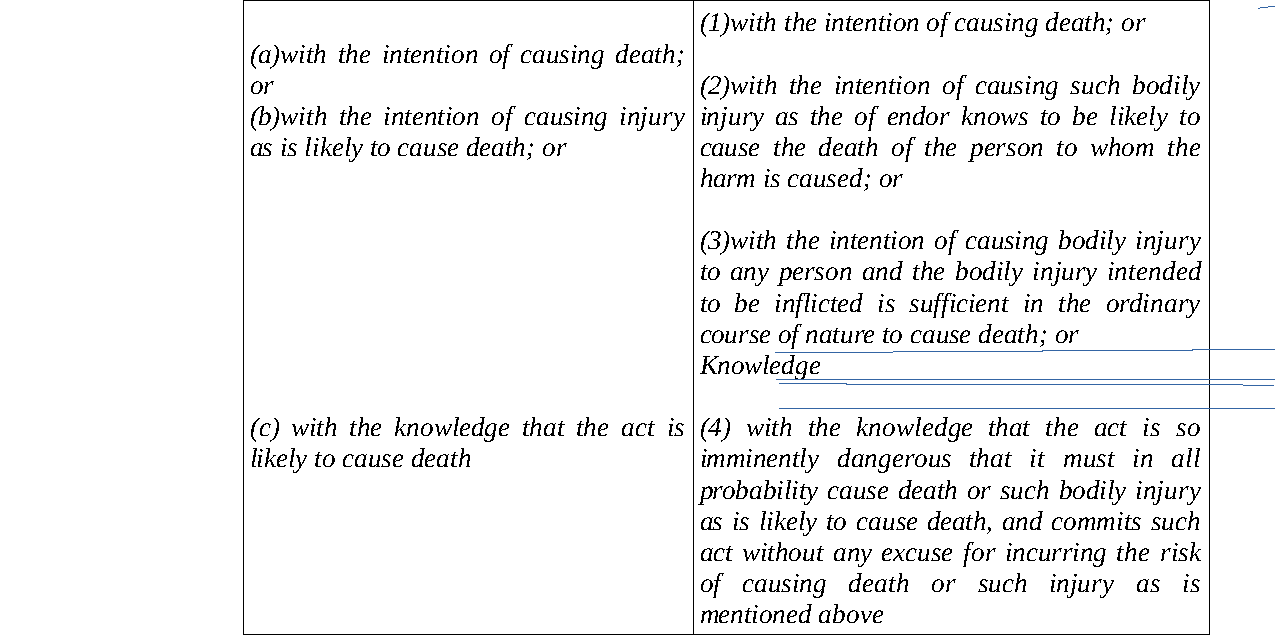
| 8. distinguishing between culpable homicide amounting to murder and culpable homicide not amounting to murder under the ipc. (Para 66 , 68) |
| 9. application of the murder test to the nature of injuries, premeditation, and shared common object in communal assault. (Para 67 , 69 , 70 , 71) |
| 10. final confirmation of the conviction, dismissal of the appeals, and issuance of custodial orders. (Para 72 , 73 , 74 , 75 , 76 , 77 , 78) |
JUDGMENT :
AJAY KUMAR-II, J.
1. The validity and sustainability of the judgment and order dated 11.03.2011 passed by Additional Sessions Judge, Court No.1, Jhansi in Sessions Trial No.282 of 2008 (State Vs. Rishipal and others) arising out of Case Crime No.1223 of 2007 under Sections 147, 148, 149, 302, 323, 307 IPC and Section 7 Criminal Law Amendment Act, Police Station Nawabad, District Jhansi has been challenged by way of instant five connected criminal appeals, whereby the appellants Krishna Pal alias Lala, Rishi Pal, Raghunath, Ranjeet, Bahadur and Udham were convicted and sentenced to undergo imprisonment for life under Section 302/149 IPC with a fine of Rs.10,000/- each, in default thereof, to further undergo one year additional rigorous imprisonment, to undergo one year rigorous imprisonment under Section 323/149 IPC, to undergo one year rigorous imprisonment under Section 148 IPC and to undergo six months rigorous imprisonment under Section 7 Criminal Law Amendment Act. All sentences were directed to run concurrently.
2. Since these criminal appeals arise out of same case number and judgment, therefore, all these appeals have been heard together and are being decided by a common judgment. Criminal Appeal No.1978 of 2011 is being treated as a leading case.
3. The prosecution story, in brief, finds place in the F.I.R., which was lodged on the basis of the written report Ex.Ka.-1 given by informant Manoj Kumar, wherein it was narrated that on 01.07.2007 at 10:00 P.M., the informant Manoj Kumar son of Ramashanker, resident of Mustra Village, P.S. Nawabad, District Jhansi with his brothers Pushparaj alias Pushpendra, Ashok and informant’s cousin Jagdish, informant’s mother Bitti Bai and wife of Pushparaj namely, Vimla Devi were watching T.V. in their room after having dinner and at that moment they heard knocking at the door of the informant’s house, to which all of them went towards the door and as soon as the brother of the informant Pushparaj opened the door, they saw Krishan Pal alias Lala son of Bhagwandas, Rishi Pal son of Sher Singh of village Mairi and Raghunath alias Batauli son of Gajraj from the informant’s village were standing there, armed with Guns and Rifles while Ranjeet son of Gajraj was armed with an axe, Bahadur son of Betali was armed with a spear and Udham son of Kamal Singh was carrying a knife. All of them with a common object came to the door an

AI

The main legal point established in the judgment is that the evidence of eyewitnesses, the injured witness, and the medical evidence played a crucial role in establishing the guilt of the accused bey....

Culpable homicide distinguished from murder based on intention and knowledge; knowledge suffices for conviction under Section 304(II) of IPC, while failure to explain accused injuries does not negate....

The court ruled that solitary eyewitness testimony can suffice for conviction in murder cases, especially when corroborated by medical evidence. The culpable act did not fall under provocation except....


The main legal point established in the judgment is the distinction between 'culpable homicide amounting to murder' and 'culpable homicide not amounting to murder' under Section 304 of the Indian Pen....

The court affirmed the conviction for murder, establishing that the accused's actions demonstrated intent to kill, supported by credible eyewitness and medical evidence.



An indispensable Tool for Legal Professionals, Endorsed by Various High Court and Judicial Officers
Please visit our Training & Support
Center or Contact Us for assistance

Scan Me!
India’s Legal research and Law Firm App, Download now!


For Daily Legal Updates, Join us on :



 Back to top


