
 Back
Back





HIGH COURT OF JUDICATURE AT ALLAHABAD, LUCKNOW
RAJESH SINGH CHAUHAN, INDRAJEET SHUKLA, JJ.
Smt. Ram Rati and others – Appellants
Versus
State of U.P. - Respondent
Criminal Appeal No. 2275 of 2019
Decided On : 22-05-2026
| Table of Content |
|---|
| 1. introductory summary and indices of the criminal appeal. (Para 1 , 2) |
| 2. prosecution case, framing of charges, and preliminary evidence. (Para 3 , 4 , 5 , 6 , 7 , 8 , 9 , 10 , 11 , 12 , 13) |
| 3. appellate court duty to independently reassess evidence. (Para 14 , 15 , 16 , 17) |
| 4. evidence of fact witnesses and dying declaration description. (Para 18 , 19 , 20 , 21 , 22 , 23 , 24 , 25 , 26 , 27 , 28 , 29 , 30 , 31 , 32 , 33 , 34 , 35 , 36 , 37 , 38 , 39) |
| 5. statutory requirements for section 304b and section 498a ipc. (Para 40 , 41 , 42 , 43 , 44 , 45 , 46 , 47 , 48 , 49 , 50 , 51 , 52 , 53 , 54 , 55 , 56 , 57) |
| 6. detailed analysis of testimonial consistency and medical reports. (Para 58 , 59 , 60 , 61 , 62 , 63 , 64) |
| 7. arguments presented by both appellant and respondent. (Para 65 , 66 , 67 , 68 , 69 , 70 , 71 , 72 , 73 , 74 , 75 , 76 , 77 , 78 , 79 , 80 , 81 , 82) |
| 8. court validation of dying declaration and rebuttal of defense. (Para 83 , 84 , 85 , 86 , 87 , 88 , 89 , 90 , 91 , 92 , 93 , 94 , 95 , 96 , 97 , 98 , 99 , 100 , 101 , 102 , 103 , 104 , 105 , 106 , 107 , 108 , 109 , 110 , 111 , 112) |
| 9. affirmation of guilt for the provided offenses. (Para 113) |
| 10. determination of sentencing proportionality and commutation authority. (Para 114 , 115 , 116 , 117 , 118 , 119 , 120 , 121 , 122 , 123 , 124 , 125) |
| 11. final orders regarding custodial release and compliance. (Para 126 , 127 , 128 , 129 , 130) |
JUDGMENT :
Indrajeet Shukla, J.
For the sake of convenience, instant judgment is divided into following parts:
| Index | |
| Serial No. | Heading |
| 1 | Introductory facts |
| 2 | Case of prosecution |
| 3 | Scope of criminal appeal (Being first appeal against conviction) |
| 4 | Relevant statutory provisions and authoritative pronouncements |
| 5 | Analysis of evidence |
| 6 | Contentions raised on behalf of appellants |
| 7 | Submissions on behalf of the State |
| 8 | Conclusion |
| 9 | Proportionality of sentence |
Introductory Facts
1. Embittered with the impugned judgment and order of conviction and sentence dated 05.08.2019 passed by the learned Additional District & Sessions Judge/Special Sessions Judge (Prevention of Corruption Act), Court No. 6, Lucknow, in Session Trial No. 440 of 2013 (State Vs. Sunil Kumar & others), arising out of Crime No. 119 of 2012, under Sections 498-A, 304-B of IPC and Section 3 /4 of Dowry Prohibition Act, Police Station Mall, District Lucknow, instant appeal has been preferred before this Court.
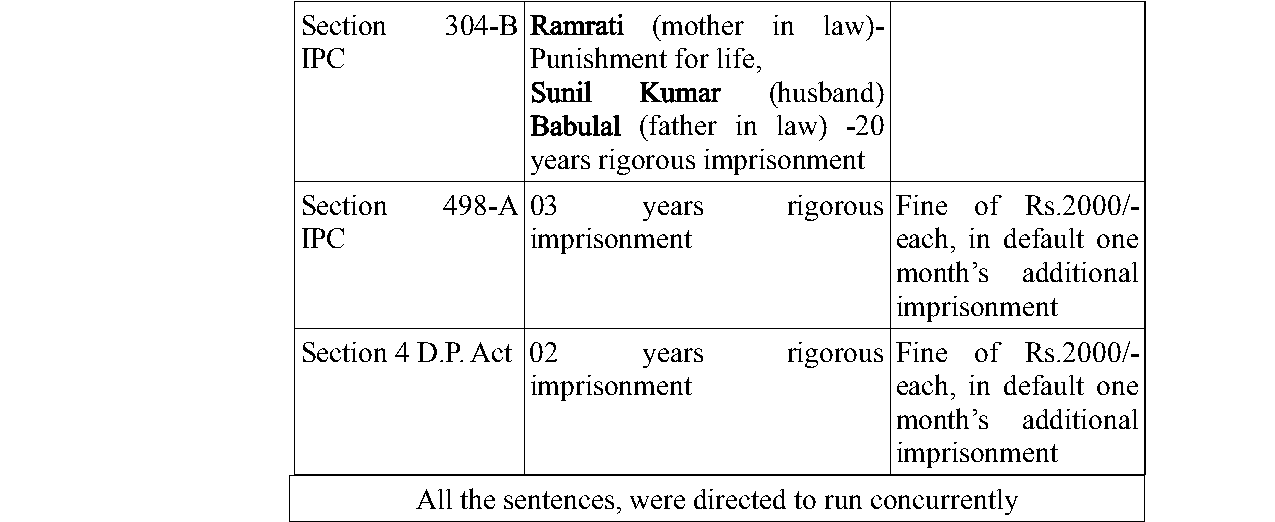
2. Conviction and sentence awarded against the appellants under different penal provisions are tabulated as under:
Case of Prosecution
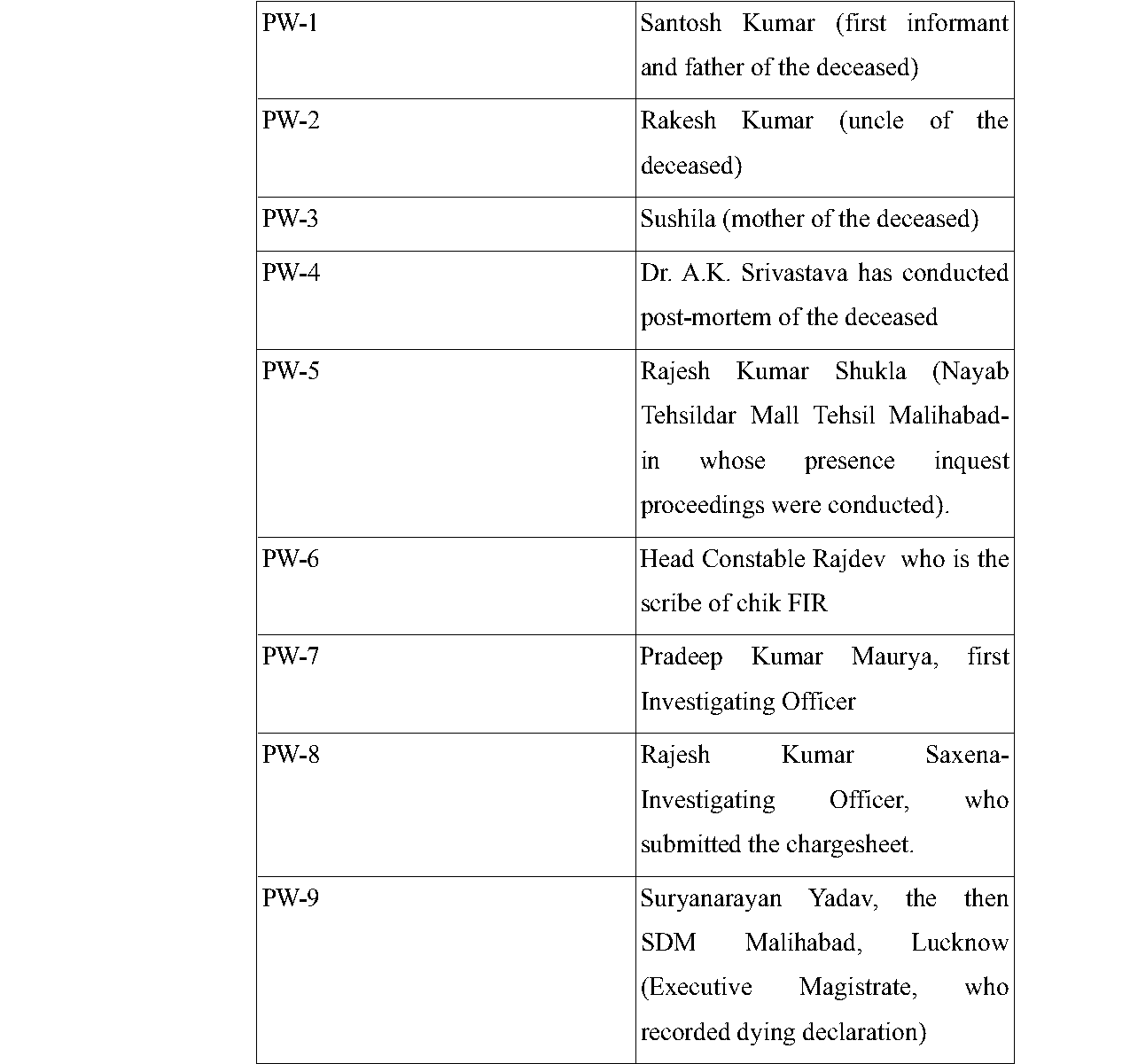
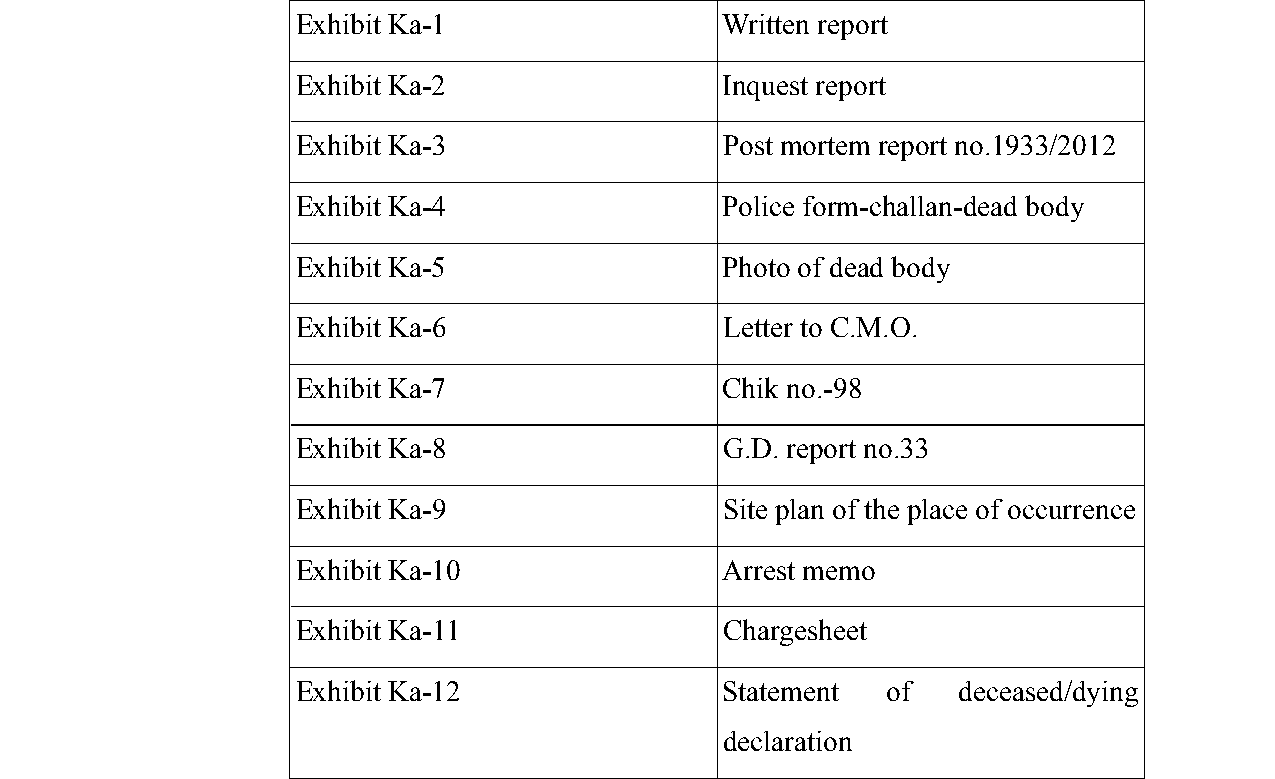
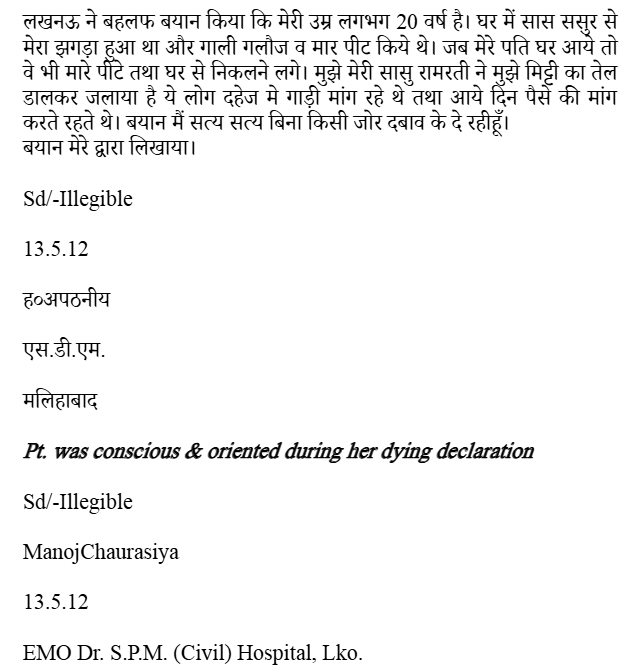
3. The prosecution story in nutshell as disclosed by first informant Santosh Kumar is, his daughter Sujata was married to one Sunil Kumar son of Babulal, native of village Kandhar Tala, Police Station Mall, District Lucknow as per Hindu rites and rituals about one and a half years prior to the occurrence. After the customary farewell for the first time, his daughter went to her in- laws house. When she came to her paternal home (maika) she told her parents that her mother-in-law Ramrati, father-in-law Babulal and her husband Sunil Kumar were asking for additional dowry in the shape of motorcycle and a fan. Owing to his poor financial condition, first informant could not fulfill the said demand. Due to social pressure, first informant’s daughter was again sent to her matrimonial home (sasural). A few days later, his daughter sent word to her parents with respect to harassment and demand of dowry. The first informant counselled her to stay at her in-laws home. On 13.05.2012, at approximately 10:00 AM, first informant’s brother-in-law (Shivdin), called him and informed that his daughter had caught fire. Her in-laws were taking first informant’s daughter to Civil Hospital, Lucknow. Upon receiving the information, the first informant rushed to the Civil Hospital. First informant’s daughter was admitted to the Civil Hospital for treatment. After admission, the in-laws fled from the hospital. The first informant and his family members were involved in treatmen
AI
Dowry deaths necessitate a presumption of guilt if death occurs within seven years after marriage accompanied by evidence of cruelty or harassment for dowry, shifting the burden of proof to the accus....


(1) Life sentence – When an offender is sentenced to undergo imprisonment for life, incarceration can continue till end of life of accused – However, it is subject to grant of remission under provisi....
Life sentence – A special category of sentence, instead of death, can be substituted by punishment of imprisonment for life or for a term exceeding 14 years and that category can be put beyond applic....


The main legal point established in the judgment is that the dying declaration can be the sole basis for conviction if found to be true and reliable, and that sentencing should consider the reformati....
Dowry Death - Dying declaration - Conviction can be based on dying declaration alone without corroboration if the court finds the dying declaration trust-worthy and genuine.
Quantum of sentence – There can be no straitjacket formulae – A delicate balance has to be struck – Fundamental underpinning is principle of proportionality.



An indispensable Tool for Legal Professionals, Endorsed by Various High Court and Judicial Officers
Please visit our Training & Support
Center or Contact Us for assistance

Scan Me!
India’s Legal research and Law Firm App, Download now!


For Daily Legal Updates, Join us on :



 Back to top


