
 Back
Back





2025 MPHC(IND) 7943
IN THE HIGH COURT OF MADHYA PRADESH AT INDORE
PREM NARAYAN SINGH, J.
Shaligram – Appellant
Versus
Ajay – Respondent
Second Appeal No. 174 of 2020
Decided On : 25-03-2025
JUDGMENT :
PREM NARAYAN SINGH, J.
1. With consent of both the parties, the appeal is heard at motion stage at admission.
2. This Second appeal under Section 100 of Civil Procedure Code (for brevity, CPC) has been filed by the appellant against the impugned judgment and decree dated 11.12.2019 passed by the First Additional District Judge, Ratlam in Civil Appeal No.55/2019 confirming the Judgment and decree dated 02.07.2019 passed by Second Civil Judge, Class-II, Sailana, District Ratlam in Civil Suit No.26-A/2018.
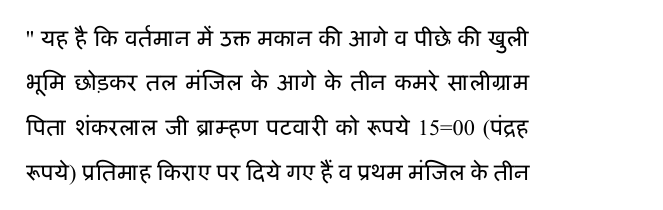
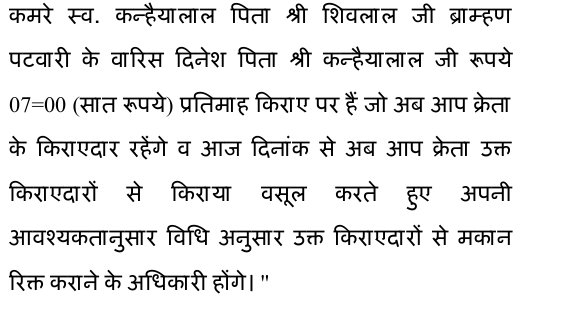
3. The facts necessary for disposal of the present appeal in brief are that the appeal arises out of the suit filed by the respondent/plaintiffs for eviction in respect of the "suit house" which is situated at Karnataka Chouhara, Village Bajna, District Ratlam. It is pertinent to mention that the provisions of M.P. Accommodation Control Act are not applicable in village Bajna and therefore, the eviction was sought by taking recourse to the provisions of Section 106 of the Transfer of Property Act. The suit was filed by the respondent on the averment that the suit house was purchased by the respondent by a registered sale deed dated 05.03.2014. It was averred that the appellant was a tenant in three rooms situated on the ground floor of the suit house @ Rs.15/- per month from the time of plaintiff's predecessors in title. The plaintiff sought eviction on the grounds (i) that the appellant was changing the nature of the suit house, (ii) that he was denying the title of plaintiff, (iii) that he was not paying the rent and (iv) that the suit house was required by the plaintiff for himself and his family members.
4. The suit was contested by the appellant/defendant by filing his written statement wherein the plaint averment were denied. The relations of landlord-tenant was denied by the appellant. It was averred, inter-alia, that the sale deed relied upon by the plaintiff was a sham document which did not confer any title on the plaintiff. On the basis of said pleadings, the trial Court framed the issues, recorded the evidence of the parties and decreed the suit in favour of the plaintiff/respondent on 02.07.2019. Being aggrieved, the appellant has preferred an appeal under Section 96 of CPC, but the same was dismissed by learned first appellate Court, Hence, the present appeal.
5. Challenging the judgment and decrees passed by the Courts below, it is submitted by the Counsel for the appellant that the learned Courts below have committed error of law in passing the impugned judgment and decree in favour of the respondent. The judgment and decree passed by learned Courts below are perverse and based upon no evidence. During the course of arguments, learned Senior counsel for the appellant has contended that the relationship between the landlord and the tenant has not been established. The agreement was executed between the firm regarding tenancy and the said landlord/respondent is only the purchaser of the suit property from the owner of the partner who is already expired earlier. It is further submitted that Section 116 of the Evidence Act is not applicable in the present eviction suit filed by firm/plaintiff is already dismissed vide Ex.D/18 passed in SA No.20/1993 on 18.02.1992. Hence counsel prayed that the appeal be admitted and impugned orders be set aside.
6. Per contra, it is submitted by counsel for respondents that both the Courts below after considering the evidence and material on record in toto have given concurrent findings of fact that the appellants has failed to prove their case. In this case, as no perverse finding was given by the Courts below and no substantial question of law is involved in this appeal, the appeal may be dismissed in limine.
7. Heard learned counsel for the parties and perused the record.
8. The Second Appeal is filed under the provisions of Section 100 of CPC which provides that Second Appeal is entertainable by the High Court if it is satisfied that the case involves a substantial question of

Concurrent findings of fact regarding landlord-tenant relationship upheld; second appeal dismissed due to lack of substantial question of law.

Point of law: The effect of Order XLI Rule 27(1)(b) CPC was considered in recording such observations. It was not an instance with reference to application of Order XLI Rule 27(1)(aa) CPC. This claus....


The case established the importance of evidence in establishing the relationship of landlord and tenant, and the liability for non-payment of rent under the Bihar Building (Lease, Rent & Eviction) Co....

The court established that eviction can be granted based on bona fide necessity when the tenant's claim of occupying multiple rooms is not substantiated by evidence.

Point of law: A question of law having a material bearing on the decision of the case (that is, a question, answer to which affects the rights of parties to the suit) will be a substantial question o....

The execution of an agreement of sale does not terminate the landlord-tenant relationship if rent continues to be paid, and evidence from a power of attorney holder is admissible if supported by docu....



An indispensable Tool for Legal Professionals, Endorsed by Various High Court and Judicial Officers
Please visit our Training & Support
Center or Contact Us for assistance

Scan Me!
India’s Legal research and Law Firm App, Download now!


For Daily Legal Updates, Join us on :



 Back to top


