
 Back
Back





IN THE HIGH COURT FOR THE STATE OF TELANGANA AT HYDERABAD
K. LAKSHMAN, J.
Keshavarao Cheedella – Petitioner
Versus
The State of Telangana – Respondent
Writ Petition Nos. 17985, 17993, 18357 of 2024
Decided On : 28-08-2024
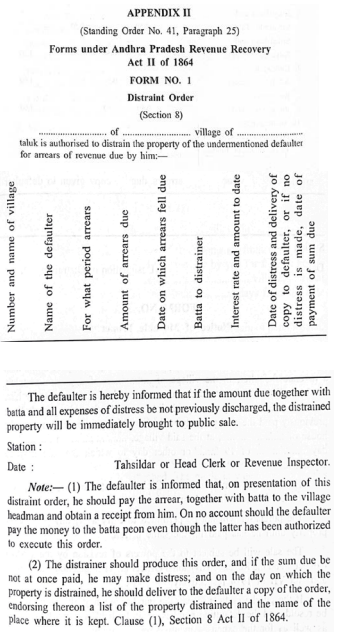
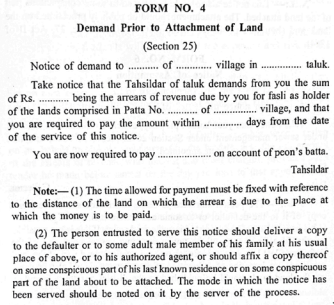
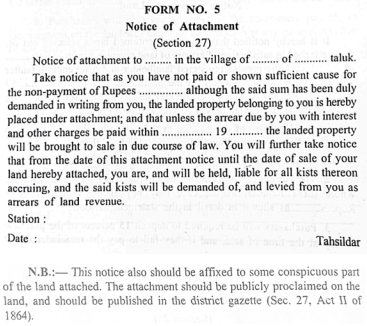
(A) Telangana Revenue Recovery Act, 1864 – Sections 4, 5, 8, 25, and 27 – Writ petitions challenging the initiation of proceedings under the R.R. Act – Petitioners alleged that notices were issued without following due procedure – Court found that the respondents failed to determine the amount due before initiating recovery proceedings, violating the principles laid down in previous judgments. (Paras 14, 27)
(B) Arbitration – Existence of an arbitration clause in the agreement precludes initiation of recovery proceedings under the R.R. Act – Court emphasized that disputes must be resolved through arbitration before recovery can be pursued. (Paras 15, 16)
Facts of the case: Petitioners, rice millers, challenged the legality of distraint orders and notices issued under the R.R. Act for alleged non-delivery of custom milled rice, claiming procedural violations and lack of due process. (Paras 2, 3)
Findings of Court: The court held that the distraint order and notices were defective due to the absence of a determination of the amount due, and thus set aside the proceedings initiated under the R.R. Act. (Paras 27, 28)
Issues: Whether the initiation of recovery proceedings under the R.R. Act was valid without determining the amount due and whether the existence of an arbitration clause affects the proceedings. (Paras 14, 15)
Ratio Decidendi: The court ruled that recovery proceedings cannot be initiated without a prior determination of the amount due, and that the existence of an arbitration clause necessitates resolution of disputes through arbitration. (Paras 14, 15)
Result: Writ petitions allowed; distraint orders and notices set aside. (Paras 28, 29)
ORDER :
1. Heard Mr. R.N. Hemendranath Reddy, learned Senior Counsel representing Mr. Sannapaneni Lohit, learned counsel for the petitioners in W.P. No. 18357 of 2024, Mr. Pasham Mohith, learned counsel for the petitioners in W.P. Nos. 17985 and 17993 of 2024, Mr. A. Jagan, learned Government Pleader for Civil Supplies and Mr. T.P. Acharya, learned Standing Counsel for the Telangana State Civil Supplies Corporation Limited (TSCSCL).
2. These writ petitions challenge the initiation of proceedings under the Telangana Revenue Recovery Act, 1864 (hereinafter referred to as ‘R.R. Act’). The allegation of the petitioners is that the respondents issued impugned notices without following procedure laid down under the R.R. Act. Therefore, there is no need to delve into the facts of the case in detail.
3. However, brief facts in W.P. No. 18357 of 2024 are as follows:
(i) Petitioner Nos. 9 and 10 are Partnership Firms. Family Members of some of the petitioners have floated petitioner Nos. 9 and 10 firms with an object and purpose of carrying business of manufacturing and selling of rice, its allied products, co-products and by-products from the activity of parboiling, steam boiling and milling of paddy. The said firms have been procuring paddy from the farmers, effectively milling the procured paddy to ensure high quality rice and selling the resultant rice in the market and paddy exporters.
(ii) The Telangana Government has announced its Paddy Procurement Policy in the year 2015. As per the said Policy and the Government Orders (GOs) issued by the State Government, Rice Millers have to purchase paddy from farmers at a Minimum Support Price (MSP) predetermined by the State Government and has to deliver 75% of the rice milled as levy to the Food Corporation of India (FCI), and the State Civil Supplies Corporation at a predetermined price. The rice millers were entitled to sell and move the remaining 25% levy free rice within and outside the State and also export the rice as per the then prevailing orders of the State Government from time to time. It was called Levy System which was abolished by the Central Government in 2015 and was duly followed by the State Governments.
(iii) The newly formed State of Telangana traded the levy system for the custom milling system in order to provide more support to the farmers. The FCI was replaced by the Telangana State Civil Supplies Corporation Limited (TSCSCL), respondent No. 4 in W.P. Nos. 17985 and 17993 of 2024 and respondent No. 3 in W.P. No. 18357 of 2024. Under the said custom milling system, the State directly purchases paddy from the farmers through different procurement centers at Village or Mandal levels and distributes the paddy to rice millers for custom milling. The rice millers mill the paddy and supply to the State and receive predetermined custom milling charges.
(iv) Vide G.O.Ms. No. 18, CA, F&CS (CS.I-CCS), dated 30.10.2015, the Government of Telangana has issued Telangana Rice (Custom Milling) Order, 2015 (for short ‘Order, 2015’), which makes it mandatory for all rice millers to whom paddy is delivered by the TSCSCL or its Agencies for custom milling of paddy and deliver rice on such terms and conditions stipulated from time to time by the State Government. The new policy coupled with increase in MSP of paddy, policy support in the form of farmers’ input incentives and improvements in irrigation led to drastic increase in the production of paddy across the State of Telangana. Thereafter, petitioner Nos. 9 and 10 firms entered into custom milling agreement with TSCSCL for each milling season on the specific terms and conditions mentioned therein.
(v) It is further contended by the petitioners that Rabi 2022-23 and Kharif 2023-24 have presented a unique set of challenges to the rice millers across the entire State. Due to torrential rains in 2022-23, most of the paddy crop across the State was damaged. As per the Policy, purchase of those Non-Fair Average Quality (Non-FAQ) paddy in large q
AI
Recovery proceedings under the Telangana Revenue Recovery Act cannot be initiated without prior determination of the amount due, especially when an arbitration clause exists in the agreement.
Recovery proceedings under the Telangana Revenue Recovery Act cannot be initiated without a prior determination of the amount due, especially when disputes exist and an arbitration clause is present.


(1) Public demand – Term ‘public demand’ is of wide amplitude and encompasses all arrears or dues.(2) Jurisdictional facts consist of a sequence of events or a bundle of circumstances – Relevant circ....

Recovery of Regulatory Authority compensation as land revenue arrears cannot be stalled by vesting of project land in State; alternative statutory modes like arrest, movable sale, other property proc....



An indispensable Tool for Legal Professionals, Endorsed by Various High Court and Judicial Officers
Please visit our Training & Support
Center or Contact Us for assistance

Scan Me!
India’s Legal research and Law Firm App, Download now!


For Daily Legal Updates, Join us on :



 Back to top


