
 Back
Back





HIGH COURT OF JUDICATURE AT ALLAHABAD LUCKNOW
RAJNISH KUMAR, ZAFEER AHMAD, JJ.
Kamal Prasad - Appellant
Versus
State of U.P. - Respondent
CRIMINAL APPEAL No. - 694 of 2016
Decided On : 20-04-2026
| Table of Content |
|---|
| 1. overview of judicial proceedings and prosecution case background. (Para 1 , 2 , 3 , 4 , 5 , 7) |
| 2. examination of competing legal contentions regarding evidence reliability. (Para 8 , 10 , 11) |
| 3. assessment of oral testimony and corroborative evidence. (Para 12 , 13 , 14 , 15 , 16 , 17 , 18 , 19 , 20 , 21 , 22 , 23 , 24 , 25) |
| 4. standard for assessing the credibility of related and interested witnesses. (Para 26 , 27 , 28 , 29 , 30 , 31 , 32 , 33) |
| 5. distinction between circumstantial evidence evaluation and homicide classifications. (Para 34 , 35 , 36 , 37 , 38 , 39 , 40 , 41 , 42 , 43 , 44) |
| 6. determining absence of premeditation to classify offence under section 304 part ii ipc. (Para 45 , 46 , 47 , 48 , 49 , 50 , 51 , 52 , 53 , 54 , 55) |
| 7. final order on conviction alteration and sentencing. (Para 56 , 57 , 58 , 59 , 60 , 61 , 62) |
JUDGMENT :
Zafeer Ahmad, J.
1. Heard, Sri Piyush Kumar Singh, learned counsel for the appellant and learned A.G.A for the State. Perused the records.
2. The aforesaid criminal appeal arises out of judgment and order dated 29.03.2016 passed by Sessions Judge, Balrampur in S.T. No. 145/2013 (State v. Kamal Prasad), arising out of Case Crime No. 356/2012, Police Station Pachperwa, District Balrampur whereby the appellant has been convicted under Section 302 of Indian Penal Code,1860 (in short I.P.C) and sentenced to rigorous imprisonment for life along with a fine of Rs. 10,000/- and in default of payment of fine, to undergo an additional one year of simple imprisonment.
Prosecution Story in Nutshell:
3. The prosecution story, in brief, is that on 19.04.2012, the complainant Anil Kumar s/o Kamal Prasad r/o Semrahwa, Police Station Pachperwa, District Balrampur submitted a written report at Police Station Pachperwa stating therein that at about 2:30 PM, his mother, Indravati, was alone at home when his father, Kamal Prasad, entered the house and started quarrelling with her and, in a fit of rage, assaulted her with an axe, causing her death. It was further stated that the complainant, along with his friend Kunjan Chaudhary s/o Raja Ram, was present at some distance and when they heard cries from the house, immediately rushed towards the spot. It was further alleged that upon reaching there, they saw the accused Kamal Prasad fleeing from the house. It was also stated that when the complainant entered the house, he found his mother lying dead therein.
4. On the basis of the written report (Ext. Ka- 1), a check FIR (Ext. Ka- 3) was registered under Section 302 IPC against accused-appellant,Kamal Nath. The investigation commenced on 19.04.2012, and after completion of the investigation, a charge-sheet (Ext. Ka- 14) under Section 302 IPC was submitted against the accused-appellant. The case was committed to the Court of Session, where charge under Section 302 IPC was framed against the accused. The accused denied the charge, pleaded not guilty, and claimed trial.
5. In order to prove its case, the prosecution examined seven witnesses, namely: PW- 1 Anil Kumar, PW- 2 Kunjan Chaudhary, PW- 3 SI Anirudh Kumar Singh, PW- 4 Constable Akhilesh Yadav, PW- 5 Dr. Rajendra Kapoor, PW- 6 IO Dinesh Singh Yadav and PW-7 SHO Uma Shankar Yadav. 6. The following documents were produced and proved before the trial court:
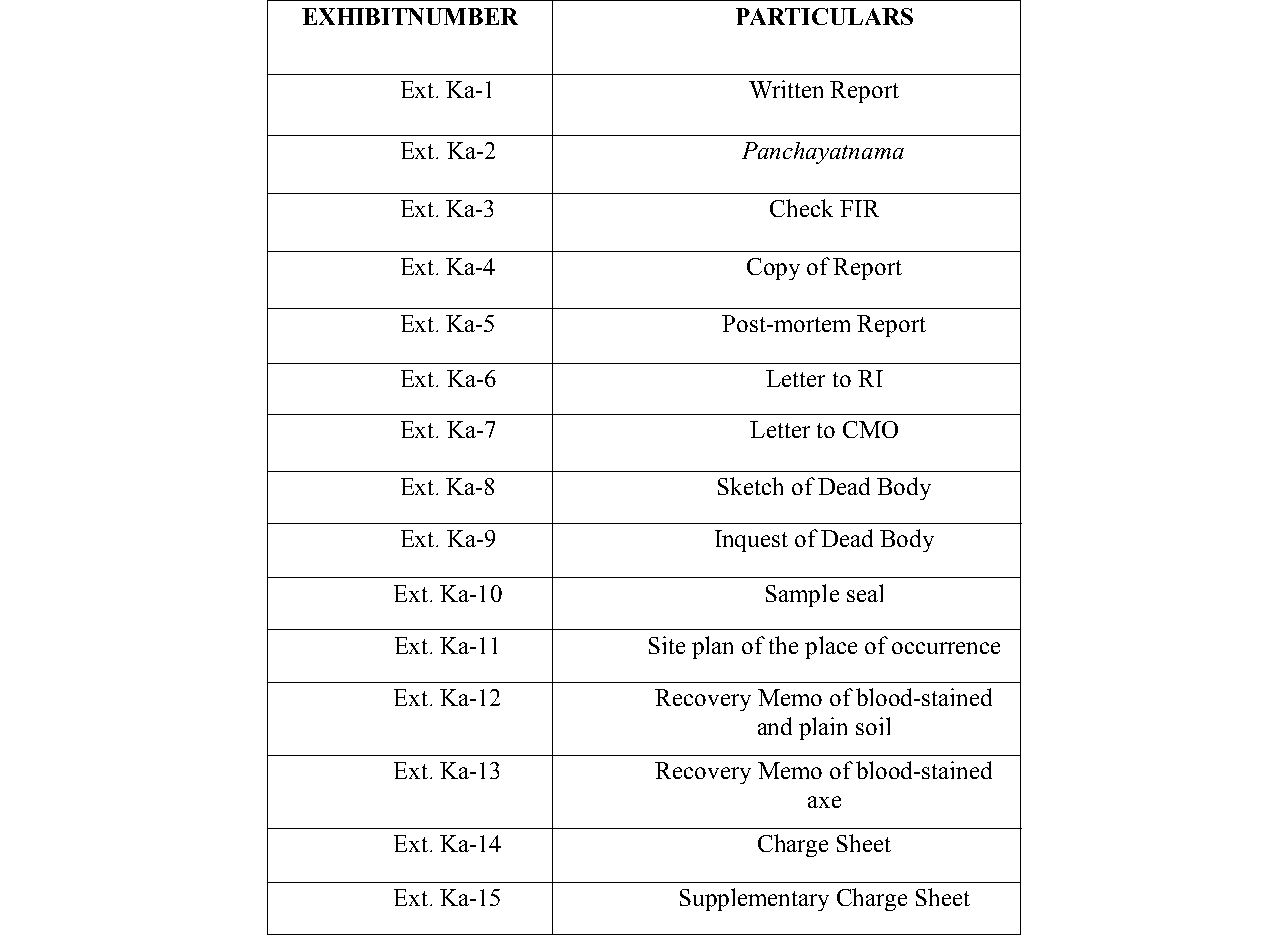
7. The following material exhibits were produced and proved before the trial court:
EXHIBIT NUMBER | ITEM/DESCRIPTION |

8. Furthermore, the appellant, in his statement recorded under Section 313 of the Code of Criminal Procedure,1973 (in short “Cr.P.C.”), denied the prosecution allegations and asserted that he has been falsely implicated due to prior enmity and a conspiracy aimed at usurping his property.
9. Upon a comprehensive appraisal of the oral and documentary evidence on record, the learned Trial Court found the accused guilty under Section 302 of IPC and sentenced him to undergo rigorous imprisonment for life along with a fine of Rs. 10,000/- and in default of payment of fine, to undergo an additional
AI

The court reclassified the conviction from murder under Section 302 IPC to culpable homicide not amounting to murder under Section 304 Part-II IPC due to lack of intent and motive.

Part II of Section 304 of IPC comes into play when the death is caused by doing an act with knowledge that it is likely to cause death, but there is no intention on the part of the accused either to ....

The court clarified the distinction between murder and culpable homicide, emphasizing that sudden altercations without premeditated intent can lower the charge under IPC.

Section 304 Part II IPC relates to punishment but without any intention to cause death.


The central legal point established in the judgment is the distinction between culpable homicide and murder under the Indian Penal Code, and the assessment of the accused's knowledge and intention in....



An indispensable Tool for Legal Professionals, Endorsed by Various High Court and Judicial Officers
Please visit our Training & Support
Center or Contact Us for assistance

Scan Me!
India’s Legal research and Law Firm App, Download now!


For Daily Legal Updates, Join us on :



 Back to top


