
 Back
Back





BEFORE THE MADURAI BENCH OF MADRAS HIGH COURT
G. Jayachandran, K.K. Ramakrishnan, JJ.
P. Seethalakshmi - Appellant
Versus
The Commissioner, Hindu Religion and Charitable Endowment Department – Respondent
W.A(MD)Nos. 25, 396, 397, 398 and 399 of 2025 and 198, 199, 209 and 210 of 2026 and C.M.P(MD)Nos.2130, 2131, 2211, 2212, 3148, 3149,3151,191 and 192 of 2025
Decided On : 02-04-2026
| Table of Content |
|---|
| 1. factual background of the temple disputes. (Para 1 , 2 , 3) |
| 2. details of specific appellants and their claims. (Para 4 , 5) |
| 3. legal history regarding poosariship. (Para 6 , 12) |
| 4. arguments regarding hereditary claims and applicability of rules. (Para 8 , 9) |
| 5. court observations on mismanagement and financial conditions. (Para 10 , 11) |
| 6. discussion of statutory provisions impacting poosariship. (Para 14 , 16) |
| 7. court's directive regarding temple administration. (Para 18) |
JUDGMENT :
K.K. RAMAKRISHNAN, J.
Prelude:
“Religion is not a cloak for enrichment, nor can piety be promoted for pecuniary gain. This case typifies the fable of monkeys fighting over bread: the priests of the shrine of Pandi Muni, revered as the sentinel spirit of Madurai, are squabbling over the division of devotees’ plate offerings and hundi collections, not to serve God but solely for their own personal gain and luxurious, lavish lifestyles. These disputes have now transformed into number of costly litigations, polluting the religious atmosphere. one such is present litigation relating to issue of hereditary poosariship”
2. The batch of writ appeals have arisen out of common judgment passed by the writ Court in batch of writ petitions filed by the appellants challenging the various impugned orders, wherein, their hereditary poosari right of Arulmighu Pandi Muneeswarar Temple, Melamadai, Madurai, were declined by the authorities of Hindu Religious and Charitable Endowments Department vide various impugned orders and confirmed by the writ Court vide impugned judgment dated 10.12.2024.
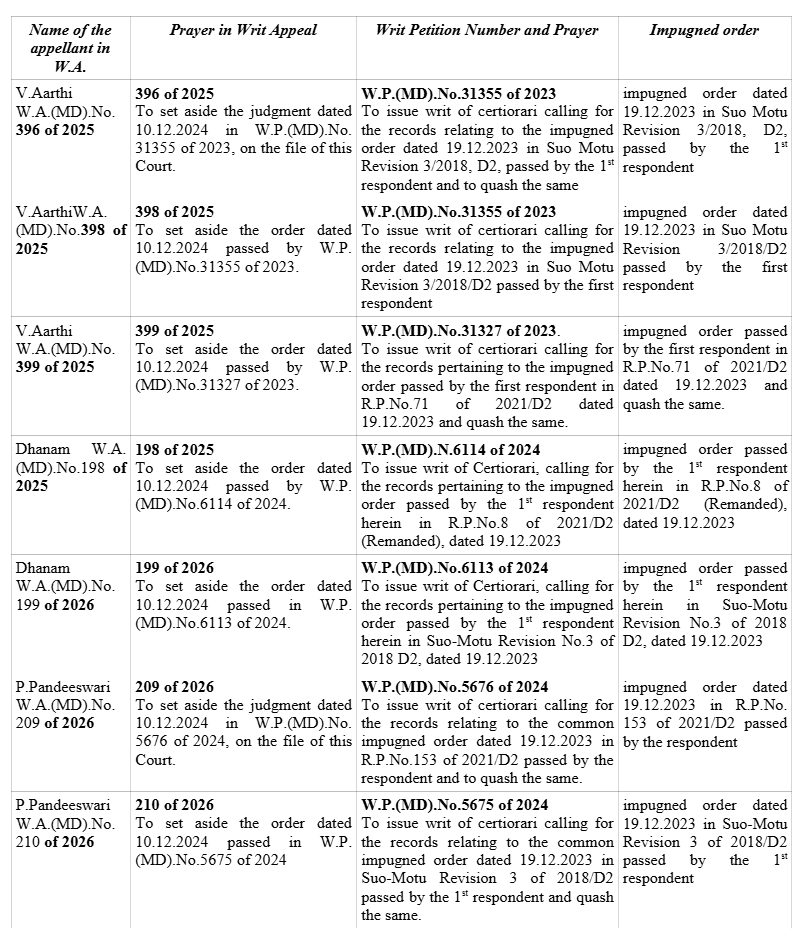
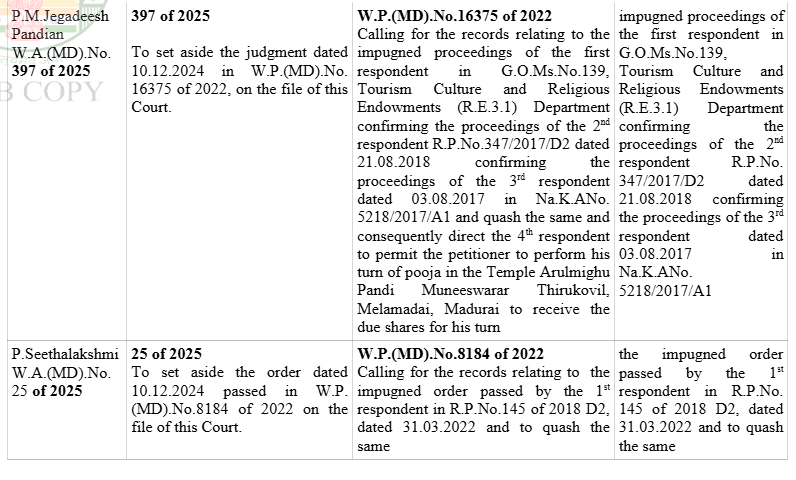
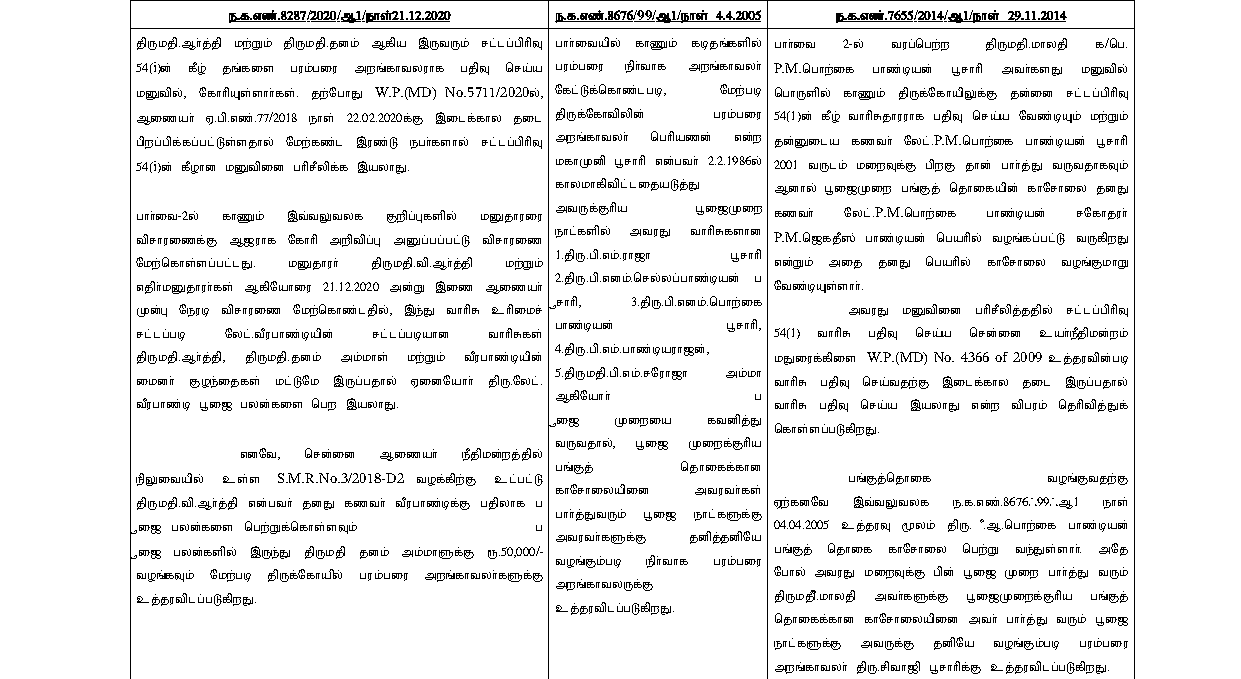
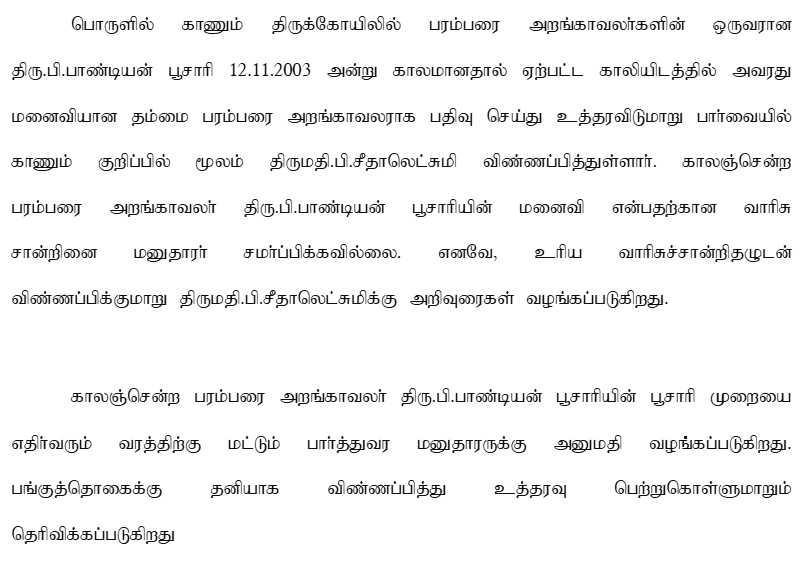
2.1.For better appreciation of the case, this Court has tabulated the following particulars of the orders impugned before the writ Court and corresponding writ appeals:
3.Brief facts of Writ Appeal in W.A(MD).No.25 of 2025 filed by P.Seethalakshmi
3.1.The appellant have filed a writ petition in W.P.(MD).No.8184 of 2022 challenging the impugned order passed by the first respondent in R.P.No.145 of 2018 D2, dated 31.03.2022, with the following averments:
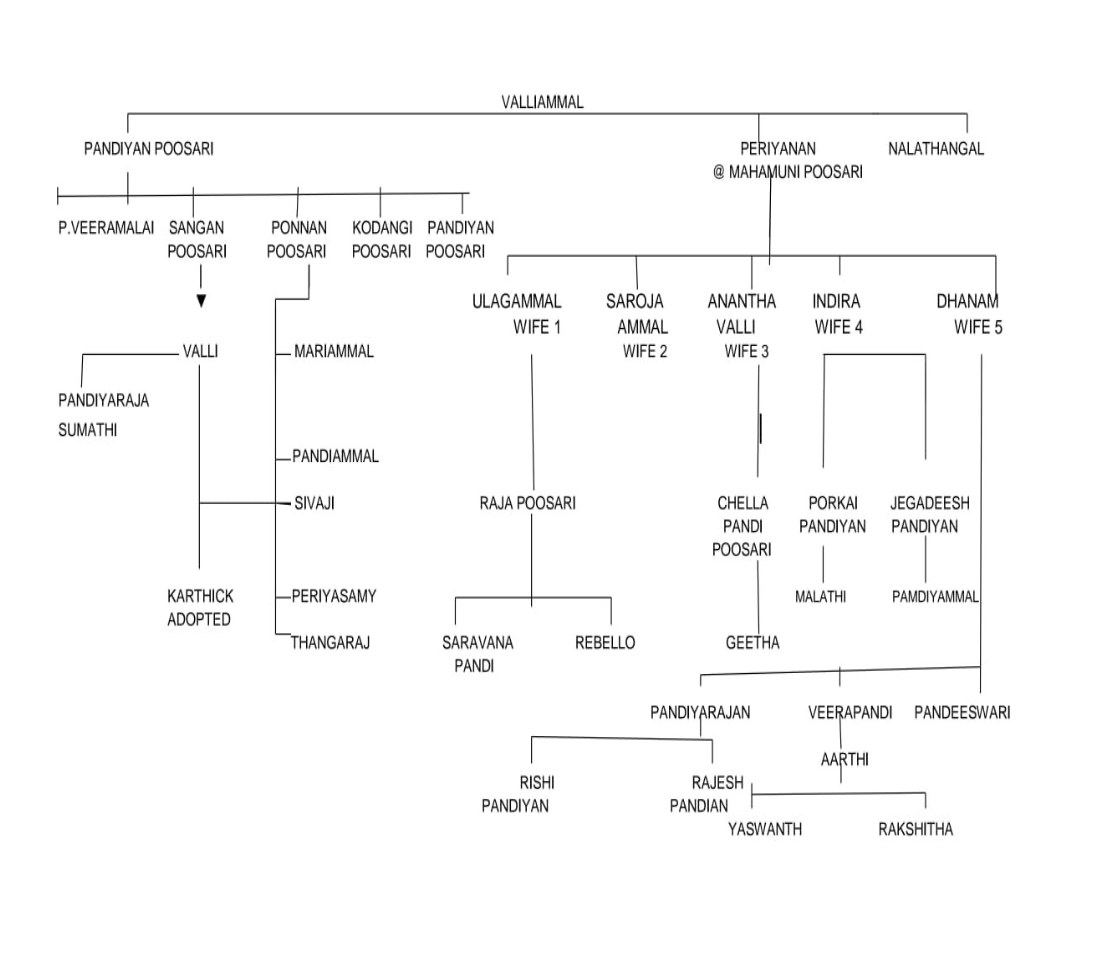
3.2.Arulmighu Pandi Muneeswarar Temple (hereinafter called for “Temple”) is a village Temple near Melamadai, Madurai declared as exempted temple as per the order passed by the first respondent board in O.S.No.453 of 1933 dated 05.09.1935. The said temple was administrated by its hereditary trustees and poojas were also performed by the hereditary trustees. Both trusteeship and poojai right are vested with the family members of the founders of the said temple. Originally the temple was administrated by Valliammal who was founder of the temple. After her demise, her two sons, namely, Bothal poojai and Mahamuni Poojai administered the temple as hereditary trustees and performed the poojas. After their demise, legal heirs of Bothal poosari and Mahamuni poosari entered into a compromise to perform the poojas and to hold trusteeships. As per the compromise, the appellant's husband, namely, P.Pandiyan poosari became the trustee cum poosari for the temple and the pooja weeks were divided into ten weeks on rotation basis and it falls on every Thursday evening and it continues till next Thursday. This practice is in vogue and her husband Pandiyan poojai had been performing poojas and received all emoluments and offerings from the devotees by acting as a chief Managing Trustee of the temple, till his death on 12.11.2003. After his demise, she submitted application before the second respondent for recording herself as a trustee on the principle of next in line of succession under Section 54(1) of the Tamilnadu Hindu Religious and Charitable Endowments Act, 1959 (herein after called Act, 22/1959). The first respondent vide order dated 04.12.2003, permitted her to perform pooja service for the weeks of Pandiyan poosari. The said order was not passed under Section 55(1) of the Act, 22/1959. The said order dated 04.12.2003 had been challenged by one Maruthupandi, claiming to be adopted son of her husband Pandiyan Poojai by way of appeal



Hereditary rights to poosariship are abolished under amended provisions, emphasizing community welfare and accountability, with no claim valid beyond established legal frameworks.

The court affirmed that while trusteeship can be hereditary, poojariship is not, as per the Hindu Religious and Charitable Endowments Act, emphasizing the secular nature of appointments.
The court established that hereditary trusteeship exists among family descendants, but poojariship must be appointed through proper authority, as hereditary rights were abolished under the Act.


The court underscored the principle that appointments of receivers in temple management should prioritize individuals with religious and administrative expertise over legal professionals to ensure ef....
State authorities cannot unilaterally usurp the managerial role of an established religious institution's trustees to implement infrastructure projects. Temple funds, particularly surpluses, must fol....

The appointment of non-hereditary trustees is valid under the Hindu Religious and Charitable Endowments Act when there is evidence of mismanagement by hereditary trustees, and full legal procedures a....



An indispensable Tool for Legal Professionals, Endorsed by Various High Court and Judicial Officers
Please visit our Training & Support
Center or Contact Us for assistance

Scan Me!
India’s Legal research and Law Firm App, Download now!


For Daily Legal Updates, Join us on :



 Back to top


