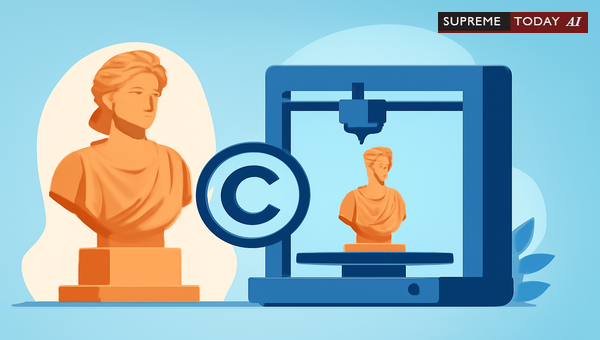
Is 3D Reproduction of Sculptures Copyright Infringement?
In the era of advanced 3D printing and scanning technology, artists, hobbyists, and businesses often wonder: Is there copyright infringement for 3D reproduction of another sculpture? This question arises frequently as creators experiment with digitizing and replicating physical art. While 3D reproductions can inspire innovation, they may cross into illegal territory if they substantially copy protected artistic works.
This blog post breaks down the key legal principles under Indian copyright law, drawing from judicial precedents. Note that this is general information based on established cases and should not be considered specific legal advice. Consult a qualified attorney for your situation.
Key Legal Principles Governing 3D Reproductions
Copyright law protects original artistic works, including sculptures, under the Copyright Act, 1957. Infringement occurs when someone reproduces a substantial part of the original without permission. Importantly, an exact copy is not required for infringement—substantial similarity suffices. As one court noted, It is trite that for infringement of copyright an exact reproduction or copy is not necessary. What is essential to be considered is whether there is a reproduction of substantial part of the said label. 2015 0 Supreme(Bom) 1933
1. Substantial Reproduction
Courts focus on whether the 3D model captures essential artistic features of the original sculpture. Variations or modifications do not necessarily avoid liability if core elements are replicated. For instance, in cases involving artistic packaging, courts found infringement based on sufficient objective similarity and causal connection.
ADLEESYA BEAUTY SDN BHD vs NORDLEEZ ENTERPRISE & ANOR
2. Public Access Exception
A crucial defense applies to sculptures permanently situated in public places. Section 52 of the Copyright Act allows reproduction of such works without infringement, provided it's not for commercial exploitation beyond permitted scopes. This includes photographing or 3D scanning public statues. However, selling 3D prints derived from these may still trigger claims if they exploit the work commercially. 2021 0 Supreme(Kar) 372 2022 0 Supreme(Mad) 3464
3. 3D Reproduction from 2D Works and Functional Uses
Creating a 3D object from a 2D image (e.g., a photo of a sculpture) may be exempt if it's for industrial application and limited to functional parts. Purely artistic replicas, however, remain vulnerable. Courts emphasize distinguishing functional from artistic intent: If the plagiarized work is protected by copyright, the unauthorized reproduction is also a copyright infringement. 2020 0 Supreme(Kar) 1643
Relevant Considerations for 3D Sculpture Reproductions
When assessing potential infringement, several factors come into play:
Nature of the Original Work: Evaluate if the sculpture's unique artistic elements—like form, expression, or design—are substantially reproduced. Indian courts have consistently held that the degree of objective similarity is... essential, in proving... that the defendant's work can properly be described as a reproduction.
ADLEESYA BEAUTY SDN BHD vs NORDLEEZ ENTERPRISE & ANOR
Public Domain and Accessibility: Publicly accessible sculptures benefit from exceptions, but commercial reproductions require caution. As per precedents, reproducing public art via 3D models is often permissible unless it leads to market confusion or passing off. 2022 0 Supreme(Del) 856 2022 0 Supreme(Cal) 304
Functional vs. Artistic Purpose: If your 3D print serves a utilitarian function (e.g., a tool inspired by a sculpture's shape), it may avoid infringement. Artistic replicas mimicking the original's essence do not. Section 52 provides carve-outs for functional industrial designs. 2025 0 Supreme(Guj) 1635
Additional case law reinforces these points. In a dispute over film reproductions, courts clarified no infringement where no substantial similarity existed, highlighting the need for evidence of copying. 2025 0 Supreme(Bom) 1685 Similarly, packaging designs were protected only where objective similarities proved causal connection, not mere common elements.
ADLEESYA BEAUTY SDN BHD vs NORDLEEZ ENTERPRISE & ANOR
Case Studies and Judicial Insights
Indian courts have addressed analogous issues:
Delay and Evidence in Claims: Timely action is key; gross delays can bar relief. One court refused ad-interim relief due to lack of substantial similarity in films, stressing assessment of copyright claims based on substantial similarity. 2025 0 Supreme(Bom) 1685
Artistic Works Protection: In beauty product box cases, statutory declarations proved ownership, and similarities led to infringement findings. Defendants failed to show independent creation.
ADLEESYA BEAUTY SDN BHD vs NORDLEEZ ENTERPRISE & ANOR
ADLEESYA BEAUTY SDN BHD vs NORDLEEZ ENTERPRISE & ANOR
Reproduction and Seizure: The very act of reproduction of an artistic work would constitute an infringement under Section 51. Machines used for unauthorized copies were deemed seizable. 2018 0 Supreme(Guj) 747
Photocopying and Scale: Even large-scale reproductions for educational purposes were scrutinized, but university facilitation did not always equate to infringement if within fair use limits. 2016 0 Supreme(Del) 3516
These rulings from Delhi, Madras, Karnataka, and other high courts illustrate that context matters—substantiality, intent, and exceptions define outcomes. 2022 0 Supreme(Del) 1258 2007 0 Supreme(Del) 1033 2008 0 Supreme(Bom) 1794
Summary of Findings
Practical Recommendations
Conduct a Similarity Analysis: Compare your 3D model against the original's protected elements.
Check Location and Purpose: Public art? Non-commercial use? Leverage Section 52.
Seek Permissions for Commercial Ventures: Contact copyright holders to avoid disputes. 2016 0 Supreme(Bom) 533
Document Independent Creation: If inspired but not copied, maintain records to rebut claims. 2017 0 Supreme(Del) 1268
Businesses in 3D printing should also consider passing off risks alongside copyright, as deceptive similarities can lead to broader liability. 2016 0 Supreme(Guj) 656
Conclusion and Key Takeaways
Navigating copyright for 3D reproductions of sculptures requires balancing innovation with respect for creators' rights. While substantial reproductions typically infringe, exceptions for public art and functional uses offer defenses. Always assess case-specific facts, as courts prioritize objective similarity over exact copies. 2019 0 Supreme(Del) 1682 2019 0 Supreme(Del) 1765
Key Takeaways:- No need for identical copies—infringement hinges on substantial parts. 1994 0 Supreme(Cal) 269- Public sculptures enjoy reproduction freedoms under limits.- Functional intent can shield reproductions.- Timely, evidence-based claims strengthen positions.
Stay informed, and when in doubt, seek professional legal counsel to protect your projects.
This post references Indian judicial precedents and is for informational purposes only.
#CopyrightLaw, #3DPrintingIP, #SculptureCopyright