Searching Case Laws & Precedent on Legal Query.....!
Analysing the retrieved Case Laws
Scanned Judgements…!



Searching Case Laws & Precedent on Legal Query.....!
Analysing the retrieved Case Laws
Scanned Judgements…!
Ambica Electrolytic Capacitors (P. ) Ltd. VS Commissioner of Central Excise, Jaipur - Customs, Excise And Gold Appellate Tribunal (1999)
"], ["Bennett Coleman & Co. Ltd. VS Collector of Customs - Customs, Excise And Gold Appellate Tribunal
"].Ambica Electrolytic Capacitors (P. ) Ltd. VS Commissioner of Central Excise, Jaipur - Customs, Excise And Gold Appellate Tribunal (1999)
"], ["Bennett Coleman & Co. Ltd. VS Collector of Customs - Customs, Excise And Gold Appellate Tribunal
"].Ambica Electrolytic Capacitors (P. ) Ltd. VS Commissioner of Central Excise, Jaipur - Customs, Excise And Gold Appellate Tribunal (1999)
"].J. S. S. Printing Industries (P. ) Ltd. VS Commissioner of Central Excise, Calcutta - Customs, Excise And Gold Appellate Tribunal
"].Ambica Electrolytic Capacitors (P. ) Ltd. VS Commissioner of Central Excise, Jaipur - Customs, Excise And Gold Appellate Tribunal (1999)
"], ["Bennett Coleman & Co. Ltd. VS Collector of Customs - Customs, Excise And Gold Appellate Tribunal
"].J. S. S. Printing Industries (P. ) Ltd. VS Commissioner of Central Excise, Calcutta - Customs, Excise And Gold Appellate Tribunal
"].The classification relies heavily on whether the chemical process results in a distinct, new product or merely surface treatment, with etching that results in a new product being considered manufacturing ["
Ambica Electrolytic Capacitors (P. ) Ltd. VS Commissioner of Central Excise, Jaipur - Customs, Excise And Gold Appellate Tribunal (1999)
"].Analysis and Conclusion:
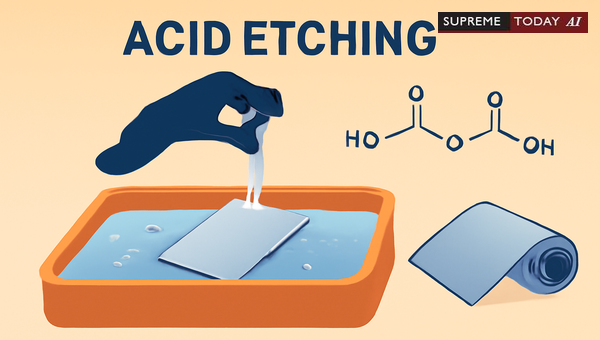
In the realm of Indian tax and excise law, businesses often grapple with classifying processes as '' or mere '.' A common query arises: acid etching not done while recovering arms? This question probes whether acid etching—a chemical process typically used in manufacturing—occurs or qualifies as manufacturing during the of arms (potentially referring to reclaiming materials or components in industrial or forensic contexts). Generally, under Indian law, acid etching is viewed as a manufacturing activity when it creates a new product, while processes, like reclaiming tartaric acid, do not. This distinction carries significant implications for , , and .
This blog post delves into judicial precedents, clarifies the legal boundaries, and integrates insights from related cases on acid use and . Note: This is general information based on case law and not specific legal advice. Consult a qualified lawyer for your circumstances.
Acid etching is not considered done while recovering arms, as etching involves a manufacturing activity that produces a new product or entity with enhanced utility. In contrast, recovering substances like tartaric acid from contaminated forms is classified as a process, not . Therefore, in the context of recovering arms—assuming it entails reclaiming existing materials without transformation—it would not be deemed a manufacturing process under Indian law.
Ambica Electrolytic Capacitors (P. ) Ltd. VS - (1999)
This ruling helps determine exemptions from , as only manufacturing triggers such obligations.
Ambica Electrolytic Capacitors (P. ) Ltd. VS - (1999)
Acid etching, such as on aluminium foil, transforms raw material into a product with heightened effectiveness. In one key case, etching aluminium foil for capacitors was held to be because it increased the effectiveness of the foil... resulting in a new or different article. The Collector of Central Excise noted the etched product's distinct utility and value.
Ambica Electrolytic Capacitors (P. ) Ltd. VS - (1999)
Similarly, in photographic block-making, the process involves depression in nitric acid tray - etching powder applied - put into etching machine - image further depressed. This skill-intensive etching creates sellable blocks, constituting a under , affirming its manufacturing essence. 1991 0 Supreme(Kar) 57
These examples illustrate that when etching yields a commercially viable, altered product, courts classify it as .
Conversely, recovering tartaric acid from contaminated forms is not . Courts have reasoned that it involves extracting or recovering the original tartaric acid, which was previously imported or used, rather than creating a new product. Affidavits confirmed no transformation into a new article. 2003 0 Supreme(SC) 1344 2005 0 Supreme(SC) 422
An Australian precedent reinforces this: activities like taking notes or making etchings do not produce goods or commodities. 2010 6 Supreme 161 Mere replication or reclamation lacks the of .
While no direct cases address 'recovering arms' (potentially reclaiming weapon components or materials), the principle applies analogously. If the process merely extracts or reclaims existing arms materials without creating a new entity—like separating parts post-use—it aligns with tartaric acid , not etching or .
In criminal contexts, '' often means seizing evidence, such as acid used in attacks. For instance, courts note failures to recover acid containers or material objects from acid attack sites, yet convictions stand on testimony and medical evidence. 2026 Supreme(Online)(Ker) 8914 2010 0 Supreme(Raj) 1396 Here, is , not productive, underscoring .
Acid features prominently in criminal law, particularly attacks under and 326B. Courts define 'acid' broadly as any substance with acidic/corrosive/burning nature capable of causing bodily injury leading to scars or disfigurement. 2022 0 Supreme(Del) 2205
Hakim vs State (NCT of Delhi)
In acid attack prosecutions:- Convictions rely on victim testimonies and medical reports of burns, even without recovering the acid. 2022 0 Supreme(Del) 2205- Presumption under applies if acid is thrown, presuming intent to cause hurt.
Hakim vs State (NCT of Delhi)
- Failure to seize acid or clothes does not doom the case if evidence suffices. 2012 0 Supreme(Cal) 873These cases highlight '' as forensic retrieval, not industrial processing, contrasting sharply with manufacturing etching.
Photographic etching cases further delineate: etching sharpens images via acid trays, but the end product (mounted blocks) triggers sales tax as a 'sale of goods.' 1991 0 Supreme(Kar) 57
In summary, acid etching is typically a manufacturing process creating new value, not done while recovering arms if the latter is mere reclamation. This hinges on transformation: etching alters utility (), restores originals (non-). Businesses must classify accurately to avoid tax pitfalls, while criminal cases remind us of acid's dual industrial-criminal roles.
Key Takeaways:- Etching aluminium or photographic plates = .
Ambica Electrolytic Capacitors (P. ) Ltd. VS - (1999)
1991 0 Supreme(Kar) 57- Tartaric acid or evidence = not . 2003 0 Supreme(SC) 1344 2026 Supreme(Online)(Ker) 8914- Always evaluate for new product creation.Stay informed on evolving excise laws. For tailored advice, consult professionals.
Ambica Electrolytic Capacitors (P. ) Ltd. VS - (1999)
: Etching as .


(d) The appellants also relied on the decision of the Collectors Conference whereby it was held in the case of Plate Processor Unit that, "As the Plate Processor Unit did not function on the principle of photography for development of the sensitised exposed plates but used acid ... etching process, the unit was more appropriately classifiable under heading 84.34. ... The cylinder is then removed for the purpose of etching. Among the equipments required for the purpose of gravure cylinder preparation, the importer have....

At about 03:00 AM she felt etching on her face because of falling of some hot material and she also found that her daughters were crying. On awakening, she found that her husband Raju was standing there and he threw acid on her daughters as well as on herself from a plastic round vessel. ... It is urged that as a matter of fact PW-3 Champa and PW-6 Raju who are termed as eye witnesses have not at all witnessed the incident as narrated by them. ... 7. ... ... (2) Corrosive acid burns, neck coorphs (antaor and postariorly....

It is stated that the above items could not be recovered since the petitioner had disposed of the same in the forests. The prosecution had also adduced evidence about the search conducted at the residence of the petitioner towards recovering the material objects. ... was not able to recover the material objects. ... Since the Courts below relied on the other evidence adduced by the prosecution about the mode of assault of the petitioner and the acid used for inflicting burn injuries upon the face of PW8, it is ....

just to repair the damage done to her from the attack. ... Section 114 B: Presumption as to acid attack- If a person has thrown acid on, or administered acid to, another person the court shall presume that such an act has been done with the intention of causing, or with the knowledge that such an act is ... Considering that this incident was happening at railway lines and the appellants ran away after the assault, the question of recovering any part of the substance, to examine it, d....

just to repair the damage done to her from the attack. ... Section 114 B: Presumption as to acid attack- If a person has thrown acid on, or administered acid to, another person the court shall presume that such an act has been done with the intention of causing, or with the knowledge that such an act is likely to cause such hurt or injury ... Further the word „acid? has not been given a strict meaning confined to its chemical formula or definition. ... Considering th....
If this knowledge can be assigned to a person that act done by him is so eminently dangerous then it must in all probabilities cause death or such bodily injury as is likely to cause death. In such a situation section 307 IPC can be invoked. Accused have thrown acid on the person of complainant Ms. ... He stated that he had not seen any acid marks on the motor-cycle. He also stated that no entry was made in the police record before they left to search for accused Shabbir and arrested him. He could not t....

Ambica Electrolytic Capacitors (P) Ltd., the matter relates to the etching of aluminium foil and the issue for consideration is, whether the etching of aluminium foils was or was not a process of manufacture under the provisions of the central excise law. ... The Tribunal in that decision had held that the process of etching of aluminium foils imported on which C.V. duty had already been paid will not amount to process of manufacture. ... The Collector of Central Excise (Appeals) had observed that the p....

Kolbert, Penguin Books (1979), page 97]: “What is said about suing under the Lex Aquilia for damage done wrongfully must be taken as meaning that damage is done wrongfully when it inflicts wrong together with the damage, and this is inflicted, save where it is done ... It is therefore impractical to suggest that the Respondents would not have acquired acid solely because they had a minor child. ... To explain further, it is not unreasonable to suggest that such a quantity of ....

done depression on low image areas - depression in nitric acid tray - etching powder applied - put into etching machine - image further depressed - image becomes sharper - being done many time till the image is sharp and clear - out the unwanted area of the plate and mounting the same on a wooden block ... He does not prepare the designs by using his skill. The customer supplies the design on photo and that plate will be mounted on the metal blocks. The skill or expertise will have a s....

He urged that acid was thrown according to the prosecution by the appellant on Rashida and not on Minazbi. ... At that time, her daughter Minazbi Nazir Shaikh aged 2½ years, was in her arms. ... To repeat, throwing of acid by the appellant was not intended on her, but on her mother, Rashida. We also find that there is no evidence on record to show that when the appellant threw acid upon Rashida, he had the knowledge that death of Minazbi would be caused. ... The act of the appellant, w....

The products of corn flakes is identified by mark “Kellog” while the product of the plaintiff herein is identified by the etching and motifs. “Cello” is not prominently displayed on the goods and is only displayed under the plates. & Anr. Vs. Kiddiland & Anr. reported at (2016) 68 PTC 308, S.M. Dyechem Ltd. Vs. Cadbury (India) Ltd. reported at (2000) 5 SCC 573 and Kellogg (supra) are not approved by the Hon’ble Supreme Court in Cadilla Health Care Ltd. Moreover, as stated in paragraph 46 in Seven Towns Ltd.

But from out of the photographs, marked as Exs.8 to 12, we are unable to find anything in favour of the accused to disbelieve the case of the prosecution. But the accused had fairly come forward to admit that he sustained the said acid burn injury only in the same occurrence. Location of the said injury on the right forearm of the accused would suggest that while pouring the acid or at least when the accused pushed the deceased and rubbed her face on the acid spilled on the floor, he would have sustained the injuries because the acid was on the back of the deceased, where the right....

The doctor did not find any infection in the vagina of the prosecutrix. The prosecutrix has admitted in her cross-examination that here grandmother applied some herbal medicine while her private parts were etching. A careful reading of the above evidence of the medical officer shows that there was abrasion in the private parts, which might have occurred because of the penetration alleged to have made by the accused. On some earlier occasions also some herbal medicine was applied.

A careful reading of the above evidence of the medical officer shows that there was abrasion in the private parts, which might have occurred because of the penetration alleged to have made by the accused. The prosecutrix has admitted in her cross-examination that here grandmother applied some herbal medicine while her private parts were etching. On some earlier occasions also some herbal medicine was applied. The doctor did not find any infection in the vagina of the prosecutrix.

This apart, the bottle containing such corrosive substance or acid was not seized. Acid was poured on the right shoulder, not on any vital part of the body of the injured. Mr. Mukherjee contended that it has not been established that the appellants had any intention to cause death of Debendranath. Injuries so detected were simple in nature in view of Exbt.-2 (Injury Report).


An indispensable Tool for Legal Professionals, Endorsed by Various High Court and Judicial Officers
Please visit our Training & Support
Center or Contact Us for assistance

Scan Me!
India’s Legal research and Law Firm App, Download now!


For Daily Legal Updates, Join us on :



 Back to top


