


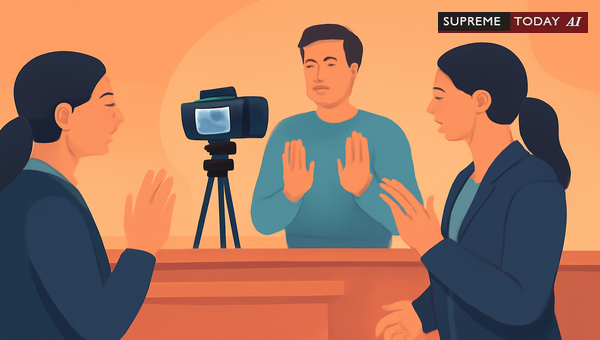
How Deaf & Mute Witnesses Testify in Indian Courts
Imagine you're in a courtroom, and a key witness is deaf and mute. Can they still provide vital testimony? The question often arises: Words and Sentences and Phrases of Court how to Give Proper Speech in Court. While traditional speech may not be possible, Indian law provides clear pathways for such witnesses to communicate effectively, ensuring justice isn't denied due to disability.
This blog explores the legal framework, procedures, and best practices for deaf and mute witnesses under Indian law. Note: This is general information based on judicial precedents and statutes; it is not legal advice. Consult a qualified lawyer for specific cases.
Main Legal Finding
A witness who is deaf, mute, or unable to speak can give evidence in court through alternative modes such as writing or signs, provided the court ensures proper procedures are followed. This includes assistance from interpreters or special educators and to establish credibility and authenticity. 2018 0 Supreme(Chh) 135 2021 0 Supreme(Mad) 2907
The and have consistently upheld this, emphasizing that depends on the witness's intelligence and understanding of the , not their ability to speak. 2018 0 Supreme(Chh) 135
Key Legal Provisions:
Section 119 explicitly states: A witness who is unable to speak may give his evidence by writing or by signs, and such writing or signs shall be deemed to be his evidence in , provided it is recorded properly. 2018 0 Supreme(Chh) 135 2021 0 Supreme(Mad) 2907
Key points include:- recognized: Deaf or mute persons are competent if they understand the and can communicate effectively. 2018 0 Supreme(Chh) 135 2021 0 Supreme(Mad) 2907- Preferred methods: If literate, record questions and answers in writing—it is desirable to record his statement giving him questions in writing and seeking answers in writing. 2024 Supreme(Online)(CG) 229 2022 0 Supreme(Mad) 3387- Signs and gestures: For illiterate witnesses, signs or gestures with an interpreter, videographed for transparency.
- Court's duty: Ensure due care in recording to avoid undermining reliability.
2012 0 Supreme(Raj) 693
Detailed Procedures for Recording Evidence
Assessing
Courts must first verify the witness's mental capacity: The court must ascertain the mental capacity and understanding of the witness before administering the . 2025 0 Supreme(Chh) 206
If competent, proceed with tailored methods.
Writing for Literate Witnesses
Such a person though unable to speak may convey himself through writing if literate. 2024 Supreme(Online)(CG) 229 This is the most satisfactory method, minimizing errors. Questions are written, answers recorded in the witness's handwriting. 2022 0 Supreme(Mad) 3387
Signs, Gestures, and Sign Language
For those unable to write: If in the opinion of the Court, can be administered to him/her, it should be so done... through signs and gestures if he is unable to read and write. 2024 Supreme(Online)(CG) 229
However, Recording gestures or signs without proper interpretation or is problematic. 2012 0 Supreme(Raj) 693 Nods or body language can be evidence if properly noted. 2016 0 Supreme(Del) 2179
Role of Interpreters and
Qualified, impartial interpreters from the witness's community are essential: The courts have underscored the importance of employing qualified interpreters who are impartial.
2024 0 Supreme(Mad) 1038
is crucial: The entire process must be recorded on video to preserve authenticity. Failure here can render evidence unreliable.
2012 0 Supreme(Raj) 693
In cases, similar principles apply—documents must be in a language the person can read and understand, highlighting communication rights. For instance, supplying grounds in English/Kannada to someone who reads/writes Marathi vitiates the order. 2015 0 Supreme(Kar) 1174
Judicial Precedents and Limitations
Courts stress procedural adherence:- rulings: Proper procedures make deaf/mute testimony as valid as oral evidence. 2021 0 Supreme(Mad) 2907- Risks of non-compliance: Without or qualified interpreters, evidence may be .
State of Rajasthan VS Darshan Singh @ Darshan Lal - Crimes ()
2023 0 Supreme(Raj) 1639Related cases underscore language barriers:- In recruitment, proficiency tests ensure candidates can speak, write and read the local language. 2025 Supreme(Online)(Ori) 3473- Detention orders fail if not in the detainee's readable language: He can speak and understand Malayalam; but he cannot read or write Malayalam. 2009 0 Supreme(Ker) 918- Even signatures in another language don't prove fluency. 2017 0 Supreme(Bom) 2289
Exceptions:- No proper assessment of capacity? Testimony questionable. 2025 0 Supreme(Chh) 206- Unqualified interpreters? Doubts arise.
State of Rajasthan VS Darshan Singh @ Darshan Lal - Crimes ()
Practical Recommendations for Courts and Lawyers
To ensure smooth proceedings:- Use qualified interpreters/special educators familiar with the witness.- Videograph everything for transparency.- Explicitly record interpretations of signs/gestures.- Prefer writing if possible: If the witness can read and write, it is desirable. 2022 0 Supreme(Mad) 3387- Lawyers: Verify procedures to prevent evidence challenges.
In language proficiency disputes, like banking jobs, courts uphold criteria requiring ability to speak, write and read fluently. 2025 Supreme(Online)(Mad) 67315
Broader Context: Communication in Legal Settings
Beyond witnesses, communication is key in exams, detentions, and claims. For example, in motor accident cases, disability assessments note abilities like he can also hear and speak properly and he can also read and write. 2016 0 Supreme(Tri) 43 In libel suits, precise language matters: he cannot perform work by kneeling... but can speak fluently. Wait, no—contextual quotes reinforce tailored approaches. 2014 0 Supreme(Bom) 1856
These cases parallel witness testimony, emphasizing accessible communication.
Key Takeaways
- Yes, deaf/mute witnesses can testify via writing, signs, or interpreters under Section 119. 2018 0 Supreme(Chh) 135
- Procedures matter: , qualified aid, capacity checks are mandatory.
- Best practice: Writing for literates; videographed signs otherwise.
- Final note: Strict adherence to legal procedures—use of qualified interpreters, videographing, and proper recording—is essential. 2018 0 Supreme(Chh) 135
Justice is inclusive. Proper speech in court isn't just verbal—it's effective communication. For personalized guidance, reach out to a legal expert.
References (select citations):1. 2018 0 Supreme(Chh) 135 - Foundational principles.2. 2021 0 Supreme(Mad) 2907 - summaries.3.
- and interpreters.4. 2024 Supreme(Online)(CG) 229 - Writing and signs. #DeafWitnessIndia, #EvidenceAct119, #CourtTestimony















