Searching Case Laws & Precedent on Legal Query.....!
Analysing the retrieved Case Laws
Scanned Judgements…!



Searching Case Laws & Precedent on Legal Query.....!
Analysing the retrieved Case Laws
Scanned Judgements…!
Party's Failure to Enter Witness Box - When a party to a suit deliberately does not appear in the witness box for cross-examination, the court can draw adverse inferences against that party. It is generally expected that parties support their case by testifying; failure to do so can weaken their position. The court may also refuse to compel the party's presence through witness summons if they choose not to appear voluntarily. 2025 0 Supreme(Telangana) 182, 2022 0 Supreme(Guj) 1013, 2025 0 Supreme(Kar) 72
Right to Cross-Examine - Cross-examination is a valuable right of the adverse party and is essential for testing the witness's credibility and the evidence presented. It is permissible for parties to require the other party to give evidence, including calling their own witnesses for cross-examination, provided it relates to relevant facts. However, courts cannot force a party who chooses not to appear in the witness box to be cross-examined. 2023 8 Supreme 487, 2023 0 Supreme(Del) 1348, 2023 0 Supreme(P&H) 288, 2022 0 Supreme(AP) 717
Implications of Not Entering Witness Box - If a party, despite being hale and healthy, refuses to enter the witness box, the court may infer unfavorable conclusions, such as the absence of supporting evidence for their case, which can influence the judgment. Conversely, witnesses like family members or representatives may depose on behalf of a party if the party does not appear, but courts scrutinize such depostions carefully. 2025 0 Supreme(Telangana) 182, 2025 7 Supreme 505
Court's Discretion and Limitations - Courts have the discretion to order the examination of parties if deemed necessary, but they cannot compel a party to be cross-examined if that party refuses voluntarily. The court's power to recall witnesses or order cross-examination is subject to the party’s participation and consent. 2024 0 Supreme(Mad) 309, 2023 0 Supreme(P&H) 1938
Summary - The main impact of a party not entering the witness box for cross-examination is the potential for adverse inference and weakened evidentiary support for that party's case. While courts have the authority to order examinations, they cannot force a party to testify or be cross-examined against their will. Proper conduct of cross-examination remains a fundamental right, and courts respect the party's choice to abstain, with consequences accordingly.
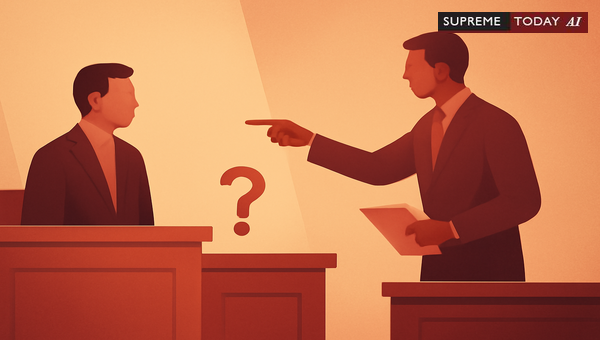
In the high-stakes arena of litigation, every decision can sway the outcome of a case. One critical choice is whether a party to the suit enters the witness box for . But what happens if Party to the Suit does Not Entered to the Witness Box for Cross Examination what is the Impact? This question strikes at the heart of in Indian courts.
Failing to appear voluntarily can trigger serious repercussions, including that undermine your entire case. This blog post explores the legal principles, landmark cases, exceptions, and practical advice to navigate this pitfall. Whether you're a litigant, lawyer, or simply curious about courtroom dynamics, understanding this can make all the difference. Note: This is general information based on judicial precedents and not specific legal advice. Consult a qualified attorney for your situation.
Under Indian evidence law, parties are expected to support their claims through personal testimony, subjecting themselves to to . When a party abstains, courts draw a against the non-appearing party.
As established in Vidhyadhar v. Mankikrao ( SC 1441), When a party to the suit does not enter the witness box and fails to offer themselves for , a arises that the case set up by that party is not correct. 2002 0 Supreme(Mad) 872 2009 0 Supreme(Cal) 772 2004 0 Supreme(Bom) 296
This stems from the fundamental right to cross-examine, allowing the opposing side to probe statements. Courts view non-appearance as a of weakness: Inferences Drawn by the Court include doubting the veracity of the party's pleaded case. 2006 0 Supreme(Bom) 1951 2018 0 Supreme(Cal) 969
Historical roots trace to the 's Sardar Gurbaksha Singh v. Gurdial Singh ( PC 230), consistently upheld in rulings. 2006 0 Supreme(Bom) 1438 2022 0 Supreme(Mad) 1306
From additional precedents: Where the party to the suit does not appear into witness box and states his own case on oral and does not offer himself to the cross examination by the other side, a would arose that the case set up by him is not correct. 2025 0 Supreme(AP) 34 2025 0 Supreme(AP) 226
The reinforced that absence from the witness box leads to an adverse , emphasizing 's role in truth-finding. 2023 0 Supreme(Kar) 648
- Consumer
Reliance solely on without is deemed unsafe, solidifying . 2004 0 Supreme(Bom) 296
Non-appearance invites unfavorable conclusions against the party's claims. 2009 0 Supreme(Cal) 772
Other cases echo this: In one instance, defendants failed to enter the box, leaving their unsupported, as noted in Vidhyadhar referenced therein. 2024 0 Supreme(AP) 316
Further, So far as the defendant in the said suit who is the appellant herein is concerned, he has not entered into the witness box and adduced evidence, except subjecting the plaintiff for . 2019 0 Supreme(Kar) 1790
These rulings illustrate a pattern: Courts expect parties, especially if hale and healthy, to testify voluntarily. Refusal may signal lack of supporting evidence. 2025 0 Supreme(Telangana) 182 2022 0 Supreme(Guj) 1013 2025 0 Supreme(Kar) 72
While the is strong, it's not absolute. Courts exercise discretion:
Evidence from Other Sources: Robust proof via documents, independent witnesses, or family members can salvage the case. Non-examination isn't fatal if claims stand independently. 2007 0 Supreme(Ori) 827
Denial of Opportunity: If a party is prevented from cross-examining, against them are inappropriate. 2022 0 Supreme(All) 1688
Court's Discretion: Judges may summon parties but cannot compel testimony against their will. remains a right, not an obligation. 2023 8 Supreme 487 2023 0 Supreme(Del) 1348 2023 0 Supreme(P&H) 288 2022 0 Supreme(AP) 717 2024 0 Supreme(Mad) 309 2023 0 Supreme(P&H) 1938
Witnesses like representatives can depose, but courts scrutinize closely. A party cannot propound a new case via others, and prior matters.
Achyuta Moharana @ Narasingha VS Nabakishore Moharana - Current Civil Cases
2025 7 Supreme 505In practice, as seen in cases where defendants adopted written statements but skipped testimony, their defense crumbled unsupported. 2024 0 Supreme(AP) 316
The impact of a party not entering the witness box is profound: Typically, it invites a of incredibility and , rooted in decades of precedent from to . 2004 0 Supreme(Bom) 296 2023 0 Supreme(Kar) 648
Key Takeaways:1. Prioritize personal testimony to avoid presumptions against your case.2. If unable to appear, fortify with independent evidence.3. Understand as both right and risk—prepare thoroughly.4. Courts respect choice but penalize strategically.
For litigants, this underscores proactive trial preparation. In your specific matter, weigh these principles carefully. Always seek tailored advice from a legal professional, as outcomes depend on facts and jurisdiction.
This post draws from established Indian jurisprudence for educational purposes. Word count: 1028.
#WitnessBox #CrossExamination #AdverseInference


The respondent No.1 - defendant No.1 deliberately did not choose to appear before the Court to adduce evidence and subject himself for cross-examination. He was hale and healthy, but wantonly not entered the witness box to avoid crucial aspects to be elicited from him in cross-examination. ... It is to be noted that the exam....

Cross-examination. –– The examination of a witness by the adverse party shall be called his cross-examination. Re-examination. ––The examination of a witness, subsequent to the cross-examination by the party who called him, shall be called his re-examina....

It is further held in that decision that normally a party to the suit is expected to step into the witness-box in support of his own case and if a party does not appear in the witness-box, it would be open to the trial Court to draw an inference against him. ... If party fails to appear in the witness-box#H....

can summon a person including a party to the suit who is not called as a witness by a party to the suit, as a witness". ... However, the petitioners cannot insist that the 7th respondent must enter box and subject himself for cross examination. ... However, the Court cannot exercise its power under Order XVI Rule 14 ....

Time and again, it is stressed that the cross examination of witness is the prerogative of the party who conducts his/her cross examination. Therefore, in view of the above discussion, there is no merit in the present application of DW1 and the same is dismissed accordingly. ... The counsel for the Petitioner raised another contention that since the witness has #HL_STAR....

Normally a party to the suit is expected to step into the witness box in support of his own case and if a party does not appear in the witness box it would be open to the trial Court to draw an inference against him. ... All these decisions in our view only indicate that it is not as if the Court has no power to direct the e....

That understanding is not correct. It is not in dispute that Defendant No. 1 did not enter the witness box, however, D.W.5 her son entered the box and deposed. ... The High Court while allowing the Second Appeal took the view that Shri Gautam Dasgupta (D.W.5 i.e. the Appellant No.4 – before us) could not have entered the wit....

Merely because the affidavit had been tendered in evidence would not mean that the witness had to be cross-examined. Many times it happens that the witnesses appear in the witness box for examination-in-chief but do not subsequently appear in the witness box for cross-examination. ... (Civil) 104 (s....
always that a party cannot call the opposite party as a witness. ... Moreover, the plaintiff Vishwender Singh, the proprietor of the plaintiff concern, has himself appeared in the witness-box as PW2 and in his cross-examination he stated that at the time of the said settlement only Vijay Kumar Bhandari from the side of the vendees and his father (father of PW2) were pre....

The right of cross-examination belongs to an adverse party and parties who do not hold that position should not be allowed to take part in the cross-examination.” 9. ... The examination and cross-examination must relate to relevant facts, but the cross-examination need n....

“Where the party to the suit does not appear into witness box and states his own case on oral and does not offer himself to the cross examination by the other side, a presumption would arose that the case set up by him is not correct”. 17. It is an admitted fact by the date of purchase of item No.1 of the plaint 'A' schedule property under a registered sale deed, dated 25.02.1984, the marriage of the 1st plaintiff with 1st defendant was performed. Their marriage was performed....

“Where the party to the suit does not appear into witness box and states his own case on oral and does not offer himself to the cross examination by the other side, a presumption would arose that the case set up by him is not correct”. 20. The original of Ex.B1 is in possession of the defendants. If really the 2nd defendant paid remaining sale consideration of Rs.800/- to Kotaiah and Sivaiah, what prevented him for obtaining endorsement on Ex.B1 with regard to alleged payment....
21. In the case on hand, the 2nd defendant filed written statement and the same is adopted by other defendants, but to prove their defence, they did not enter into the witness box. The law is well settled by the Hon'ble Apex Court in a case of Vidhyadhar vs. Manikrao and others, AIR 1999 SC 1441 where the Hon'ble Apex Court held that; In the case on hand, the defence put forth by the defendants in the written statement was not at all supported by the defence as they did not enter into witness ....

Firstly, the witness cannot propound a new case or the case of its own; Thirdly, permitting a party to the suit to be examined on behalf of another, is always at the discretion of the Court. Secondly, the witness must not have entered witness box in the said suit previously to lead evidence and has been cross-examined; and,
So far as the defendant in the said suit who is the appellant herein is concerned, he has not entered into the witness box and adduced evidence, except subjecting the plaintiff for cross-examination. Issue No.1 which is with reference to whether plaintiff is legitimate daughter of defendant, is answered in the affirmative; issue No.2 as to whether the plaintiff is unable to maintain herself, is answered in the affirmative and issue No.3 with reference to the prayer whether th....


An indispensable Tool for Legal Professionals, Endorsed by Various High Court and Judicial Officers
Please visit our Training & Support
Center or Contact Us for assistance

Scan Me!
India’s Legal research and Law Firm App, Download now!


For Daily Legal Updates, Join us on :



 Back to top


