Searching Case Laws & Precedent on Legal Query.....!
Analysing the retrieved Case Laws
Scanned Judgements…!



Searching Case Laws & Precedent on Legal Query.....!
Analysing the retrieved Case Laws
Scanned Judgements…!
The customary law's principles can sometimes conflict with statutory law, especially regarding the age of marriage or sexual relations involving minors, where statutory provisions like the POCSO Act override customary practices ["2023 0 Supreme(Megh) 24"].
Analysis and Conclusion:
References:- ["Bernard N. Marak vs State Of Meghalaya - Meghalaya"]- ["1969 Supreme(Online)(Gau) 4"]- ["2023 0 Supreme(Megh) 24"]- ["2011 0 Supreme(Gau) 823"]- ["1996 0 Supreme(Gau) 205"]- ["2014 0 Supreme(Megh) 210"]- ["2014 0 Supreme(Megh) 207"]- ["Bernard N. Marak vs State Of Meghalaya - Meghalaya"]- ["Bernard N. Marak vs State Of Meghalaya - Meghalaya"]- ["Bernard N. Marak vs State Of Meghalaya - Meghalaya"]- ["Bernard N. Marak vs State Of Meghalaya - Meghalaya"]- ["2020 0 Supreme(Megh) 37"]- ["Bernard N. Marak vs State Of Meghalaya - Meghalaya"]- ["2021 0 Supreme(Megh) 77"]- ["1968 0 Supreme(Gau) 51"]- ["Bernard N. Marak vs State Of Meghalaya - Meghalaya"]
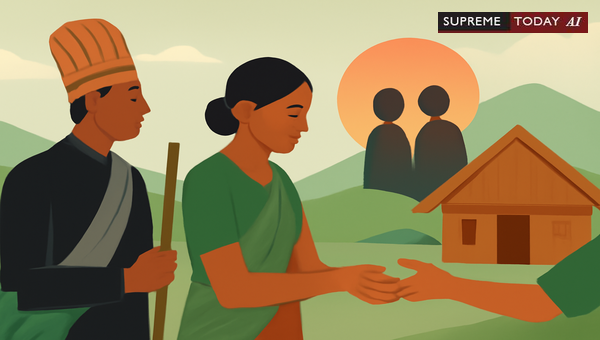
In the diverse landscape of India's tribal communities, Garo stands out for its unique blend of social structure, , and matrilineal traditions. If you've ever wondered, What is Garo ?, you're not alone. This ancient system governs key aspects of Garo society, particularly in regions like Meghalaya and Assam, influencing everything from land ownership to inheritance. Rooted in long-standing customs, it has been validated by courts and statutes, offering a fascinating intersection of tradition and modern law.
This blog post delves into the core elements of Garo , highlighting the central role of the (traditional headman), land management, succession rules, and judicial recognition. We'll draw from established legal findings and scholarly sources to provide clarity, while noting that this is general information—not specific legal advice. Always consult a qualified lawyer for personalized guidance.
At the heart of Garo is the , defined as a head of a clan or who holds land as custodian on behalf of a clan or 1988 0 Supreme(Gau) 77. The serves as both a social leader and land administrator, holding land in trust for the clan or community 1988 0 Supreme(Gau) 77 2022 0 Supreme(Megh) 275. This role extends to organizing social festivals, distributing land, and upholding communal responsibilities.
A key customary obligation is the 's residence in the —the traditional clan house. Abandoning this residence may lead to relinquishment of rights, underscoring the deep ties between leadership and land 2022 0 Supreme(Megh) 275. Courts have upheld this, recognizing the 's position as integral to Garo social fabric 1988 0 Supreme(Gau) 77.
Scholarly writings reinforce this: the is a headman, landowner, and custodian of community land, responsible for equitable management 1988 0 Supreme(Gau) 77 2022 0 Supreme(Megh) 275.
land is quintessential community property, belonging to the or clan, not individuals. Transfers, such as mortgaging or , require consent from female clan members, especially the and the mother of the house, reflecting the matrilineal ethos 1988 0 Supreme(Gau) 77 1968 0 Supreme(Gau) 51 2022 0 Supreme(Megh) 275.
For instance, a father's attempt to transfer land without maternal consent is typically invalid 1968 0 Supreme(Gau) 51. This protects communal interests, preventing land from leaving the —a principle echoed in historical cases where property once in a cannot pass out of it1943 0 Supreme(Cal) 93.
Courts emphasize that such restrictions are binding unless proven otherwise, ensuring remains a symbol of clan unity 1988 0 Supreme(Gau) 77.
Garo society predominantly follows a matrilineal system, where descent, inheritance, and succession trace through the mother's line 1988 0 Supreme(Gau) 77 1996 0 Supreme(Gau) 205. Property and titles stay within the , governed by customs that prioritize female lineage.
In succession disputes, communities elect successors per tradition, as seen in cases involving substitute wives or clan elections
. Oral evidence and authoritative texts, like Major Playfair's monograph, guide courts in verifying these rules 1943 0 Supreme(Cal) 93. Plaintiffs failing to prove title under such customs often see claims dismissed 1943 0 Supreme(Cal) 93.
Offshoots from Garo male and non-Garo female unions may not claim under , highlighting strict matrilineal tracing: descent is always traced and accorded through the mother's line 2013 0 Supreme(Megh) 20.
Indian courts consistently recognize Garo , provided it's established through evidence and tradition 1988 0 Supreme(Gau) 77 2024 Supreme(Online)(MEGH) 301. For example, appointments and land rights are upheld if aligned with proven customs 1988 0 Supreme(Gau) 77.
In one case, courts noted the accepted legal position of the Garo customary laws in disputes, directing parties to legal proceedings for resolution
. Similarly, unreliable oral evidence leads courts to rely on books like Rev. C.D. Baldwin's 1933 publication on Garo law 1943 0 Supreme(Cal) 93.
This judicial deference ensures customs remain vital, but only when proven and consistent with the community’s long-standing practices1988 0 Supreme(Gau) 77.
While robust, Garo isn't absolute:- Abandonment of Practices: A abandoning the may lose rights 2022 0 Supreme(Megh) 275 1988 0 Supreme(Gau) 77.- Proof Requirement: Customs must be evidenced; unproven claims fail 1988 0 Supreme(Gau) 77 1943 0 Supreme(Cal) 93.- Conflicts with Statutory Law: Customs may yield to public policy or statutes, such as in claims 2013 0 Supreme(Megh) 20.- Deputy Commissioner Involvement: Certificates on tribal status require proper parties in suits 2013 0 Supreme(Megh) 20.
These limitations balance tradition with legal scrutiny, as courts intervene where customs clash with broader laws.
Navigating this system requires respect for its principles:- Document Customs: Support claims with community evidence and historical texts.- Seek Consent: In land deals, obtain female clan approvals to avoid invalidation 1968 0 Supreme(Gau) 51.- Verify Leadership: Ensure adherence to residence and duties 2022 0 Supreme(Megh) 275.- Court Approach: Present clear proof of customs in disputes 1988 0 Supreme(Gau) 77.
Authorities should confirm procedures before altering rights, preserving cultural integrity.
Garo weaves a rich tapestry of , communal , and stewardship, upheld by courts as valid tradition 1988 0 Supreme(Gau) 77 2024 Supreme(Online)(MEGH) 301. From protections to succession rules, it safeguards clan heritage amid modern challenges.
Key takeaways:- holds land in trust; residence is obligatory 2022 0 Supreme(Megh) 275.- is property—transfers need consent 1968 0 Supreme(Gau) 51.- Matrilineal descent governs inheritance 1996 0 Supreme(Gau) 205 1943 0 Supreme(Cal) 93.- Prove customs for legal enforceability 1988 0 Supreme(Gau) 77.
As tribal laws evolve, understanding Garo customs fosters harmony between tradition and law. For specific matters, professional legal counsel is essential—this overview generally reflects documented practices.
References:1. 1988 0 Supreme(Gau) 77: definition, land custody, succession.2. 2022 0 Supreme(Megh) 275: obligations, restrictions.3. 1968 0 Supreme(Gau) 51: Consent for land transfers.4. 1996 0 Supreme(Gau) 205: Matrilineal customs.5. 2024 Supreme(Online)(MEGH) 301: Court validation.6. 1943 0 Supreme(Cal) 93: inheritance rule.7.
,
, 2013 0 Supreme(Megh) 20: Additional case insights. #GaroCustomaryLaw, #NokmaRights, #TribalLandLaw


customary laws in this matter. ... Suffice it to notice for the present purpose that the accepted legal position of the Garo customary laws is , which is take up the matter in the Court of law for several adversities. ... customary laws though his proclaimed right is in dispute and he is being duly proceeded against.

From S.29 of the Garo Law, by Jobang D. ... law. ... The finding of the Learned Lower Appellate Court that the transfer of the Akhing land by Tosu in favour of Khewil was unconditional and absolute is not correct inasmuch as Tosu had no authority to encumber the Akhing land and transfer the same in violation of the Garo Customary Law. ... It is further directed that the members of the 'Sko - Mechik' clan should now select the Nokma of the Boldamgiri Akhing in accordance with the #HL_ST....

At this juncture, the learned counsel has submitted that in the Garo community, it is customary for a man to marry more than one wife, in many cases, apart from being married to his wife, he may have to marry his widowed mother-in-law, on the death of his father-in-law and can marry upto three wives. ... The learned counsel has reiterated that in this instant case, the relationship between the petitioner No. 2 and the victim girl is based on Garo customary practices, this petition may ....

Banerjee has further referred the principles of Garo Customary law prevalent amongst the Garos. He has drawn the attention of certain words under the Garo customary law which is relevant for the decision of the instant case. The word 'chra' means 'male relatives'. ... In the instant case parties are governed by Garo Customary law including the marriage, adoption and divorce. The pleaded facts established in the case would clearly in....

customary law. ... When a Nokma and her husband are once installed under the Garo Customary law they cannot be removed from that status. ... The only other submission of learned Counsel that deserves our serious consideration is whether a nokma can be removed by the clans men under the Garo Customary law. ... After his death the petitioner accepted Khijing Sangma as her substituted husband as per Garo customary #HL....
Nema Sangma, as per Garo customary law, Smti. Thame Sangma was given as substitute wife to Shri. ... Law. ... In their objection/complaint, it is stated that according to the Garo customary law, the Maharis have to elect the one who is to become regarding Garo customary law we request you the judge to p style="position:absolute;white-space:pre;margin ... system among all the customary laws....
In their objection/complaint, it is stated that according to the Garo customary law, the Maharis have to elect the one who is to become the “Nokma”. In their objection, the appellants and others did not state that the undisputed owner of Jendragre Akhing i.e. ... Section 15 of the said Book called Principles of Garo Law, reads as follows:- ... “15. ... Sangma and regarding Garo customary law we request you the judge to entrust the maharis to elect th....

The finding of the lower appellate Court as to the oral evidence in the case is this: The evidence of the witnesses examined by both sides does not seem to be quite reliable on the question of the customary law on the point. ... The next authority cited before us is a small publication on Garo law by the Reverend C.D. Baldwin, dated 1933. The author is an Australian Baptist Missionary of the Mymensingh District and does not himself claim his work to be authoritative. ... After pointing out that the Garos are divided int....
Under the Garo Customary Law the ownership of the Akhing land vest on the community itself. Normally such land belongs to a particular clan known as the Mahari. ... Justice Jangsan Sangma in his book Principles of Garo Law in Chapter VIII narrated about the 'Succession to Akhing land.' ... Considering the aforesaid aspects of the matter I am of the view that the appellate authority namely the Chief Executive Member shall independently examine the entire matter afresh without being trammelled by the #HL_....
Sangma was in accordance to Garo Customary Law, Practice and Usage during the year 1979, and the Garo Customary Law has a force of law. ... In this regard, this Court made an observation that the marriage certificate is required to be proved and exhibited in the manner provided by law. ... The learned Judicial Officer/Garo Hills Autonomous District Council, West Garo Hills, Tura issued the succession certificate da....
As per the Garo Customary Law (L) Watre Ch. Marak, mother of Smti. Enilla Ch. Smti. Enilla Ch. Marak became Nokma only in the month of April, 2011. Marak became the Nokma and continued to be the recorded Nokma of Danakgre Akhing till her death in 2011.
Further, the certificate in question has been issued by the Deputy Commissioner, hence the Deputy Commissioner ought to have been made a party to this suit, which has not been made alone in the present case. The offshoots or progeny of marriage between Garo (male) and non-Garo (female) cannot claim the status of Scheduled Tribe either under the customary law applicable to the Garo tribal or under the Constitution of India The gist of the custom pleaded in the writ petition is that the Garo society follows matrilineal system and descent is always traced and accorded through ....


An indispensable Tool for Legal Professionals, Endorsed by Various High Court and Judicial Officers
Please visit our Training & Support
Center or Contact Us for assistance

Scan Me!
India’s Legal research and Law Firm App, Download now!


For Daily Legal Updates, Join us on :



 Back to top


