


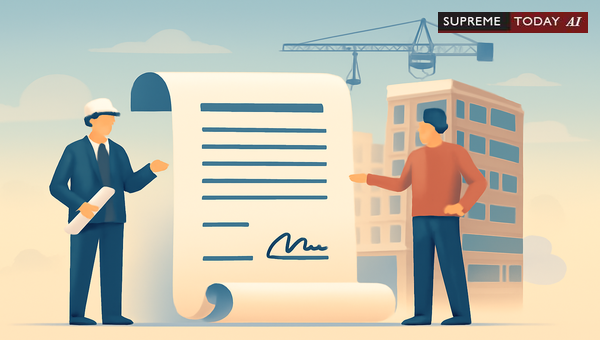
Drafting a Solid Architect-Contractor Contract for Commercial Complexes
In the fast-paced world of commercial real estate development, a well-drafted construction contract between an architect and a contractor is crucial for the successful execution of projects like commercial complexes. But how do you ensure your Draft Construction Contract between Architect and Contractor for the Construction of a Commercial Complex covers all bases? This guide breaks down the key components, drawing from legal precedents and standard practices to help you navigate this essential agreement.
Whether you're a developer, architect, or contractor, understanding the , , , and mechanisms can prevent costly disputes and delays. We'll explore these elements in detail, supported by relevant legal insights.
Main Legal Findings on Architect-Contractor Contracts
A draft construction contract for a commercial complex must clearly outline the , , and of both the architect and contractor. Typically, it specifies the architect's role in designing and supervising, while the contractor handles execution, with provisions for cooperation, quality, and disputes. This structure ensures enforceability and compliance with laws.
Key points include:- Architect's duties: Designing, reviewing documents, ensuring legal compliance, and obtaining approvals.
- Contractor's duties: Executing work per approved plans, maintaining quality, and meeting timelines.
- Mutual aspects: Cooperation, , and for disputes.
Detailed Scope and of the Architect
The architect plays a pivotal role in the project's foundation. generally include developing project concepts, preparing schematic and design development drawings, and reviewing construction documents for consistency and errors. They must obtain governmental approvals and coordinate with associates, ensuring designs comply with laws and standards. The architect seals and signs the contract documents, including drawings and specifications.
For instance, as per standard clauses, the Architect shall submit to the Society all the necessary sketch plans/designs, draft tender documents within the period stipulated by the society. 2021 Supreme(Online)(KER) 32298 Additionally, stipulates that the Architect shall prepare and submit complete working drawings and details sufficient to commence the work at the site for the proper execution during the construction. 2021 Supreme(Online)(KER) 32298
Architects also issue instructions during construction, which contractors must follow, covering materials, specifications, and approvals. 2025 Supreme(Online)(SCDRC) 24061 2025 Supreme(Online)(SCDRC) 24554
Contractor's in Commercial Complex Projects
While specific details may vary, contractors are typically responsible for executing construction per approved designs, upholding , and adhering to timelines. They must cooperate with the architect, notify discrepancies in writing, and seek clarifications before proceeding.
In projects like residential or commercial complexes, contractors handle pile caps, basements, and multi-storey buildings, as seen in developments such as 'Starwood' comprising seven buildings. 2024 Supreme(Online)(HC) 2048 Payments, including , are processed through the .
2025 Supreme(Online)(SCDRC) 24061
Mutual Cooperation, , and Compliance
Contracts emphasize joint responsibility for design, construction, and administration. Parties work cooperatively, with the architect assisting in approvals and ensuring documents conform to laws. Quality and compliance are central.
Standard forms like PAM or PWD outline procedures for instructions, , and approvals. require prior written approval, and contractors must use architect-approved materials. Discrepancies demand written notices to the architect or project manager.
2025 Supreme(Online)(SCDRC) 24061 2025 Supreme(Online)(SCDRC) 24554
Legal principles stress clear scopes: Vague terms like may lack enforceability.
Statutory approvals are mandatory before work begins. 2004 2 Supreme 694
Handling , Claims, and Payments
from scope changes can impact contract value but need documentation and approval. Claims for extras require prior notice and architect certification, which is advisory yet critical.
2025 Supreme(Online)(SCDRC) 24061
In one case, payments due to contractors under the contract or related agreements are governed by specific , and preliminaries.
Mechanisms
Clear procedures are vital. Contracts often mandate , specifying arbitrator choice and venue. Issues must be raised in writing promptly.
Delays, costs, or compliance disputes rely on architect certification. Statutory matters may escalate beyond if procedures aren't followed. 2004 2 Supreme 694
Exceptions, Limitations, and Best Practices
Watch for pitfalls:- Vague terms hinder enforcement.
- Non-compliance with statutes may void protections. 2004 2 Supreme 694- Ambiguous duties lead to disputes; define mutually.
Recommendations for drafting:- Use precise definitions for scope, , and standards.- Detail approvals, inspections, and compliance procedures.- Include , venue, and governing law.- Align with statutes; allow amendments.
Incorporate standard clauses from PAM/PWD for and notices.
Key Takeaways and Conclusion
Drafting an architect-contractor contract for a commercial complex requires balancing detailed roles, cooperation, and safeguards. By clearly defining scopes—like architects' design approvals and contractors' execution—while embedding quality controls and , parties minimize risks. Insights from cases underscore clarity and compliance.
2004 2 Supreme 694
References:1.
: Architect and cooperation.2.
: Clear specifications for enforceability.3.
: Statutory compliance.4. 2004 2 Supreme 694: Building rules adherence.5. 2024 Supreme(Online)(HC) 2048: Complex construction examples.6.
: Payment and architect roles.7. 2021 Supreme(Online)(KER) 32298: Design submissions.
Note: This is general information based on referenced documents and not specific legal advice. Consult a qualified attorney for your situation. Always ensure contracts comply with local laws.
#ConstructionContract, #ArchitectContractor, #CommercialComplex















