
SupremeToday Landscape Ad
AI Thinking

AI Thinking...

Searching Case Laws & Precedent on Legal Query.....!

Scanned Judgements…!

Checking relevance for SHAH FAESAL VS UNION OF INDIA...

Checking relevance for Total Environment Building Systems Pvt. Ltd. VS Deputy Commissioner of Commercial Taxes...

Checking relevance for Arun Kumar Aggarwal VS State of Madhya Pradesh...

Checking relevance for Jagannath Temple Managing Committee VS Siddha Math...

Checking relevance for SUPREME COURT ADVOCATE ON RECORD ASSOCIATION VS UNION OF INDIA...

1993 0 Supreme(SC) 922 : The legal document indicates that the advice given by the Supreme Court (specifically through the Chief Justice of India) to the President of India is not binding in the final decision-making process. In paragraph 416, it states that in S.P. Gupta''''s case (1982), the Court held that the Central Government can override the opinion given by constitutional functionaries (including the Chief Justice of India) and arrive at its own decision regarding the appointment of judges. This establishes that the advice of the judiciary is not binding on the Executive, and the Executive has primacy in the appointment process. Therefore, while the Supreme Court''''s advice is part of the consultation process under Articles 124(2) and 217(1), it is not binding on the President, and the President acts in accordance with the advice of the Council of Ministers, which is ultimately under the Executive''''s control.Checking relevance for UNION OF INDIA VS MAJOR S. P. SHARMA...

2014 2 Supreme 288 : The Supreme Court''''s judgments, particularly those delivered under Article 141 of the Constitution, are binding on all courts and authorities in India. The doctrine of stare decisis ensures that the law declared by the Supreme Court is the law of the land and must be followed by all lower courts and tribunals. This principle establishes that the decisions of the Supreme Court are not merely advisory but are legally binding precedents, and their finality is essential to maintain the rule of law, prevent litigation chaos, and ensure consistency in judicial administration.Checking relevance for Astrazeneca Ab VS Westcoast Pharmaceutical Works Limited...

Checking relevance for Tulsa Bai Gond W/O Shri Ramnarayan Gond VS State Of Madhya Pradesh Secretary Women And Child Development Deptt. (Madhya Pradesh)...

Checking relevance for Tapan Kumar Santra VS Tarak Nath Paul...

Checking relevance for Rajeev Bhardwaj VS State of H. P. ...

Checking relevance for Anil S/o Ramsing Bilawar VS Anita W/o. Gopal Kadam...

Checking relevance for State of UP VS Geeta Rani W/o Late Man Singh...

Checking relevance for M. S. Sandhu VS State of Punjab...

Checking relevance for Union Of India: Prithipal Singh: Ram Mehar Raj Kumar: Delhi Cattle Breeding Farms Private LTD. VS Raghubir Singh: Union Of India: Union Of India: Union Of India...

Checking relevance for State of U. P. VS Ajay Kumar Sharma...

Checking relevance for Shanker Raju VS Union of India...

Checking relevance for State of Gujarat VS Gordhandas Keshavji Gandhi...

Checking relevance for Rajendra Kumar VS Kalyan...

Checking relevance for State of Meghalaya VS Sujata Gupta...

Checking relevance for Muhammed Riyas VS State of Kerala...

Checking relevance for Syed Ifthekar Ahmed S/O Late Syed Shafiq Ahmed VS State By Karnataka Lokayuktha City Division...

Checking relevance for ASHOK KUMAR SOOD VS RAJINDRA PROPERTIES...


AI Overview

AI Overview...

  • Advice by Supreme Court as Binding Precedent - The Supreme Court of India clarifies that only the principles and ratios of its judgments are binding as precedents, not the specific orders or decisions in individual cases. The Court emphasizes that the scope of precedent should be limited to the legal principles underlying the decision, and not expanded unnecessarily [["2023 0 Supreme(Bom) 1343"], Hazara Singh, AIR 1975 SC 1087; State of Punjab vs. Baldev Singh, 1999 (6) SCC 172; Mahadeva Shetty, 2003 (7) SCC 197; Manoharlal, AIR 2002 SC 3088; Prakash Chand, 1998 (1) SCC 1].

  • Advice by the Supreme Court to the President of India - Several judgments reaffirm that the Court’s directives or recommendations are not legally binding as precedents on the Executive, especially in matters like the Governor's power regarding remission or recommendations to the President. For example, in cases related to the Governor forwarding recommendations to the President, the Court has held that such actions are contrary to the constitutional scheme and that the Court does not bind the President or the Governor in such administrative or constitutional decisions [["2024 0 Supreme(Mad) 1849"], AG Perarivalan case; ["2024 0 Supreme(Mad) 2042"], same case; ["2024 0 Supreme(Mad) 2359"], similar context].

  • Legal Principles on Binding Nature of Court Advice - The Court has observed that only statements of law in decisions are binding, and not the factual or case-specific directions. When a Court issues a recommendation or advice, it is generally not binding as a precedent unless it establishes a legal principle that must be followed [["2023 0 Supreme(Bom) 1343"]].

  • Implication - The Supreme Court’s rulings clarify that judicial advice, recommendations, or directions are not binding as precedents on the Executive or other courts unless they articulate a binding legal principle. Each case’s specific order or direction is not necessarily a precedent; only the legal ratio decidendi is binding references above.

Conclusion:The advice or recommendations given by the Supreme Court to the President of India are not binding as precedents. The Court’s role is to interpret and lay down legal principles, and its specific directions or case-specific orders do not constitute binding precedents on executive actions unless they establish a binding legal rule.

Arnesh Kumar Guidelines: Distinguishing Binding Precedent from Advisory Supreme Court Opinions

Arnesh Kumar Guidelines Reiterated by Supreme Court: Is the Advice Binding Precedent?

In the realm of Indian criminal justice, the Arnesh Kumar guidelines—laid down by the Supreme Court in Arnesh Kumar v. State of Bihar (2014)—stand as a cornerstone for preventing unnecessary arrests in cases involving offenses punishable by less than seven years' imprisonment. These guidelines emphasize notice of appearance over mechanical arrests, protecting personal liberty. Recently, the Supreme Court has reiterated these guidelines, prompting questions about their legal weight, especially when issued as advice to the President of India.

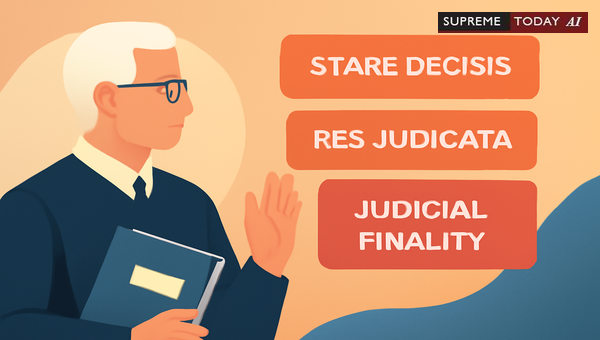
But does such advice from the Apex Court create a binding precedent for future cases? This blog delves into this nuanced issue, drawing from authoritative legal principles like stare decisis and res judicata. While generally informative, this is not legal advice—consult a qualified lawyer for specific cases.

Understanding the Arnesh Kumar Guidelines

The Arnesh Kumar ruling revolutionized arrest procedures by directing magistrates to satisfy themselves about the need for arrest before authorizing it. Key directives include:- Issuing notice under Section 41A CrPC before arrest.- Recording reasons in writing for arrests.- Protecting personal liberty under Article 21.

When the Supreme Court reiterates these in opinions or advice, lower courts and authorities often follow suit. However, the core question arises: Is Supreme Court advice to the President binding as precedent?

Main Legal Finding: Authoritative but Not Binding Precedent

The Supreme Court's advice to the President, while highly authoritative, does not constitute a binding precedent for subsequent cases. It carries significant weight due to the Court's constitutional role and principles of judicial finality, but lacks the force of a formal judgment.

Key Points:- Supreme Court opinions to the President guide but do not constrain future courts. 1993 0 Supreme(SC) 922- Binding nature stems from res judicata and stare decisis, applicable to judgments, not advisory opinions. 2014 2 Supreme 288- A decision rendered by a competent court cannot be challenged in collateral proceedings—emphasizing finality for judicial decisions only. 2014 2 Supreme 288

This distinction ensures stability in law without extending precedential rigidity to non-judicial advice.

Detailed Analysis: Nature of Supreme Court Advice

Advice vs. Judicial Precedent

The Supreme Court interprets the Constitution authoritatively, but advice to the President—often under Article 143—is advisory, not adversarial. Documents clarify: The Court’s opinions or judgments serve as precedents that guide future judicial and constitutional interpretation but do not imply that the Court’s advice to the President... becomes a binding legal precedent. 2014 2 Supreme 288

In the context of Arnesh Kumar reiteration, if issued as advice, it influences policy (e.g., executive guidelines on arrests) but does not bind courts like a ratio decidendi from a decided case.

Judicial Finality and Stare Decisis

Finality is paramount: The judgments of the court and particularly the Apex Court... cannot and should not be unsettled lightly. 2014 2 Supreme 288 This doctrine protects decided cases via res judicata, preventing collateral challenges. However, advisory opinions fall outside this, functioning as persuasive authority.

Supporting precedents from other sources reinforce this:- It is well settled law of precedents that only the ratio of a judgment is binding as a precedent, not the order which is passed in a case. 2023 0 Supreme(All) 1501 2023 0 Supreme(All) 768- Supreme Court law binds all courts, but only if material facts align: No decision is binding as a precedent in another case if the material facts or issue in the latter case are not identical. 1998 0 Supreme(Pat) 510

Role in Constitutional Interpretation

The Court sets binding precedents on constitutional matters, but advice remains influential guidance. For Arnesh Kumar, reiterations in judgments (not mere advice) would bind via stare decisis, ensuring uniform arrest practices nationwide.

Insights from Related Cases on Binding Precedents

Other judicial observations highlight precedent nuances:- In GST extension cases, recommendations must align with statutory requirements; absence renders actions ultra vires—mirroring how advice without judicial form lacks binding force. 2025 0 Supreme(Gau) 1026- Non-compliance with Supreme Court precedents can invite contempt, underscoring their weight when binding. 2025 Supreme(Online)(SCDRC) 21253 2025 Supreme(Online)(SCDRC) 20605- Procedural rules are directory, not conferring rights, emphasizing substance over form in judgments. 2023 0 Supreme(All) 1501

In arbitration contexts, courts prima facie verify clauses before appointing arbitrators, respecting precedents like S.B.P. & Co. v. Patel Engineering Ltd.2006 0 Supreme(Del) 1540

These illustrate that while Supreme Court views command respect, only ratios from judgments bind.

Exceptions, Limitations, and Practical Implications

Exceptions: Advice cannot be reopened unless part of a final judicial decision. It carries significant authoritative weight and shapes constitutional understanding. 2014 2 Supreme 288

Limitations: It informs but does not dictate. Lower courts must adhere to binding precedents, not advisory notes.

For practitioners handling Arnesh Kumar-related matters:- Cite formal judgments for arguments on arrests.- Use advice for persuasive policy advocacy.- Beware contempt for ignoring binding ratios. 2025 Supreme(Online)(SCDRC) 21253

Recommendations: Treat such advice as influential, aligning decisions with stare decisis for predictability. Authorities should integrate Arnesh Kumar principles routinely to avoid liberty violations.

Key Takeaways

In conclusion, while the Supreme Court's reiteration of Arnesh Kumar guidelines via advice to the President powerfully guides executive and judicial action, it does not forge binding precedent. Legal stakeholders should value its authority while grounding practice in formal judgments. Stay informed on evolving precedents to navigate India's dynamic legal landscape effectively.

References:1. 1993 0 Supreme(SC) 922: Judiciary independence and non-binding advice.2. 2014 2 Supreme 288: Finality, res judicata, and precedent scope.3. Additional sources as cited above.

This post provides general insights based on public legal documents (as of latest available data). Laws evolve; seek professional advice.

#ArneshKumarGuidelines, #SupremeCourtPrecedent, #LegalAdviceIndia
Chat Download
Chat Print
Chat R ALL
Landmark
Strategy
Argument
Risk
Chat Voice Bottom Icon
Chat Sent Bottom Icon
SupremeToday Portrait Ad
logo-black

An indispensable Tool for Legal Professionals, Endorsed by Various High Court and Judicial Officers

Please visit our Training & Support
Center or Contact Us for assistance

qr

Scan Me!

India’s Legal research and Law Firm App, Download now!

For Daily Legal Updates, Join us on :

whatsapp-icon Back to top







