


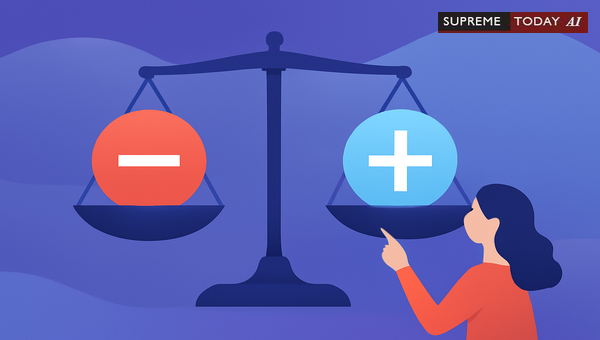
Why is Illegal in India
In the realm of constitutional law, the principle of equality stands as a cornerstone of justice. But what happens when claims of equality are twisted to justify or perpetuate illegal acts? This is where the concept of —often termed or —comes under scrutiny. The question at the heart of many legal battles is: is Bad under Law? As we'll explore, Indian courts have consistently ruled that it is, emphasizing over any form of illegality.
This blog post delves into the legal doctrine surrounding , drawing from Supreme Court judgments and constitutional principles. Note that this is general information based on established case law and should not be considered specific legal advice. Consult a qualified lawyer for personalized guidance.
Understanding
, or , refers to the misguided argument that if an illegal or irregular benefit has been granted to some, others in similar positions must receive the same to avoid 'discrimination.' This logic flips equality on its head, seeking to enforce parity through perpetuation of wrongdoing.
Courts have firmly rejected this notion. embodies , guaranteeing equality before the law and equal protection of laws. It mandates treating equals equally and unequals unequally based on —not by endorsing prior illegalities. As held in multiple rulings, Article 14 provides for , not , and cannot be used to perpetuate illegality or irregularity 2010 4 Supreme 546 2021 0 Supreme(HP) 930 2015 0 Supreme(All) 1548 2015 0 Supreme(All) 1042.
Core Legal Principles: Positive vs.
The Doctrine of Article 14
Article 14 is not a shield for illegality. It promotes , ensuring fair treatment grounded in law. , by contrast, would mean two wrongs make a right, which courts have universally condemned.
Key tenets include:- No : Repeating illegal acts, even if done previously, remains impermissible. Repeating illegal or irregular acts, even if similar acts have been previously done in other cases, is not permissible under law, as it would amount to perpetuating illegality 2010 4 Supreme 546 2021 0 Supreme(HP) 930 2015 0 Supreme(All) 1548.- : Equality applies to equals; unequal treatment must be reasonable, not arbitrary.- Rejection of claims: Courts have explicitly rejected claims based on , emphasizing that equality under Article 14 is about treating equals equally and unequals unequally based on , not about perpetuating illegal acts or benefiting from illegal advantages 2010 4 Supreme 546 2021 0 Supreme(HP) 930 2022 0 Supreme(Megh) 252.
This principle ensures the law remains a tool for justice, not a loophole for wrongdoing.
Landmark Judgments Rejecting
Indian jurisprudence is replete with cases dismantling arguments. In 2021 0 Supreme(HP) 73 and 2021 0 Supreme(HP) 930, the Supreme Court clarified that illegal acts or benefits cannot be used as a legal basis for others to claim similar rights. Granting such claims would amount to perpetuating illegality, which is impermissible.
Similarly, in 2021 0 Supreme(HP) 930 and 2021 0 Supreme(HP) 73, courts reinforced that is unconstitutional.
The enduring doctrine of is echoed in 2022 0 Supreme(Guj) 1165 and 2021 0 Supreme(HP) 930. Courts cannot justify illegal acts by citing prior illegal acts in other cases 2022 0 Supreme(Guj) 1165 2005 0 Supreme(Del) 847.
Insights from Additional Legal Sources
Further precedents solidify this stance. In , the Supreme Court observed: merely because some other similarly placed casual workers were regularized, illegality or irregularity in appointments cannot be further perpetuated by regularizing the services of others. Thus, it is held that there cannot be any 2020 0 Supreme(Guj) 654. Even erroneous regularization of others doesn't justify extending the benefit.
Another ruling notes: A negative or reverse discrimination is also against social justice 2019 0 Supreme(Mad) 2200. This highlights how undermines broader societal equity.
In cases involving regularization of casual workers, courts have questioned: In spite of that, question arises whether the said discrimination is positive or negative 2009 0 Supreme(Gau) 726 2009 0 Supreme(Gau) 727. The answer is clear—, where similarly situated persons are ignored while others irregularly benefit, cannot create rights but must be rectified lawfully.
International human rights perspectives align, emphasizing non-discrimination over arbitrary differentiation 2025 0 Supreme(Del) 364. Domestically, actions born of discrimination are deemed bad in law 2024 Supreme(Online)(MP) 14913 2023 0 Supreme(UK) 415.
Exceptions and Rational Differentiation
While equality is paramount, courts allow based on and to a legitimate objective. However, stereotypes or arbitrary grounds fail this test. For instance, discrimination based on gender roles or fixed notions is struck down 2025 0 Supreme(Raj) 1555. Illegal benefits never qualify as a foundation for claims 2024 7 Supreme 465 2024 0 Supreme(Raj) 1617.
Practical Recommendations
To navigate this legal landscape:- Ground claims in law: Avoid relying on irregular precedents; focus on lawful entitlements.- Administrative caution: Decisions must comply with procedures to prevent constitutional challenges.- Litigants' strategy: Courts reject ; build cases on positive rights and equality.
As advised: Legal claims should be grounded in lawful and rational grounds; reliance on illegal acts or benefits granted irregularly should be avoided 2010 4 Supreme 546.
Conclusion and Key Takeaways
is unequivocally bad under Indian law. Courts uphold under Article 14, refusing to perpetuate illegality through . The law prioritizes justice over misguided equity, ensuring illegal benefits granted to some cannot serve as a legal basis for others to claim similar benefits 2010 4 Supreme 546 2021 0 Supreme(HP) 930 2015 0 Supreme(All) 1042.
Key Takeaways:- Article 14 mandates positive, not negative, equality.- Two wrongs never make a right.- Claims must stem from lawful grounds, not irregularities.- violates constitutional integrity.
In sum, while equality is a fundamental right, it cannot cloak illegality. This consistent judicial stance safeguards the rule of law. For deeper analysis, review the referenced judgments.
Word count: 1028. This post draws from established precedents for educational purposes only.
References
- 2010 4 Supreme 546 - Principles on equality claims.
- 2021 0 Supreme(HP) 930 - Supreme Court on positive vs. .
- 2015 0 Supreme(All) 1548 - No rights from illegal acts.
- 2020 0 Supreme(Guj) 654 - Explicit rejection of .
- 2025 0 Supreme(Del) 364 - Non-discrimination principles.
- Others as cited inline.















