Searching Case Laws & Precedent on Legal Query.....!
Analysing the retrieved Case Laws
Scanned Judgements…!



Searching Case Laws & Precedent on Legal Query.....!
Analysing the retrieved Case Laws
Scanned Judgements…!
Mere attack or abusive remarks against a person, even if that person belongs to a Scheduled Caste (SC) or Scheduled Tribe (ST), do not automatically attract offences under the SC/ST Act unless specific elements are proven. The offence requires that the insult or threat be targeted at the victim because of their caste identity, with an intention to humiliate or intimidate on that ground. Simply making a remark or attack without casteist intent or without targeting the individual's caste does not suffice. ["2023 0 Supreme(All) 950"], ["2025 0 Supreme(Ori) 778"], ["2023 0 Supreme(Ker) 430"], ["2024 0 Supreme(Ker) 1197"], ["2025 0 Supreme(Ori) 293"], ["2025 0 Supreme(Ori) 484"], ["2024 0 Supreme(All) 2317"]
The law emphasizes that for offences under Sections 3(1)(x) and 3(2)(v) of the SC/ST Act, the victim's caste identity must be the ground for the offence, and the act must be committed with casteist intent. Insults or threats made generally or without casteist motive are insufficient to attract the Act. Additionally, the offence must be committed in a manner that is in public view, involving the presence of independent witnesses, to qualify under the Act. ["2023 0 Supreme(All) 950"], ["2025 0 Supreme(Ori) 778"], ["2023 0 Supreme(Ker) 430"], ["2025 0 Supreme(Ori) 293"], ["2025 0 Supreme(Ori) 484"], ["2024 0 Supreme(Ker) 1197"], ["2024 0 Supreme(All) 2317"]
The courts have clarified that an attack or abusive language alone, without casteist intent or targeting, does not automatically constitute an offence under the Atrocities Act. For example, if remarks are made generally or within private spaces without public view or casteist motive, they do not attract the provisions of the Act. The focus is on whether the act was done specifically because the victim belonged to a SC or ST. ["2023 0 Supreme(All) 950"], ["2025 0 Supreme(Ori) 778"], ["2023 0 Supreme(Ker) 430"], ["2025 0 Supreme(Ori) 293"], ["2025 0 Supreme(Ori) 484"]
In cases where the allegations of caste-based insult or attack are not supported by evidence of casteist intent, or where the act is not proven to be targeted because of caste, the offence under the SC/ST Act is not made out. The courts have acquitted accused persons where the acts were deemed personal misdemeanors or lacked caste-specific motive. ["2023 0 Supreme(Ker) 430"], ["2025 0 Supreme(Ori) 293"], ["2025 0 Supreme(Ori) 484"]
Overall, the legal position underscores that merely attacking or insulting a person who is a member of SC/ST does not automatically attract the Act. The offence is specifically linked to caste-based discrimination, insult, or intimidation with clear casteist intent and in a public setting involving independent witnesses. Without these elements, the offence under the SC/ST Act is not established. ["2023 0 Supreme(All) 950"], ["2025 0 Supreme(Ori) 778"], ["2023 0 Supreme(Ker) 430"], ["2024 0 Supreme(Ker) 1197"]
Conclusion: Attacking or insulting an SC/ST person by itself is not sufficient to attract the SC/ST Atrocities Act unless it is proven that the act was committed with casteist intent, targeted specifically because of caste, and in a manner that is in public view with independent witnesses.
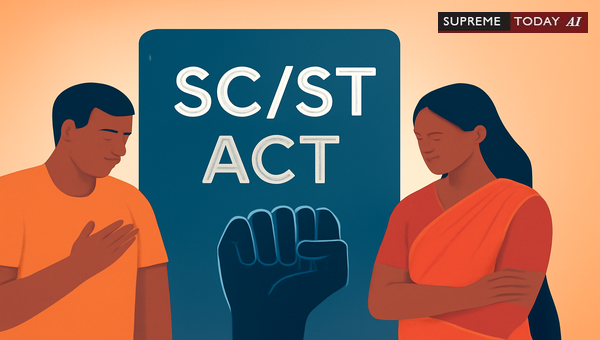
In India, the (SC/ST Act) is a vital law aimed at protecting marginalized communities from and violence. But a common question arises: will the SC/ST Act attract by merely attacking an ST person? This query often surfaces in disputes involving assaults, where the victim's tribal identity raises concerns about invoking special protections.
The short answer, based on consistent judicial interpretations, is no. Simply attacking someone who belongs to a Scheduled Tribe (ST) does not automatically trigger the SC/ST Act. There must be more—typically, proof that the offence was committed that the victim is an ST member, implying a or, post-amendment, knowledge of their identity. This blog delves into the nuances, drawing from key judgments and legal principles to clarify when the Act applies. Note: This is general information, not specific legal advice. Consult a qualified lawyer for your case.
The SC/ST Act does not apply mechanically. Courts have ruled that the offence must be linked to the victim's caste or tribal status. As emphasized in judicial rulings, the offence under the Scheduled Castes and Scheduled Tribes (Prevention of Atrocities) Act (SC/ST Act) is not automatically attracted by merely attacking an individual who belongs to the Scheduled Tribe (ST) community. Instead, the law requires that the attack or offence must be committed that such person is a member of a Scheduled Caste or Scheduled Tribe2021 4 Supreme 16.
This distinction ensures the Act targets atrocities driven by prejudice, not routine crimes.
have repeatedly clarified this threshold through landmark cases:
2021 4 Supreme 16: The held, for application of is that an offence must have been committed against a person that such person is a member of SC/ST. Without evidence of this , the provision fails.
2021 4 Supreme 16: Conviction under requires proof that the offence was committed that she belonged to Scheduled Caste, beyond mere membership.
2021 4 Supreme 16: The Court stressed the offence must be only of caste, setting aside convictions lacking such proof.
These rulings underscore that means for the reason or on the basis of the victim's caste or tribal identity 2021 4 Supreme 16.
The (effective ), modified Section 3 to focus on knowledge rather than strict motive. Now, if the accused knew the victim was ST, offences like assault can attract the Act—provided other ingredients (e.g., public humiliation for certain sections) are met. However, even here, mere attack without this knowledge doesn't suffice 2021 4 Supreme 16.
In assault scenarios:- No Automatic Invocation: Merely attacking an ST person without specific evidence of caste-based motive or knowledge does not automatically attract the provisions of the SC/ST Act2021 4 Supreme 16.- Evidence Needed: Prosecution must show caste slurs, prior enmity tied to tribe, or accused's awareness of identity.
For instance, in a case involving assault and caste remarks, courts quashed SC/ST charges due to lack of proof that remarks were in —a requirement under . Insufficient evidence of undermines SC/ST Act charges2025 Supreme(Online)(MAD) 13598. Conviction under (hurt) was upheld, but not the Act.
Other judgments reinforce this:
2024 0 Supreme(Pat) 877: To attract the provisions of of the Act, the is that the victim should be a person who belongs to a Scheduled Caste or a Scheduled Tribe and that the offence under the is committed against him on the basis that such a person belongs to a Scheduled Caste. Failure to prove identity via caste certificate led to quashing SC/ST conviction.
Unnamed Case on Cognizance2024 Supreme(Online)(Pat) 3742: Cognizance under the SC/ST Act cannot be sustained if the informant is not a member of Scheduled Caste or if the involvement is merely circumstantial related to civil disputes. Civil land rows don't invoke the Act without .
Rape Case Analysis2022 0 Supreme(All) 952: Merely because minor victim is a scheduled caste would not attract the offence under of the SC/ST Act. Prosecution failed to link the crime to caste.
Context2020 0 Supreme(Kar) 690: Even in serious cases, if no public witnesses or caste motive exists (e.g., midnight lockdown incident), SC/ST doesn't apply.
These cases highlight courts' scrutiny: IPC charges (e.g., 323, 506) often stand, but SC/ST requires that extra caste layer.
The Act kicks in if:- Evidence shows caste-based intent, like slurs or humiliation within 2025 Supreme(Online)(MAD) 13598.- Accused knew victim's ST status, especially among neighbors: if any offence of IPC is committed against the member of SC & ST knowing well, he or she belongs to that category, provisions of SC & ST Act automatically get attracted2019 0 Supreme(Del) 2131.- Post-amendment, acquaintance presumes knowledge in some scenarios.
However, private disputes or unproven public elements limit applicability 2019 0 Supreme(Mad) 889.
In summary, while the SC/ST Act powerfully combats caste violence, it doesn't blanket every ST assault. Courts ensure targeted application, balancing protection with fairness. Stay informed, but seek professional advice for specifics.
Word count: ~1050. References are to specific judgments; full texts via legal databases.
#SCSTAct, #AtrocitiesAct, #LegalInsights


As held by the Supreme Court, the offence must be such so as to attract the offence under Section 3(2)(v) of the Act. The offence must have been committed against the person on the ground that such person is a member of Scheduled Caste and Scheduled Tribe. ... The allegation of hurling abuses is against a person who claims title over the property. If such person happens to be a Scheduled Caste, the offence under Section 3(1)(r) of the Act is not made out. 6. ... Ther....

Even if the same be directed generally to a person, who happens to be a Scheduled Caste or Tribe, per se, it may not be sufficient to attract section 3(1)(x) unless such words are laced with casteist remarks. ... The legislative intent seems to be clear that every insult or intimidation for humiliation to a person would not amount to an offence under section 3(1)(x) of the SC/ST Act unless, of course, such insult or intimidation is targeted at the victim because of he being a member of a particular Scheduled ... the prov....

Therefore, the offence under Section 3(1)(x) of the SC/ST Act would not attract as against the appellant. Hence, the same is liable to be set aside. ... On the contrary, if the remark is made inside a building, but some members of the public are there (not merely relatives or friends) then it would not be an offence since it is not in the public view(sic).” Para No.33Para No.30it is implicitly clear that the expression “within public view” should be construed to mean that the insult or humiliation must take place in the presence of or in ....

Law (Amendment) Act, 2013 was passed. ... Word, gesture or act intended to insult the modesty of a woman. ... Act, providing efficacious redress for the grievance of the aggrieved party. ... The word ‘person’ in the section was substituted by the word ‘woman’ and the expressions ‘watches or spies on a person in a manner that results in a fear of violence or serious alarm or distress in the mind of such person, or interferes with the mental peace of such person’ were d....

As held in Ramesh Chandra’s case (supra), if such a comment is made generally to a person, who happens to be a scheduled caste or scheduled tribe community, per say, it may not be sufficient to attract offence under Section 3(1)(x) of the SC/ST (POA) Act (Unamended) as such words are not laced with casteist ... Even if the same be directed generally to a person, who happens to be a Scheduled Caste or Tribe, per se, it may not be sufficient to attract section 3(1) (x) unless such words are laced with cas....

To attract the provisions of Section 3(2)(v.) of the Act, the sine qua non is that the victim should be a person who belongs to a Scheduled Caste or a Scheduled Tribe and that the offence under the Penal Code, 1860 is committed against him on the basis that such a person belongs to a Scheduled Caste ... Therefore, from the afore-quoted decisions and the preamble of the Act, it is clear that the fundamental requirement in order to attract the provisions of the SC/ST Act#HL_END....

As held by the Supreme Court, the offence must be such so as to attract the offence under Section 3(2)(v) of the Act. The offence must have been committed against the person on the ground that such person is a member of Scheduled Caste and Scheduled Tribe. ... Also, even if the remark is made inside a building, but some members of the public are there (not merely relatives or friends) then also it would be an offence since it is in the public view. ... ), 1989, otherwise there was no occasion to registe....

This is sufficient to attract the offences under Sections 3(i) of the SC/ST Act. That apart, PW.1 has stated the word uttered by Raj Kumar (A3) and Lakshmanan (A5). ... Except PW.1, neither PW.2 nor PW.7, who alleged to have been present at the time of occurrence, had heard the objectionable utterance by the accused persons to attract offence under Section SC/ST Act. ... Therefore, merely on the ground of delay in registering the F.I.R, the trial will not get vitiated. ... POA) Amendment Act#H....

The question is whether the offer by the accused to the witness Mutuwa of two women and to the witness Wickremesinghe of tea and anything else they wanted while at the same time the accused pointed out his house where two women were out obviously to attract the attention of any males, ... The events that subsequently transpired were narrated by the witnesses but they could at best be regarded as furnishing corroborative testimony, for the subsequent events merely indicate that the witnesses went to the Police Station and made a complaint there, t....

Whether the appellant merely happened to be present, or whether he shared the common object of the assembly, are matters that can only be conclusively determined after evidence is led during trial. At this stage, the prosecution material was held sufficient to attract Section 149 IPC. ... (iii) The court cannot act merely as a post office or a mouthpiece of the prosecution but has to consider the broad probabilities of the case, the total effect of the evidence and the documents produced before the court, any basic infi....

In light of the deliberations held above, we have no hesitation in coming to the conclusion that the prosecution has failed to establish existence of necessary ingredients to attract commissioning of offence under Section 3(2)(v) of the SC/ST Act against the accused appellant. The prosecution has not brought on record any evidence which may demonstrate that the minor victim was raped on the ground of her being a scheduled caste. Merely because minor victim is a scheduled caste would not attract the offence under Section 3(2)(v) of the SC/ST Act.

Therefore, the offence under Section 3(2)(v) of the SC/ST (POA) Act will not attract. In the said case, the learned Judge has considered the fact of that case, wherein the alleged offence was committed at 23:45 hours on 14-5-2020 during the dark hours of the midnight and at the time of COVID-19 lockdown and no other persons were present and it has held that, the offences are under Sections 323 and 506 of the IPC. However in this case, the occurrence of the alleged incident has been admitted by both the parties in the complaint and counter complaint.

Therefore, as per provision of SC & ST Act, if any offence of IPC is committed against the member of SC & ST knowing well, he or she belongs to that category, provisions of SC & ST Act automatically get attracted. It is not in dispute that petitioners and respondent no.2 are neighbours and they know the caste of each other.
Relying upon the judgment of this court in K.Jayaramanuju –vs- Janakaraj & others reported in 1996 (1) CTC 470, the learned Senior Counsel would content that, to convict a person under section 294(b) IPC, mere utterance of obscene words not sufficient. If so, in the absence of public view, Section 3(1)(x) of SC and ST Act, will not attract. The utterance of obscene words must cause annoyance to others. Further, the learned Senior Counsel would submit that, even according to the defacto complainant, at the time of the alleged occurrence, except the three accused, nobody was ....

Section 3 is heart and soul of the SC/ST Act, which encompasses in it, certain acts done by a non-SC/ST person towards an SC/ST person, willfully and intentionally humiliating that person, knowing fully well that such person belongs to SC/ST. To put it in a different way, various provisions of the SC/ST Act revolve around Section 3. As per Section 2(1)(a) of the SC/ST Act atrocity means an offence punishable under Section 3 of the SC/ST Act.


An indispensable Tool for Legal Professionals, Endorsed by Various High Court and Judicial Officers
Please visit our Training & Support
Center or Contact Us for assistance

Scan Me!
India’s Legal research and Law Firm App, Download now!


For Daily Legal Updates, Join us on :



 Back to top


