


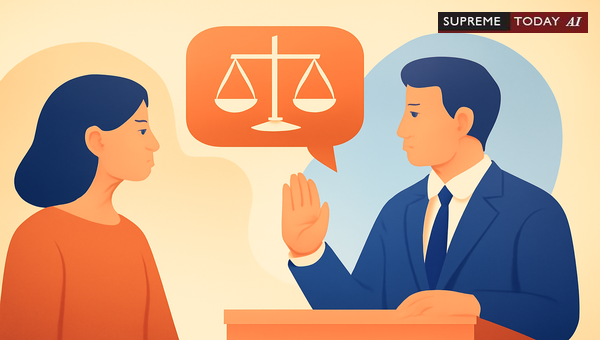
No Party Left Unheard: The Cornerstone of in India
In the realm of law, few principles are as sacrosanct as the right to be heard. The age-old maxim —Latin for hear the other side—ensures that no one is condemned without an opportunity to present their case. But what happens when a party is indeed left unheard? This blog delves into the legal question: A Party should Not be Left Unheard, exploring its foundations, applications, exceptions, and real-world implications under Indian jurisprudence.
Whether you're a litigant, business owner, or simply curious about procedural fairness, understanding this principle can safeguard your rights in , , and . Let's break it down step by step.
The Fundamental Right to Hearing under
forms the bedrock of fair adjudication in India. The principle of mandates that no individual should be condemned unheard and that no person should be a judge in their own cause. This requires parties affected by an order or decision to be given a genuine opportunity to present their case 2000 0 Supreme(Chh) 3 2009 0 Supreme(HP) 641 2000 0 Supreme(Chh) 4.
have repeatedly emphasized this as an intrinsic right, not merely statutory but constitutional in essence. As observed in judicial precedents, our laws of procedure are grounded on a principle of which requires that men should not be condemned unheard 2025 Supreme(Online)(Ori) 6452. Denying this right strikes at the heart of justice.
Key Elements of the Right to Be Heard
- Notice: Affected parties must receive clear, timely notice of proposed actions.
- Opportunity to Respond: Sufficient time to make representations or defend.
- Impartial Hearing: Free from bias, ensuring a fair process.
Application in Judicial and Proceedings
This principle applies rigorously to , , and authorities. Even without explicit statutory mandates, bodies affecting rights or interests must adhere to 2009 0 Supreme(HP) 641 2010 0 Supreme(HP) 23 2023 0 Supreme(J&K) 111.
For instance, in administrative actions like , failure to issue a before penalizing an employee violates fairness. One case highlighted that the petitioner was condemned unheard and was left to bear stigma of his disengagement, rendering the order unsustainable
J&K and another .….Respondent(s) Through: Coram: HON’BLE MR.
. Similarly, in civil suits, doesn't doom the case if it deprives no one of a hearing, per 2022 Supreme(Online)(KER) 36909.Mandatory Nature of Notice and Opportunity
Issuing notice is non-negotiable. It must inform the party of the allegations and grant reasonable time for defense. Orders passed without this are typically set aside 2000 0 Supreme(Chh) 3 2009 0 Supreme(HP) 641 2000 0 Supreme(Chh) 4.
In criminal and civil contexts, stress over technicalities. For example, dismissing cases for without notice to the complainant is improper: It is a settled principle of law that a party should not remained unheard 2022 0 Supreme(Guj) 1271 2022 0 Supreme(Guj) 822
.
Exceptions and Limitations to the Principle
While fundamental, exceptions exist:- Statutory Provisions: Explicit permission for ex parte proceedings.- Waiver: If the party voluntarily forgoes the hearing.- No Prejudice: Where absence causes no injustice 2010 0 Supreme(HP) 23 2022 0 Supreme(Del) 320
Vijay Shankar Johari VS State Of U. P. Thru Prin. Secy. Deptt. Of Energy Civil Sectt. Lko - (2023)
2022 0 Supreme(Del) 11.However, scrutinize these closely. In matrimonial disputes, vague allegations under may be quashed if they fail to provide a case, but the right to hearing remains paramount. Even in urgent matters like sugarcane crushing reallocations, the apprehension of the cane growers should not be left unheard or unattended 2023 0 Supreme(Mad) 474.
Effect of Denying a Hearing
Breach leads to invalidation. Orders causing prejudice are quashed, as justice requires that parties are not condemned unheard 2009 0 Supreme(HP) 641 2000 0 Supreme(Chh) 3 2022 0 Supreme(Del) 320.
Real-world examples abound:- Criminal : Dismissals for default restored, emphasizing merits over technicalities 2022 0 Supreme(Guj) 822.- Negotiable Instruments Cases: Absent complainants get second chances; a party should not suffer for the mistake of his lawyer
.- Delay Condonation: condone delays to avoid leaving parties remediless, especially with counsel's demise 2022 0 Supreme(Cal) 353.
In one instance, cross-examination rights were reopened post-dismissal, underscoring that adjudication should be on merits rather than on mere technicalities
.
Judicial Discretion and Ensuring Fair Opportunity
Judges wield wide discretion to uphold :- Grant additional time or costs to cure lapses.- Restore proceedings if no prejudice to the other side.- Organize legal aid camps for aggrieved parties, as in cane growers' grievances 2023 0 Supreme(Mad) 474
Vijay Shankar Johari VS State Of U. P. Thru Prin. Secy. Deptt. Of Energy Civil Sectt. Lko - (2023)
.
This flexibility ensures procedural fairness without rigidity.
Integrating Broader Contexts from Case Law
Beyond core principles, sources reveal nuanced applications:- Matrimonial Cruelty Claims: General allegations insufficient; specific ones needed, but hearings prevent misuse 2023 Supreme(Online)(CAL) 12109.- Injury Assessments: Medical evidence must be heard fully, avoiding presumptions 2022 Supreme(Online)(MP) 12713.
These illustrate the principle's versatility across civil, criminal, and administrative domains.
Conclusion and Key Takeaways
The legal consensus is clear: no party should be adversely affected without a proper hearing. Orders breaching are vulnerable to challenge unless exceptions apply without prejudice.
Key Takeaways:- Always demand notice and hearing in proceedings affecting rights.- Challenge violations promptly via or .- prioritize merits; technical defaults rarely justify denial.
When advising clients, prioritize procedural compliance. If breached, highlight violations for redress.
Disclaimer: This post provides general information on Indian legal principles and is not specific legal advice. Consult a qualified lawyer for your situation.
#NaturalJustice, #RightToBeHeard, #AudiAlteramPartem














