


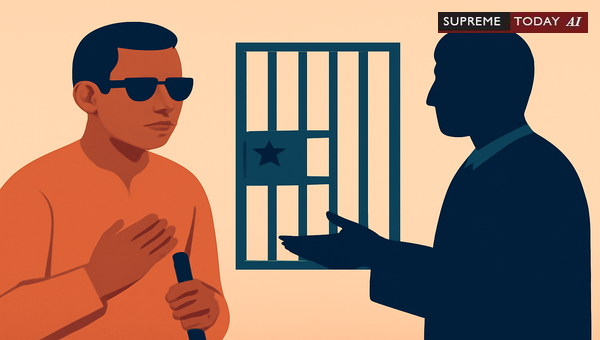
Bail Rights for Blind Persons: Must It Be Granted?
In the Indian legal system, the question Bail Must be Given to Blind Person often arises in cases involving accused individuals with visual impairments. Does blindness automatically disqualify someone from bail, or does the law protect their right to ? This blog post delves into the legal principles, case-specific considerations, and judicial insights to provide clarity. While this is general information based on established precedents and not specific legal advice, it highlights how courts typically approach such matters.
Understanding bail is crucial: it secures the accused's appearance at trial without unnecessary deprivation of liberty. For vulnerable groups like the blind, additional humanitarian and constitutional factors come into play. Let's break it down step by step.
Legal Principles Governing Bail
Bail is not merely a procedural tool but a fundamental right rooted in the . Every accused is presumed innocent until proven guilty, making pre-trial detention punitive unless justified. 2022 0 Supreme(AP) 556 2012 0 Supreme(All) 651
Key principles include:1. : This cornerstone supports bail as the default, preventing liberty deprivation before conviction. Courts emphasize that bail should be the rule, while refusal should be the exception. 2021 0 Supreme(All) 4 2023 0 Supreme(All) 5272. Bail as a Right: In , the accused has an absolute right to bail if willing to provide it. The court is obligated to grant it. 2015 0 Supreme(Chh) 783. : Judges exercise discretion based on case facts, judiciously and compassionately, especially for vulnerable individuals like those with disabilities. 2020 0 Supreme(Ker) 388 1995 0 Supreme(MP) 1078
These principles apply universally, without explicit disqualification for blindness.
Specific Considerations for Blind Persons
Blindness does not bar bail eligibility. Legal documents focus on charges' nature and evidence, not disability. For instance, in a blind murder case—where eye-witnesses were relatives and not chance witnesses—bail was granted due to lack of substantial evidence.
It was a case of blind murder. Alleged eye witnesses are relative and were not the chance witnesses.
Other factors include:1. Impediments to Granting Bail: No law states blindness disqualifies bail. Assessment hinges on reoffending risk or evidence tampering, where a blind person's limitations (e.g., inability to commit certain physical acts) may reduce perceived threat. 2021 0 Supreme(P&H) 1292 2016 0 Supreme(All) 112. : Courts adopt a humane approach for disabled persons. protections extend to the visually impaired, recognizing their vulnerabilities. 2025 0 Supreme(Ker) 31603. : India's Constitution () prohibits . Blind persons cannot be denied bail solely due to their condition. 2017 0 Supreme(Ker) 15
Provisions like those in CrPC further support this: Courts may release sick or infirm persons on bail, and mere need for witness identification isn't grounds for denial if the accused complies with directions. 2021 0 Supreme(J&K) 164 2018 0 Supreme(Ori) 740 Provided that the Court may direct that any person under the age of sixteen years or any woman or any sick or infirm person accused of such an offence be released on bail.
Insights from Case Law and Additional Sources
Judicial precedents reinforce fair treatment for blind accused. In one matter, bail was considered at the investigation stage, emphasizing case merits over disability.
The court noted opposition from the state but focused on evidence gaps.
Accessibility rights also intersect: Blind persons must secure authorisation to convert books into accessible format copies, highlighting systemic recognition of visual disabilities. A person with a visual and print disability includes those who is blind. [Blind Blind SA vs Minister of Trade Industry and Competition and Others [2022] ZACC 33 - vs Minister of Trade Industry and Competition and Others [2022] ZACC 33 - 2022 Supreme(Blind SA vs Minister of Trade Industry and Competition and Others [2022] ZACC 33 - )(ZACC) 11 - 2022 Supreme(Blind SA vs Minister of Trade Industry and Competition and Others [2022] ZACC 33 - )(ZACC) 11](https://supremetoday.ai/doc/judgement/SA_ZACC_2022_ZACC_33)
Warnings against judicial errors abound, like the blind leading the blind parable in a case where ignorance led to invalid orders: the first blind person in this case is the learned Sessions Judge, who was guiding the learned Magistrate, who was also blind.
MIR ANAS ALI vs THE STATE REP BY ITS - 2022 Supreme(Online)(MAD) 43856 - 2022 Supreme(Online)(MAD) 43856
This underscores informed discretion in bail matters.Other rulings affirm bail as non-punitive, prioritizing liberty unless compelling reasons exist. 2023 0 Supreme(Del) 4324 2023 0 Supreme(Mad) 3302 2024 0 Supreme(Ker) 22 Special considerations for disabilities ensure equality, preventing marginalization. 2025 0 Supreme(Ker) 3160
In vacancies for blind candidates, non-availability didn't forfeit rights, mirroring bail logic: entitlements persist absent disqualification. 2025 Supreme(Online)(Mad) 78252
in Practice
Courts weigh:- Nature and severity of charges- Strength of evidence- or tampering potential- Accused's health and disability- Prolonged detention impacts
For blind persons, arguments like improbability of certain crimes (e.g., eyewitness-dependent offenses) strengthen bail pleas. Humanitarian pleas invoke Article 21's life and liberty protections.
Exceptional cases, like national security, may differ, but disability alone isn't exceptional. 2023 Supreme(SRI)(CA) 147
Conclusion and Key Takeaways
A blind person generally has the right to apply for bail, with disability not automatically disqualifying them. Courts must consider case specifics, evidence, , and constitutional equality. Bail remains the rule, denial the exception.
Key Takeaways:- Emphasize and lack of evidence in applications.- Highlight humanitarian and equality arguments.- Counter prosecution misuse of disability.- Ensure accessibility in proceedings for blind accused.
By upholding these principles, the system safeguards justice for all, including the visually impaired. Consult a qualified lawyer for case-specific advice, as outcomes depend on individual circumstances.
References: 2022 0 Supreme(AP) 556 2012 0 Supreme(All) 651 2015 0 Supreme(Chh) 78 2021 0 Supreme(P&H) 1292 2017 0 Supreme(Ker) 15 2016 0 Supreme(All) 11 2020 0 Supreme(Ker) 388 1995 0 Supreme(MP) 1078 2021 0 Supreme(All) 4 2023 0 Supreme(All) 527
[Blind Blind SA vs Minister of Trade Industry and Competition and Others [2022] ZACC 33 - vs Minister of Trade Industry and Competition and Others [2022] ZACC 33 - 2022 Supreme(Blind SA vs Minister of Trade Industry and Competition and Others [2022] ZACC 33 - )(ZACC) 11 - 2022 Supreme(Blind SA vs Minister of Trade Industry and Competition and Others [2022] ZACC 33 - )(ZACC) 11](https://supremetoday.ai/doc/judgement/SA_ZACC_2022_ZACC_33)
MIR ANAS ALI vs THE STATE REP BY ITS - 2022 Supreme(Online)(MAD) 43856 - 2022 Supreme(Online)(MAD) 43856
2021 0 Supreme(J&K) 164 2018 0 Supreme(Ori) 740 2023 0 Supreme(Del) 4324 2025 0 Supreme(Ker) 3160(Word count: 1028. This post provides general insights; seek professional legal counsel for your situation.)
#BailForBlind, #DisabilityLawIndia, #PresumptionOfInnocence















