


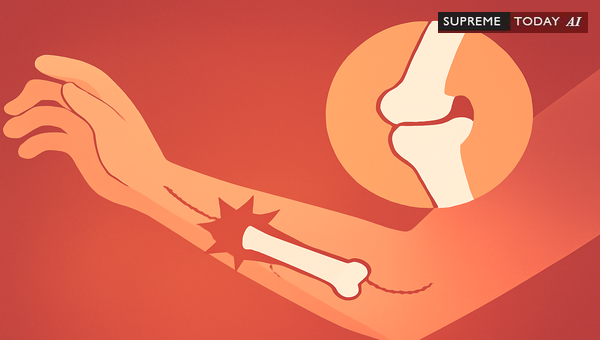
Does Dislocation Qualify as Under Section 320?
In the realm of Indian criminal law, distinguishing between and can significantly impact legal outcomes, penalties, and victim compensation. A common question arises: Whether Dislocation Comes Within the Definition of ? This issue frequently surfaces in assault cases where injuries involve bones or teeth. Understanding this requires delving into (), judicial interpretations, and medical evidence.
This article provides a comprehensive overview, drawing from statutory provisions and case law. Note that this is general information and not specific legal advice—consult a qualified lawyer for your situation.
Understanding Under
is a serious category of injury outlined in , which lists eight specific types of hurt designated as grievous. These include , , , and injuries causing severe pain for 20 days or . 2007 0 Supreme(MP) 1218 2007 0 Supreme(MP) 1224 2023 0 Supreme(All) 243
The seventh clause explicitly states: . This makes it clear that dislocation is not merely a peripheral injury but squarely falls within the legal definition of . Courts have consistently upheld this, emphasizing that the provision uses straightforward language without qualifiers like complete or severe dislocation. 2019 0 Supreme(Guj) 494 2017 0 Supreme(Bom) 2362
For instance, one source affirms: The is defined in Section 320 and accordingly, is .2019 0 Supreme(Guj) 494
Why Dislocation Qualifies as
Dislocation occurs when a bone is displaced from its normal position at a joint, often causing significant pain, immobility, and requiring medical intervention. Under , this injury type is treated on par with fractures because both disrupt structural integrity.
Key points supporting this classification:- Explicit Statutory Inclusion: directly lists dislocation of a bone or tooth alongside fractures. No additional proof of permanence or severity is needed beyond the dislocation itself. 2023 Supreme(Online)(KAR) 14707 2016 0 Supreme(Bom) 824- Judicial Consensus: Courts do not require the dislocation to be accompanied by a fracture. Even partial displacements qualify if medically confirmed. 2023 0 Supreme(All) 407- Tooth Dislocation: Dislocation of a tooth is also covered, as noted in precedents where dental injuries were classified as grievous if they meet the criteria. 2004 0 Supreme(AP) 1139
A supporting excerpt states: 'Fracture or dislocation of a bone' or 'any hurt which endangers life 'are treated as .2019 0 Supreme(Ker) 440
Landmark Case Laws on Dislocation and
Indian courts have clarified this through precedents:
In this case, it was held that a fracture or dislocation of a bone is sufficient to classify an injury as grievous, regardless of the extent of the fracture. 2023 0 Supreme(All) 407 This ruling underscores that the legal test is the presence of dislocation, not its degree.
()
The court emphasized that dislocation of a tooth could also be considered grievous if it meets the criteria outlined in . 2004 0 Supreme(AP) 1139
Additional cases reinforce this:- In a ruling, mere surface scratches on bones do not qualify, but actual dislocation does, distinguishing it from .
-
- High Court noted: It is clear from Section 320 (Point Seven) that if '' occurred the case will come under .-
These decisions highlight that courts prioritize the injury's nature over subjective medical labels like mild.
Role of Medical Evidence in Proving
While medical reports are crucial, classification as is a legal determination, not purely medical. Doctors confirm the injury (e.g., via X-rays showing dislocation), but courts apply Section 320 criteria. 2009 0 Supreme(SC) 1710 2023 0 Supreme(All) 408
Challenges arise when reports describe mild dislocation or swelling without explicit dislocation confirmation. For example:- One case noted failure to produce X-rays undermined the grievous claim, as The definition of is enumerated in Section 320... '' is treated as a .2016 0 Supreme(Bom) 824 2016 0 Supreme(Bom) 1545- Sri Lankan precedents (analogous to ) clarify that cracks not fully through the bone may still qualify, but superficial injuries do not.
Recommendations for stakeholders:- Secure detailed medical documentation, including imaging.- Highlight impacts on daily life, potentially invoking (20 days severe pain). 2023 0 Supreme(All) 244
Broader Implications:
If dislocation results from dangerous weapons (e.g., knives, spades), it escalates to , attracting up to life imprisonment. Sources confirm: deals with by dangerous weapons... fracture is ...2019 0 Supreme(Guj) 494
In one instance, a spade causing bone dislocation led to conviction under Section 326, as fracture or dislocation of a bone is included in the terms '.'2017 0 Supreme(Bom) 2362
Common Misconceptions and Clarifications from Sources
- No Fracture Needed: Dislocation stands alone.
-
- Not Just Pain-Based: Unlike , Clause 7 is objective.
- Dental Injuries: Tooth dislocation qualifies. 2023 Supreme(Online)(KAR) 14707
Excerpt: Dislocation of tooth which amounts to grievous injury... seventhly indicates the .2023 Supreme(Online)(KAR) 14707
Conclusion and Key Takeaways
Dislocation of a bone or tooth unequivocally falls within the definition of under , Clause 7. Supported by statutes, rulings like Hori Lal, and High Court precedents, this classification holds unless disproven by evidence. Always ensure robust medical proof and consider victim impacts for stronger cases.
Key Takeaways:- Dislocation = (Clause 7). 2007 0 Supreme(MP) 1218 2007 0 Supreme(MP) 1224- Courts decide based on legal definitions, aided by medical evidence. 2009 0 Supreme(SC) 1710- Weapon use may invoke harsher Sections like 326 .- Consult professionals for case-specific advice.
References: 2007 0 Supreme(MP) 1218 2007 0 Supreme(MP) 1224 2023 0 Supreme(Chh) 84 2023 0 Supreme(All) 243 2023 0 Supreme(All) 407 2009 0 Supreme(SC) 1710 2004 0 Supreme(AP) 1139 2023 0 Supreme(All) 408
-
2023 Supreme(Online)(KAR) 14707-
2019 0 Supreme(Guj) 494 2019 0 Supreme(Ker) 440 2017 0 Supreme(Bom) 2362 2016 0 Supreme(Bom) 824 2016 0 Supreme(Bom) 1545 #GrievousHurt, #IPC320, #IndianCriminalLaw












