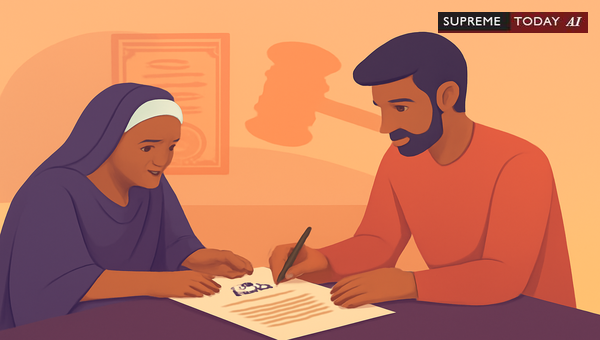
Burden of Proof in Deeds Executed by Elderly Persons
Imagine an elderly family member, perhaps in their late 80s or 90s, signing over a valuable property deed to a relative or buyer. What if questions arise about their mental sharpness, understanding of the document, or whether undue pressure was applied? These scenarios are all too common and raise a critical legal question: Deed Executed by Age Old Person Burden of Proof. In such cases, courts apply special rules to safeguard vulnerable individuals from exploitation.
This blog post delves into the legal principles governing the burden of proof when deeds are executed by elderly persons, drawing from established case law and evidentiary standards. While this provides general insights, it is not legal advice—consult a qualified attorney for specific situations.
Overview of the Legal Framework
When deeds—such as sale deeds or gift deeds—are executed by elderly individuals who may be infirm, illiterate, or mentally deficient, the burden of proof typically shifts. Rather than the challenger proving invalidity, the party seeking to enforce the deed must demonstrate that it was executed voluntarily, with full comprehension, and in a sound state of mind. This protective principle stems from public policy to prevent fraud, undue influence, or misrepresentation.
Registered documents enjoy a presumption of validity under the law, meaning they are assumed genuine unless substantial evidence rebuts this. However, for elderly executants, this presumption is scrutinized more closely, especially if factors like old age, illness, or dependency are present. As noted in key precedents, the burden lies on the person seeking to enforce the deed to prove that it was executed with full comprehension and in a healthy state of mind especially when the executant is elderly or infirm. 1995 0 Supreme(All) 973
Key Principles on Burden of Proof
1. Standard Burden on the Enforcing Party
In typical civil disputes, the party alleging undue influence or fraud bears the initial burden. But for elderly or vulnerable executants, this flips. The beneficiary or vendee must affirmatively prove:- The executant understood the deed's contents.- No undue influence, fraud, or coercion was involved.- The transaction was fair and voluntary.
This is particularly true for pardanashin ladies (women in purdah, often illiterate or secluded) or those in dependency. It is well settled that the burden of proof, that the donor, who is a pardanashin lady, executed the deed of gift voluntarily, is on the person who is benefitted by the transaction. 2014 0 Supreme(Cal) 319
2. Role of Fiduciary or Confidential Relationships
If a fiduciary relationship exists—such as between caregiver and elderly ward—the burden shifts decisively to the dominant party. They must prove the absence of undue influence. In cases where undue influence, fraud, or misrepresentation is alleged, the party making such allegations generally bears the burden of proof. However, if a fiduciary relationship exists, the burden may shift to the dominant party to prove the absence of undue influence or fraud. 1962 0 Supreme(SC) 140 1980 0 Supreme(All) 12
Courts emphasize active confidence: When a person is bound to prove the existence of any fact, it is said that the burden of proof lies on that person. 2025 Supreme(Online)(Pat) 1729
3. Presumption of Validity for Registered Deeds
Under evidentiary rules, registered sale deeds are presumed lawful. Registered documents, including sale deeds, are presumed to be executed in accordance with the law. This presumption can only be rebutted by providing substantial evidence to the contrary. 2022 0 Supreme(Raj) 2997
Yet, for the elderly, courts demand more. Mere registration doesn't suffice if capacity is questioned, as in wills or deeds by the aged: Thus, merely because the Will Deed is registered, it will not hold good and valid. 2025 0 Supreme(All) 2171
Landmark Case Examples
Case of the 90-Year-Old Vendor
In a poignant example, a 90-year-old man, blind and mentally distressed, executed a sale deed. The court ruled: the vendee bore the burden to prove full understanding and capacity. Failing this, the deed was voided. 1995 0 Supreme(All) 973
Pardanashin and Dependent Executants
Similar protections apply to vulnerable groups. In cases involving Pardanashin ladies or individuals in a position of dependency, the burden of proof lies on the party seeking to enforce the deed to demonstrate that the deed was explained and understood by the executant. 1997 0 Supreme(All) 1099
Another case involved an elderly woman alleging her nephew exploited her age: Plaintiff is maternal aunt as well as mother-in-law of the defendant No. 6. She has alleged that the defendant No. 6 has taken undue advantage of her old age and got sale deed in respect of lands executed in his name. 2022 0 Supreme(Bom) 1646
Broader Precedents on Vulnerable Transactions
Courts have long held: The burden of proof shall in such a case rests not with those who attack, but with those who found upon the deed as its beneficiary and the proof must go so far as to show affirmatively and conclusively that the deed was not only executed by, but was explained to, and was really understood by the grantor. 2022 0 Supreme(Ori) 248
For old or illiterate persons under confidential relations, the beneficiary must prove fairness: Burden of Proof in Deeds by Old or Illiterate Persons shifts when active confidence exists. 2023 0 Supreme(Del) 1795 2025 Supreme(Online)(MP) 9527 2025 Supreme(Online)(Mad) 74203 2024 0 Supreme(Ker) 1449
Evidence Required to Meet the Burden
To discharge the burden, enforcers typically need:- Witness testimony from the execution time, attesting to comprehension.- Medical records showing sound mind.- Independent advice proof, e.g., lawyer explanation.- Circumstantial evidence like the executant's prior intent or family dynamics.
Direct proof is ideal; courts infer from surroundings if unavailable. Age presumptions (e.g., Evidence Act Section 90) aid but don't replace capacity proof for deeds. 2023 2 Supreme 649
STEVEN APPUHAMY V. DOTTY
Undue influence looms large in unconscionable deals: the dominant party proves no exploitation. 2024 0 Supreme(Ker) 1449
Practical Recommendations
- For Enforcers/Beneficiaries: Gather robust evidence upfront—videos, affidavits, medical notes. Refer precedents like 1995 0 Supreme(All) 973
- Allahabad 1997 0 Supreme(All) 1099 1962 0 Supreme(SC) 140.
- For Challengers: Highlight age, infirmity, relationships; allege specific influence without bearing initial proof.
- Prevention Tips: Involve neutral parties, record explanations, ensure literacy aids for the elderly.
Conclusion and Key Takeaways
Deeds by elderly persons demand heightened scrutiny. Generally, the burden rests on the enforcing party to prove validity, protecting against exploitation. Key takeaways:- Burden shifts for infirm, illiterate, or dependent executants.- Fiduciary ties amplify this.- Registration presumes validity but yields to capacity evidence.- Courts prioritize free will and understanding.
This framework upholds justice for the vulnerable. For tailored advice, seek professional legal counsel. Stay informed on evolving case law to navigate these complex issues effectively.
(Word count: 1028. This post references general principles from cited documents; outcomes vary by facts and jurisdiction.)
#BurdenOfProof #ElderlyDeeds #PropertyLaw