


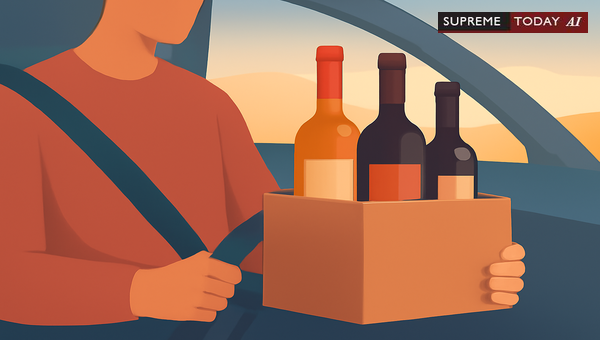
Is Carrying Liquor Bottles in a Car Illegal in India?
Driving with a few bottles of liquor in your car's trunk might seem harmless, especially after a party or a trip to the liquor store. But is it an offence to carry liquor bottles in the car? In India, this seemingly simple act can land you in legal trouble depending on state laws, quantity, and permits. This blog post breaks down the legal nuances, drawing from court cases and excise regulations to help you understand the risks and how to avoid them.
Disclaimer: This article provides general information based on legal precedents and is not a substitute for professional legal advice. Consult a lawyer for your specific situation, as laws vary by state.
Understanding the Legal Framework
India's liquor laws are primarily governed by state excise acts, as alcohol regulation falls under state jurisdiction. There's no uniform national law, making it crucial to know your state's rules. The core question—Is it an offence to carry liquor bottles in the car?—hinges on factors like , exceeding permissible quantities, and the type of liquor.
Carrying liquor without a valid permit or license is often treated as an offence. For example, in a case where a petitioner was found with 15 boxes of country-made liquor in a car, it led to conviction under 2009 0 Supreme(P&H) 1432. Similarly, another incident involved the of 144 bottles of foreign liquor from a vehicle, though the court allowed vehicle release if the owner lacked knowledge of the illicit nature 1994 0 Supreme(All) 75.
Permissible Limits: What You Can Carry Without a Permit
Most states allow small quantities for without a permit, but limits vary:
- : Up to three bottles of any size if traveling with others, increasing the limit proportionally 2020 0 Supreme(AP) 520.
- : Up to four units of liquor, where one unit is a defined quantity 1988 0 Supreme(Raj) 795.
Exceeding these can trigger offences. In one case, a vehicle carrying 240 bottles without a license was confiscated 2019 0 Supreme(Kar) 246. However, if within limits, seizures can be challenged successfully 2018 0 Supreme(Kar) 835.
From additional cases, small quantities like four quarter bottles for may be permissible, but larger or hidden amounts typically aren't 2025 Supreme(Online)(AP) 10801. Police often intercept vehicles on suspicion, finding bottles in secret compartments, leading to FIRs under sections like 4(1)(a), 65(e), or 116B of 2025 0 Supreme(Guj) 902 2025 Supreme(Online)(Guj) 6638 2021 Supreme(Online)(MAD) 38216.
When Does It Become an Offence?
1. Possession Without Permit
If caught without authorization, expect and charges. In a documented stop, when Accused No. 1 was asked, whether he had permission or licence to keep the bottles with him, he replied that he was not having such things. Then, the S.I. of Police seized the liquor bottles and the car bearing No. AP 39 AB 2444 2024 0 Supreme(AP) 1386. This highlights how lack of a permit leads to immediate action.
2. Quantity and Concealment
Large quantities or hidden bottles scream . Courts examine if the quantity exceeds limits or if concealment was involved 2024 0 Supreme(Ker) 1268 2024 0 Supreme(Guj) 439. Even claiming ignorance doesn't always help if evidence suggests otherwise.
3. Vehicle and
Vehicles become instruments of crime under excise laws. is common for illicit hauls, but owners without knowledge may recover them 1994 0 Supreme(All) 75. In contrast, proven involvement leads to permanent loss 2019 0 Supreme(Kar) 246.
Exceptions and Defenses
Not every case sticks:- : Mere vehicle ownership doesn't imply guilt. Courts have ruled that the owner was not presumed to have knowledge of the offence committed by another person 1994 0 Supreme(All) 75.- : If within limits, FIRs can be quashed 2020 0 Supreme(AP) 520 1988 0 Supreme(Kar) 47.- : Small amounts openly carried might pass muster, unlike bulk or concealed loads 2025 Supreme(Online)(AP) 10801.
In one scenario, a Head Constable purchased liquor while driving a government vehicle from Chandigarh to Hyderabad, leading to a case, but departmental proceedings considered context 2012 0 Supreme(Del) 2432. Another petitioner was falsely implicated after signing documents without reading, under Sections 341, 384 and 34(A) 2021 0 Supreme(AP) 179.
Search and Procedures: Know Your Rights
Police must follow protocols. Searches without reasonable grounds or records violate 2024 Supreme(Online)(Kar) 45938. Improper procedures can invalidate evidence, aiding defenses in court 2025 Supreme(Online)(Chh) 6204
. Always demand search witnesses and memos.
State Variations and Dry Days
like or Bihar have —any possession is riskier 2025 Supreme(Online)(Guj) 6638. Even ramp up checks during elections or festivals. Always verify local rules.
Key Takeaways and Recommendations
- Check Limits: Familiarize with your state's excise laws—e.g., 3 bottles in AP, 4 units in 2020 0 Supreme(AP) 520 1988 0 Supreme(Raj) 795.
- Get Permits: For larger quantities, obtain transport licenses.
- Document Everything: Keep receipts, labels visible, avoid hiding.
- Stay Alert: During checks, cooperate but assert rights.
Conclusion: Carrying liquor bottles in a car may be an offence if exceeding limits, lacking permits, or involving . Small, compliant amounts are generally fine, but risks of and charges loom large otherwise. Stay informed to drive legally.
References:2009 0 Supreme(P&H) 1432 1994 0 Supreme(All) 75 2020 0 Supreme(AP) 520 1988 0 Supreme(Raj) 795 2019 0 Supreme(Kar) 246 2018 0 Supreme(Kar) 835 1988 0 Supreme(Kar) 47 2024 0 Supreme(AP) 1386 2021 0 Supreme(AP) 179 2012 0 Supreme(Del) 2432 2025 0 Supreme(Guj) 902 2025 Supreme(Online)(Guj) 6638 2021 Supreme(Online)(MAD) 38216 2025 Supreme(Online)(Chh) 6204
2024 Supreme(Online)(Kar) 45938 2022 Supreme(Online)(MAD) 10580 2024 0 Supreme(Ker) 1268 2024 0 Supreme(Guj) 439 2025 Supreme(Online)(AP) 10801 #LiquorLawsIndia, #CarryingAlcohol, #ExciseAct












