Searching Case Laws & Precedent on Legal Query.....!
Analysing the retrieved Case Laws
Scanned Judgements…!



Searching Case Laws & Precedent on Legal Query.....!
Analysing the retrieved Case Laws
Scanned Judgements…!
Individuals' Right to Challenge Travel Restrictions - Main Points and Insights
Under Article 226 of the Indian Constitution, individuals and entities can challenge administrative actions, including travel restrictions, if they are violative of fundamental rights such as personal liberty (Article 21) or freedom of movement (Article 19) ["
O.P. Gupta vs Union of India - Delhi
"] ["2020 Supreme(Online)(DEL) 1892"].However, some judgments suggest that certain executive decisions (e.g., regarding security or sovereignty) are non-justiciable or beyond judicial review, especially when based on security considerations or classified information ["2020 Supreme(Online)(KER) 19335"] ["SANJAY NARANG vs UNION OF INDIA & ANR - Delhi"]-1067_2017).
Analysis and Conclusion
Yes, individuals can challenge travel restrictions imposed during lockouts or lockdowns under Article 226 of the Constitution if they believe such restrictions violate their fundamental rights, particularly the right to personal liberty and freedom of movement.
O.P. Gupta vs Union of India - Delhi
"] ["2006 0 Supreme(AP) 659"].References:- ["
O.P. Gupta vs Union of India - Delhi
"]- ["2020 Supreme(Online)(DEL) 1892"]- ["2024 0 Supreme(Cal) 1362"]- ["2020 0 Supreme(Ker) 341"]- ["2020 Supreme(Online)(KER) 19335"]- ["2012 0 Supreme(Mad) 2943"]- ["2006 0 Supreme(AP) 659"]- ["2015 0 Supreme(Del) 398"]- ["SANJAY NARANG vs UNION OF INDIA & ANR - Delhi"]-1067_2017)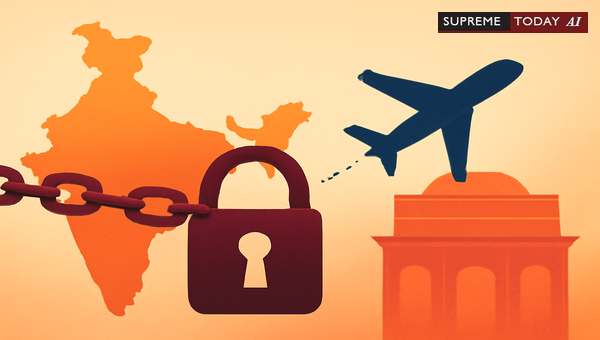
In times of crisis, such as pandemics or security threats, governments often impose travel restrictions to protect public safety. But what happens when these measures, issued by the during lockouts, clash with your right to freedom of movement? A common question arises: Can individuals challenge travel restrictions imposed by , during lockouts, under of the Constitution of India?
empowers to issue writs for enforcing and legal rights. However, courts typically uphold such restrictions as on rights under (freedom of movement) and 19(5). This post dives into the legal landscape, key precedents, and when challenges might succeed—drawing from and High Court rulings.
Lockouts, often linked to emergencies like COVID-19 lockdowns, involve curbs on inter-state or intra-state movement. The , under powers like the , issues orders prioritizing public health and security. These are viewed as reasonable restrictions in the interest of . For instance, during the pandemic, orders like No.40-3/2020-DM-I(A) dated and from the regulated movement nationwide 2021 0 Supreme(Ker) 709.
Courts have consistently recognized that such measures are justified. The has held that restrictions on movement during emergencies are permissible, emphasizing public interest over individual rights 1950 0 Supreme(Bom) 38 2024 0 Supreme(Cal) 576. In COVID-related cases, inter-state travel bans were upheld as necessary for public health
.
Writ petitions under are not a blanket remedy. Courts exercise caution, deferring to executive decisions during crises unless is proven. Challenges succeed only if restrictions are arbitrary, unreasonable, or violate constitutional principles 1950 0 Supreme(Bom) 38.
For example, in a case questioning Karnataka's RT-PCR requirements for border entry, the dismissed the petition for lack of under , noting: Court has to entertain a must be answered on basis of the averments made in petition truth or otherwise whereof being immaterial 2021 0 Supreme(Ker) 709. This highlights self-imposed limits on ' .
Similarly, unregistered bodies lack standing for (PILs) challenging such measures. In a Kerala case against bus occupancy norms amid COVID-19, the court ruled: The is not maintainable as the petitioners are an unregistered body, hence lacking 2020 Supreme(Online)(Ker) 49156. Public interest claims must come from recognized entities or directly aggrieved individuals.
Several rulings affirm the validity of restrictions:
.
In one instance: The has recognized that restrictions on movement during emergencies or lockouts are often justified as reasonable restrictions in the interest of and safety 1950 0 Supreme(Bom) 38. Challenges based solely on individual rights fail without proving invalidity.
While generally upheld, exceptions exist:
Courts note: Restrictions that are arbitrary, excessive, or imposed without legal backing can be challenged successfully 1950 0 Supreme(Bom) 38. However, during crises, judicial deference prevails, as in MHA guideline cases where relaxations couldn't be judicially expanded 2018 0 Supreme(Mad) 3844.
Other contexts reinforce this: Self-imposed limits on jurisdiction mean alternative remedies or can bar petitions 2011 0 Supreme(Mad) 4199 2015 0 Supreme(Ker) 751.
If facing restrictions:
Courts advise: Legal challenges should focus on procedural violations or lack of legal basis rather than contesting the restriction per se.
Individuals generally cannot successfully challenge travel restrictions during lockouts under , as they are upheld as reasonable for public safety 1950 0 Supreme(Bom) 38 2024 0 Supreme(Cal) 576. Precedents from COVID-19 and security cases show strong judicial support for executive action.
Key Takeaways:- Restrictions are valid if statutory and proportionate.- Success hinges on proving or illegality.- limit interference via jurisdiction and standing rules.
This post provides general insights based on precedents and is not legal advice. Consult a qualified lawyer for your situation. Laws evolve, and outcomes depend on facts.
References:- 1950 0 Supreme(Bom) 38: Upholding movement restrictions in public interest.- 2024 0 Supreme(Cal) 576: Permissible limits during threats.-
: COVID inter-state curbs.- 1996 8 Supreme 673: Emergency procedures.- 2021 0 Supreme(Ker) 709: Jurisdiction and MHA orders.- 2020 Supreme(Online)(Ker) 49156: Standing for unregistered bodies. #Article226, #TravelRestrictions, #IndianConstitution


The letter of the Ministry of Home Affairs dated 12th May, 2020 is reproduced hereinbelow: URGENT COURT CASE No. 40-10/2020-DM-I(A) Government of India Ministry of Home Affairs North Block ... I have been directed to convey to you that Para-5 of Ministry of Home Affair's D.O. ... It is pertinent to mention that the present public interest litigation has been filed under Article 226 of the Constitution of India seeking a directi....
Government of India Ministry of Home Affairs North Block, New Delhi Dated: 12th May, 2020 To, Smt. ... No.40-3/2020-DEM-I (A) 30th April, 2020 Dear Chief Secretary, Kindly refer to Ministry of Home Affairs (MHA) Order of even number dated 15 April 2020 vide which consolidated revised guidelines on lockdown measures were issued. ... I have been directed to convey to you that Para-5 of Ministry of Home Affair‟s D.O. ... It is pertinent to mention that ....

Section 22 of the 1967 Act is an exception carved out from the restrictions imposed by the Act itself. ... While adjudicating the issue at hand, the provisions of Article 19 of the Constitution is required to be considered. Article 19(1)(d) provides that all citizens shall have the right to move freely throughout the territory of India. ... Thus, the repository of such power of exemption is not the court but the Central Government, flowing from Section 22 of the 1967 Act which carves o....

226 of the Constitution. ... Union of India, Ministry of Petroleum and Natural Gas (1995)1SCC85 . A decision in the case of Akhil Bharatiya Soshit Karamchari Sangh v. Union of India and Ors. (1981)ILLJ209SC was relied where the non-registered Association was held to apply under Article 32 of the Constitution. ... The impugned provision of the notification violates the mandatory guidelines issued by the Ministry of Home Affairs dated....

Union of India and Ors. (1981) ILLJ 209 SC was relied where the non-registered Association was held to apply under Article 32 of the Constitution. ... B.The impugned provision of the notification violates the mandatory guidelines issued by the Ministry of Home Affairs dated 30.05.2020, which mandates the norms of social distancing to be observed by maintaining a distance of 6 feet between individuals. ... After going through the papers and on hearing the counsel, we are of the view t....
Union of India, Ministry of Petroleum and Natural Gas (1995)1SCC85 . A decision in the case of Akhil Bharatiya Soshit Karamchari Sangh v. Union of India and Ors. (1981)ILLJ209SC was relied where the non-registered Association was held to apply under Article 32 of the Constitution. ... The impugned provision of the notification violates the mandatory guidelines issued by the Ministry of Home Affairs dated 30.05.2020, which mandates the norms of social distancing to be ....
Order No.40-3/2020-DM-I(A) dated 29.08.2020 issued by the Government of India, Ministry of Home Affairs, New Delhi, is reproduced hereunder: “No. 40-3/2020-DM-I(A) Government of India Ministry of Home Affairs ... Order No.40-3/2020-DM-I(A) dated 29.04.2021 issued by the Ministry of Home Affairs, Government of India, New Delhi, is reproduced hereunder: “No. 40-3/2020-DM-I(A) Government of India Ministry#H....

They claim private individuals cannot occupy the same without obtaining permission of the Ministry of Defence. ... Plainly, the opinion of Central Government in this regard is not be amenable to judicial review under Article 226 of the Constitution of India. 20. ... As noticed above, the same is not a subject matter of challenge before this Court. Thus, this petition must be decided on the basis that restrictions as imposed in terms of the Act are valid an....

They claim private individuals cannot occupy the same without obtaining permission of the Ministry of Defence. ... Plainly, the opinion of Central Government in this regard is not be amenable to judicial review under Article 226 of the Constitution of India. 20. ... As noticed above, the same is not a subject matter of challenge before this Court. Thus, this petition must be decided on the basis that restrictions as imposed in terms of the Act are valid an....
The Ministry of Home Affairs7, which is the nodal ministry responsible for issuing guidelines for international travel, has noted that an LOC can be issued in cases of cognizable offences under the Indian Penal Code and other penal laws and only in exceptional circumstances, can its scope be expanded ... Pertinently, the trial court has not imposed any conditions/restrictions on the Petitioner’s travel. As regards FIR bearing No. RC4E/2020/CBI/SCB/LKO no charge sheet ....

Similarly the self imposed restrictions while invoking the extraordinary jurisdiction under Article 226 of the Constitution of India, deserves to be concurred with. Though a submission has been made on the decision arrived at with respect to the fixation of cap at 15% discount on the MRP of the bouquet and the discounts given under the tariff order, the aforesaid decision cannot be a ground to hold that the ultimate conclusion arrived at on the other issues would necessarily follow suit. The finding has to be seen contextually along with the other issues including the overa....

These relaxations extended by the Home Ministry cannot modify by the court under Article 226 of the Constitution of India to the present case.

Though a submission has been made on the decision arrived at with respect to the fixation of cap at 15% discount on the MRP of the bouquet and the discounts given under the tariff order, the aforesaid decision cannot be a ground to hold that the ultimate conclusion arrived at on the other issues would necessarily follow suit. The finding has to be seen contextually along with the other issues including the overall stand taken in the counter affidavit of respondents 1 to 4. Similarly the self imposed restrictions while invoking the extraordinary jurisdiction under Article 226 of the....
I, therefore, reject the contention of the respondents on the issue of alternative remedy. Even otherwise, it is not a question of inherent lack of jurisdiction, but that of an alternative remedy. Legions are the precedents in this regard that it is only a self-imposed limitation concerning adjudication under Article 226 of Constitution of India.

Courts have imposed self restrictions as to the entertaining of writ petitions under Article 226 of the Constitution of India. Whether there is laches in approaching the Court depends on the facts and circumstances of the case. In my view, Article 226 of the Constitution of India do not prescribe any period of limitation.


An indispensable Tool for Legal Professionals, Endorsed by Various High Court and Judicial Officers
Please visit our Training & Support
Center or Contact Us for assistance

Scan Me!
India’s Legal research and Law Firm App, Download now!


For Daily Legal Updates, Join us on :



 Back to top


