


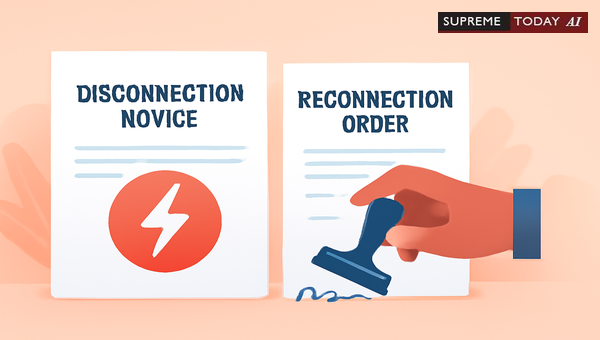
Court Orders Electricity Reconnection After Disconnection Without Proper Notice
Imagine receiving a power bill and suddenly finding your electricity supply cut off—without any warning. This scenario raises a critical question: Reconnection was Ordered as the Licensee Disconnected Supply Without Giving Proper Notice. In India, such abrupt actions by electricity licensees can violate , leading courts to mandate immediate reconnection. This blog explores the legal framework, key judgments, and consumer protections under the , helping you understand your rights.
Note: This article provides general information based on legal precedents and is not specific legal advice. Consult a qualified lawyer for your situation.
Main Legal Finding
The , and associated regulations strictly require licensees to provide proper notice before disconnecting electricity supply. Typically, this means a minimum 15-day written notice for reasons like . Disconnection without this notice is generally considered illegal, opening the door for consumers to challenge it in court. Courts have consistently ordered reconnection when procedural violations occur, emphasizing to protect consumers. 2004 0 Supreme(Ori) 163
As stated: The licensee shall, in the case of disconnection proposed on the grounds mentioned in clauses (a) and (b) of sub-regulation (1) of regulation 138 above, issue a disconnection notice in writing, as per , with a of not less than fifteen clear days. 2004 0 Supreme(Ori) 163
Key Points on Disconnection and Reconnection
- Mandatory : Under , licensees must give at least 15 days' clear notice before disconnection for or similar issues. 2021 0 Supreme(Ker) 797
- Illegal Disconnection: Acting without notice contravenes law, making the action challengeable. Courts view this as a . 1996 0 Supreme(Cal) 418
- Reconnection Remedies: Improper disconnections often result in court directives for licensees to restore supply, sometimes at their own cost and within tight timelines like 48 hours. 1996 0 Supreme(Cal) 418
- Consumer Safeguards: The emphasis is on fairness—licensees cannot bypass , ensuring consumers have time to respond or pay dues.
Detailed Legal Provisions on Disconnection
Section 56 of the , is central here. It mandates written notice before disconnection, except in emergencies like theft or safety risks. , reinforces this with a 15-day requirement. 2021 0 Supreme(Ker) 797
For instance, in cases of alleged or , notice is non-negotiable. Failure to comply renders the disconnection unlawful. Courts have quashed such actions and directed restoration. In one precedent, the licensee was ordered to reconnect within 48 hours because the disconnection lacked justification and proper notice. 1996 0 Supreme(Cal) 418
Another ruling underscores: The licensee cannot disconnect supply without following , including proper notice, and that disconnection without such notice is unlawful.
When Courts Order Reconnection
Judicial intervention is common when licensees flout procedures. In 1996 0 Supreme(Cal) 418, the court directed CESC (Calcutta Electric Supply Corporation) to reconnect supply at the licensee's expense due to improper disconnection. Similarly,
affirmed that procedural safeguards like notice are mandatory, with reconnection as the remedy for violations.
The further supports this: supply must be restored if procedures aren't followed before the termination . 2013 0 Supreme(Mad) 2882
From additional precedents:- In a case involving disconnection requests from , the court ruled a licensee cannot disconnect without notice to the actual occupant and consumer, directing restoration within three weeks. 2008 0 Supreme(Cal) 873: The licensee is directed to restore supply of electricity which was disconnected on within three weeks from date.- Courts have also addressed related issues, like restoring supply immediately upon compliance or quashing tied to improper disconnections.
: Thereupon, the petitioner's supply of electricity will be restored immediately and without delay.
These cases illustrate a pattern: courts prioritize consumer rights, invalidating hasty disconnections.
Exceptions and Limitations
While notice is generally required, exceptions exist:- Immediate Disconnection: Allowed for theft, safety hazards, or tampering, but even then, post-disconnection procedures like hearings apply.
- Other Reasons: Disconnections for tenancy disputes or dormant connections must follow specific codes, such as . 2015 0 Supreme(P&H) 2217- Minimum Charges and Repairs: Licensees cannot shift burdens like minimum guarantee charges during disruptions they cause, nor recover unauthorized repair costs. 2011 0 Supreme(All) 3434
In tampering cases, statutory powers are balanced with fairness, often granting to maintain pending trial.
Integrating Broader Case Law Insights
Related judgments reinforce the notice imperative. For example, in theft allegations, under must involve the inspection team, and improper handling leads to quashing and potential reconnection directives. 2017 0 Supreme(Cal) 828
Another highlights that licensees cannot worsen a consumer's position via appeals without cross-objections, especially in assessments post-disconnection. 2010 0 Supreme(Cal) 268
In insolvency contexts, regulations on reconnection after notice are strict. 2022 Supreme(Online)(NCLAT) 910: The regulation relating to reconnection of power supply is as follows:- '6.0 Reconnection of supply: The licensee shall not reconnect the #HL_STA....'
These sources collectively show courts' reluctance to tolerate procedural shortcuts.
Practical Recommendations for Consumers and Licensees
- For Consumers: If disconnected without notice, document everything—bills, dates, communications. File a complaint with the consumer forum or court seeking reconnection and possibly damages. Keep records to prove occupancy and payments. 2008 0 Supreme(Cal) 873
- For Licensees: Adhere to Section 56 and supply codes. Issue notices in prescribed formats and allow compliance time to avoid litigation.
- General Tip: In disputes like tenancy or repairs, verify regulations before acting. Seek legal aid promptly for urgent restoration.
Conclusion and Key Takeaways
Disconnection without proper notice under the , is typically unlawful, prompting courts to order reconnection and uphold consumer rights. Key precedents like 1996 0 Supreme(Cal) 418 and
demonstrate this protective stance.
Takeaways:- Always demand and verify 15-day notices.- Challenge violations swiftly for restoration.- Exceptions are narrow; reigns.
Stay informed, protect your supply, and ensure licensees follow the law. For personalized guidance, reach out to a legal expert.
References:1. 2004 0 Supreme(Ori) 163 - 15-day notice requirement.2. 1996 0 Supreme(Cal) 418 - Reconnection directive.3.
- Procedural safeguards.4. 2013 0 Supreme(Mad) 2882 - Supply Code restoration rules.5. Additional cases: 2008 0 Supreme(Cal) 873,
,
. #ElectricityLaw, #ConsumerRights, #ReconnectionOrder















