


Under the Drugs and Cosmetics Act 1940
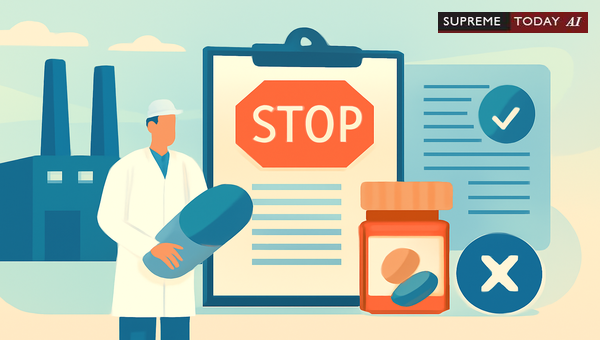
In the highly regulated pharmaceutical industry in India, receiving a can halt operations abruptly, leading to significant financial losses and legal battles. Manufacturers often face such orders under the (and Rules, 1945) for alleged violations like stocking or manufacturing drugs without proper licenses. But what are the ? This post explores the legal framework, key case precedents, and practical strategies, drawing from judicial interpretations.
If you're a manufacturer wondering, What are the under the ?, read on for a detailed breakdown. Note: This is general information based on legal precedents and not specific legal advice. Consult a qualified lawyer for your case.
Understanding Stop Manufacturing Orders and (c)
A typically arises from inspections revealing potential contraventions of (c) of the , which prohibits the manufacture, sale, stocking, or exhibition for sale of drugs without a valid license. Paired with of the , it mandates that drugs be supplied only against signed orders, emphasizing proper documentation.
Such orders are often precursors to criminal complaints under , punishable by imprisonment and fines. However, courts have consistently held that not every inspection finding justifies a blanket halt or prosecution. without evidence of does not automatically constitute an offence. 1974 0 Supreme(SC) 27
Unless it is for purpose of sale, does not amount to an offence within meaning of of Drugs and Cosmetics Act.
This principle forms the bedrock for challenging such orders.
Primary Grounds to Challenge: Lack of Evidence of Offence
1. Insufficient Proof of Sale or Sale Intent
The cornerstone of any valid complaint or stop order under (c) is clear evidence linking the accused to sale, stocking for sale, or manufacturing intent without a license. Courts have quashed proceedings where prosecutors relied solely on possession.
In one key ruling, the court clarified:
No stock of impugned substance was found on premise of Appellants – Alleged substance is not included as a drug in Indian Pharmacopoeia – No scientific evidence or otherwise has been furnished to prove that alleged substance is solely used for manufacturing drug and not food items. 2023 1 Supreme 730
Other sources reinforce this: Violations under (c) and (5)(1)(e) require proof of unlicensed manufacturing or sale, such as failure to produce purchase bills or signed orders. 2023 Supreme(Online)(MAD) 24779 Without scientific or material evidence proving the substance's drug nature and sale intent, challenges succeed. 2023 1 Supreme 730
- Bullet point takeaway: Challenge on grounds of no recovered stock, unclassified substances, or dual-use materials (e.g., for food).
- Related rule: mandates licensing for manufacturing; non-compliance needs intent proof. 2024 0 Supreme(Mad) 1043
2. is Not Enough
Judicial precedent emphasizes that stocking alone, without sale evidence, falls short:
Stocked for sale there and then? or to be sold certainly but elsewhere later? are two alternatives flowing from language of (1)(c). 1974 0 Supreme(SC) 4
A pending license application does not permit manufacturing or sale, but absence of sale proof weakens the case. 1974 0 Supreme(SC) 4Additional insights from cases show prosecutions fail without linking to Schedule H drugs or proper records under . 2020 0 Supreme(Mad) 2309
Procedural Lapses: A Strong Defense Pillar
Procedural defects often invalidate stop orders and complaints. Courts scrutinize:
1. Limitation Periods
Complaints must be filed within the under . Delays bar prosecution:
Prosecution was barred by law of limitation as complaint was filed beyond three-year period.
02200032906
2.
Notices must specify violations clearly, including signed order requirements under :
The show cause notice did not adequately inform the petitioners of the requirement for signed orders, rendering the prosecution invalid.
02200032906
Cross-references: Inspections under and failures in record maintenance () require proper notice. Lack of address or license details on sales invalidates claims. 2024 0 Supreme(Mad) 1043 2024 Supreme(Online)(Tel) 28557
- Timely filing: Essential for validity.
- Proper notice: Must detail exact rule breaches, e.g., (9)(b) for licensee details. 2013 0 Supreme(Mad) 2909
Integrating Manufacturing-Specific Violations
Stop orders often cite manufacturing lapses under (a)(i)/(vi) or (c) r/w Rule 105(2). Challenges succeed if:
- No proof of reprocessing without testing (). 2013 0 Supreme(Bom) 1850
- Compromise possible post-trial under Sections 18(a)(vi), 18(b). 2018 0 Supreme(Chh) 306
- Directors not without specific roles. 2017 0 Supreme(Raj) 2248
Broader context: covers unlawful manufacture, but needs license proof. governs license conditions; breaches like missing bills trigger . 2024 Supreme(Online)(Tel) 28557
Exceptions Where Challenges May Fail
- Proven manufacturing/sale without license, even incomplete. 2020 0 Supreme(Mad) 2309
- Record failures under /65, e.g., no purchase bills. 2025 0 Supreme(SC) 250 (implied from patterns)
- Substances confirmed as drugs via pharmacopoeia.
Key Takeaways and Recommendations
To challenge a effectively:1. Gather counter-evidence: Prove no sale intent, dual-use substances, or licensing efforts. 1974 0 Supreme(SC) 272. Audit procedures: Check limitation, notice adequacy.
02200032906
3. Scientific validation: Test substances; demand prosecutor proof. 2023 1 Supreme 7304. Compliance checklist: Maintain records, signed orders ().5. Seek quashing: File under in High Court.References:- 1974 0 Supreme(SC) 27: Storage without sale intent not offence.-
02200032906
: Limitation and notice issues.- 2023 1 Supreme 730: Evidence lacks for non-drugs.- 1974 0 Supreme(SC) 4: Intent clarification.- 2003 8 Supreme 756: Procedural correctness.Conclusion
Challenging a under the Drugs and Cosmetics Act hinges on disproving sale intent, evidentiary gaps, and procedural flaws. Cases like 1974 0 Supreme(SC) 27 2023 1 Supreme 730 show courts favor defendants without solid proof. Manufacturers should prioritize compliance with Sections 18(c), 27(d) and Rules 62/65 to avoid pitfalls.
Stay proactive: Regular audits and legal reviews mitigate risks. This analysis draws from cited precedents; outcomes vary by facts. Always seek professional advice.
#DrugsAct1940, #StopManufacturingOrder, #PharmaLaw












